Your Guide to Food X-Ray Machine Costs and Features
Investing in food safety technology is a significant financial commitment. Food X-ray inspection systems typically range from $30,000 for basic models to over $100,000 for advanced, high-speed systems. The final x ray machine for food industry price depends on the machine's type, detection capabilities, software, and overall configuration, reflecting a growing market projected to reach $2.9 billion by 2032.
Why Invest in a Food X-Ray Machine?

An X-ray inspection system is a powerful tool for safeguarding product quality and business health. Companies that integrate this technology protect consumers, enhance their brand reputation, and streamline operations. The investment moves a business from reactive problem-solving to proactive quality assurance.
Enhancing Food Safety and Brand Protection
Protecting a brand's reputation is paramount. A single food recall averages nearly $10 million in direct costs, not including the long-term damage to consumer trust. X-ray inspection virtually eliminates the risk of shipping products with contaminants like metal, glass, or bone. This proactive step prevents costly recalls and potential litigation. Many companies have successfully bolstered their brand image by adopting this technology.
| Company Type | Challenge | X-Ray Solution | Brand-Related Outcome |
|---|---|---|---|
| Ready-meal Manufacturer | Contaminants in paper-based packaging | Advanced food X-Ray machine | Reduced returns and improved brand trust. |
| Beverage Manufacturer | Issues with recycled PET bottles | X-Ray machine for food industry | Strengthened product safety and sustainability perception. |
| Snack Manufacturer | Errors from lightweight packaging | High-speed food inspection system | Cut false rejects by over 40%, supporting quality goals. |
Meeting HACCP, BRC, and SQF Compliance
Global food safety standards require robust foreign body detection programs. X-ray systems help manufacturers achieve and maintain critical certifications. These standards explicitly recommend or mandate effective detection technologies as part of a comprehensive food safety plan.
Key Compliance Points 📝
- HACCP: Prerequisite Programs (PRPs) list X-ray equipment as a key tool for controlling physical hazards.
- SQF: Standards require the monitoring and validation of detection technologies like X-ray systems.
- BRC: Global Standards mandate comprehensive foreign object detection, a requirement that X-ray systems directly fulfill.
Beyond Contamination: Quality Control Checks
Modern X-ray machines offer much more than just contaminant detection. They function as all-in-one quality control stations, improving production efficiency. These systems perform numerous checks simultaneously at high speeds. This capability turns a standard machine into an intelligent tool that reduces false positives and increases throughput.
Key quality checks include:
- Mass Measurement: Verifying the correct product weight.
- Component Counting: Ensuring all items are in a multi-pack.
- Fill Level Verification: Checking that containers are filled properly.
- Product & Package Integrity: Identifying broken items or damaged seals.
What Is the X Ray Machine for Food Industry Price?
The x ray machine for food industry price is not a single figure but a spectrum. Costs are directly tied to the system's technological sophistication, inspection capabilities, and intended application. Understanding the differences between price tiers helps a business align its budget with its specific food safety and quality control objectives.
Entry-Level Systems ($30,000 - $50,000)
Entry-level X-ray systems provide a robust and accessible solution for fundamental contaminant detection. These machines are an excellent starting point for companies transitioning from manual inspection or basic metal detectors. They offer reliable protection against common physical hazards.
These systems typically use a lower-power X-ray tube, making them ideal for straightforward applications. For example, the Ishida IX-EN Series is designed for reliable inspection in these basic-level scenarios. Key applications include:
- Packaged Foods: Systems can effectively scan through standard packaging to find contaminants inside sealed products.
- Bulk Products: They inspect large quantities of items like grains, nuts, or powders for foreign objects.
- Ready-to-Eat Meals: Manufacturers can ensure final products are free from contaminants before shipping.
Note on Total Cost 💡 The initial purchase price is just one component. Businesses must also budget for installation, training, and service. Room preparation can cost between $5,000 and $15,000, while initial staff training may add another $1,000 to $5,000. These factors contribute to the total cost of ownership.
While effective, these systems generally focus on contamination detection and may lack the advanced quality control functions of more expensive models. The x ray machine for food industry price in this range delivers essential safety compliance and brand protection.
Mid-Range Systems ($50,000 - $80,000)
Mid-range systems represent a significant step up in both performance and versatility. These machines offer higher detection sensitivity and introduce a suite of advanced software functions that go beyond simple contaminant detection. They are ideal for manufacturers looking to enhance quality control and improve production line efficiency.
A key advantage at this level is the ability to perform multiple checks simultaneously, such as verifying mass, counting components, and checking fill levels. This turns the X-ray machine into a comprehensive quality assurance station. The investment often pays for itself quickly. Most automated inspection systems achieve a return on investment (ROI) within 12 to 24 months, driven by reduced defect rates and higher throughput.
This tier is where the advantages of X-ray technology over traditional metal detectors become most apparent.
| Feature | Metal Detectors | Mid-Range X-Ray Systems |
|---|---|---|
| Contaminants | Detects most metals. | Detects metal, glass, stone, bone, and dense plastics. |
| Packaging | Ineffective with metallized film. | Inspects through foil and metallized film. |
| Quality Checks | Cannot perform quality checks. | Performs mass, fill level, and integrity checks. |
| Data | Basic data logging. | Advanced image analysis and reporting. |
The higher x ray machine for food industry price in this category is justified by broader capabilities, making these systems a strategic investment for growing businesses focused on comprehensive quality assurance.
High-End and Specialized Systems ($80,000+)
High-end and specialized X-ray systems are engineered for the most demanding production environments. These machines feature state-of-the-art technology, including high-resolution detectors, advanced image processing software, and AI-driven algorithms. They are essential for high-speed production lines, complex products, or industries with exceptionally stringent regulatory standards.
Manufacturers like Eagle Product Inspection offer systems with proprietary technologies, such as PXT™, for superior detection of very small or low-density contaminants. Top manufacturers, including Mettler-Toledo, Anritsu, and Ishida, provide specialized solutions tailored to specific needs. These systems are common in industries where product safety is absolutely critical. Stringent standards in the food and beverage, pharmaceutical, and automotive sectors drive the demand for such advanced inspection technology.
Key characteristics of high-end systems include:
- Unmatched Speed: Capable of inspecting hundreds of products per minute without sacrificing accuracy.
- Ultimate Sensitivity: Detects microscopic foreign bodies and subtle product defects.
- Specialized Configurations: Custom designs for unique products like liquids in glass bottles, canned goods, or large, dense items.
- Advanced Data Integration: Seamlessly connects with factory management systems for complete traceability and process optimization.
The x ray machine for food industry price for these systems reflects their role as mission-critical assets. The total cost of ownership is also higher, with annual service contracts often costing 8-15% of the purchase price to cover preventive maintenance, software updates, and emergency support. For large-scale operations, this investment is crucial for protecting consumers and maintaining a global brand reputation.
Key Features That Determine Performance and Cost
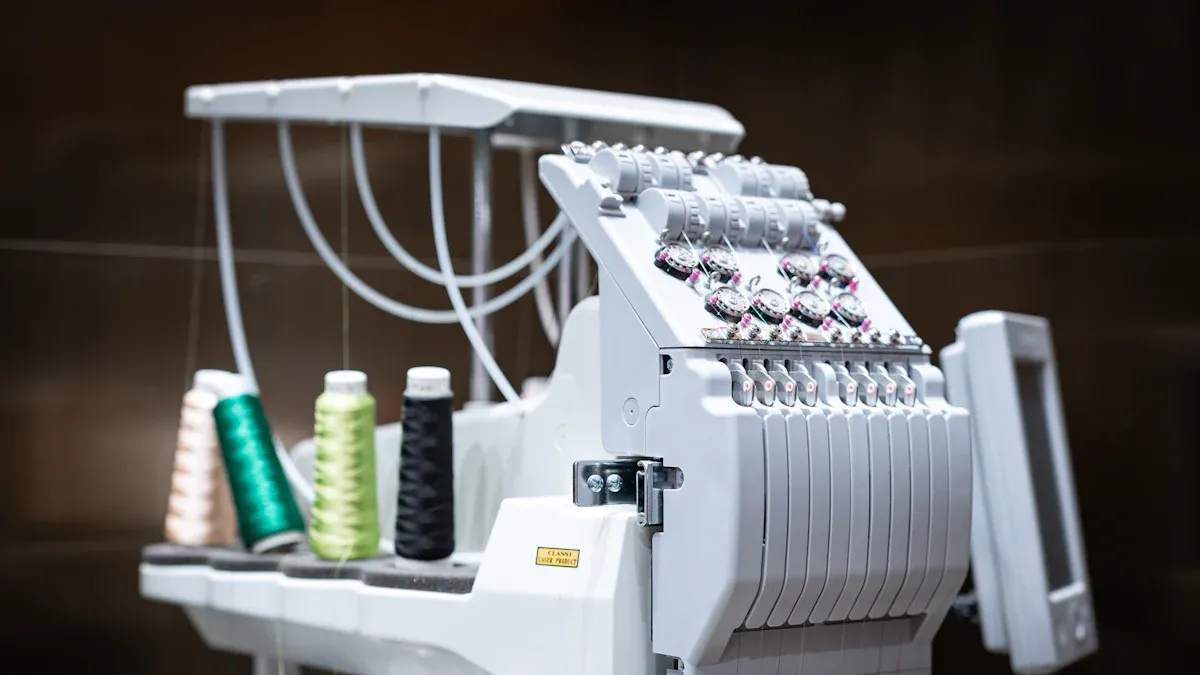
The price of a food X-ray machine is a direct reflection of its capabilities. Several key features determine not only the initial investment but also the system's long-term value and performance. Manufacturers must evaluate these factors carefully to select a machine that aligns with their product, production environment, and safety goals.
Detection Sensitivity and Contaminant Types
A system's primary function is to detect foreign bodies. Its detection sensitivity—the ability to identify the smallest possible contaminant—is a critical performance metric and a major cost driver. This capability is influenced by the "product effect," which describes how a product's own characteristics affect the X-ray image. X-ray absorption depends on the thickness and density of an object. Therefore, dense contaminants like metal are more easily detected in less dense products like bread.
A product's texture and uniformity also play a crucial role.
- Homogeneous products (e.g., cheese blocks, yogurt) produce a consistent X-ray signal, making small changes from contaminants easy to spot.
- Non-homogeneous products (e.g., bags of salad, ready-meals) have variable textures and air pockets. This creates a "busy" X-ray image, which can reduce the contrast between the product and a low-density contaminant, making detection more challenging.
Higher product density or thickness requires more X-ray power for effective inspection, which generally increases system cost. Advanced technologies like dual-energy detectors help overcome these challenges by using sophisticated image filtering to improve radiographic contrast and isolate contaminants.
System Configuration for Your Product Type
X-ray systems are not one-size-fits-all. The machine's physical configuration must match the product's shape, size, and packaging to ensure accurate inspection. Choosing the wrong setup can lead to missed contaminants or excessive false rejects.
| Configuration | Optimal Product Shape/Type | Imaging Approach |
|---|---|---|
| Top-Down X-ray | Flat objects (e.g., pizzas, baked goods) | Images the product from above, through its narrowest dimension. |
| Side-View X-ray | Upright containers (e.g., jars, bottles, cans) | Images through the side of the container, ideal for "glass-in-glass" detection. |
| Pipeline X-ray | Pumped products (e.g., ground meat, sauces) | Inspects product as it flows through a pipe before packaging. |
Pipeline systems are particularly effective for bulk liquids and semi-solids. They offer unique advantages:
- Inspects pumped product to reject contaminants before they enter packaging or damage downstream equipment.
- Utilizes active product tracking to minimize the amount of rejected product.
- Ensures a consistent product flow for optimal contaminant detection.
For packaged goods, the choice is clear. A side-view system is essential for inspecting upright containers like jars and bottles. For flat-packaged goods, manufacturers can choose from a range of top-down systems, including economical, standard, or dual-energy models, depending on their specific needs.
Advanced Software and Inspection Functions
Modern X-ray software transforms a detection device into a comprehensive quality control station. The sophistication of this software is a significant factor in the machine's overall cost. Basic systems focus on contaminant detection, while advanced systems offer a suite of functions powered by specialized image processing.
Key Software Capabilities 🖥️
- Real-time display of X-ray images on an HMI touchscreen.
- Detection of quality defects like shape errors, fill level anomalies, and incomplete products.
- Archiving of images from ejected products with timestamps for complete traceability.
The most significant software advancement is the integration of Artificial Intelligence (AI) and deep learning. Unlike traditional systems that rely on fixed rules, deep learning models learn from thousands of real production images. This allows them to develop a nuanced understanding of acceptable product variations.
AI-powered systems can distinguish between packaging artifacts (like clips or seams) and actual foreign bodies. They tolerate natural variations in density, such as in nuts or multi-layer sandwiches, while still flagging true contaminants. For example, a seafood processor that implemented a deep learning system reduced its false rejection rate by 35% while increasing detection sensitivity by 20%. This technology improves accuracy, minimizes product waste, and provides greater confidence in quality assurance.
Production Line Speed and Throughput
The speed of a production line dictates the required throughput of an X-ray system, measured in products per minute (PPM). The faster the system needs to operate, the higher its cost.
Entry-level systems are ideal for standard applications and moderate throughput needs. Unless a facility needs to process hundreds of items per minute, a more basic model may still be able to fulfill its needs.
High-end systems are engineered for demanding, high-speed production lines where slowing down is not an option. These machines use powerful processors and optimized software to inspect hundreds of products per minute without sacrificing accuracy. In contrast, smaller businesses with slower production cycles may find that a basic system with a lower PPM capacity is perfectly adequate and more cost-effective.
Sanitary Design and Ease of Maintenance
In the food industry, hygiene is non-negotiable. An X-ray machine's design directly impacts its cleanability, which affects both food safety and operational uptime. Systems intended for washdown environments require specific sanitary features that add to their cost.
The highest standard for this is the IP69K rating. This certification indicates the machine can withstand intense, high-pressure, and high-temperature cleaning procedures.
- The first digit (6) signifies the enclosure is completely dust-tight.
- The second digit (9K) signifies protection against powerful, high-temperature water jets (up to 1450 psi and 176°F) from close range.
This level of protection is critical in industries like meat, poultry, and dairy. Key sanitary design features often include:
- Smooth, sloped surfaces to prevent liquid from pooling and promote drainage.
- Minimized crevices and harborage areas where bacteria could accumulate.
- Tool-free disassembly of components like belts and guide rails.
A tool-less design significantly impacts operational efficiency. It allows operators to quickly remove parts for cleaning without needing specialized tools, reducing downtime and labor costs. These efficiency-boosting features can save several minutes per cleaning cycle, accumulating into significant time savings and improving overall production efficiency.
The x ray machine for food industry price directly correlates with its capabilities. Basic systems offer essential contaminant detection from $30,000, while advanced models for high-speed quality checks exceed $80,000. The right investment balances a company's budget with the specific features required for its product and safety standards.
Ready to find the right X-ray system for your budget? Contact our experts for a customized quote based on your specific needs.
FAQ
Are food X-ray machines safe?
Yes. Food X-ray systems use extremely low radiation levels. The food remains safe and does not become radioactive. Shielding and safety interlocks also protect operators from any exposure.
When should a business choose X-ray over a metal detector?
A business should choose X-ray to find non-metallic contaminants like glass, stone, or bone. X-ray systems also inspect products packaged in foil, which metal detectors cannot do.
How long does it take to see a return on investment (ROI)?
Most companies see a full return on investment within 12 to 24 months. This ROI comes from reduced product waste, fewer recalls, and improved production line efficiency.
See Also
Discovering Top Chinese Suppliers for X-Ray Inspection Machine Purchases
Essential Industrial Checkweighers: A Must-Have for Every Food Processing Plant
Tablet Sampling Machines: An Ultimate Guide for Laboratory Equipment Selection
Understanding Pharmaceutical Checkweighers: Key Features and Their Importance
Capsule Checkweighers: Top Models for Buyers to Evaluate in 2025