How Modern X-ray Inspection Ensures Quality in Pharmaceutical Tablets
Quality and safety matter most in pharmaceutical tablet production. X-ray inspection for tablets uses non-destructive, high-speed technology to find contaminants like glass, metal, and plastic. Advanced systems such as RaymanTech help companies meet strict regulations and protect patient health. This technology supports the growing need for reliable medicine.
Key Takeaways
X-ray inspection helps find contaminants like glass and metal in pharmaceutical tablets, ensuring only safe products reach consumers.
Real-time monitoring with X-ray technology improves production efficiency and helps companies quickly address any issues.
Integrating X-ray inspection systems into production lines supports compliance with safety regulations, protecting both patients and brand reputation.
Quality Assurance in Pharmaceutical Tablets
Risks of Defects and Contaminants
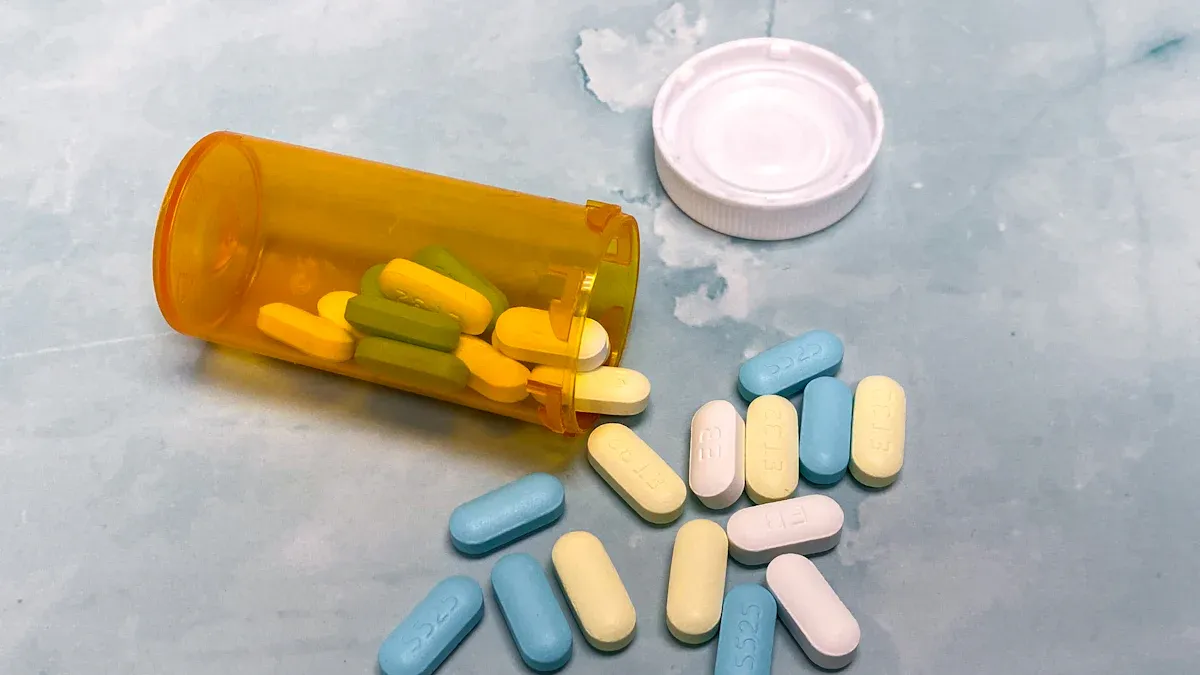
Pharmaceutical tablets must meet high standards because even small defects can affect patient safety. Tablets can develop problems during production, such as cracks, chips, or uneven color. These issues may result from too much pressure, poor mixing, or worn equipment. The table below shows common defects, their causes, and what they mean:
Defect Type | Definition | Causes |
|---|---|---|
Lamination | Tablet splits into two or more layers. | Over-compression, Entrapped air, Too much binder or moisture |
Cracking | Visible fine cracks on the surface of the tablet. | Rapid expansion of granules, Too much pressure or poor formulation design |
Chipping | Small pieces broken from the tablet edges. | Worn punches or dies, Low binder concentration |
Picking | Material sticks to the punch face. | Moist granules, Poor lubrication, Embossed punches |
Sticking | Tablet material adheres to the die wall or punch surface. | Too much moisture or insufficient lubricant |
Mottling | Uneven color distribution on the tablet surface. | Improper mixing of colorant, Migration of dye during drying |
Weight Variation | Significant difference in weight between tablets. | Poor flow of granules, Improper feeding of die cavity |
Double Impression | Duplication of embossed print on tablet. | Free movement of upper punch |
Defects like these can lead to inconsistent dosing, reduced effectiveness, or even safety risks. For example, cracks or chips may cause a tablet to break apart, making it hard for patients to take the right dose. X-ray inspection for tablets helps find these problems early, so only safe products reach consumers.
Regulatory Compliance and Consumer Trust
Regulatory standards protect patients by making sure medicines are safe and effective. Tablets must follow strict rules set by organizations such as the FDA and MHRA. The table below lists some important requirements:
Regulatory Requirement | Description |
|---|---|
FDA Approval | New pharmaceuticals must receive formal approval from the FDA before marketing. |
Animal studies and human clinical trials | Required to determine safety and efficacy before filing a New Drug Application (NDA). |
Compliance with Human Medicines Regulations 2012 | Ensures adherence to established safety and efficacy standards for medicines. |
Complete batch traceability | Allows tracking of the product from manufacture to patient, ensuring accountability and safety. |
When companies follow these rules, they show responsibility and care for patient welfare. This builds trust with consumers. People are more likely to trust medicines from companies that use advanced quality checks and follow regulations. X-ray inspection for tablets supports this trust by helping manufacturers meet all safety standards.
X-ray Inspection for Tablets: Technology and Solutions
Detecting Foreign Matter and Defects
X-ray inspection for tablets uses advanced technology to look inside each tablet and package without causing any damage. This method can find problems that are hard to see with the naked eye. It helps detect foreign materials such as metal, glass, and plastic. The system also checks for missing or broken tablets and makes sure each package is complete.
X-ray technology inspects the internal structure of tablets and capsules.
It detects contaminants like non-metallic particles, rubber, or plastic.
The system finds missing pills, broken components, and foreign materials.
It ensures packaging integrity by spotting leaks or misaligned blister packs.
RaymanTech’s X-ray inspection for tablets uses high-speed, automated scanning. This means every tablet gets checked quickly and accurately. The technology is non-destructive, so the tablets remain safe for patients. By using these systems, manufacturers can catch defects early and prevent unsafe products from reaching consumers.
Real-Time Monitoring and Operational Efficiency
Modern X-ray inspection systems do more than just find defects. They provide real-time monitoring, which means they check products as they move through the production line. This helps companies respond to problems right away and keep production running smoothly.
Key Findings | Description |
|---|---|
Mass Flow Rate Measurement | X-ray sensors measure the flow of tablets in real time, supporting continuous manufacturing. |
Measurement Accuracy | The sensors have a low error rate, making them reliable for quality control. |
Robustness | The sensors work well even when materials or conditions change. |
Real-time Process Control | Immediate adjustments can be made to fix issues, improving efficiency. |
Continuous Manufacturing | This process saves time and money compared to traditional batch methods. |
RaymanTech’s systems use automated, high-speed inspections. This reduces the need for manual checks and lowers the risk of human error. The technology also increases productivity by allowing more tablets to be inspected in less time. Real-time data helps operators make quick decisions, which keeps the production line efficient and reduces waste.
Tip: Real-time monitoring with X-ray inspection for tablets helps companies avoid costly recalls and maintain a steady supply of safe medicine.
Ensuring GMP and FDA Compliance
Pharmaceutical companies must follow strict rules set by organizations like the FDA and Good Manufacturing Practice (GMP) standards. X-ray inspection for tablets plays a key role in meeting these requirements. The systems provide non-destructive, real-time imaging that helps companies pass regulatory inspections.
X-ray inspection systems detect foreign contaminants and verify product integrity.
They confirm that packaging is correct and complete.
These systems prevent defective products from reaching consumers.
They help companies avoid financial penalties, reputational damage, and product delays.
RaymanTech’s technology supports compliance by offering advanced imaging and automated record-keeping. This makes it easier for companies to show that their products meet all safety and quality standards. Using X-ray inspection for tablets also protects brand reputation and builds trust with both regulators and consumers.
Note: Failing to comply with GMP and FDA standards can lead to severe consequences, such as fines, restricted market access, and even shutdowns.
By integrating X-ray inspection for tablets into their production lines, manufacturers can ensure consistent quality, improve operational efficiency, and meet all regulatory requirements.
Implementation and Benefits
Integration into Production Lines
Integrating X-ray inspection systems into pharmaceutical tablet production lines requires careful planning and precise execution. The process begins with site preparation. The floor must be level, and the area needs proper electrical service and ventilation. Next, a radiation survey checks that all shielding meets safety standards. After that, the conveyor system is aligned and matched in height to ensure smooth product flow. Network connectivity is set up to allow for data logging and remote access.
The validation process follows several key steps:
Installation Qualification (IQ): Confirm the equipment is installed according to manufacturer specifications.
Operational Qualification (OQ): Test all functions to ensure they operate correctly.
Performance Qualification (PQ): Use test samples to demonstrate the system’s detection capabilities.
Ongoing Verification: Perform regular tests with certified pieces to maintain accuracy.
Routine maintenance is also important. Daily tasks include visual inspections and cleaning. Weekly, operators clean detector windows and check the rejection mechanism. Monthly, the system undergoes calibration and a safety survey. Each year, a full system validation takes place.
Tip: Regular validation and maintenance help ensure the system continues to meet regulatory standards and delivers reliable results.
Reducing Recalls and Enhancing Brand Protection
X-ray inspection for tablets plays a vital role in reducing product recalls and protecting brand reputation. The technology detects a wide range of contaminants, such as metal, glass, and plastic, before products reach the market. It also verifies packaging integrity and checks for completeness, ensuring each blister pack contains the correct number of tablets.
Impact of X-ray Inspection on Product Recalls in Pharmaceuticals | Description |
|---|---|
Contamination Detection | Enhances the ability to identify a wide range of contaminants, preventing defective products from reaching the market. |
Product Integrity Verification | Acts as a second layer of protection, ensuring that packaging integrity is maintained. |
Completeness Checks | Confirms the correct number of tablets in blister packs and detects product trapped in seals. |
Early Identification of Packaging Defects | Supports the reduction of operational risks by identifying defects early in the process. |
Improved Efficiency | Automates quality verification, minimizing the need for manual inspections. |
Traceability in Recalls | Allows for quick isolation of affected products, enabling targeted recalls rather than entire production runs. |
Automated inspection reduces the need for manual checks and lowers the risk of human error. This approach not only prevents costly recalls but also helps companies avoid legal liabilities, regulatory penalties, and production losses. By ensuring only safe and compliant products reach consumers, manufacturers strengthen their brand reputation and build trust.
The market for pharmaceutical X-ray inspection systems continues to grow in the United States. This growth is driven by stricter regulations and advances in technology. Companies that invest in these systems show a strong commitment to safety and quality. As a result, they gain consumer trust and increase their market share. Enhanced brand protection leads to higher sales and a stronger presence in the industry.
Note: Preventing even a single recall can save millions of dollars and protect a company’s reputation for years.
Case Studies and Real-World Impact
Pharmaceutical companies have seen significant benefits from using X-ray inspection systems. These systems help verify blister pack integrity, ensuring each cavity contains the correct product. They also count tablets inside bottles or blister packs without opening the packaging. In addition, X-ray inspection detects damaged or missing vials and checks fill levels.
Application | Description |
|---|---|
Verification of blister pack integrity | Ensures each cavity contains the correct product. |
Accurate tablet counting | Counts tablets within bottles or blister packs without opening packaging. |
Detection of damaged vials | Identifies damaged or missing vials and verifies proper fill levels. |
Automated vision systems have led to major efficiency gains. By comparing samples against a master template, these systems detect even minor discrepancies that human inspectors might miss. This automation increases accuracy and reduces inspection time by up to 70%. X-ray microtomography also helps analyze the microstructure of tablets, improving understanding of ingredient distribution and mechanical properties.
The cost benefits are clear. X-ray inspection allows manufacturers to identify faulty products without discarding entire batches. This targeted approach reduces material waste and lowers production costs. Avoiding recalls also prevents financial losses, legal issues, and damage to consumer trust.
Callout: Companies that use advanced inspection systems not only protect patients but also secure their place in a competitive market.
X-ray inspection systems help ensure pharmaceutical tablets remain safe and high quality.
They find foreign objects and check packaging integrity.
These systems detect glass, stone, and plastic contaminants.
Benefit | Description |
|---|---|
Improved Efficiency | Automated inspection speeds up production and reduces manual labor. |
Better Compliance | Helps meet strict safety regulations and lowers recall rates. |
Increased Brand Trust | Advanced technology builds consumer confidence and loyalty. |
New innovations, such as dual energy detectors, will further improve contaminant detection and support ongoing industry progress.
FAQ
What types of contaminants can X-ray inspection detect in tablets?
X-ray systems can find metal, glass, plastic, and stone. They also spot missing or broken tablets inside packaging.
Is X-ray inspection safe for pharmaceutical products?
Yes. X-ray inspection does not damage tablets or change their chemical structure. The process is non-destructive and safe for medicines.
How does X-ray inspection help with regulatory compliance?
X-ray inspection provides records and proof of quality checks. This helps companies meet FDA and GMP requirements and pass audits.