X-ray for frozen fish finds flaws fast
X-ray for frozen fish uses high-energy beams to penetrate each product and reveal internal flaws instantly. This technology identifies bones, metal, and glass without damaging the fish. Detection rates remain impressive: large fish bones reach 100%, medium bones achieve 98.5%, and small bones score 93.5%.
How X-ray for Frozen Fish Detects Flaws
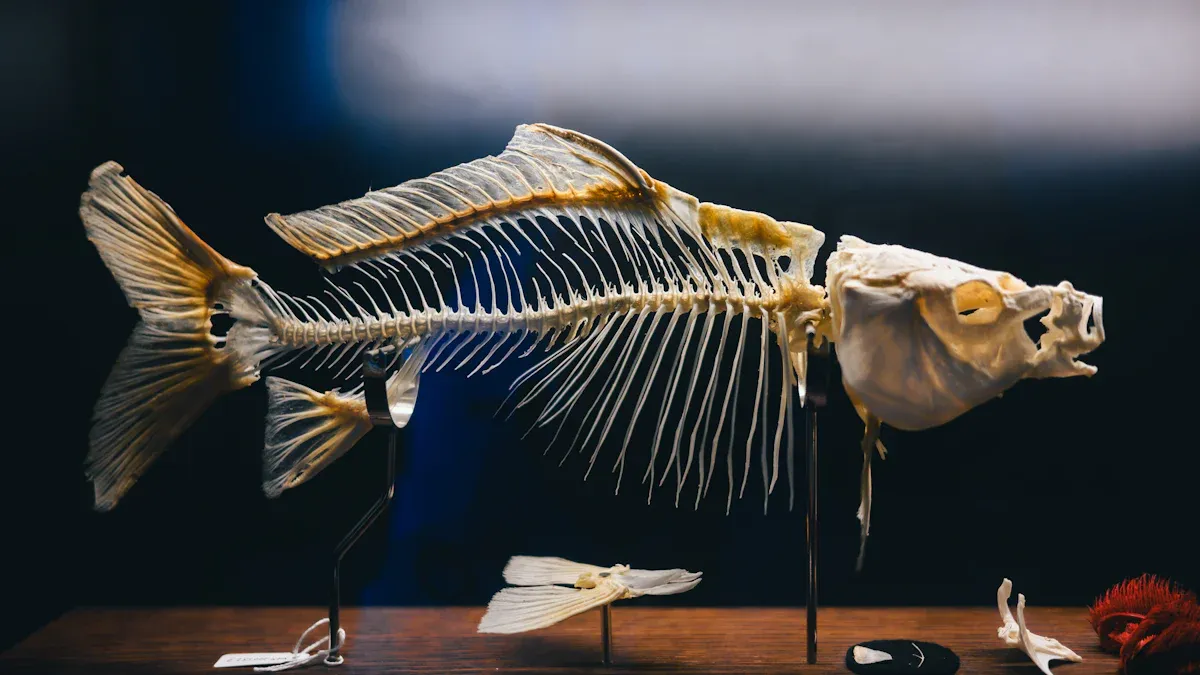
Types of Flaws Found in Frozen Fish
X-ray for frozen fish enables processors to identify a wide range of flaws that may compromise product quality and safety. The technology scans each product and highlights contaminants that are often invisible to the naked eye. Common flaws detected include:
- Bones, including those as small as 0.2 mm by 2 mm
- Metal fragments
- Shells and shell fragments
- Plastic pieces
- Foreign objects found in fish fillets, shrimp, and shellfish
Note: The presence of broken shells and foreign objects in seafood can pose health risks to consumers. Early detection through X-ray for frozen fish helps prevent these hazards.
The following table summarizes the most frequent contaminants found in frozen fish:
| Contaminant Type | Description |
|---|---|
| Broken shells | Pieces of shell from seafood |
| Shell fragments | Smaller parts of shells |
| Foreign objects | Various non-food items detected |
How X-ray Images Reveal Contaminants and Quality Issues
X-ray for frozen fish relies on advanced imaging technology to differentiate between safe product and harmful contaminants. The system uses high-energy beams that pass through the fish, with each material absorbing radiation at different rates. Bones, metal, and glass appear darker in X-ray images due to their higher density compared to fish tissue. Plastic and thin bones require high-resolution sensors for accurate detection because of their lower density.
Modern X-ray machines, such as those equipped with PXT™ dual-energy photon-counting detectors, enhance inspection accuracy. These systems analyze the density and appearance of materials in real time, allowing processors to identify contaminants even within dense, frozen blocks. Frost and ice sometimes scatter X-ray beams, causing signal distortion. Advanced systems adjust automatically to maintain detection accuracy, especially for low-density contaminants.
Tip: Dual-energy technology improves the ability to spot thin bones and plastic pieces, which are traditionally difficult to detect in frozen fish.
X-ray for frozen fish provides reliable, non-destructive inspection. The process ensures that bones, metal fragments, and other foreign objects are removed before products reach consumers, supporting high standards in seafood manufacturing.
X-ray for Frozen Fish: Step-by-Step Process and Practical Considerations
Preparing and Positioning Frozen Fish for X-ray
Operators begin by arranging frozen fish products on the conveyor belt. They ensure that each piece lies flat and does not overlap with others. Proper positioning allows the X-ray system to scan every section of the fish, minimizing blind spots. In many facilities, insulated detection tunnels protect the electronics from cold temperatures and reduce frost buildup. This insulation maintains consistent performance and food safety standards.
Tip: Consistent product orientation improves detection accuracy and reduces the risk of missing small contaminants.
Scanning with X-ray Machines
Once positioned, the conveyor moves the frozen fish through the X-ray inspection system. The machine emits high-energy beams that penetrate the fish and capture detailed images. Modern systems, such as the Fish Bone X-Ray Inspection System and Fanchi X-ray Inspection System, use advanced sensors to detect bones as small as 0.2 mm by 2 mm. The SXRF-4080 Series X-Ray adds artificial intelligence to identify a wide range of contaminants, including metal, glass, rubber, and plastic.
| Model | Detection Capabilities |
|---|---|
| Fish Bone X-Ray Inspection System | Detects bones down to 0.2mm x 2mm using TDI-HD detector technology. |
| Fanchi X-ray Inspection System | Detects bones down to 0.2mm x 2mm with high definition X-ray sensor. |
| SXRF-4080 Series X-Ray | Detects bone, metal, glass, rubber, and plastic with AI-powered detection. |
These machines scan products in real time, ensuring that contaminants are identified before the fish leaves the inspection area.
Image Analysis and Flaw Detection
After scanning, the system analyzes the X-ray images using specialized software. The software highlights differences in density, making bones, metal fragments, and glass appear darker than fish tissue. Operators review these images to confirm the presence of flaws. Proper training enables staff to distinguish between natural variations in the product and actual contaminants. This step reduces false positives and ensures that only defective items are flagged.
Note: Staff must receive education on X-ray hazards and document all training to comply with safety protocols.
What Happens When a Flaw Is Detected
If the system detects a flaw, it triggers an automatic rejection mechanism. The conveyor diverts the affected product into a separate bin for further inspection or disposal. This process prevents contaminated fish from reaching consumers. Operators then review the rejected items to verify the findings and adjust system settings if necessary. This closed-loop approach maintains high quality and safety standards throughout the production line.
Advantages of X-ray Inspection
X-ray for frozen fish offers several advantages over traditional quality control methods. The technology inspects 100% of products, unlike random manual checks, which can miss hidden contaminants. Real-time scanning identifies bones, metal fragments, glass, and some plastics based on density differences. This comprehensive detection reduces the risk of recalls and enhances consumer trust.
Implementing X-ray technology also improves efficiency and cost-effectiveness. The system minimizes food waste by up to 40%, as it only removes defective items rather than entire batches. The table below summarizes key benefits:
| Benefit | Impact on Efficiency and Cost-Effectiveness |
|---|---|
| Product Integrity | Ensures high quality and safety standards, reducing recalls. |
| Detection of Foreign Objects | Minimizes contamination risks, enhancing consumer trust. |
| Reduction of Food Waste | Can decrease waste by up to 40%, improving sustainability. |
International food safety organizations recognize the value of X-ray for frozen fish. They note that this technology enables 100% inspection, significantly reducing contamination risks and supporting compliance with global standards.
Limitations and Safety in X-ray for Frozen Fish
While X-ray for frozen fish provides robust quality control, it has limitations. The system may struggle to detect very low-density contaminants, such as thin plastic films. Frost and ice can sometimes distort images, though advanced machines compensate for these effects.
Safety remains a top priority. Operators must understand how to interpret X-ray images and keep shielding in place during operation. No personal protective equipment is required, as lead lining and protective curtains block radiation. The FDA sets a safe exposure limit of 5 μSv/hour, but most X-ray systems emit less than 1 μSv/hour—far below the regulatory threshold. For perspective, daily background radiation exposure exceeds that from X-ray inspection systems.
Alert: Proper training and adherence to safety protocols ensure that both staff and products remain protected during X-ray inspection.
X-ray for frozen fish delivers rapid, precise flaw detection, supporting food processors in meeting strict safety standards. Systems like XSpectra enhance quality control by identifying contaminants early.
| Feature | Description |
|---|---|
| Detection Precision | High-precision detection of foreign objects |
| Purpose | Ensures product integrity in frozen fish |
- Strengthens food safety programs
- Reduces operational risk
FAQ
How safe is X-ray inspection for frozen fish?
X-ray inspection systems use low radiation levels. Operators and products remain safe when following standard procedures. Most machines emit less radiation than daily background exposure.
Can X-ray machines detect all types of contaminants?
X-ray machines detect most dense contaminants, such as bones, metal, and glass. Very thin plastics or low-density materials may remain undetected in some cases.
Does X-ray inspection affect the taste or quality of frozen fish?
X-ray inspection does not alter taste, texture, or nutritional value. The process remains non-destructive and leaves the frozen fish unchanged for consumers.
See Also
Top Locations for Purchasing X-Ray Inspection Equipment in China
Steel Processing Techniques for Effective Heat Exchange Solutions
Exploring Capsule Sorters and Their Importance in Defect Elimination
Assessing Molybdenum Plugs in Seamless Steel Pipe Manufacturing by 2025
Canine Influenza Virus Antigen Tests: Which One Is Accurate?