How Wishbone Detection Works in Poultry Processing
Wishbone detection poultry systems use advanced automation to locate and remove wishbones from processed chicken. These systems often rely on X-ray and laser imaging to identify bones that manual inspection can miss. Processors protect consumers from bone fragments and maintain strong brand reputations by implementing this technology.
- Food safety teams trust wishbone detection poultry systems to deliver consistent, high-quality results.
Wishbone Detection Poultry Technologies

X-ray Inspection Systems
X-ray inspection systems play a central role in wishbone detection poultry operations. These systems scan processed chicken to identify bones that are difficult to see or feel by hand. Processors rely on advanced models such as the 400 RMI and 400HCP. The following table highlights their key features:
| System Name | Key Features | Bone Detection Size | Metal Detection Size | Other Contaminants Detection |
|---|---|---|---|---|
| 400 RMI | Enhanced bone inspection for young and older bones, cost-effective | 2.0mm - 3.0mm | 0.6mm - 1.0mm | Glass, stones, high density plastic, rubbers, etc. |
| 400HCP | Enhanced poultry bone inspection for various bones in boneless products | 2.0mm - 3.0mm | 0.6mm - 1.0mm | Glass, stones, high density plastic, rubbers, etc. |
These systems deliver high sensitivity, detecting wishbones as small as 2.0 mm. Operators can also identify other contaminants, such as glass or high-density plastics, during the same inspection process.
Note: The detection accuracy for wishbone fragments in poultry products reaches a sensitivity of 2.0 mm, ensuring even small bones do not escape notice.
Laser Range Imaging
Laser range imaging provides another layer of precision in wishbone detection poultry systems. This technology projects laser beams onto the surface of poultry products. Sensors then measure the reflected light to create a detailed 3D map. Operators use this map to spot surface irregularities that may indicate the presence of bones. Laser imaging works well for detecting bones close to the surface, especially in boneless products. The technology also helps processors maintain high throughput without sacrificing accuracy.
Automated Detection Algorithms
Automated detection algorithms enhance the performance of both X-ray and laser systems. These algorithms analyze imaging data to distinguish between bone, meat, and other tissues. The table below outlines some effective approaches:
| Algorithm Type | Methodology | Effectiveness |
|---|---|---|
| Hyperspectral Imaging | Nearest neighbor classifier using mean reflectance spectra | Differentiates between surface fat, connective tissue, embedded bone, and meat |
Some systems, such as ClassifEYE® 2.0, use artificial intelligence to improve identification of processing quality in poultry.
- These algorithms can process large volumes of data in real time.
- They help reduce false positives and ensure only actual wishbone fragments trigger removal actions.
A combination of visible and X-ray sensing modalities further improves detection, especially for thin bones near the meat surface.
Integration with Processing Lines
Wishbone detection poultry technologies integrate seamlessly with modern processing lines. Manufacturers design these systems for easy installation and minimal disruption. Operators can monitor inspection results in real time and adjust settings as needed.
- Automated sorters remove contaminated products from the line immediately.
- Data from detection systems supports traceability and quality control.
Tip: Efficient integration reduces manual labor and increases overall productivity, making wishbone detection poultry systems a smart investment for processors focused on food safety and quality.
Features, Effectiveness, and Benefits of Wishbone Detection Poultry Systems
Detection Sensitivity and Accuracy
Wishbone detection poultry systems deliver high sensitivity and accuracy, surpassing manual inspection methods. Automated technologies, such as X-ray and optical imaging, consistently identify small or embedded bones that manual checks might miss. These systems minimize false positives and enhance the detection of wishbones and other bones in boneless products.
- Automated systems, including the 400HCP, provide rigorous inspection for various poultry products.
- Processors benefit from higher throughput, improved line efficiency, and reduced labor costs.
- These systems enhance inspection capabilities for both young and mature birds.
Note: Automated wishbone detection poultry systems offer a significant improvement in accuracy and efficiency compared to manual inspection, ensuring thorough detection and consistent product quality.
Types of Bones and Contaminants Detected
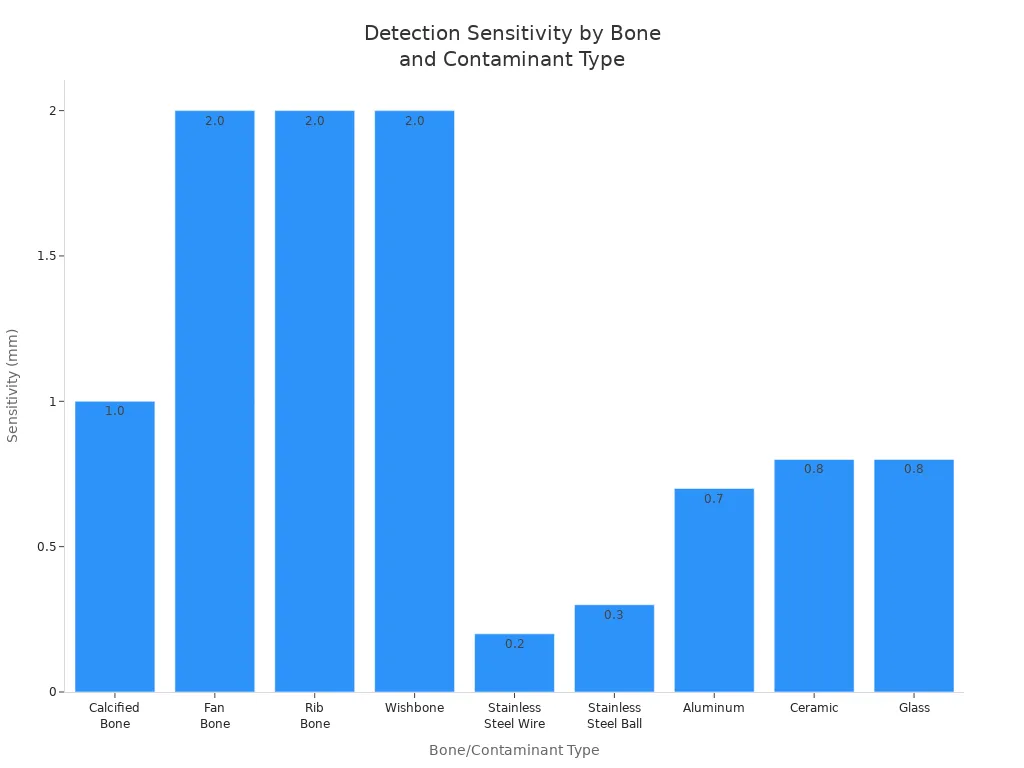
Consumers expect poultry products to be free from bones and contaminants. Wishbone detection poultry systems address this demand by identifying a wide range of bones and foreign materials. The following table highlights the detection sensitivity for different types of bones and contaminants:
| Type of Bone/Contaminant | Sensitivity (mm) |
|---|---|
| Calcified Bone | 1.0 |
| Fan Bone | 2.0 |
| Rib Bone | 2.0 |
| Wishbone | 2.0 |
| Stainless Steel Wire | 0.2 x 2 |
| Stainless Steel Ball | 0.3 |
| Aluminum | 0.7 |
| Ceramic | 0.8 |
| Glass | 0.8 |
Processors also monitor for contaminants such as metal, glass, stones, high-density plastics, and rubbers. Customers demand assurance that products are checked for these materials, as their presence can pose safety risks.
Real-Time Monitoring and Sorting
Wishbone detection poultry systems feature real-time monitoring and automated sorting. These capabilities allow processors to identify and remove contaminated products immediately, maintaining high product quality and safety.
- The Wishbone algorithm enables precise and high-resolution ordering of detected items, improving the robustness and accuracy of the sorting process.
- High-resolution detection allows the system to identify rare or small bone fragments that might otherwise go unnoticed.
- Real-time data supports immediate corrective actions and detailed traceability.
Tip: Real-time monitoring and sorting streamline operations, reduce manual labor, and ensure only safe products reach consumers.
Food Safety and Quality Assurance
Food safety remains a top priority in poultry processing. Wishbone detection poultry systems play a crucial role in minimizing the risk of bone fragments and foreign materials in finished products.
The challenges in detecting poultry bones, particularly wishbones, are highlighted by the limitations of X-ray technology. The density of wishbones is often indistinguishable from that of meat, complicating the detection process. This issue is significant for food safety in poultry processing, as it can lead to the presence of bone fragments in meat products, which poses a risk to consumers.
Despite these challenges, advanced detection systems reduce bone content complaints, improve monitoring, and minimize cross-contamination. Processors can guarantee a higher standard of quality assurance, which strengthens consumer trust and brand reputation.
Regulatory Compliance
Wishbone detection poultry systems help processors meet strict regulatory requirements for food safety and quality. Automated detection methods ensure consistent inspection and documentation, supporting compliance with industry standards and government regulations.
- These systems provide detailed records of inspection results, which facilitate audits and traceability.
- Compliance with regulations reduces the risk of recalls and legal issues, protecting both consumers and the business.
Note: Investing in advanced wishbone detection poultry technology demonstrates a commitment to regulatory compliance and continuous improvement in food safety.
Wishbone detection poultry systems use advanced automation to ensure safe, high-quality products. Modern detection methods deliver fast, accurate results. Processors benefit from reduced risks and improved consumer trust.
- Advanced technology supports food safety.
- Reliable systems help meet industry standards.
Investing in wishbone detection strengthens quality assurance.
FAQ
How accurate are wishbone detection poultry systems?
Wishbone detection poultry systems achieve high accuracy. They detect bones as small as 2.0 mm, reducing the risk of bone fragments in finished products.
Can these systems detect other contaminants besides bones?
Yes. These systems identify metals, glass, stones, high-density plastics, and rubbers. Processors rely on them to ensure comprehensive product safety.
Do wishbone detection systems slow down processing lines?
No. Modern systems operate in real time. They integrate seamlessly with processing lines and maintain high throughput without sacrificing detection accuracy.
See Also
Essential Checkweighers For Food Plants: The Top Three
Truth Behind Canine Influenza Virus Antigen Testing
Reliable Steel Processing For Effective Heat Exchange Solutions