Why Tungsten Twisted Wire Keeps Industry Running Smoothly
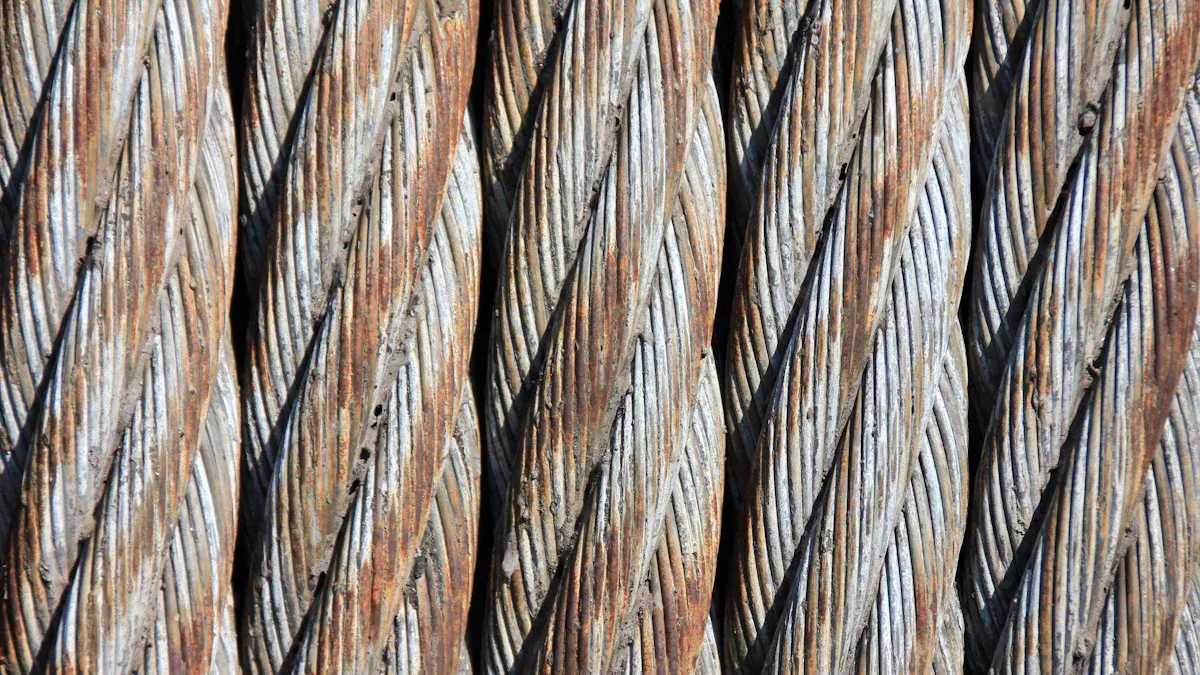
Tungsten twisted wire supports critical industrial processes with exceptional strength and heat resistance. Manufacturers rely on it for stable performance and long service life. Common applications include vacuum metalizing and thin film coating, as shown below:
| Application | Description |
|---|---|
| Vacuum Metalizing | Used as a heating element for car lights, mirrors, and decorations |
| Coating Thin Film | Applied in making Christmas balls, bottle caps, shoe heels, and lamp industries |
Key Properties of Tungsten Twisted Wire
Strength and High Temperature Performance
Tungsten twisted wire stands out for its remarkable strength. Engineers choose this material when they need wires that can handle heavy loads without breaking. The twisted structure increases the wire’s tensile strength, making it less likely to snap under stress. This property proves essential in high-stress environments, such as industrial furnaces and vacuum chambers.
The wire also performs exceptionally well at high temperatures. Tungsten has one of the highest melting points among metals, reaching up to 3,422°C (6,192°F). This allows tungsten twisted wire to maintain its shape and function even when exposed to intense heat. Many industries rely on this feature for processes that involve extreme thermal conditions.
Tip: For applications that demand both strength and heat resistance, tungsten twisted wire offers a reliable solution.
Superior Conductivity and Corrosion Resistance
Tungsten twisted wire delivers excellent electrical conductivity. This makes it a preferred choice for electrical and electronic applications. The wire ensures efficient current flow, which is critical for devices that require stable and consistent power.
Corrosion resistance adds another layer of value. Tungsten resists oxidation and chemical reactions, even in harsh environments. This property helps prevent degradation over time, reducing the need for frequent replacements. As a result, manufacturers can trust tungsten twisted wire in settings where other metals might fail.
| Property | Benefit |
|---|---|
| High Conductivity | Reliable electrical performance |
| Corrosion Resistance | Longer service life in tough conditions |
Durability and Longevity
Durability defines tungsten twisted wire. The twisted design distributes stress evenly along the wire, reducing weak points and extending its lifespan. This structure helps the wire withstand repeated use and mechanical wear.
Longevity remains a key advantage. Many industries select tungsten twisted wire because it continues to perform well after years of operation. The combination of strength, heat resistance, and corrosion protection means fewer breakdowns and less downtime.
- Key benefits of tungsten twisted wire durability:
- Reduced maintenance costs
- Fewer replacements needed
- Consistent performance over time
Note: Choosing tungsten twisted wire can help companies achieve long-term reliability in their operations.
Tungsten Twisted Wire in Industrial Applications
Lighting and Lamp Filaments
Lighting manufacturers depend on tungsten twisted wire for its ability to withstand high temperatures and maintain structural integrity. The wire’s unique twisted design helps distribute electrical current evenly, which improves the brightness and lifespan of lamp filaments. Engineers select this material for incandescent bulbs, halogen lamps, and specialty lighting because it resists sagging and breakage, even after thousands of hours of use. The consistent performance of tungsten twisted wire ensures reliable illumination in both commercial and industrial settings.
Electronics and Semiconductor Manufacturing
Tungsten twisted wire plays a vital role in electronics and semiconductor production. Its high temperature stability and low vapor pressure make it ideal for use in vacuum environments. Manufacturers use this wire as heating elements in several critical processes:
- Provides stable heating for ion implantation systems.
- Supports vacuum deposition by maintaining consistent temperatures.
- Functions in electron beam systems, where strong mechanical properties are essential.
These demanding applications require materials that can handle extreme conditions without degrading. Tungsten twisted wire meets these needs, helping to produce high-quality electronic components.
Medical Devices and Heating Elements
Medical device designers rely on tungsten twisted wire for its strength, flexibility, and longevity. Surgical robotics often use these cables to actuate movement and support robotic arms. The wire’s superior tensile strength allows for smaller diameters, which is important for creating compact yet powerful devices. Flexibility ensures smooth operation over small pulleys, increasing both precision and lifespan in surgical robots.
Heating elements in both medical and industrial equipment also benefit from this material. The following table highlights key properties and their benefits:
| Property | Benefit |
|---|---|
| High melting point | Enables stable operation at high temperatures, essential for heating elements. |
| Excellent thermal conductivity | Ensures efficient heat transfer, improving heating performance. |
| Resistance to oxidation/corrosion | Increases longevity and reliability in harsh environments. |
Engineers use tungsten twisted wire in electrical heating elements because it delivers reliable performance and precision in high-temperature applications.
Aerospace and Energy Systems
Aerospace and energy industries demand materials that can perform under extreme stress and temperature. Tungsten twisted wire meets these requirements by offering unmatched durability and resistance to thermal shock. Aircraft manufacturers use this wire in critical components such as sensors, heating systems, and electrical contacts. Power generation facilities also rely on it for applications that require stable conductivity and long service life. The wire’s ability to function in harsh environments helps maintain safety and efficiency in these advanced fields.
Tip: Selecting the right wire for aerospace and energy systems can reduce maintenance needs and improve operational reliability.
Comparing Tungsten Twisted Wire to Alternatives
Advantages Over Single-Strand Tungsten Wire
Engineers often compare twisted and single-strand tungsten wire for demanding applications. Twisted wire offers several mechanical and performance benefits. The following table highlights key differences:
| Benefit | Description |
|---|---|
| Even Current Distribution | Improves uniformity in resistive heating applications |
| Reduced Brittleness | Twisting enhances flexibility, reduces snapping during handling |
| High-Temperature Uniformity | Distributes thermal stress more evenly across the element |
| Customizable Resistance | Adjust resistance through twist pitch and strand count |
| Improved Assembly | Easier to handle in coil-winding and lamp-manufacturing |
Twisted wire’s design allows for better handling and more reliable performance in high-stress environments. This makes it a preferred choice for manufacturers who need consistent results.
Benefits Compared to Other Metal Wires
Tungsten twisted wire stands out when compared to wires made from other metals. Its low thermal expansion means it stays stable under extreme heat, unlike steel, which expands more and can lose shape. This stability is crucial in industries like aerospace and power generation, where even small changes in size can cause equipment failure.
Note: Enhanced flexibility and heat distribution make twisted tungsten wire suitable for complex setups, such as vacuum furnaces and quartz glass melting.
The table below compares flexibility and performance between twisted and single-strand tungsten wire:
| Feature | Tungsten Twisted Wire | Single-Strand Tungsten Wire |
|---|---|---|
| Flexibility | Enhanced for complex setups | Limited |
| Heat Distribution | Better heat distribution | Less effective |
| Structural Integrity | Improved | Standard |
| Resistance to Deformation | High under extreme temperatures | Lower |
| Applications | Suitable for advanced industrial uses | Less suitable for complex tasks |
Cost-Effectiveness and Reliability
Companies value tungsten twisted wire for its long service life and reduced maintenance needs. The wire’s durability leads to fewer replacements and less downtime. Its stable performance at high temperatures helps prevent costly failures. Over time, these advantages translate into lower operating costs and improved reliability for critical systems.
Tungsten twisted wire remains essential for modern industry. Manufacturers value its high melting point, conductivity, and resistance to sagging, especially in aerospace and electronics.
| Standard | Purity | Technology |
|---|---|---|
| ASTM B777 | ≥99.95% | Powder metallurgy |
| AMS 7725E | N/A | N/A |
- Demand will rise in heating, aerospace, electronics, and medical sectors.
- Energy-efficient heating drives adoption.
FAQ
What industries use tungsten twisted wire most often?
Manufacturers in aerospace, electronics, lighting, and medical device sectors rely on tungsten twisted wire for its strength, heat resistance, and long service life.
How does tungsten twisted wire improve equipment reliability?
Tungsten twisted wire resists heat, corrosion, and mechanical stress. This durability reduces equipment failures and extends maintenance intervals for industrial systems.
Can tungsten twisted wire be customized for specific applications?
Engineers can specify diameter, twist pitch, and purity. Suppliers offer custom solutions to meet unique requirements in advanced manufacturing and research.