Why Industries Choose Monel 400 Flanges for Tough Jobs
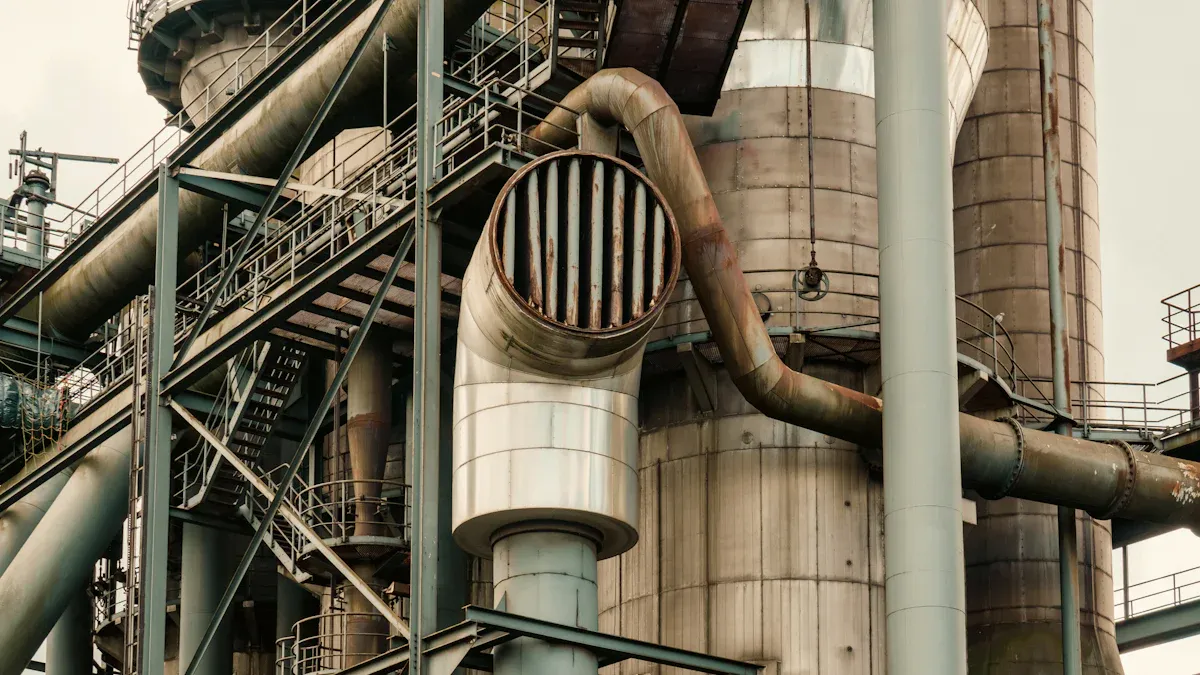
Industries choose Monel 400 flanges for their most demanding jobs. These components provide unparalleled resistance to corrosion, high strength, and reliability in extreme environments. Their robust properties ensure operational integrity where other materials, including some Alloy 20 Flanges Corrosion Resistant Nickel Alloy Flanges, might falter. This unique combination delivers significant advantages.
Key Benefits:
- Ensures operational safety in critical systems.
- Reduces long-term maintenance costs.
- Extends the service life of essential equipment.
Key Takeaways
- Monel 400 flanges are strong metal parts. They resist rust and damage in harsh places.
- This material works well in many tough spots. These include ocean water, oil and gas, and chemical plants.
- Monel 400 stays strong in very hot and very cold conditions. It does not break easily.
- Using Monel 400 helps save money over time. It lasts longer and needs less repair than other materials.
- Monel 400 helps industries meet new rules. It is a good choice for the environment because it lasts a long time.
What Core Properties Make Monel 400 Ideal for Tough Jobs?
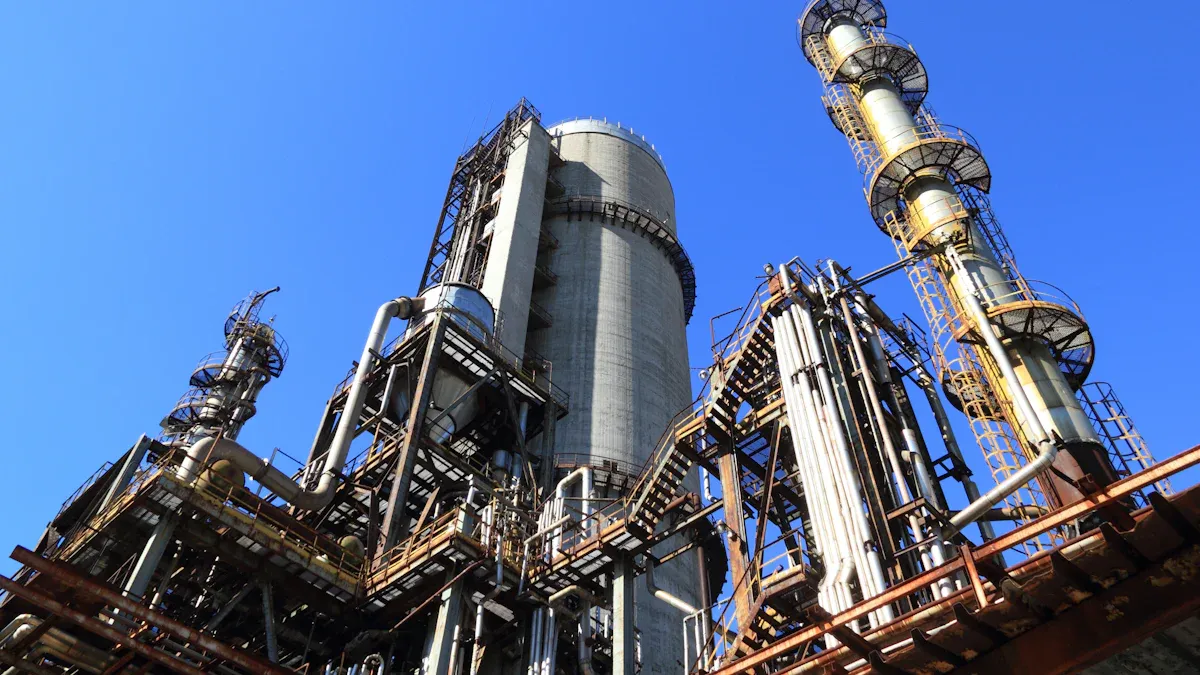
Monel 400's reputation in demanding industries stems from a powerful trio of properties. This nickel-copper alloy delivers exceptional performance where standard materials cannot. Its core characteristics provide the reliability and longevity necessary for critical operations.
Exceptional Corrosion Resistance
Monel 400 provides outstanding defense against a wide array of corrosive media. This alloy is virtually immune to chloride-ion stress corrosion cracking, a common failure point for many other metals. Its resistance extends across reducing environments, alkalis, salts, and organic substances at both normal and elevated temperatures.
Key areas where it excels include:
- Seawater and Steam: It resists corrosion from high-temperature steam and saltwater, outperforming even high-grade stainless steels like 316 in marine environments.
- Acids: The alloy offers excellent resistance to non-oxidizing acids. It is a premier material for handling hydrofluoric acid and performs well against sulfuric, hydrochloric, and phosphoric acids.
- Alkalis and Salts: It shows minimal corrosion from caustic solutions and is highly resistant to neutral, alkaline, and acid salts.
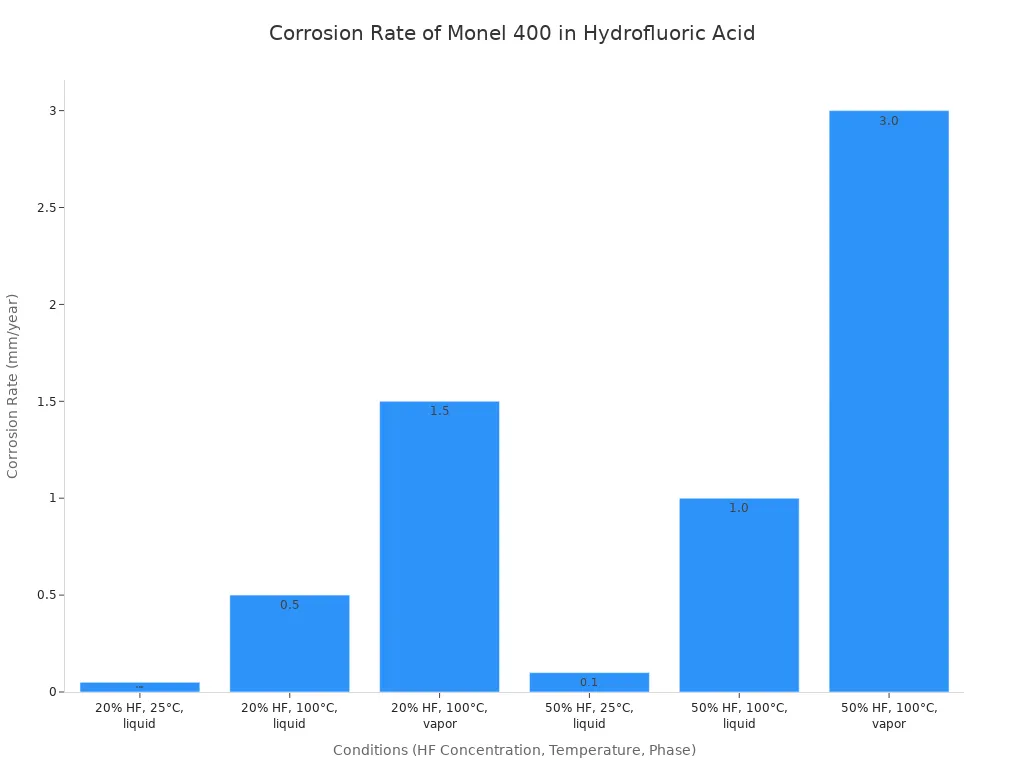
Its performance in hydrofluoric acid (HF) is particularly noteworthy. Monel 400 maintains good resistance in all concentrations of HF up to approximately 250°F (120°C). However, factors like temperature, aeration, and flow rate influence the corrosion rate.
| Factor | Effect on Corrosion Rate of Monel 400 in HF |
|---|---|
| Temperature & Concentration | Corrosion rate increases with higher temperatures and HF concentrations. |
| Phase (Liquid vs. Vapor) | The corrosion rate is generally higher in the vapor phase than in the liquid phase. |
| Aeration & Impurities | The presence of oxygen or oxidizing impurities significantly accelerates corrosion. |
High Strength and Durability
Beyond its corrosion resistance, Monel 400 is a fundamentally tough and strong material. It cannot be hardened by heat treatment; its strength is developed through cold working. This gives it excellent mechanical properties from sub-zero temperatures up to approximately 1000°F (538°C).
The alloy's strength varies based on its condition, such as annealed or hot-finished.
| Condition | Ultimate Tensile Strength (MPa) | Yield Strength (MPa) |
|---|---|---|
| Annealed | 517–620 | 172–345 |
| Hot-Finished | 552–758 | 276–690 |
Standardization for Quality ⚙️ The mechanical properties for Monel 400 Flanges are formally defined under the ASTM B564 / ASME SB564 specifications. These standards ensure that every flange meets minimum requirements for tensile strength, yield strength, and hardness, guaranteeing reliable performance.
While alloys like titanium may offer a higher strength-to-weight ratio for aerospace applications, Monel 400's combination of high strength and premier corrosion resistance makes it the superior choice for heavy-duty industrial and marine systems.
Reliability at High Temperatures
Monel 400 maintains its excellent mechanical properties across an impressively wide temperature range. This makes it a reliable choice for applications involving extreme thermal cycling.
It retains its strength and toughness in high-heat environments, with a maximum recommended service temperature of around 1000°F (538°C) in most oxidizing atmospheres. This capability is crucial for systems in power generation, chemical processing, and high-pressure steam lines.
Equally important is its performance at the other end of the spectrum.
- Cryogenic Excellence: Monel 400 shows exceptional toughness and strength at cryogenic temperatures.
- No Brittle Transition: Unlike many ferrous metals, it does not undergo a ductile-to-brittle transition as temperatures drop. It remains tough and ductile even down to the temperature of liquid hydrogen.
This unique ability to perform reliably in both high-heat and cryogenic conditions solidifies its status as a go-to material for the toughest jobs.
Which Industries Rely on Monel 400 Flanges?
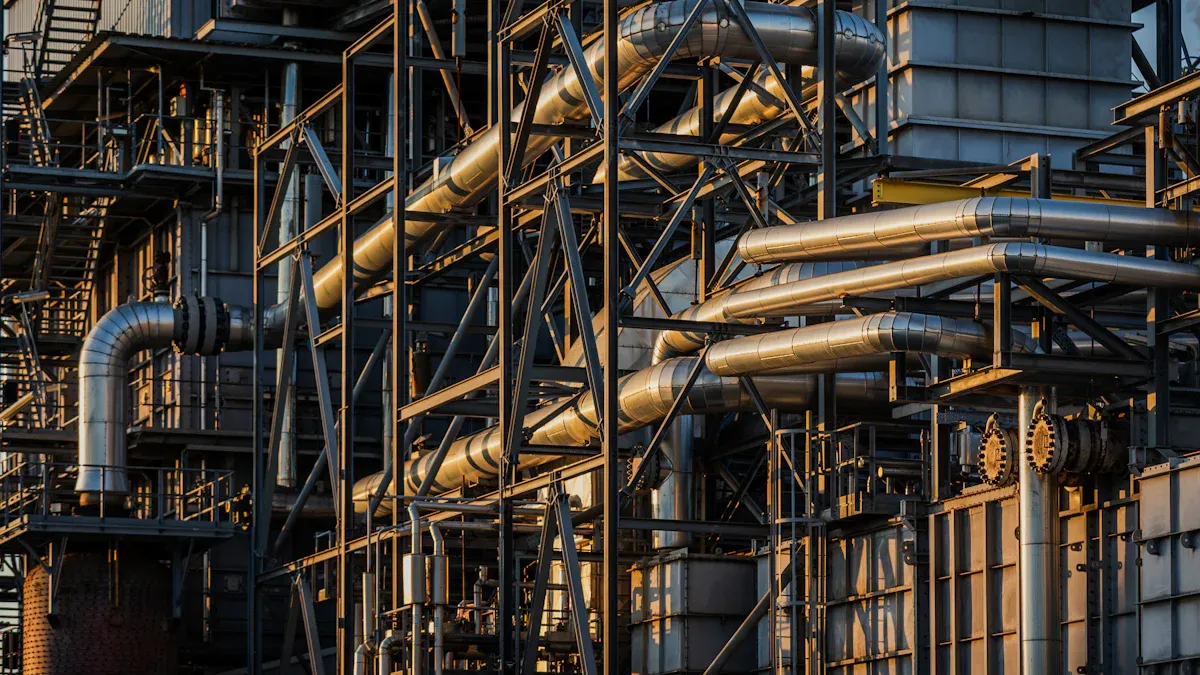
The exceptional properties of Monel 400 make it an indispensable material for industries where failure is not an option. Its unique blend of strength and corrosion resistance provides long-term reliability in the most challenging operational settings. Key sectors depend on Monel 400 Flanges to maintain safety, efficiency, and structural integrity.
Marine Engineering and Shipbuilding
The marine environment is relentlessly corrosive. Constant exposure to saltwater, high-velocity seawater flow, and atmospheric salt spray quickly degrades lesser materials. Monel 400 excels in these conditions, establishing it as a premier choice for naval and commercial vessels, offshore platforms, and coastal infrastructure.
Traditional copper alloys often fail due to sulfide corrosion or pitting in flowing seawater, with some new ship pipelines leaking in under a year. Monel 400 solves this problem. It demonstrates a remarkably low and predictable corrosion rate of no more than 0.03mm per year, a rate that is largely unaffected by seawater velocity. This predictable performance allows for confident maintenance planning and prevents unexpected failures at sea.
Common applications in marine systems include:
- Seawater cooling pipes and heat exchangers
- Pump and propeller shafts
- Valves and hull fittings
- Ballast systems and seawater injection lines on offshore rigs
Case in Point: Proven Longevity 🌊 Monel 400's durability is well-documented. In offshore oil platforms, its piping systems consistently outperform stainless steel by resisting localized corrosion from constant seawater and sour gas exposure. Similarly, desalination plants utilize Monel 400 in heat exchangers to handle both raw seawater intake and concentrated brine discharge, ensuring long-term operational efficiency with minimal downtime.
Oil and Gas
The oil and gas industry presents a dual challenge: extreme pressures and highly corrosive media. From upstream extraction to downstream refining, equipment must withstand sour gas (H2S), chlorides, CO2, and high temperatures. Monel 400 provides the robust performance needed for these critical applications.
In refining processes, the alloy is frequently specified for components in crude oil distillation units. Its resistance to acids and other corrosives ensures the integrity of systems like:
- Crude oil distillation towers
- Overhead condensers
- Boiler feedwater heaters and tanks
Handling sour gas is another area where Monel 400 is a trusted material. It offers reliable resistance to stress cracking in moderate sour service conditions.
Compliance and Safety 🛡️ The selection of materials for sour gas environments is strictly regulated. Industry standards like NACE MR0175 provide guidance on material requirements. Monel 400 is included in these recommendations for applications where its specific properties meet the demanding criteria for temperature, chemical composition, and pH levels, ensuring safe and reliable operation.
Chemical Processing
Chemical processing plants handle some of the most aggressive substances known. Monel 400's broad resistance to acids, alkalis, and solvents makes it a vital material for ensuring process safety and preventing equipment failure. It is particularly effective when handling de-aerated hydrochloric and hydrofluoric acids.
Its performance against various aggressive media is a key reason for its selection.
| Chemical Agent | Monel 400 Performance | Typical Applications |
|---|---|---|
| Hydrofluoric Acid | Excellent resistance in all concentrations up to ~250°F (120°C). | HF alkylation units, storage tanks, piping. |
| Sulfuric Acid | Highly resistant to non-aerated solutions at moderate temperatures. | Pumps, valves, and vessels. |
| Chlorinated Solvents | Strong resistance to corrosion. | Reactors and filtration systems. |
| Caustic Alkalis | Virtually immune to corrosion from caustic solutions. | Evaporators, heaters, and handling equipment. |
Beyond heavy industrial chemicals, Monel 400 also plays a role in high-purity sectors like pharmaceutical manufacturing. Its biocompatibility and resistance to contamination make it ideal for equipment such as mixing blades and filtration systems. It complies with FDA standards for food and drug contact, ensuring that no metal ions leach into high-purity products.
Power Generation
The power generation industry operates under conditions of extreme heat, high pressure, and constant mechanical stress. Power stations, whether fossil-fueled or nuclear, require materials that guarantee safety and operational uptime. Monel 400 provides the necessary resilience for these demanding environments, making it a cornerstone material for critical components.
In conventional power plants, high-pressure feedwater heaters are essential for improving thermal efficiency. These systems preheat water before it enters the boiler, operating under intense thermal and mechanical stress. Monel 400 demonstrates superior strength and toughness across a wide temperature spectrum, from sub-zero conditions to over 500°C. Its excellent thermal stability ensures it resists degradation and retains its mechanical properties during prolonged exposure. This makes it an ideal material for heat exchanger tubing and related systems.
Ensuring Long-Term Reliability ⚙️ Monel 400's inherent resistance to pitting, crevice corrosion, and stress corrosion cracking significantly boosts the long-term reliability of high-pressure feedwater heaters. This performance minimizes the risk of unexpected failures and costly downtime.
The nuclear power sector presents even greater challenges, adding radiation to the mix of high temperatures and corrosive agents. Safety is paramount, and materials must offer uncompromising integrity. Monel 400 flanges are utilized within the cooling systems of nuclear reactors. The alloy meets the strict criteria for components that must endure corrosive media and extreme temperatures, offering exceptional resilience in these critical power generation areas.
Key applications in power generation include:
- Boiler feedwater heaters and heat exchanger tubing
- Steam generator tubing
- Components in nuclear reactor cooling systems
- Brine heaters and evaporators in desalination plants often paired with power stations
Its performance in these applications confirms its status as a trusted material for ensuring the safe and efficient generation of power.
Why Monel 400 Flanges Remain a Top Choice in 2025
As industries evolve, the demand for high-performance materials only grows. Monel 400 continues to prove its value, solidifying its position as a critical component for future-facing projects. Its relevance in 2025 is driven by tightening regulations, technological advancements, and a clear understanding of long-term value.
Meeting Stricter Environmental Regulations
Industries face increasing pressure to adopt sustainable practices. New environmental regulations in 2025 are tightening limits on hazardous substances like PFAS (Per- and Polyfluoroalkyl Substances). This shift indirectly favors inherently durable materials. Monel 400's exceptional corrosion resistance extends its service life dramatically, reducing the need for frequent replacements and minimizing associated waste. A longer operational life means less manufacturing, less transportation, and a smaller environmental footprint over the lifecycle of a project.
Enabling Advances in Extreme Environments
Technological progress pushes operations into increasingly harsh conditions. Monel 400 is a key enabler for these innovations. Market trends for 2025 show significant growth in sectors that rely on its unique properties.
- Rising demand in marine and offshore applications.
- Growth in chemical processing and petrochemical industries.
- Increasing adoption in aerospace for corrosion-resistant components.
- A growing focus on sustainable materials for renewable energy projects.
Advanced manufacturing techniques like additive manufacturing are also making it possible to create complex Monel 400 component designs, further expanding its application in cutting-edge fields.
Long-Term Cost-Effectiveness vs. Initial Investment
While the upfront cost of Monel 400 may be higher than some alternatives, its long-term performance delivers significant financial benefits. The superior durability of Monel 400 Flanges translates directly into a longer service life, reduced maintenance, and minimized risk of costly failures. In corrosive environments like seawater, its performance far exceeds that of other common alloys.
| Material | Corrosion Rate (Seawater, mm/year) | Pitting Tendency |
|---|---|---|
| Monel 400 | 0.025–0.05 | Very Low |
| 316L Stainless Steel | 0.1–0.2 | Moderate |
This data shows that investing in Monel 400 is a strategic decision. It ensures operational reliability and provides a lower total cost of ownership in demanding applications.
Industries select Monel 400 flanges for their most difficult jobs. The alloy’s robust combination of corrosion resistance, high strength, and superior temperature performance provides unmatched reliability. Investing in Monel 400 is a strategic decision for any operation facing extreme conditions.
This choice ensures long-term operational safety. It also reduces maintenance needs and lowers total ownership costs, guaranteeing dependable performance where other materials would fail.
FAQ
What is Monel 400?
Monel 400 is a high-strength nickel-copper alloy. It provides excellent resistance to corrosion from seawater, acids, and alkalis. Industries value this material for its exceptional toughness and durability in demanding operational environments.
Which industries benefit most from Monel 400 flanges?
Key industries rely on Monel 400 for critical applications. These sectors include:
- Marine Engineering and Shipbuilding
- Oil and Gas
- Chemical Processing
- Power Generation
How does Monel 400 compare to stainless steel?
Monel 400 offers superior corrosion resistance in many environments. It excels in seawater and against hydrofluoric acid. Unlike many stainless steels, it is virtually immune to chloride-ion stress corrosion cracking, a common cause of failure.
What standards govern Monel 400 flanges?
The primary specification for Monel 400 forgings, including flanges, is ASTM B564. This standard defines the material's chemical composition, mechanical properties, and manufacturing requirements to ensure consistent quality and reliable performance for industrial use.
Can Monel 400 be used in both high and low temperatures?
Yes. Monel 400 maintains excellent strength at temperatures up to 1000°F (538°C). It also performs exceptionally well in cryogenic conditions, retaining its toughness and ductility without becoming brittle, making it highly versatile.
See Also
Assessing Molybdenum Plugs for Seamless Steel Pipe Manufacturing in 2025
Effective Steel Processing for Optimal Heat Exchanger Performance
Unveiling Molybdenum High-Temperature Furnaces: Functionality and Innovative Design
Molybdenum High-Temperature Furnaces: Key Insights and Future Outlook for 2025
Simplified Support for AHRI 400/401 Heat Exchangers: Your Hassle-Free Guide