Why I Switched to the Best DTF Transfer Film A-SUB
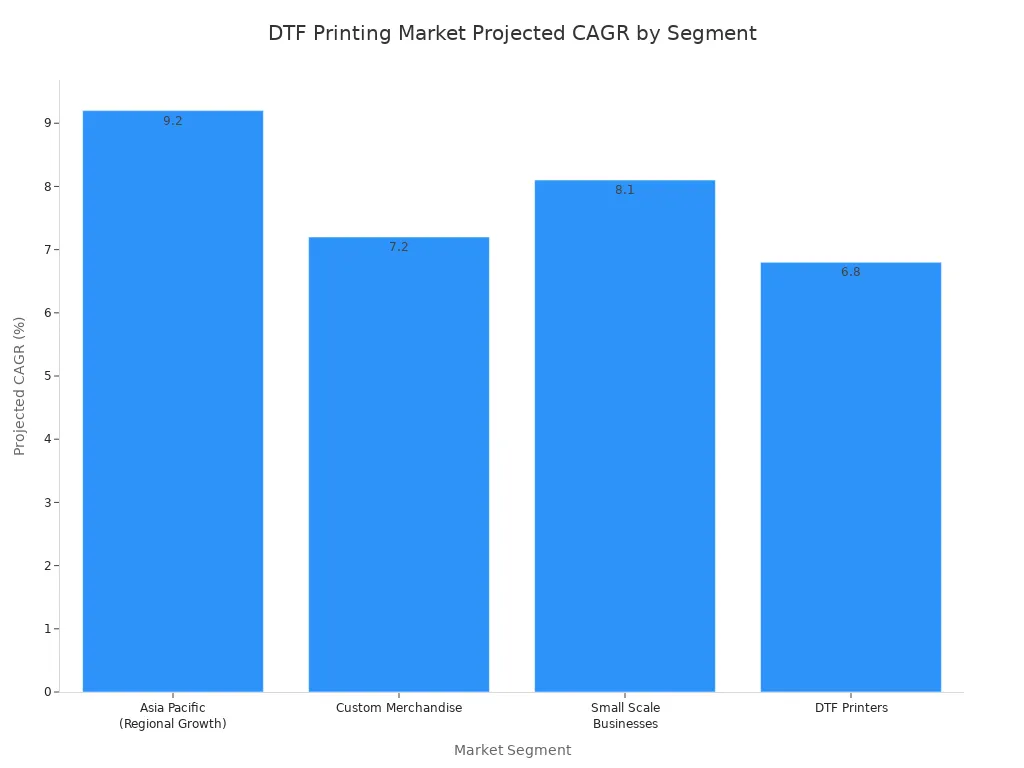
The Direct-to-Film (DTF) printing market is experiencing significant growth, with projections showing a substantial increase in market size.
| Metric | Value |
|---|---|
| Market Size in 2023 | USD 2.56 Billion |
| Projected Market Size by 2033 | USD 4.57 Billion |
| Compound Annual Growth Rate (CAGR) 2023-2033 | 5.97% |
Within this expanding industry, A-SUB film distinguishes itself. It delivers consistently superior print vibrancy and sharpness. Its exceptional durability prevents transfers from cracking or fading after many washes. This search for the best dtf transfer film ends with A-SUB's reliable cold peel process, which eliminates frustrating print failures and saves both time and materials.
Key Takeaways
- A-SUB film makes colors bright and lines sharp. This helps prints look professional and clear.
- A-SUB film lasts a long time. It does not crack or fade after many washes.
- A-SUB film helps you save money. It reduces mistakes and wasted materials during printing.
Print Quality Showdown: A-SUB vs. Generic Film
The final print quality is the most critical factor in DTF production. It directly impacts customer satisfaction and brand reputation. A side-by-side comparison reveals significant differences between A-SUB film and generic alternatives. A-SUB consistently produces superior visual results.
Unmatched Color Vibrancy
Color is the first thing that captures the eye. A-SUB DTF film excels at producing brilliant, true-to-life colors. Its specialized coating ensures that ink sits perfectly on the surface. This allows for maximum saturation without over-inking. The result is a print that looks rich and dynamic, not dull or faded. Generic films often fail this test. They can have inconsistent surfaces that cause colors to appear muted, fundamentally altering the intended design.
Note: A key performance indicator for premium film is a wide color gamut. This technical specification refers to the range of colors a film can accurately reproduce. A-SUB's formulation is engineered for a broad gamut, ensuring that even subtle gradients and complex color palettes are printed with stunning accuracy. The search for the best dtf transfer film often ends when a user sees this level of color fidelity.
Crisp Lines, No Ink Bleeding
Sharp details separate professional-grade apparel from amateur work. Ink bleeding is a common frustration that ruins intricate designs and small text. This issue often stems from several factors:
- Poor quality ink with incorrect viscosity.
- High humidity affecting the film's coating.
- An inferior film surface that cannot properly absorb ink.
- Improper printer settings or a faulty printhead.
A-SUB film directly addresses these challenges at the material level. Its surface has an exceptional ink absorption rate, allowing ink to dry quickly and stay precisely where it is placed. The film's smooth, uniform coating prevents ink from feathering or spreading. This means printers can produce razor-sharp lines, clean edges, and legible micro-text with confidence. Generic films, lacking this advanced coating technology, frequently lead to fuzzy edges and blurred details, wasting time and materials. Choosing the best dtf transfer film is the most reliable way to eliminate these print quality issues.
The Durability Test: How A-SUB Holds Up to Wear
A stunning design loses its value if it cracks, peels, or fades after a few wears. The longevity and feel of a transfer are non-negotiable for any professional apparel business. A-SUB film excels in these areas, providing transfers that not only look great on day one but also withstand the rigors of daily life. This durability ensures customer satisfaction and protects a brand's reputation for quality.
Surviving the Wash Test
Washability is the ultimate measure of a DTF transfer's quality. In the printing industry, DTF technology stands strong against its competitors, offering durability comparable to traditional screen printing.
| Printing Method | Wash Durability |
|---|---|
| Direct to Film (DTF) Transfer | 50-100 washes |
| Screen Printing | 50-100 washes |
| Dye Sublimation | Hundreds of washes |
| Direct to Garment (DTG) | 20-50 washes |
| Heat Transfer Vinyl (HTV) | 20-50 washes |
| Inkjet Transfer | 10-20 washes |
While DTF transfers are inherently robust, their lifespan depends heavily on proper application and care. Factors like an incorrect pressing process or failure to follow washing instructions can compromise durability. A-SUB film is engineered to maximize this potential. Tests show that garments printed with A-SUB film can endure between 50 and 100 wash cycles without significant degradation. Specific trials on black DTF prints revealed they still looked fresh after approximately 52 washes, showing no signs of fading.
This resilience is quantified by industry-standard testing. A-SUB film achieves a superior colorfastness rating of 4/5 or higher on the AATCC grayscale. This score indicates minimal color loss, confirming that the vibrant hues remain locked into the transfer wash after wash.
Pro Tip: Maximizing Transfer Lifespan Pro Tip To ensure every print lasts as long as possible, users should follow key care guidelines. Adhering to these practices preserves the integrity of the transfer:
- Turn garments inside out before washing.
- Use gentle wash cycles with cold water.
- Avoid harsh chemicals, especially bleach.
- Tumble dry on low heat or hang dry.
- Iron the garment inside out, never directly on the transfer.
A Softer, More Flexible Feel
Beyond durability, the tactile quality—or "hand feel"—of a print is crucial. Customers expect a decorated garment to be comfortable, not stiff or rubbery. The final feel is largely determined by the heat press process. Industry experts identify a "sweet spot" for pressing, typically around 280–290°F for 2 to 5 seconds, which creates a soft, natural-feeling transfer. Higher temperatures or longer press times often result in a heavy, plastic-like feel.
A-SUB film is designed to perform flawlessly within this optimal window. Its advanced formulation allows the adhesive powder to melt and bond cleanly at lower temperatures and shorter durations. This enables the ink and adhesive layer to integrate with the fabric's fibers rather than just sitting on top. The result is a remarkably soft, pliable transfer that stretches with the garment without cracking.
Generic films often require higher heat or extended pressing to achieve a secure bond. This extra exposure to heat and pressure is what creates that undesirable thick and rubbery texture. With A-SUB, printers can consistently produce durable transfers that feel like a part of the shirt itself, delivering a premium product that customers will love to wear.
My Search for the Best DTF Transfer Film is Over
A successful DTF business relies on a predictable and repeatable process. The search for the best dtf transfer film often concludes when a user discovers a product that streamlines the workflow. A-SUB film provides this consistency, particularly during the critical powdering and curing stages.
Even Powder Application
The application of adhesive powder is a pivotal step where many print failures originate. A-SUB film features a uniform surface with a specialized coating. This design ensures the DTF powder clings evenly across the entire inked area without sticking to the negative space. This consistency helps printers avoid common issues that plague lower-quality films.
Common Problems Caused by Uneven Powdering:
- Poor Adhesion: Gaps in powder coverage can lead to spots where the transfer fails to stick to the garment.
- Excess Powder Marks: Over-application causes stray powder to melt onto the fabric, creating unwanted blemishes.
- Adhesive Leak-Through: Too much powder can melt through the fabric, resulting in a stiff, stained area on the inside of the shirt.
A-SUB's reliable powder adhesion minimizes material waste and ensures a clean transfer every time.
Consistent Curing Results
The curing process melts the adhesive powder, bonding it to the ink layer to create a durable transfer. Incorrect curing can ruin a print, causing it to peel, fade, or crack after washing. A-SUB film is engineered with stable thermosensitive properties. It performs reliably within specific temperature and time parameters, ensuring a perfect cure.
| Curing Method | Temperature Range | Time Duration |
|---|---|---|
| Conveyor Oven | 100-110°C (212-230°F) | 2-3 minutes |
| Heat Press | 110-120°C (230-250°F) | 60-90 seconds |
Adhering to these settings prevents colors from fading and significantly extends the print's lifespan. Proper curing is essential for creating a flexible yet strong bond. This process helps prevent the cracking that occurs when the ink and adhesive layers are under-cured, delivering a high-quality, long-lasting final product.
The A-SUB Workflow Advantage
Efficiency and reliability are pillars of a successful printing operation. A-SUB film enhances the entire DTF workflow, offering distinct advantages that reduce errors and save resources. The most notable improvement comes from its perfected peeling process.
The Game-Changing Cold Peel
The peeling step can make or break a print. A-SUB's cold peel film transforms this critical moment into a predictable, stress-free action. The film's design incorporates specific technical features for consistent success.
- Release Layer Formulation: The film has a release layer that remains inert when heated. This property ensures the film does not bond too aggressively to the transfer.
- Adhesion and Flexibility: It adheres gently to the fabric. This allows the final transfer to be more flexible, moving with the garment to prevent cracking and improve color retention.
A crucial part of this process is waiting for the film to cool completely before peeling. This pause allows the adhesive to dry and form a strong, permanent connection between the print and the fabric. The result is a flawless transfer with superior adhesion and print quality.
Reducing Failed Prints
A difficult peel is a primary cause of failed prints, leading to wasted materials and lost time. The forgiving nature of A-SUB's cold peel process directly addresses this issue. It provides a wider window for a successful peel, minimizing common production errors.
Key Failures Avoided with A-SUB:
- Partial Transfers: Ink and adhesive lifting from the garment during the peel.
- Torn Designs: Intricate details ripping because the film bonded too strongly.
- Adhesive Residue: Unwanted adhesive marks left on the garment.
By eliminating these frustrations, printers can significantly reduce the number of reprints. This consistency saves money on ink, powder, and garments. Ultimately, a reliable workflow means higher productivity and greater profitability.
A True Cost-Per-Print Analysis
Evaluating the true expense of DTF printing requires looking beyond the initial purchase price of supplies. A comprehensive cost-per-print analysis reveals that premium materials like A-SUB film offer significant long-term financial benefits by minimizing waste and maximizing efficiency.
Beyond the Initial Price Tag
The retail price of DTF film is often the first consideration for many businesses. A-SUB film remains competitively priced within the market, making quality accessible.
| Product Name | Retail Price (USD) |
|---|---|
| A-SUB DTF Transfer Film and Powder Kit | $16.87 |
| DTF Transfer Film - A4 | $16.62 |
However, the film itself is just one piece of the financial puzzle. A complete cost-per-print calculation must account for all variables involved in producing a single garment.
- Ink Consumption: A primary cost, averaging $0.50 to $1.50 per print.
- Film Costs: A high-quality sheet can cost $1-$2.
- Powder Adhesive: This adds approximately $0.10-$0.20 per print.
- Labor and Overhead: Printing time, electricity, and maintenance contribute an estimated $1-$3 per shirt.
This breakdown shows that labor and ink are major cost drivers, where mistakes become expensive.
How Quality Saves You Money
Investing in a superior film like A-SUB directly reduces expenses by preventing costly print failures. Print defects are a major drain on profitability. Industry reports show that print defects cost the supply chain $14.7 billion, with 21% of that loss attributed to color stability issues. Furthermore, 19.3% of e-commerce returns are due to color discrepancies.
A-SUB's rigorous quality control and advanced coating technology prevent these problems, safeguarding a business's bottom line. This commitment to quality translates into real-world success. For example, the apparel brand TeeQuest doubled its sales in six months by using durable, high-quality DTF prints. This growth demonstrates how reliable output leads to customer satisfaction and increased revenue, proving that quality is an investment, not an expense. Growth
A-SUB film emerges as the clear winner. Its combination of vibrant print quality, lasting durability, and a streamlined workflow delivers superior results. The reduction in wasted materials justifies the investment, proving its long-term economy.
For any serious printer seeking to improve efficiency, choosing the best dtf transfer film is a decision they will not regret.
FAQ
What makes A-SUB film suitable for different fabrics?
A-SUB film's advanced adhesive formulation creates a strong, flexible bond. This versatility allows it to adhere reliably to cotton, polyester, blends, and other common apparel materials.
Can A-SUB film be used with any DTF printer and ink?
Yes, A-SUB film offers broad compatibility. It is engineered to work seamlessly with most desktop and commercial DTF printers and standard DTF inks available on the market.
See Also
Unveiling WT20 Thoriated Tungsten: Enhancing TIG Welding Performance and Quality
Leading Precoating Materials for Advanced Filtration Systems: A 2025 Outlook
Automatic UV Coaters: Indispensable for Achieving High-Speed Printing Excellence
TDC Residential Door Hinges: A Comprehensive Review of Their Value
2,5-Furandicarboxylic Acid: Industrial Applications and Dissolution Methods Explained