Why Switching to HEPA Pleated Bag Filters Cuts Industrial Energy Costs
Industrial facilities constantly seek methods to lower operational expenses. Upgrading to a HEPA Pleated Bag cuts energy costs by reducing system differential pressure by 20% or more. The expanded surface area lowers airflow resistance, significantly decreasing fan motor kilowatt consumption while maintaining required airflow rates. Additionally, surface-loading PTFE media minimizes pulse-cleaning cycles, directly reducing plant air compressor loads.
Lowering Fan Energy with a HEPA Pleated Bag

Industrial dust collection systems consume significant electrical power during continuous plant operations. The main exhaust fan drives high-volume airflow through fabric filters, encountering natural resistance as dust accumulates. Upgrading standard cylindrical filter bags to a HEPA Pleated Bag creates a immediate mechanical advantage that dramatically cuts electrical energy consumption.
Increased Surface Area Reduces Delta P
Traditional felt filter bags provide limited surface area within a standard collector housing. Pleated designs incorporate deep folds along their circumference, multiplying the active filtration footprint without expanding equipment dimensions. Advanced engineering from Jinyou utilizes precision-molded pleats to maximize media exposure within heavy dust-loading environments.
| Metric / Scope | Increase in Filter Media / Surface Area |
|---|---|
| Baseline Surface Area Expansion | 50% to 150% additional surface area |
| Filtration Capacity per Foot | Up to double (2x) the area per linear foot |
| Maximum Media Expansion | Up to a 700% increase in total filter media |
Expanding total surface area fundamental changes internal filtration dynamics:
- Air-to-Cloth Ratio Mechanics: The air-to-cloth ratio represents the volume of airflow processed per unit of filter surface area.
- Impact of High Ratios: An aggressive or overly high ratio leads directly to operational issues, primarily high differential pressure (pressure drop) and inefficient system cleaning.
- Role of Surface Area: Expanding the filter surface area distributes the airflow across more media, effectively reducing the air-to-cloth ratio and lowering overall pressure drop to re-establish system balance.
The air-to-cloth ratio measures the volume of incoming airflow against the total available filter surface area. Ensuring sufficient filter area relative to the flow rate prevents operational overloading and maintains efficient dust capture performance. This substantial surface expansion cuts baseline system differential pressure (Delta P) by 20% or more. Lower resistance across the filter media provides an immediate reduction in total system static pressure.
Key Operational Takeaway: Reducing baseline differential pressure minimizes the mechanical work required from dust collection blowers, protecting motors from continuous overworking.
Decreasing Blower Motor Kilowatt Draw
Dust collector fans must generate sufficient static pressure to pull process air through accumulated dust cakes and filter media. High differential pressure forces variable frequency drives (VFDs) to ramp up fan motor speed. Dampered systems require wider vane openings, which drastically increases electric current draw.
Lower Differential Pressure ➔ Reduced System Static Resistance ➔ Lower Fan Motor Load ➔ Direct Kilowatt-Hour (kWh) Savings
Replacing conventional bags with a HEPA Pleated Bag lowers system resistance across all operational cycles. The decreased pressure drop allows VFD-controlled fan motors to run at significantly lower revolutions per minute (RPM). Reduced motor speed translates directly into lower kilowatt (kW) draw, generating substantial utility cost savings over thousands of operating hours.
Maintaining System CFM at Lower Resistance
Industrial dust capture requires continuous volumetric airflow (CFM) at capture hoods to collect hazardous particulates at process sources. Airflow degradation allows dust to settle in ductwork, creating safety hazards and regulatory non-compliance.
| Operational Aspect | Impact of Inconsistent Airflow | Benefits of Stable Airflow Maintenance |
|---|---|---|
| Process & Environmental Control | Causes difficult temperature regulation and inconsistent ventilation. | Enhances overall system reliability and maintains predictable production conditions. |
| Dust & Pollution Management | Weakens dust extraction performance and disrupts pollution control balance. | Maintains required capture capability and balances environmental control systems. |
| Energy Efficiency | Leads to power wastage due to airflow inaccuracy and improper fan sizing. | Optimizes energy usage by sustaining consistent operational performance without excess power consumption. |
A stable ventilation balance preserves air movement across extraction points without overloading blower hardware. Industrial operators maintain necessary air velocity through routine system care:
- Propeller and Wheel Cleaning: Eliminates buildup to recover accurate airflow and preserve dynamic balance across the rotating assembly.
- Airflow and Pressure Testing: Periodically checks airflow velocity and system pressure to guarantee process dependability and compliance with safety standards.
- Proactive Fan Service: Prevents unexpected operational shutdowns, improves power efficiency, prolongs machinery lifespan, and stabilizes process conditions before major equipment failures occur.
Lower system resistance enables dust collectors to deliver target CFM continuously while operating at reduced motor power. Facilities protect air quality and compliance while optimizing energy utilization.
Cutting Compressed Air Demand via HEPA Pleated Bag Media
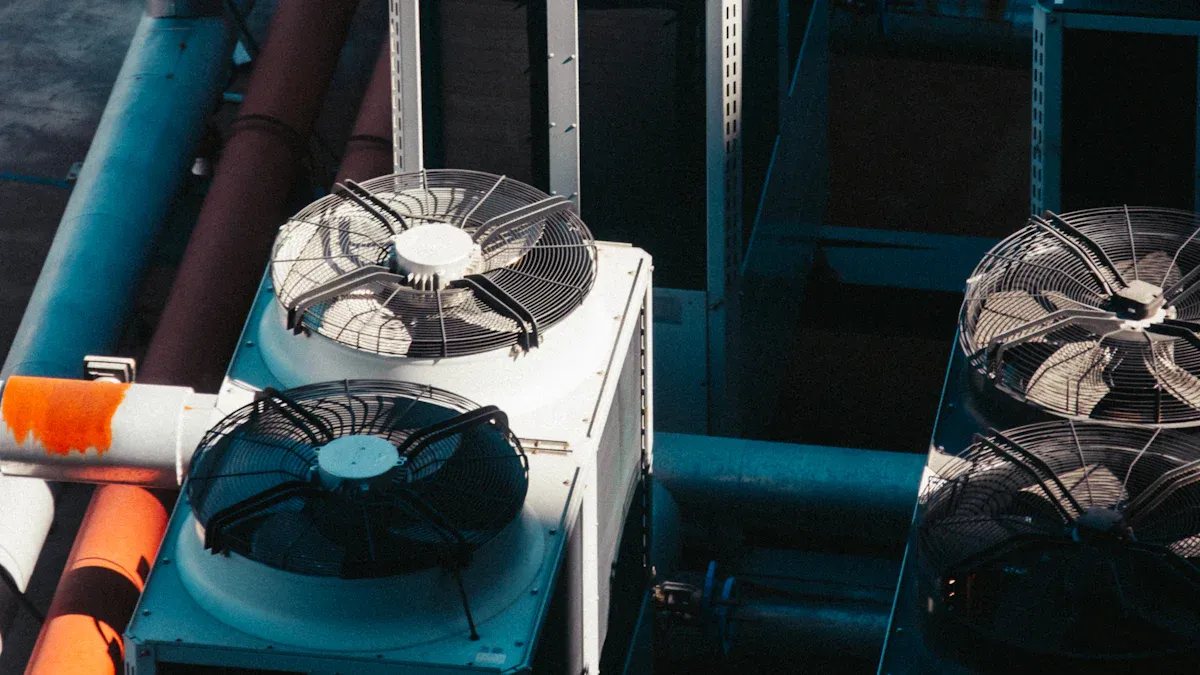
Pulse-jet dust collectors rely on continuous bursts of compressed air to clean filter elements during operation. Plant air compressors consume significant electrical energy to maintain high supply pressures for these cleaning cycles. Upgrading to advanced filter media cuts compressed air demand directly at the source.
Surface Loading vs Depth-Loading Felt
Standard needlefelt filter bags trap dust particles deep within the thickness of the fabric. This depth-loading mechanism locks fine dust inside the media pores, creating persistent airflow resistance. Pulse-jet blasts often fail to dislodge embedded particles from dense felt fibers. High differential pressure builds quickly, forcing the system to clean continuously.
In contrast, modern pleated media utilize advanced technology to collect particulate matter strictly on the exterior surface:
Key Technology Insight: Pleated spunbond polyester media paired with an advanced PTFE membrane creates a smooth, surface-loading barrier. Surface filtration traps sub-micron particles before dust enters the media substrate, achieving 99.99% filtration efficiency for 0.33 µm dust and maintaining outlet emissions below 5 mg/Nm3.
Dust cakes drop off easily during reverse pulses because particulates remain on the outer membrane. A HEPA Pleated Bag releases heavy dust loadings quickly without requiring high cleaning pressure or continuous reverse air blasts.
Reduced Pulse-Cleaning Cycle Frequency
Surface-loading media retain low baseline resistance over extended operating periods. Dust collection controls optimize air usage when facilities switch from automated timer-based pulsing to differential pressure monitoring. Implementing differential pressure controllers, such as a Photohelic gauge, enables on-demand cleaning by triggering pulses only when filter resistance reaches a high setpoint and stopping once it drops to a low setpoint. Restricting the operating range between these setpoints prevents redundant pulsing, directly minimizing compressed air consumption and decreasing the generation load.
| Operating Parameter | Value / Metric | System Load Impact |
|---|---|---|
| Volume Per Pulse | 3 to 6 cubic feet | Defines the specific amount of air drawn from the system per single cycle |
| Pulse Duration | 0.15 to 0.5 seconds | Represents the brief burst window consuming compressed air |
| Air Consumption Reduction | Up to 70% lower | Significantly reduces total demand on air generation equipment by pulsing less frequently |
Extending the duration between cleaning pulses reduces the total volume of generated air needed each day. Operators enjoy several operational advantages by maintaining low internal resistance:
- Efficient Cleaning Cycle: Delivering a more complete clean with each pulse preserves unrestricted airflow across the filter media.
- Sustained Low Differential Pressure: Maintaining minimal resistance for longer durations eliminates the need for frequent pulse cycles.
- Lower Compressed Air Load: Decreasing the total number of pulse events directly reduces the overall volume of compressed air required, cutting operating costs.
Optimizing Plant Air Compressor Loads
Air compressors represent some of the most expensive electrical equipment to run in modern industrial facilities. Reducing compressed air volume requirements allows plant management to scale down compressor operations. Central air compressors switch to un-loaded idle states or lower operating speeds, yielding direct kilowatt-hour utility savings.
Surface-Loading Pleated Media ➔ Extended Pulseless Intervals ➔ Dropping Compressed Air Demand ➔ Reduced Air Compressor Duty Cycle
The physical design of modern pleated filter hardware further optimizes system performance. One-piece filter designs eliminate separate metal cages, reducing mechanical wear and structural failure points. Sturdy outer bandaging and heavy-duty internal steel mesh preserve pleat spacing under intense dust conditions.
These durable construction elements extend filter service life by 2 to 4 times compared to conventional fabric bags. Long-lasting media integrity prevents air blow-by and structural collapses, helping air compressors maintain steady, efficient supply pressures across years of continuous industrial operation.
Transitioning to a HEPA Pleated Bag lowers facility electrical demand and cuts compressed air generation costs. Operating at lower differential pressure helps plants run fans efficiently while meeting strict environmental standards.
- Sub-Micron Particle Trapping: Captures extremely fine dust to fulfill EPA and OSHA air purity mandates.
- Rapid Equipment ROI: Delivers ongoing utility savings, reduces maintenance downtime, and extends filter service life.
FAQ
How do HEPA pleated bag filters reduce fan energy costs?
Pleated designs expand filtration surface area up to three times. This expanded area lowers operating differential pressure by 20% or more, reducing fan motor power draw significantly.
Why do pleated bag filters require less pulse-cleaning air?
Surface-loading PTFE media captures dust on the outer membrane rather than deep inside fibers. Dust releases easily during pulses, drastically cutting pulse frequency and compressed air demand.
How much longer do pleated bag filters last compared to standard felt bags?
Heavy-duty construction and sturdy steel mesh extend operating service life by two to four times, minimizing maintenance downtime and equipment replacement costs for industrial plants.
See Also
Boosting Industrial Process Efficiency Using Modern Plate Air Preheaters
Maximizing Industrial Energy Efficiency Through Advanced Condensate Cooler Systems
Innovations In Heat Exchanger Manufacturing Drive Superior Industrial Performance
Reducing Ecological Impact Utilizing Sustainable Gasketed Plate Heat Exchangers
Uncovering Key Advantages Of Commercial Heat Exchanger Technology In 2025