Why a Welded Plate Beats Bolts Every Single Time
A welded connection fuses steel into a single, monolithic structure. This continuous bond makes a welded plate inherently stronger than a bolted joint. It distributes loads evenly, eliminating the stress points that compromise bolted connections. For ultimate structural integrity, welding provides the definitive engineering solution. ⚙️
Unmatched Strength Through Monolithic Design

A bolted connection is an assembly of separate parts. A welded connection is a single, unified structure. This fundamental difference gives welding its superior strength.
Fusing Steel into a Single Unit
Welding uses intense heat to melt the edges of steel plates. A filler material is often added. The molten materials mix and cool together, forming a continuous grain structure. This process, called coalescence, effectively turns multiple steel components into one solid piece. The resulting joint becomes as strong as the parent metal itself.
A bolted joint simply clamps plates together. A welded joint recreates the steel, making the connection an integral part of the structure.
This monolithic bond ensures that forces transfer seamlessly through the connection. There are no gaps, no slippage, and no individual fasteners to manage the load.
Eliminating Critical Stress Points
Bolted joints introduce inherent weaknesses. Engineers must drill holes into the steel plates. These holes remove material and create areas of high stress concentration. Loads are not distributed evenly. Instead, they focus intensely around the perimeter of each bolt hole, creating prime locations for fatigue cracks to form. 💥
A welded joint, however, provides a continuous connection path. It distributes structural loads smoothly along its entire length. This eliminates the localized stress points found in bolted designs.
| Feature | Bolted Joint | Welded Joint |
|---|---|---|
| Load Transfer | Concentrated at bolts | Distributed evenly |
| Weak Points | Bolt holes | None |
| Structural Unit | Assembly of parts | Single monolithic piece |
By removing these critical points of failure, welding delivers a more durable and reliable structure.
The Superior Performance of a Welded Plate
Beyond raw strength, welding delivers superior operational performance. A welded connection behaves differently under load, providing rigidity and permanence that bolted joints cannot match.
Achieving Zero-Slip Rigidity
Bolted connections have a built-in tolerance for movement. The holes are slightly larger than the bolts themselves. Under significant shear load, the plates can shift until the bolts make firm contact with the edges of the holes. This movement is called "bearing slip." Even a small slip can compromise the precise alignment of a structure.
A welded plate eliminates this issue entirely. The fusion process creates a single, solid component with zero clearance between parts. This results in several key advantages:
- Immediate Load Transfer: Forces are transferred instantly without any initial slip.
- Maintained Alignment: The structure maintains its exact design geometry under load.
- Enhanced Stiffness: The overall structure becomes more rigid and less prone to deflection.
This absolute rigidity is critical in machinery, bridges, and high-precision frames where even millimeter-level shifts are unacceptable.
Creating Permanent, Sealed Joints
Bolted joints create seams. These seams are natural entry points for moisture, chemicals, and other corrosive agents. Engineers often add gaskets or sealants to close these gaps, but these materials can degrade over time, requiring inspection and replacement.
A welded joint is not just a connection; it is a permanent, hermetic seal. The continuous bead of fused metal leaves no gaps for contaminants to penetrate. 💧
This makes a welded plate the ideal choice for applications requiring containment or environmental protection. It ensures the long-term integrity of fluid tanks, pipelines, and ship hulls. The joint becomes a maintenance-free barrier, protecting the structure from internal leaks and external corrosion for its entire service life.
Designing Lighter and Cleaner Structures
Strength and performance are not the only advantages of welding. This method also allows engineers to create structures that are more efficient and visually appealing. Welding provides a path to lighter designs and cleaner aesthetics.
Reducing Overall Component Weight
Bolted connections add significant, unnecessary weight to a structure. The design requires overlapping plates and often includes extra components like gussets and brackets to achieve sufficient strength. This approach introduces parasitic weight from several sources:
- The bolts, nuts, and washers themselves.
- The overlapping material required for the joint area.
- Additional connector plates needed to transfer loads.
Welding eliminates the need for these bulky connection components. It joins members directly, edge-to-edge.
This efficient design reduces the total amount of steel required. A lighter structure costs less to fabricate, transport, and erect. The weight savings compound, as a lighter frame requires a less substantial foundation.
Achieving a Streamlined Aesthetic
Functionality often dictates form, and welded joints offer a superior visual finish. Bolted connections create a cluttered, mechanical look with protruding bolt heads and bulky plates. This appearance can be undesirable in architectural steel, consumer products, or modern equipment design.
A welded joint, in contrast, is smooth and continuous. The connection can be ground flush to become nearly invisible. This creates clean lines and a sleek, monolithic appearance that designers prefer. 🎨 The final product looks like it was crafted from a single piece of metal, not assembled from a kit of parts. This streamlined look communicates quality and modern engineering.
Key Applications Where Welding Excels
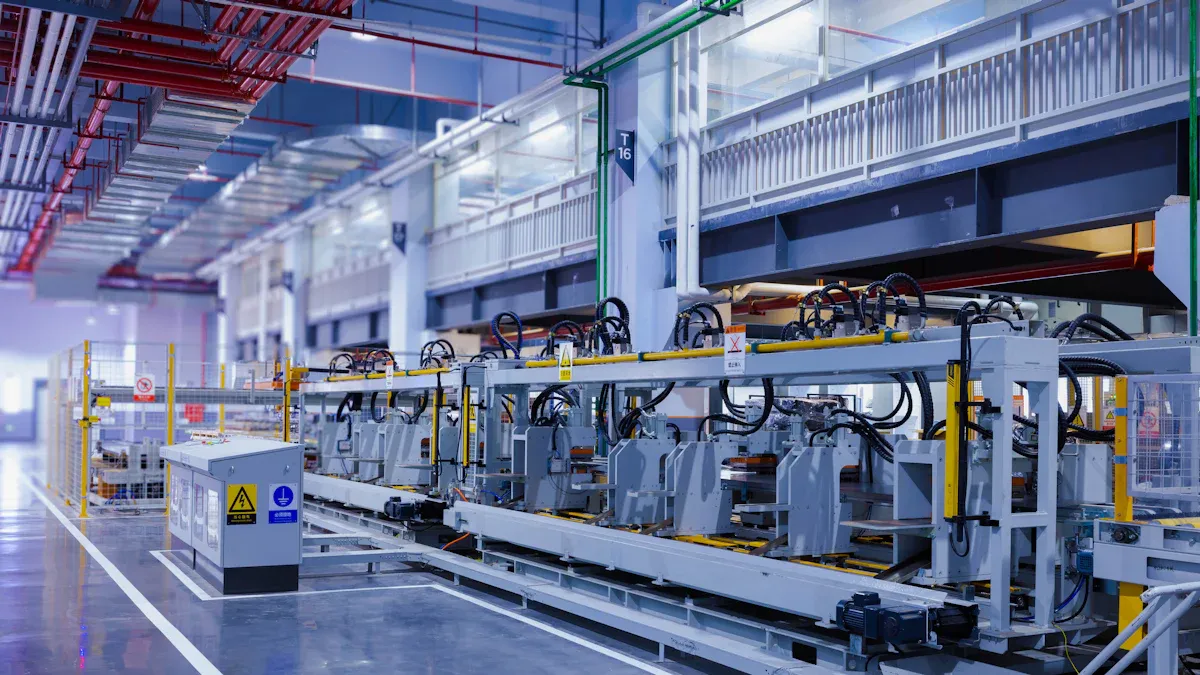
The theoretical benefits of welding translate directly into superior real-world performance. Engineers choose welding for the most demanding jobs where failure is not an option. Certain applications highlight the method's distinct advantages over bolting.
High-Stress and Fatigue-Prone Environments
Structures subjected to constant vibration, cyclical loads, or extreme forces require connections that can endure fatigue. Bolted joints, with their inherent stress concentrations around holes, are susceptible to crack initiation over time. Welding provides a more robust solution.
A welded joint distributes stress across the entire connection, not just at specific points. This monolithic bond eliminates the primary failure points found in bolted assemblies. For this reason, welding is the standard for:
- Bridges and Overpasses: Handling constant traffic loads and vibrations.
- Heavy Machinery Frames: Resisting the intense forces of industrial equipment. 🏗️
- Pressure Vessels: Containing high-pressure liquids or gases safely.
- Aerospace Components: Ensuring structural integrity under extreme flight stresses.
In these environments, a welded structure offers a longer service life and a higher margin of safety.
Permanent, Maintenance-Free Installations
Some structures are built to last for decades with minimal human intervention. Bolted connections represent a long-term liability. Bolts can loosen due to vibration and thermal cycles, requiring periodic inspection and retightening. This maintenance adds significant lifetime cost.
Welding creates a truly permanent connection. Once a joint is properly welded and inspected, it requires no further tightening or adjustment.
This "set it and forget it" quality makes welding essential for inaccessible or critical infrastructure. Engineers rely on welded joints for offshore oil rigs, underground pipelines, and the foundational steel skeletons of skyscrapers. The joint becomes an integral, maintenance-free part of the structure, ensuring reliability for its entire operational lifespan.
A welded plate provides a superior structural solution. It delivers unparalleled monolithic strength, superior rigidity, and more efficient, lightweight designs. Welding eliminates the failure points found in bolted joints, ensuring maximum long-term performance. For applications where structural integrity is non-negotiable, a welded plate is the definitive engineering choice. ✅
FAQ
Is welding more expensive than bolting?
Welding often lowers total project costs. It uses less material and removes the expense of fasteners. This efficiency saves money on fabrication and the structure's foundation.
What if a structure needs repairs?
Bolted joints allow for easier disassembly and modification. Welded connections are permanent. Repairs require cutting the joint and re-welding, which is a more involved process. 🛠️
Are bolts ever the better choice?
Yes. Engineers choose bolts for temporary structures or equipment requiring frequent maintenance. They are also practical where on-site welding conditions are difficult or hazardous.
See Also
Mastering Pass Partition Plate Welding: Expert Techniques for 2025 Success
Achieving Secure Tie Bolt Installation: A Guide for Concrete Structures
Auto Reinforcement Made Easy: A Beginner's Guide to Frame Plate Kits
Optimizing Heat Exchange: Steel Processing Techniques for Superior Performance
Enhancing TIG Welding: Essential Facts About WT20 Thoriated Tungsten Electrodes