Are Nickel 200 Pipe Fittings Right for Your Project?
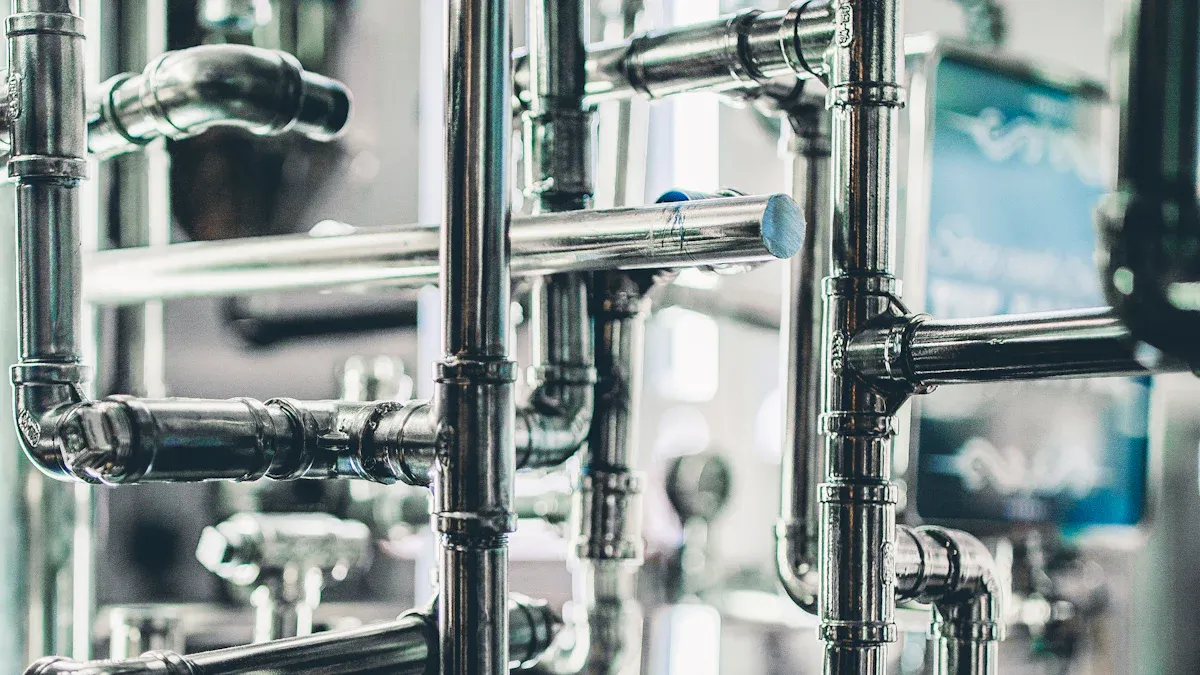
Engineers select Nickel 200 Pipe Fittings for projects demanding exceptional corrosion resistance. The material excels against caustic alkalis like caustic soda. These fittings provide an ideal solution when maintaining product purity is critical, such as in food processing and chemical handling. While standards like ASTM B366 Monel 400 Pipe Fittings exist for other alloys, Nickel 200 is optimal for applications operating below 600°F (315°C). This temperature ceiling ensures long-term structural integrity and prevents material degradation.
Key Takeaways
- Nickel 200 pipe fittings are great for projects needing strong protection against harsh chemicals like caustic soda.
- These fittings keep products pure, which is important for food, medicine, and special chemicals.
- Use Nickel 200 only below 600°F (315°C); higher heat makes it weak.
- Nickel 200 costs more at first, but it saves money over time because it lasts longer in tough conditions.
Evaluating Your Project's Environment
A project's success often depends on the materials chosen to withstand its specific operational conditions. Before specifying any component, engineers must meticulously analyze the chemical and thermal challenges the system will face. This evaluation is paramount when considering specialized materials like Nickel 200.
Assessing Corrosion Resistance
Nickel 200 demonstrates exceptional resilience in a variety of corrosive settings, making it a premier choice for demanding applications. Its performance is particularly noteworthy in reducing and neutral environments.
-
Caustic Environments: The alloy is virtually immune to corrosion from caustic soda (sodium hydroxide) across all concentrations, even up to its melting point. This remarkable resistance comes from a protective nickel oxide layer that forms on the surface, which significantly slows the corrosion rate over time. In fact, for caustic concentrations above 70% at temperatures over 300°F (148°C), pure nickel is the preferred material.
-
Neutral and Alkaline Salt Solutions: Nickel 200 also performs very well in neutral and alkaline salt solutions. Its high nickel content ensures it remains highly resistant to corrosion in these common industrial environments, preventing premature failure and maintaining system integrity.
-
Acids: The material offers good resistance to non-oxidizing acids under specific conditions.
Note: Nickel 200 can handle hydrochloric and sulfuric acids at modest concentrations (up to 30%) and low-to-medium temperatures. Its performance improves significantly in de-aerated solutions, where the absence of oxygen minimizes the corrosive attack. However, exceeding these temperature and concentration limits can lead to rapid material degradation.
Understanding Temperature Limitations
Temperature is a critical factor that directly impacts the structural integrity and service life of Nickel 200. While it excels in many areas, its operational temperature ceiling is a key design consideration.
Metallurgical engineers recommend Nickel 200 for service primarily below 600°F (315°C). Prolonged exposure to temperatures above this threshold can trigger a process called graphitization.
What is Graphitization? 🌡️ At temperatures above 600°F (315°C), the carbon within the Nickel 200 alloy can precipitate at the grain boundaries. This phenomenon, known as graphitization, leads to intergranular embrittlement. The material loses its ductility and impact strength, making it brittle and susceptible to fracture under stress.
This characteristic makes it essential to control the operating temperature of any system using Nickel 200 pipe fittings. For applications requiring high-temperature strength and corrosion resistance, engineers should consider alternative alloys specifically designed for such conditions.
Does Your Application Demand High Purity?

Certain industries demand absolute product purity. Food processing, pharmaceutical manufacturing, and specialty chemical production are prime examples. In these fields, even trace amounts of contamination from piping systems can compromise product safety, alter chemical formulations, or ruin entire batches. Nickel 200 excels in these environments because its composition is commercially pure. This inherent purity ensures the material does not react with or leach into the process media.
Protecting Product Integrity
The primary benefit of Nickel 200 in high-purity applications is its inertness. Its high nickel content prevents it from imparting any taste, odor, or metallic ions into the final product. This characteristic is critical for meeting stringent regulatory standards set by bodies like the FDA and for adhering to guidelines such as ASME-BPE for bioprocessing equipment.
Meeting Purity Mandates 🛡️ Industries like food and pharmaceuticals operate under strict purity protocols. Materials must be:
- Non-Reactive: They cannot interfere with drug formulations or food chemistry.
- Cleanable: Surfaces must be smooth and non-porous to prevent microbial growth and allow for effective sterilization.
- Traceable: Full material documentation is often required to comply with Good Manufacturing Practices (GMP).
Nickel 200's stable, non-corroding surface helps facilities meet these essential requirements, safeguarding the end product from contamination.
Prime Industry Applications
The combination of corrosion resistance and high purity makes Nickel 200 an essential material for specific, sensitive processes. Engineers specify it where contamination control is as important as structural integrity. The use of Nickel 200 Pipe Fittings ensures that the entire fluid path maintains the same high standard of purity.
| Industry | Key Applications |
|---|---|
| Chemical Processing | Handling and storage of caustic soda, production of synthetic fibers. |
| Food Processing | Equipment for handling foods sensitive to metallic contamination. |
| Pharmaceuticals | Systems requiring sterility and non-reactivity with active ingredients. |
| Chlor-Alkali | Critical components within chlor-alkali production cells. |
By selecting this alloy, project managers protect both their equipment investment and the quality of their final product.
Key Properties of Nickel 200 Pipe Fittings
Beyond corrosion resistance and purity, the physical and mechanical properties of Nickel 200 define its performance in demanding systems. Engineers evaluate these characteristics to confirm the material can withstand the mechanical stresses and environmental conditions of a project.
Mechanical Strength and Ductility
Nickel 200 offers a unique combination of moderate strength and outstanding ductility. This balance makes it both tough and easy to fabricate. In its annealed state, the alloy is relatively soft, allowing it to be formed without fracturing. Its mechanical properties provide a reliable baseline for design calculations.
| Property | Typical Value |
|---|---|
| Tensile Strength | 380 MPa (55 ksi) |
| Yield Strength (0.2% offset) | 148 MPa (21.5 ksi) |
| Elongation (in 2″) | 40% |
The exceptional ductility of Nickel 200 is a significant advantage during manufacturing. Its low work-hardening rate means the material remains malleable even after being shaped. This quality is essential for creating complex components.
- The alloy can be shaped using all cold-working methods.
- Its low hardness after annealing promotes excellent formability.
- It can be strengthened through cold work while retaining good ductility.
This formability allows manufacturers to produce a wide range of reliable Nickel 200 Pipe Fittings, from elbows to custom-designed parts.
Magnetic and Electrical Properties
Nickel 200 is a ferromagnetic material, meaning it is attracted to magnets. This property changes with temperature. The alloy loses its magnetic characteristics above a specific point known as the Curie temperature.
Curie Temperature 🌡️ Nickel 200 is magnetic up to its Curie Temperature of approximately 360°C (680°F). Above this point, it becomes paramagnetic.
This alloy also possesses good thermal and electrical conductivity. With a thermal conductivity of 70.2 W/m-K, it transfers heat efficiently, making it suitable for heat exchanger applications. Its low electrical resistivity of 9.6 µΩ·cm further broadens its utility in specialized electronic and electrical components where conductivity is a key requirement. These properties add to its versatility across various industrial sectors.
Fabrication and Installation Considerations
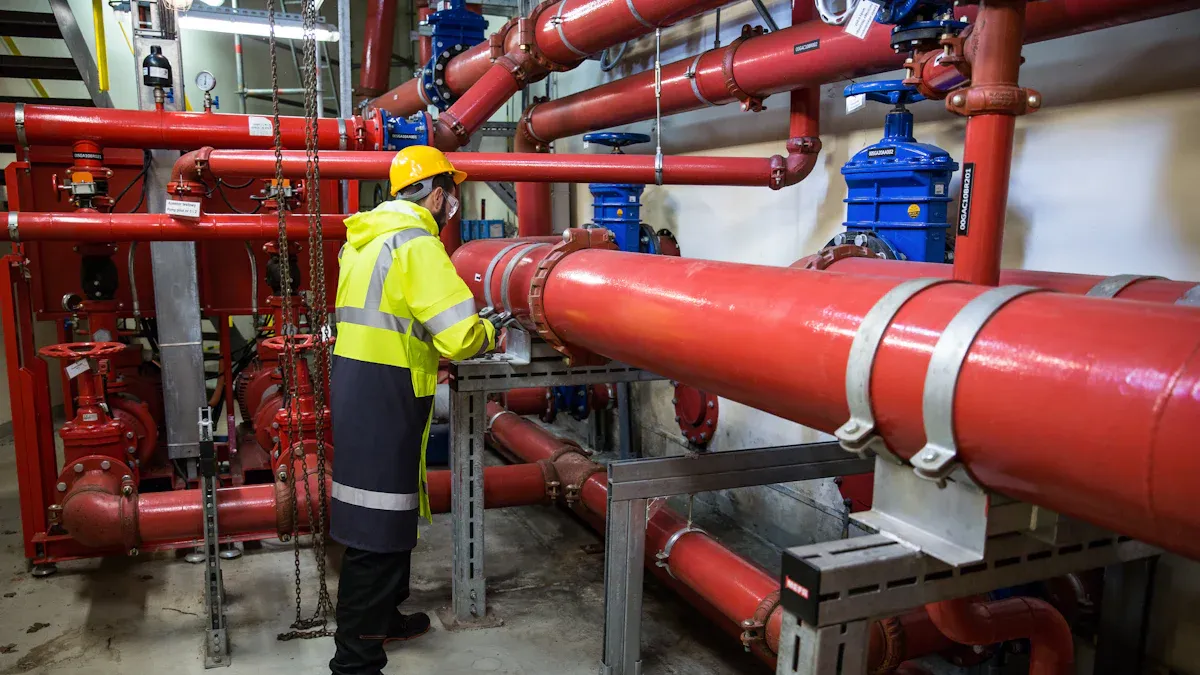
Proper fabrication and installation are crucial for leveraging the full benefits of Nickel 200. Its unique properties require specific techniques to ensure system integrity and performance. Fabricators can readily weld the alloy using standard welding processes, creating strong and reliable joints. However, its machinability demands careful attention to prevent work hardening.
Welding and Machinability
Nickel 200's tendency to work harden means machinists must adopt specific strategies. Improper techniques can damage both the tool and the workpiece. Following best practices ensures a smooth, efficient machining process and maintains the material's desired properties.
Machining Best Practices ⚙️ To achieve optimal results and prevent work hardening, machinists should:
- Use sharp tools with positive rake angles to shear the metal cleanly.
- Employ generous lubrication, such as sulfurized mineral oil, to reduce friction and heat.
- Maintain a sufficient feed rate and depth of cut to avoid rubbing the workpiece.
- Utilize lower cutting speeds to manage heat generation effectively.
These steps help maintain dimensional stability and produce high-quality components without compromising the material's integrity.
Available Fitting Types
Engineers can design robust piping systems using a comprehensive range of standard components. Manufacturers produce these fittings to meet established industry standards like ASME B16.9, ensuring interchangeability and reliability. This wide availability simplifies procurement and system design for various applications.
A full suite of buttweld fittings allows for the construction of fully welded, leak-tight systems.
| Fitting Category | Common Types Available |
|---|---|
| Elbows | 45°, 90°, 180°; Long Radius (LR) & Short Radius (SR) |
| Tees | Equal, Reducing, Straight |
| Reducers | Concentric (cone-shaped), Eccentric (flat-sided) |
| Caps | End Caps for terminating pipe runs |
| Stub Ends | Type A (for lap joint flanges), Type C |
| Crosses | Equal, Reducing |
This variety ensures that designers can specify the exact components needed to meet complex layout and flow requirements.
Comparing Alternatives and Cost
Selecting the right material involves a careful trade-off between performance, longevity, and budget. While Nickel 200 offers premier performance in specific scenarios, engineers must compare it against other common and specialized alloys to make a cost-effective and technically sound decision. This analysis ensures the chosen material provides the necessary resistance without over-specifying for the application.
Nickel 200 vs. Stainless Steel
The most frequent comparison pits Nickel 200 against various grades of stainless steel. Stainless steel is a versatile and widely used material known for its general corrosion resistance and lower cost, making it a default choice for many projects. However, its limitations become apparent in aggressive chemical environments.
- Performance: Stainless steel provides adequate service in mild atmospheric, water, and chemical conditions. It struggles significantly in the presence of concentrated caustic alkalis like sodium hydroxide, where it is prone to rapid corrosion and stress corrosion cracking. Nickel 200, in contrast, delivers outstanding, predictable performance in these caustic environments.
- Purity: For applications in food processing or pharmaceuticals, stainless steel can sometimes leach metallic ions, potentially affecting product quality. Nickel 200’s high purity and inertness make it the superior choice for protecting product integrity.
- Cost: Stainless steel has a much lower initial material cost. The investment in Nickel 200 is substantially higher.
Lifecycle Cost vs. Initial Cost 💰 A project manager must look beyond the initial purchase price. In an application where stainless steel would fail in months, the cost of replacement parts, labor, and production downtime far exceeds the initial savings. Nickel 200's durability in its target environments provides a lower total lifecycle cost and greater operational reliability.
Nickel 200 vs. Nickel 201
Nickel 200 and Nickel 201 are nearly identical in composition, but a small difference in carbon content creates a critical performance distinction. Nickel 201 is the low-carbon variant of Nickel 200. This single variation dictates their suitability for high-temperature applications.
The fundamental difference lies in their maximum allowable carbon content:
| Grade | Carbon Content (max) |
|---|---|
| Nickel 200 | 0.15% |
| Nickel 201 | 0.02% |
This lower carbon content in Nickel 201 is crucial for service above 600°F (315°C). At these elevated temperatures, the higher carbon in Nickel 200 can precipitate as graphite, leading to embrittlement and a loss of ductility. Nickel 201’s composition prevents this phenomenon, making it the preferred and safer choice for high-temperature caustic service.
Decision Rule:
- ✅ Choose Nickel 200 for applications operating below 600°F (315°C).
- ✅ Choose Nickel 201 for applications operating above 600°F (315°C).
Nickel 200 vs. Other Nickel Alloys
The world of nickel alloys is vast, with each family engineered for specific challenges. When Nickel 200 is not the perfect fit, another nickel-based alloy often is. Key alternatives include Monel and Inconel alloys.
- Monel 400 (Nickel-Copper Alloy): This alloy offers excellent resistance to a broad range of corrosive media, including seawater, sulfuric acid, and hydrofluoric acid. While Nickel 200 excels in caustics, Monel 400 is the superior material for handling aqueous hydrofluoric acid at all concentrations up to the boiling point.
- Inconel 600 (Nickel-Chromium Alloy): This alloy is designed for extreme heat and oxidation. Its chromium content creates a protective oxide layer that resists scaling and corrosion in high-temperature oxidizing environments up to 2000°F (1093°C). While Inconel excels in furnace atmospheres and oxidizing heat, Nickel 200 Pipe Fittings remain the standard for high-purity caustic service at lower temperatures.
This comparison highlights a critical engineering principle: material selection is about matching the alloy's specific strengths to the project's unique environmental demands.
| Alloy | Primary Strength | Key Limitation |
|---|---|---|
| Nickel 200 | Caustic soda, high purity | Temp limit of 600°F (315°C) |
| Monel 400 | Hydrofluoric acid, seawater | Poor resistance to nitric acid |
| Inconel 600 | High-temp oxidation | Higher cost, not ideal for some reducing acids |
Is the Investment in Nickel 200 Justified?
The higher initial price of Nickel 200 often causes project managers to pause. However, a comprehensive financial analysis reveals a different story. The true value of this alloy emerges when evaluating its total cost of ownership over the system's entire operational life. A forward-thinking approach looks beyond the initial invoice to the long-term performance and reliability of the asset.
Analyzing Initial vs. Lifecycle Costs
Engineers must first acknowledge the significant price gap between standard and specialized alloys. For instance, while 316 stainless steel serves as a baseline, a high-performance alloy like Monel 400 can be three to five times more expensive per pound. Nickel 200 carries a similar premium. This initial outlay can seem daunting, but it represents only one part of the total financial picture.
The more accurate measure is lifecycle cost.
Lifecycle cost refers to the total expense of a material over its entire lifespan. It extends far beyond the initial purchase price to include all associated expenditures.
A complete analysis accounts for several key factors:
- Initial material and installation costs
- Ongoing maintenance and repair costs
- The financial impact of production downtime
- Future replacement and disposal costs
In an aggressive caustic environment where stainless steel would fail rapidly, the costs of frequent replacement and lost production would quickly dwarf the initial savings.
Calculating Long-Term Value
Calculating long-term value transforms the cost discussion into a strategic analysis of operational reliability. The extended service life of Nickel 200 in its intended environments is the primary driver of its value. Its durability directly reduces maintenance needs and minimizes the frequency of shutdowns for inspection or replacement. This improvement in plant uptime is a significant financial benefit.
A straightforward method for comparison involves a simple calculation:
- Determine the total applied cost of the system (material, labor, surface preparation).
- Divide this total cost by the system's expected service life in years.
- The result is a clear "cost per year" figure.
When this formula is applied, the superior longevity of Nickel 200 in corrosive service often results in a lower annual cost compared to cheaper materials that require frequent replacement. This long-term reliability makes the investment in Nickel 200 Pipe Fittings a sound financial decision for the right project.
Engineers select Nickel 200 Pipe Fittings when a project's success depends on specific performance criteria. These fittings are the correct engineering choice for applications demanding absolute product purity and superior resistance to caustic environments.
Key Selection Criteria ✅
- Environment: Superior resistance to caustic alkalis.
- Purity: Essential for food, pharma, and specialty chemicals.
- Temperature: Optimal for service below 600°F (315°C).
For higher temperatures or oxidizing conditions, alternatives like Nickel 201 or Inconel alloys are more appropriate. Matching the unique strengths of ASTM B564 UNS N02200 to project needs ensures long-term reliability and prevents costly failures.
FAQ
What is the main advantage of Nickel 200?
Nickel 200 pipe fittings offer outstanding resistance to caustic alkalis, especially sodium hydroxide (caustic soda). This makes the alloy a premier choice for chemical processing and chlor-alkali production, where other materials would corrode quickly. Its high purity also protects product integrity.
Why is Nickel 200 not used above 600°F (315°C)?
Engineers limit Nickel 200 to service below 600°F (315°C). Higher temperatures cause graphitization, a process where carbon precipitates and makes the material brittle. This embrittlement compromises the structural integrity of the pipe fittings, leading to potential failure under stress.
How does Nickel 200 differ from Nickel 201?
The key difference is carbon content. Nickel 201 is the low-carbon version of Nickel 200.
Key Distinction ⚙️
- Nickel 200: For service below 600°F (315°C).
- Nickel 201: For service above 600°F (315°C) to prevent embrittlement.
Is Nickel 200 a good choice for every corrosive environment?
No, its strengths are specific. While it excels in caustics, other alloys perform better in different conditions. For example, engineers prefer Monel 400 for its superior resistance to hydrofluoric acid and many marine environments. Material selection always depends on the specific application.
See Also
Assessing Molybdenum Plugs for Seamless Steel Pipe Manufacturing in 2025
Comparing EHEDG Guidelines and 3A SSI Standards for Hygienic Equipment Design
Simplifying AHRI 400/401 Heat Exchanger Selection and Troubleshooting
Expert Guidance for Welding Pass Partition Plates: Insights for 2025
Evaluating TDC Residential Door Hinges: Are They a Worthwhile Investment?