What to Look For When Buying a Used Car

You are joining a massive market of used vehicle buyers. Each year, millions of sales occur.
| Year | Used Light Vehicles Sold (Millions) |
|---|---|
| 2021 | 43.1 |
| 2022 | 38.6 |
To buy a great used car, you must verify four things: the vehicle's history, its physical condition, a professional inspection, and its market price. This is the best way to get a reliable vehicle.
Key Takeaways
- Always check a used car's history and condition. This helps you avoid problems.
- Get a mechanic to inspect the car. They find hidden issues you might miss.
- Know the car's true value and use facts to get a fair price.
Set Your Budget and Find the Right Car
A great purchase starts with smart planning. You need a clear budget and a list of reliable vehicles before you start shopping. This preparation helps you focus your search and avoid costly mistakes.
Determine Your All-In Budget
First, you must establish your total budget. This "all-in" number should cover more than just the sticker price. Remember to account for extra costs that can add up quickly.
- Sales tax
- Title and registration fees
- Potential insurance increases
- Immediate repairs or maintenance
Tip: Set aside at least 10% of the car's price for unexpected repairs. This financial cushion gives you peace of mind after the purchase.
Research Reliable Models
Next, you should research vehicles known for their dependability. Some brands consistently earn high marks for reliability in older models. Consumer Reports data shows the top brands for used vehicles aged 5 to 10 years are:
- Lexus
- Toyota
- Mazda
- Acura
- Honda
However, you should not rely on brand reputation alone. An automotive data analyst at Consumer Reports warns that reliability can differ greatly by model and year. For example, a 2018 Chevrolet Equinox is reliable, but a 2019 Chevrolet Silverado is not. Always check ratings for the specific model year you are considering.
Decide: Dealer or Private Seller?
Finally, decide where you will shop. Licensed dealers and private sellers offer different experiences and legal protections. Dealers generally provide more consumer rights, while private sales are often "buyer beware."
| Feature | Licensed Dealer | Private Seller |
|---|---|---|
| Quality | Must be of satisfactory quality | No legal warranty |
| Description | Must match the description | Must match the description |
| Recourse | Right to reject or repair | Very limited; hard to prove deceit |
| Warranty | Statutory rights often apply | No legal warranty |
Choosing between a dealer and a private seller impacts your rights if something goes wrong with the vehicle.
Start with the Paperwork
Before you inspect the vehicle, you should examine its documents. The paperwork tells a story about the car's past. A vehicle history report and service records reveal potential problems that a visual check might miss.
Decode the Vehicle History Report
You must get a vehicle history report from a service like CarFax or AutoCheck. This report uses the Vehicle Identification Number (VIN) to track its history. You should look for major red flags that signal a risky purchase.
- Salvage or Rebuilt Title: This indicates the vehicle was declared a total loss by an insurer.
- Odometer Inconsistencies: Mileage that goes down or has large, unexplained gaps can mean tampering.
- Lien Records: A lien means a bank still has a loan on the car, which can complicate the sale.
- Multiple Accidents: A history of accidents, especially with frame damage, is a serious warning.
- Commercial Use: Former rental or fleet vehicles often have more wear than privately owned ones.
- Open Recalls: These are safety issues the manufacturer must fix for free.
Review Service and Maintenance Records
Next, you should ask the seller for all service records. A complete maintenance history shows the owner cared for the vehicle. A well-maintained vehicle will have records for regular tasks. These include frequent oil changes, brake inspections, and tire rotations.
A detailed service log is a great sign. It shows consistent care for important systems like the engine, transmission, and brakes. Missing records for major services, like a transmission fluid change, could mean expensive repairs are in your future.
The Hands-On Car Inspection and Test Drive
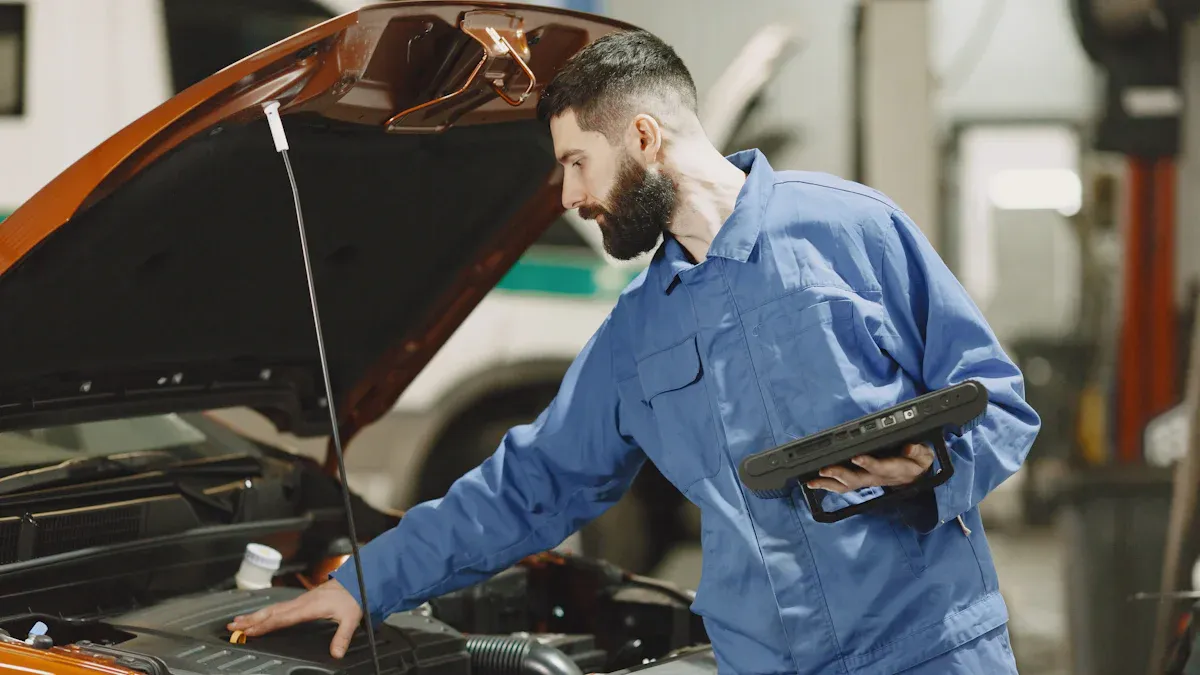
After reviewing the paperwork, you are ready for the physical inspection. This is your chance to find issues the documents might not show. A thorough hands-on check and a comprehensive test drive are essential steps before you make an offer.
The Exterior Walk-Around
You should start your inspection by walking around the vehicle in good light. Look for signs of past accidents or neglect. Pay close attention to the body panels, tires, and glass.
First, check for evidence of previous bodywork. A prior collision can lead to long-term problems. You can spot poor repairs by looking for these clues:
- Mismatched Paint: A door or fender that is a slightly different shade may have been repainted. Look for uneven texture, like an "orange peel" finish, or overspray on nearby trim.
- Uneven Panel Gaps: The spaces around the doors, hood, and trunk should be uniform. Gaps that are too wide, too tight, or crooked suggest parts were bent or reinstalled incorrectly.
- Misaligned Lights: Headlights and taillights should fit perfectly. If they look pushed in or sit unevenly, it could be a sign of front or rear-end damage.
Next, inspect the tires. Tire wear can reveal hidden issues with the vehicle's alignment or suspension.
| Tire Wear Pattern | What It Indicates |
|---|---|
| Wear on Both Edges | The tires were likely underinflated. |
| Cupping or Scalloping | This points to worn suspension parts like shocks or struts. |
| Patchy, Diagonal Wear | The tires are probably out of balance. |
Finally, check all glass for cracks or large chips. A small chip can quickly spread, leading to a costly windshield replacement.
The Interior Check
Now, you can move to the inside of the vehicle. The interior condition often reflects how well the previous owner maintained the entire car. You should look for excessive wear and check for signs of hidden damage, especially from floods.
A musty or mildew odor is a major red flag for flood damage. Sellers may try to hide this smell with strong air fresheners. Turn off the fan, close the doors for a minute, and then take a deep breath.
To confirm your suspicions, pull back the carpets, not just the floor mats. Look and feel for dampness, mold, or a gritty layer of sand or silt underneath. This is a clear sign the vehicle has been in water. Also, test all the electronics. Check the windows, locks, radio, air conditioning, and heating to ensure everything works correctly.
Under the Hood Inspection
You do not need to be a mechanic to perform a basic under-the-hood check. With the engine off and cool, pop the hood and look for obvious problems. Focus on fluids, belts, and hoses.
First, check the vehicle's vital fluids. Their color and consistency can tell you a lot about the engine's health.
| Fluid | Healthy Appearance | Warning Signs |
|---|---|---|
| Engine Oil | Light brown and clear | Milky color (coolant leak), gritty texture, or metallic sheen (engine wear) |
| Transmission Fluid | Red and clear | Dark brown/black color, burnt smell, or gritty texture (internal wear) |
| Coolant | Bright green, orange, or pink | Rusty color (corrosion) or an oily film (oil leak) |
Next, look for signs of a major engine problem like a leaking head gasket. Key indicators include:
- White, milky residue on the underside of the oil filler cap.
- Bubbles forming in the coolant reservoir when the engine is running.
- White smoke coming from the exhaust pipe after the engine has warmed up.
Finally, inspect the belts and hoses. Look for visible cracks, fraying, or glazing on the belts. Squeeze the larger coolant hoses. They should feel firm but not rock-hard or mushy. Brittle or soft hoses will need to be replaced soon.
The All-Important Test Drive
The test drive is your final and most important evaluation. You must drive the vehicle in various conditions to see how it performs. Plan a route that includes city streets, tight corners, and a stretch of highway.
During the drive, turn off the radio and listen for unusual noises. Certain sounds can signal expensive problems.
- Engine Noises: A roaring sound when you accelerate could mean there is a leak in the exhaust system.
- Transmission Noises: Grinding, whining, or clunking sounds when the transmission shifts gears often point to internal damage.
- Suspension Noises: Listen for knocking or creaking sounds when you drive over bumps. This can indicate worn-out shocks or other suspension parts.
Pay attention to how the vehicle handles. At city speeds, the steering should feel responsive. On the highway, the vehicle should feel stable and not drift to one side. Test the brakes in a safe location to ensure they stop the vehicle smoothly and without pulling. Driving at both low and high speeds gives you a complete picture of the vehicle's mechanical condition.
Get a Professional Pre-Purchase Inspection (PPI)
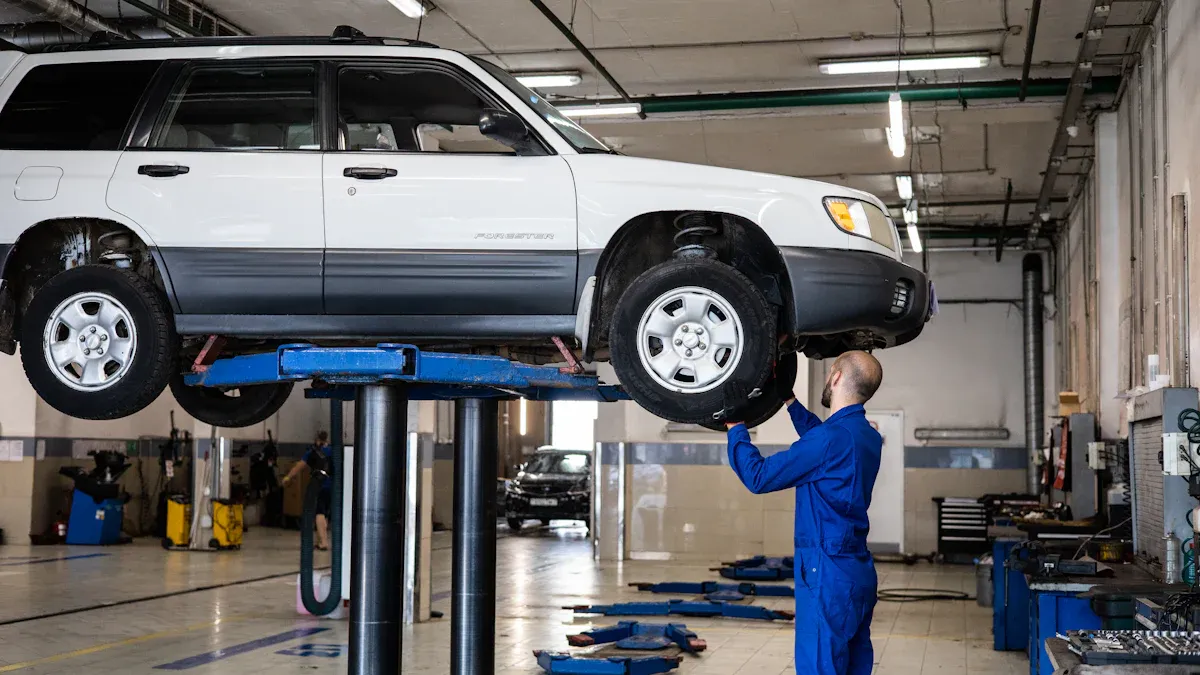
Your personal inspection is a great start. However, you should always get a professional opinion before buying. A pre-purchase inspection (PPI) by a qualified mechanic can uncover hidden problems that are invisible to the untrained eye. This step protects you from buying a vehicle with expensive, underlying issues.
Why a PPI is Non-Negotiable
You should consider a PPI a mandatory part of the buying process. It provides an expert, unbiased assessment of the vehicle's true condition. A standard inspection for a typical car usually costs between $100 and $250. The price can be higher for specialty or high-end vehicles. This small investment can save you thousands of dollars in future repairs.
A professional inspection gives you powerful information. You can use the mechanic's report to negotiate a lower price or to confidently walk away from a bad deal.
What a Mechanic Looks For
A mechanic performs a much deeper evaluation than your own test drive. They use a detailed checklist and specialized equipment to assess the vehicle's health. A thorough PPI typically includes:
- A full review of the exterior and interior for wear, damage, and rust.
- An under-the-hood check of the engine, belts, hoses, and fluid conditions.
- A computer scan using diagnostic tools to find hidden error codes in the vehicle's memory.
- A comprehensive road test to evaluate the engine, transmission, brakes, and suspension under real-world conditions.
The mechanic will lift the vehicle to inspect the frame, exhaust system, and suspension components for damage or leaks. This expert look is the best way to confirm you are making a sound purchase.
Verify the Price and Negotiate
You have inspected the vehicle and reviewed its history. Now you must confirm the price is fair and negotiate the final deal. This last step ensures you pay what the vehicle is truly worth.
Research Fair Market Value
First, you need to determine the vehicle's fair market value. You can use free online tools from trusted sources like Kelley Blue Book (KBB) and Edmunds. These platforms analyze millions of data points, including recent sales and local demand, to provide accurate price estimates.
The value depends heavily on several key factors:
- Mileage: Vehicles with lower mileage, especially under 60,000 miles, usually have a higher value.
- Condition: A well-maintained vehicle with a clean interior and no exterior damage is worth more.
- Location: Prices can change based on regional supply and demand.
KBB provides different values, such as the "Private Party Value" for buying from an individual and the "Fair Purchase Price" for buying from a dealer. You should use the correct one for your situation.
Use Your Findings to Negotiate
You can now use your research and the professional inspection report as powerful negotiation tools. Your goal is to have a calm, fact-based discussion with the seller. Present the specific issues you or the mechanic found. For example, you can point to worn tires or a needed brake service to justify a lower offer.
Use your inspection report to craft a precise counteroffer. Frame your proposed price as a reasonable compromise that is supported by concrete evidence.
If the seller is not willing to negotiate to a fair price, you must be prepared to walk away. Your thorough preparation gives you the confidence to either secure a great deal or avoid a bad one.
You should always check the vehicle's history and inspect it thoroughly. Get a professional opinion and verify the market price. These four steps are your foundation for a smart purchase.
Following this guide empowers you to negotiate effectively and drive away in a dependable car you can trust. car
FAQ
When is the best time of year to buy a used car?
You can find good deals at the end of the month or year. Dealers often lower prices to meet sales goals during these times.
Is a Certified Pre-Owned (CPO) car worth the extra cost?
CPO cars cost more but include a manufacturer-backed warranty and a thorough inspection. This extra protection can provide you with valuable peace of mind.
What should I bring with me to test drive a car?
You should bring your driver's license and proof of insurance. Also, have your phone ready to take notes and pictures of the vehicle. camera