What to Look for in a Water Dispenser with Ice Maker
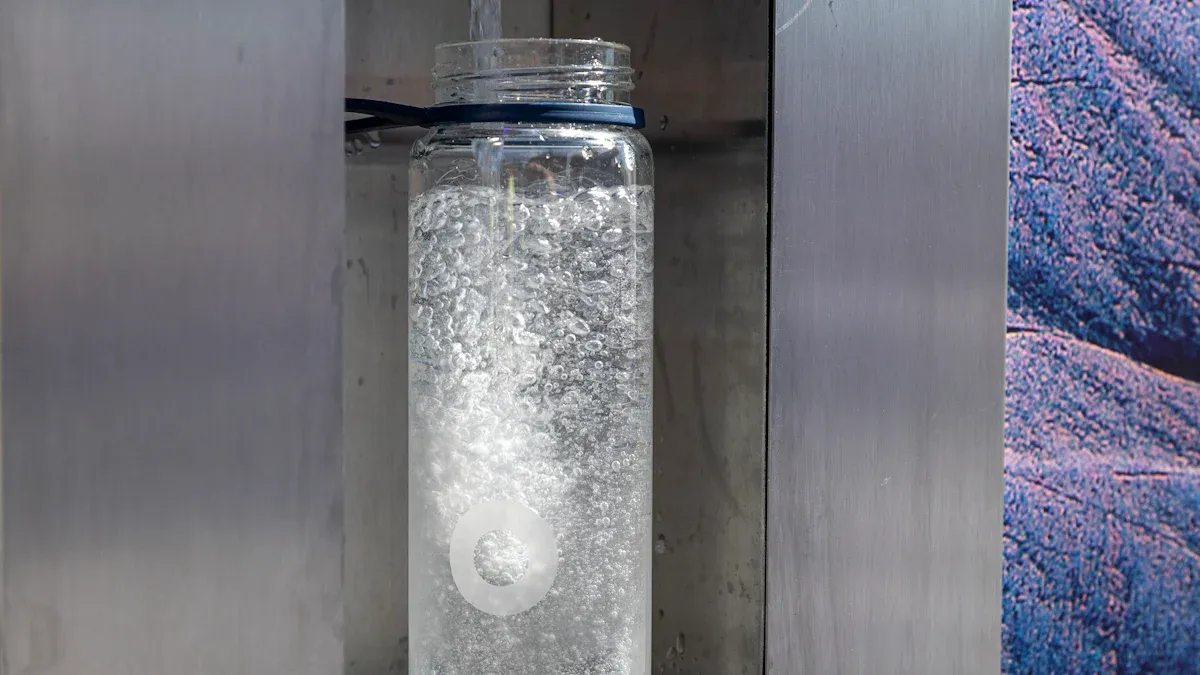
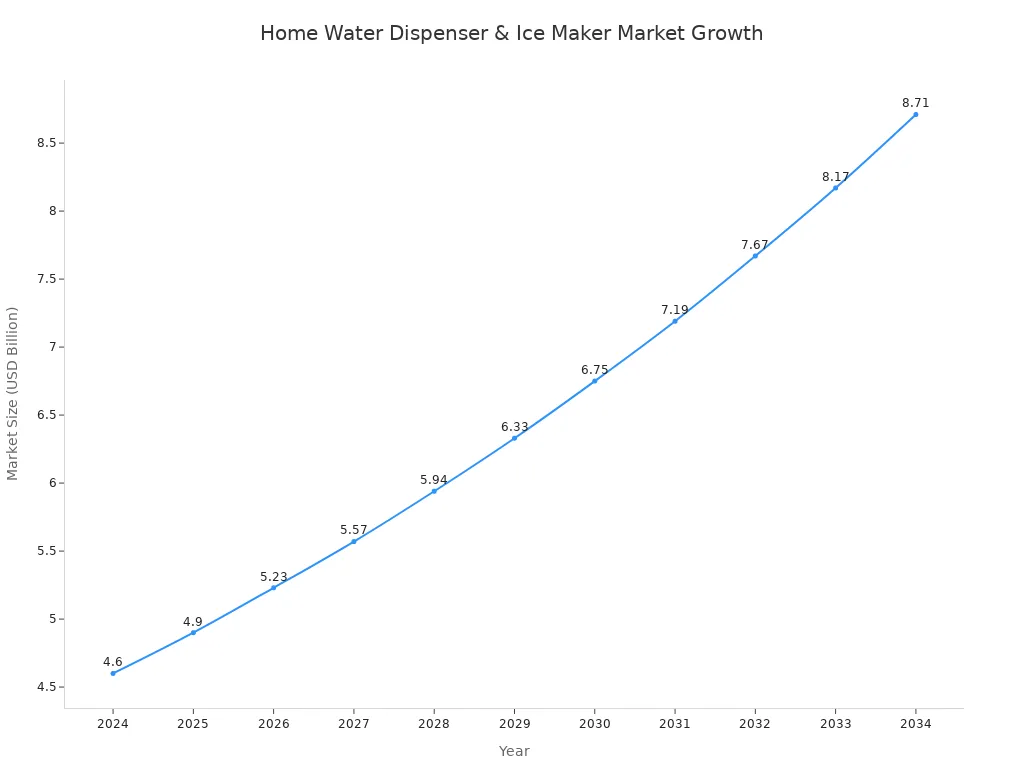
Choosing the right water dispenser with ice meets a growing demand for convenience and quality drinks at home. The market is expanding rapidly as more households prioritize better hydration and entertainment.
A past survey found that 30.6% of consumers were dissatisfied with their tap water's taste.
You should evaluate ice production, filtration, and size to find your perfect match.
Key Takeaways
- Consider how much ice you need daily and what type of ice you prefer. This helps you choose the right size and ice production capacity.
- Look for a good water filtration system. This ensures your water is clean and tastes good, with options like Reverse Osmosis for the best purity.
- Think about where the dispenser will go and how it gets water. This helps you decide between countertop or freestanding models and bottle-fed or plumbed-in options.
Key Features to Evaluate
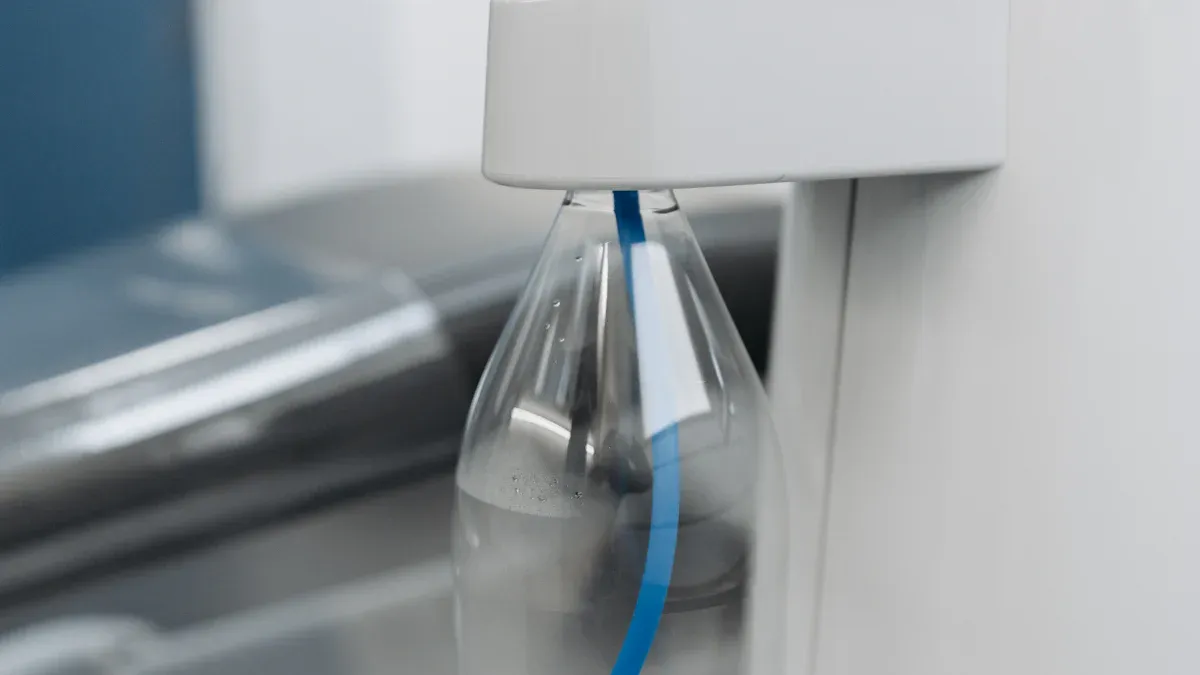
You should examine several key features before buying a water dispenser with ice. These details determine how well the appliance fits your lifestyle, from the ice it makes to the water it purifies. A careful evaluation ensures you get a machine that is both convenient and reliable.
Ice Production and Capacity
Your first consideration should be the unit's ice-making capabilities. Think about how much ice your household uses daily. Do you need a constant supply for drinks, or just enough for occasional entertaining?
Most combination units produce nugget ice. These small, chewable ice pellets are popular for their soft texture and ability to cool drinks quickly. You should also check the daily production rate. Countertop models are great for smaller needs, while freestanding units serve larger families or frequent hosts.
| Installation Type | Typical Output (24h) |
|---|---|
| Countertop / Portable | ~20–30 lbs |
| Freestanding | 30–60 lbs |
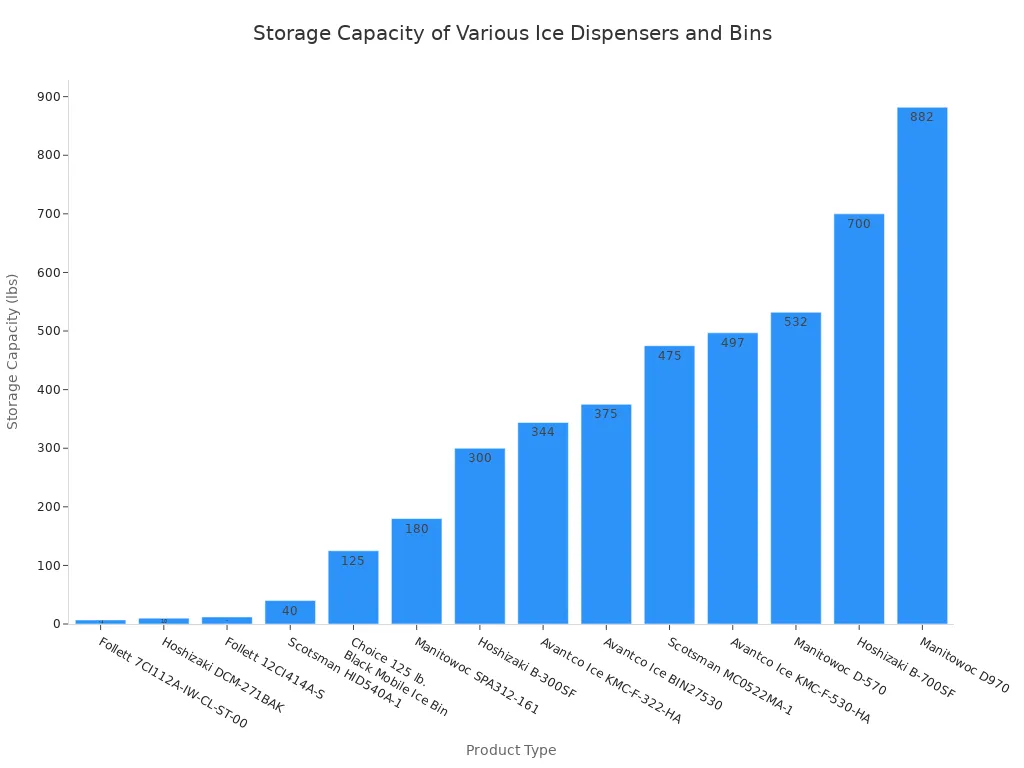
Beyond production, you need to assess the ice storage bin capacity. This determines how much ice is available at any given moment. A small bin might be fine for one or two people, but a larger family will need more storage to avoid running out. Storage capacities vary widely, from as little as 7 pounds to over 800 pounds in commercial-grade units. For example, some hotel dispensers hold around 180 lbs, while a compact countertop model might only hold 10-12 lbs.
Water Filtration System
The quality of your water is just as important as the ice. A good water dispenser with ice will have a robust filtration system to remove impurities. The type of filtration you need depends on your local water quality. Many dispensers use multi-stage filters to target specific contaminants.
Note: A multi-stage system provides comprehensive purification. Each stage targets different impurities, ensuring your water is clean and tastes great.
Here is a breakdown of common filtration stages and what they remove:
| Filtration Stage | Primary Contaminants Removed |
|---|---|
| Sediment Filter | Rust flakes, silt, dirt, and other large particles. |
| Pre-Carbon Filter (GAC) | Chlorine taste and odor, hydrogen sulfide, and some VOCs. |
| Post-Carbon Filter | Residual tastes, pollutants, and lingering chemicals. |
| Ultrafiltration Membrane | Cysts, lead, mercury, and pesticides, while retaining healthy minerals. |
| Reverse Osmosis (RO) Membrane | Up to 97% of Total Dissolved Solids (TDS), including arsenic, salts, and lead. |
Reverse Osmosis (RO) systems offer the highest level of purification. They remove dangerous pollutants like lead and arsenic, eliminate unpleasant tastes, and reduce your reliance on plastic bottles. This makes RO an excellent choice for health and environmental reasons.
Water Temperature Options
Modern dispensers offer more than just cold water. Many models provide hot, cold, and room-temperature water from a single spigot. This versatility adds significant convenience to your daily routine. You can make a quick cup of tea, prepare instant soup, or enjoy a perfectly chilled glass of water.
When looking at hot water features, check the maximum temperature. Many units can dispense steaming hot water at or above 194°F (90°C). This temperature is ideal for brewing coffee or tea, ensuring you get the best flavor extraction. A reliable water dispenser with ice and hot water can replace multiple kitchen appliances.
Controls and User Interface
The user interface affects your daily interaction with the dispenser. Look for a machine with intuitive and easy-to-use controls. Modern units often feature advanced technology for enhanced hygiene and convenience.
Some popular features include:
- Touchless Technology: Smart sensors allow you to dispense water and ice without physical contact.
- Smart Connectivity: Wi-Fi-enabled models let you monitor water usage and receive filter change alerts through an app. Some even offer voice control with Alexa or Google Assistant.
- Full-Color Touchscreens: These provide a clear, intuitive way to select water temperatures or schedule ice production.
- Self-Cleaning Functions: Automated cleaning cycles use UV light or ozone to keep the dispenser hygienic with minimal effort.
Safety is also a critical part of the user interface, especially in homes with children.
A customer once noted, "The hot water has a protection for kids so I’m not afraid that my kids will get burned."
Most dispensers include a child safety lock on the hot water tap. This feature requires a specific action to dispense hot water, preventing accidental burns and giving you peace of mind.
Practical and Long-Term Considerations
Beyond the immediate features, you should think about how a dispenser will fit into your home and life over time. Practical details like size, water source, and maintenance will impact your long-term satisfaction. These considerations ensure your new appliance is a convenient addition, not a daily hassle.
Dispenser Type and Dimensions
You must first decide where the dispenser will go. This choice determines the type and size you can accommodate. The three main types are countertop, freestanding, and built-in. Each has different space requirements.
Countertop models are compact and sit on your kitchen counter. You should measure the height between your counter and upper cabinets before buying one.
Tip: Always leave a few extra inches around the unit for proper ventilation. This prevents the machine from overheating.
Here are the typical dimensions for a countertop model:
| Dimension | Measurement |
|---|---|
| Height | 17.59" (44.7 cm) |
| Width | 14.62" (37.1 cm) |
| Depth | 22.12" (56.2 cm) |
Freestanding units are larger and stand on the floor. They offer higher ice production and water capacity, making them ideal for busy households or office spaces. You need to find a dedicated spot for these models near a power outlet. Some units offer a base stand to convert a countertop model into a freestanding one.
A larger freestanding unit might have these dimensions:
| Dimension | Measurement |
|---|---|
| Left to Right | 34 1/16" |
| Front to Back | 28 1/2" |
| Height | 48 1/16" |
Water Source for Your Dispenser
Your dispenser will get its water from one of two sources: large water bottles or a direct plumbing line.
- Bottle-fed dispensers are portable and easy to set up. You just place a 3- or 5-gallon water jug on top or in a bottom-loading cabinet. However, you must replace the jugs manually, and they take up storage space.
- Point-of-use (POU) dispensers connect directly to your home's water line. This gives you a constant supply of filtered water without any heavy lifting. They are eco-friendly and have a low operating cost, but the initial installation is more complex.
Installing a POU dispenser involves several steps. You will need to work with your home's plumbing.
- Turn off the main water supply.
- Mount the dispenser's faucet to your sink.
- Install the hot water tank under the sink, close to a power outlet.
- Connect the color-coded water tubes to the correct fittings.
- Make the final plumbing connections to your water line.
- Install the filtration system.
- Connect the tubing to the filter head.
- Insert the tube into the compression fitting and tighten it.
- Fill the tank and flush the system for about three minutes.
- Plug in the unit and wait 10-15 minutes for the water to heat.
- Adjust the temperature if needed after 24 hours.
Cleaning and Maintenance Needs
Regular cleaning is essential for any water dispenser with ice. It ensures your water and ice remain fresh, safe, and free of contaminants. You should clean your unit as often as necessary, but a good rule of thumb is once every two to three months.
Some modern dispensers make this task easier with self-cleaning functions. For example, the Brio 420 uses UV light to automatically sanitize the cold water tank. The Simzlife Countertop Ice Maker has a self-clean button that cleans the inside of the machine for you.
You also need to descale the hot water tank periodically to remove mineral buildup. This process keeps the heating element working efficiently.
To descale your hot tank:
- Turn off the power and water supply.
- Drain all water from the tank.
- Fill the tank with a descaling solution.
- Drain the solution completely.
- Flush the tank with fresh water to remove any leftover solution.
- Let the tank refill.
- Check for leaks before turning the power back on.
Energy Efficiency of a Water Dispenser with Ice
A dispenser runs 24/7 to keep water hot or cold, so energy consumption is an important factor. Look for models with an ENERGY STAR® certification. These units are designed to be more efficient, saving you money on your electricity bill.
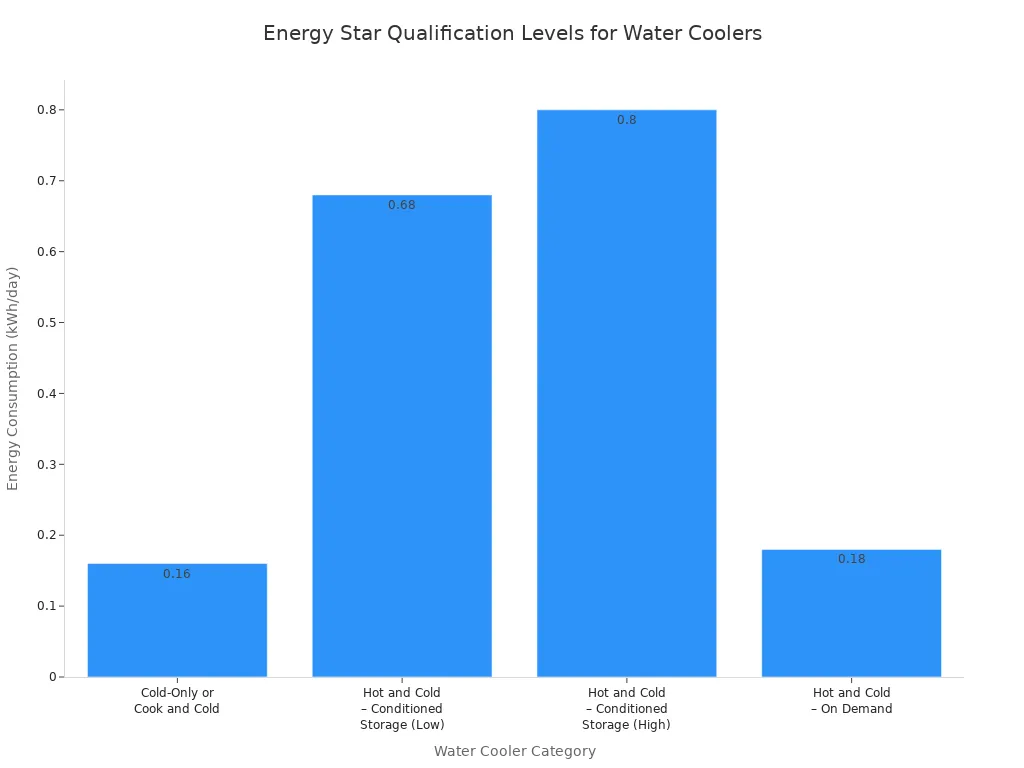
The ENERGY STAR program sets maximum energy use levels for different types of coolers.
| Water Cooler Category | Capacity | Qualification Level |
|---|---|---|
| Cold-Only or Cook and Cold Units | All | ≤ 0.16 kWh/day |
| Hot and Cold Units – Conditioned Storage | Low Capacity | ≤ 0.68 kWh/day |
| Hot and Cold Units – Conditioned Storage | High Capacity | ≤ 0.80 kWh/day |
| Hot and Cold Units – On Demand | All | ≤ 0.18 kWh/day |
Note: The ENERGY STAR program has specific rules. It does not certify units that are primarily ice makers but also dispense water. You should check the product specifications carefully.
Brand Reputation and Warranty
Finally, you should consider the manufacturer's reputation and the warranty they offer. A strong warranty provides protection for your investment. Read reviews from other customers to learn about a brand's reliability and customer service.
Most warranties cover defects in materials and workmanship for a specific period, usually one year. However, you must understand what is not covered. Common warranty exclusions include:
- Normal wear and tear from regular use.
- Damage from improper installation or maintenance.
- Accidental damage caused by the user.
- Issues from unauthorized repairs or modifications.
- Consumable parts like filters that need regular replacement.
Choosing a reputable brand with a clear warranty gives you confidence that help will be available if something goes wrong.
You should select a water dispenser with ice based on your top priorities, like filtration or size. Balance the initial purchase price with ongoing costs.
Note: Yearly filter replacements are a key expense.
- Annual costs can range from $25 to over $130.
A well-chosen unit seamlessly provides daily convenience and quality hydration.
FAQ
How often should I replace the water filter?
You should replace the filters every six months. This schedule ensures optimal water quality. Some models have indicator lights that alert you when it is time for a change.
Are water dispensers with ice makers noisy?
These units produce some noise from the compressor and when ice drops. Most models are quiet.
Tip: You can check the decibel (dB) rating to find a quieter option for your home.