Find the Perfect Tabletop Water Dispenser for You
An increasing number of households are choosing a tabletop water dispenser for convenient, clean water. This choice reflects a growing market. The global water dispenser market shows significant expansion.
| Metric | Value |
|---|---|
| Market Revenue (2023) | USD 2,983.7 million |
| Projected Market Revenue (2030) | USD 5,349.9 million |
| Compound Annual Growth Rate (2024-2030) | 8.7% |
You need to consider several key factors to find the right model. These factors include filtration, temperature options, and overall size.
Key Takeaways
- Choose a water dispenser with the right filter. Different filters remove different bad things from your water.
- Think about how you will use the dispenser. Decide if you need hot, cold, or room temperature water, and how much water you need.
- Check the size and features. Make sure it fits your space and has safety options like a child lock.
Filtration System: The Heart of Your Dispenser
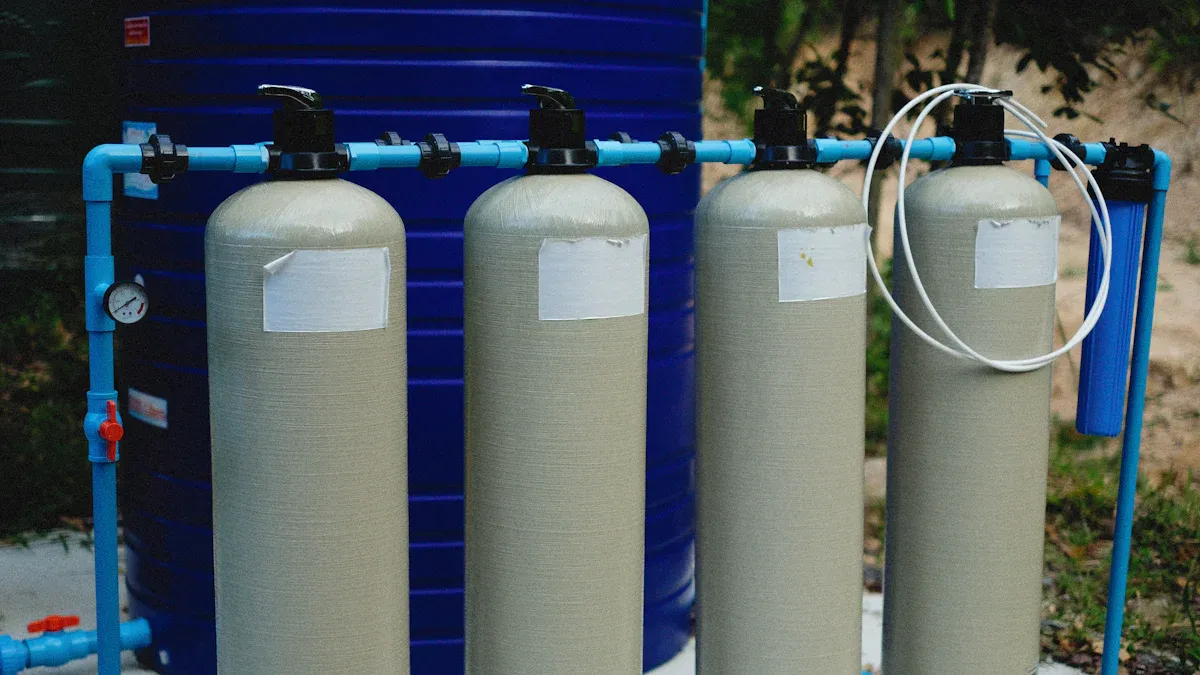
The filtration system is the most important part of your tabletop water dispenser. It ensures your water is clean and safe. Tap water can contain unwanted contaminants. These include lead from old pipes, chemicals like PFAS, and even microplastics, which have been found in 94% of U.S. tap water. A good filter removes these impurities.
Types of Filters
You will find several types of filters. Each one targets different contaminants. Understanding them helps you choose the right system for your needs.
- Activated Carbon Filters: These are very common. They act like a sponge to absorb chemicals. They excel at removing chlorine, which improves your water's taste and smell. They also reduce pesticides, lead, and some microplastics.
- Reverse Osmosis (RO) Systems: These systems offer a higher level of purification. They push water through a special membrane. This process removes up to 99% of dissolved solids, including heavy metals like arsenic, salts, and bacteria.
- Ultraviolet (UV) Purification: This method uses light to kill 99.99% of bacteria and viruses. However, UV does not remove chemical or physical contaminants. It is often used with other filter types.
Here is a quick comparison of the two most common filter systems:
| Contaminant Type | Reverse Osmosis | Carbon Filter |
|---|---|---|
| Chlorine | Excellent | Excellent |
| Heavy Metals | Excellent | Good |
| Bacteria/Viruses | Excellent | Poor |
| Bad Taste/Odor | Excellent | Excellent |
Filter Lifespan and Cost
You must also consider the long-term cost of your dispenser. Filters do not last forever. You will need to replace them regularly to keep your water clean.
Note: A standard carbon filter may need replacement every 3-6 months, costing between $40 and $100 annually. An RO system has higher upfront costs and requires multiple filter changes, with annual maintenance often costing $100 to $200. RO filters also waste water, which can impact your utility bill.
Choosing a filter involves balancing performance with cost. Think about what you want to remove from your water and how much you are willing to spend on maintenance.
Temperature, Capacity, and Size
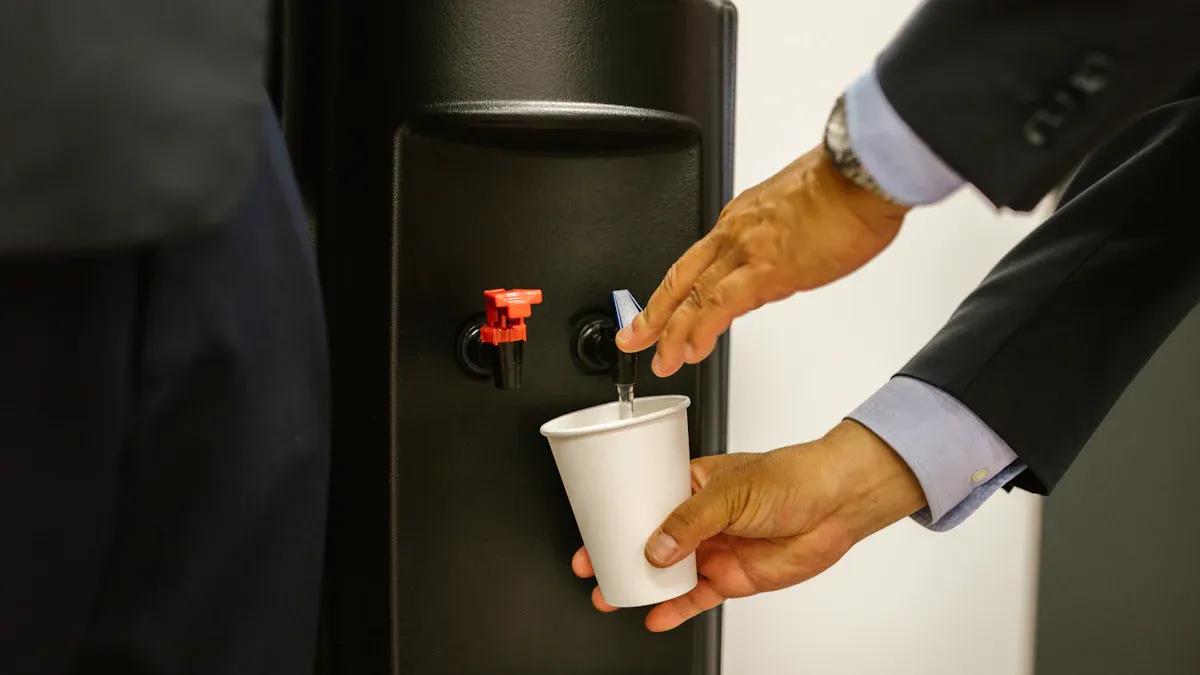
You should think about your daily water habits. This helps you choose the right features for your lifestyle. Consider how you will use the dispenser for temperature, how much water you need, and where you will place it.
Hot, Cold, or Room Temp?
Your first decision is about water temperature. Do you want instant hot water for tea or coffee? Do you prefer chilled water for refreshment? Many dispensers offer three options: hot, cold, and room temperature. Some models provide hot water between 85-95 degrees Celsius. Other advanced systems even give you up to 9 temperature options for total control.
Keep in mind that cooling features use more electricity. A tabletop water dispenser with a cooling compressor typically uses 50 to 100 watts of power, similar to a mini-fridge. Choosing a model without a cooling function can save on your energy bill.
Water Reservoir Size
The capacity of the water reservoir determines how often you need to refill it. Capacities vary widely between models.
- Hot water tanks usually hold 0.8 to 2 liters.
- Cold water tanks often hold 1.5 to 3 liters.
Some dispensers connect directly to your water line for a continuous supply. Others use large, replaceable bottles, often holding 5 gallons (18.9 liters). You should choose a capacity that meets your household's daily drinking needs without constant refilling.
Physical Footprint
You must measure your counter space before buying a dispenser. These appliances need more room than you might think. A compact unit might measure around 18.5 inches high, 10 inches wide, and 11 inches deep.
Important Tip: Always check the manufacturer's recommendation for ventilation space. Most units require at least 8 inches of clearance from walls. This space allows the cooling components to release heat properly and run efficiently.
Key Features and Maintenance for Your Tabletop Water Dispenser
Beyond the core functions, you should look at the daily usability and long-term care of your dispenser. These details make a big difference in your overall satisfaction.
Dispensing Mechanism
You can choose from several ways to get your water. Common options include push-buttons and levers. However, many modern units now offer touchless dispensing.
- Push-button and Lever: These are simple to use. Good models have well-spaced buttons that are easy to clean.
- Touchless (Infrared Sensor): These systems use a sensor to dispense water. You just wave your hand. This method is the most hygienic because it reduces the spread of germs, making it great for offices or busy homes.
Safety Features
Safety is very important, especially with children around. Most dispensers with a hot water function include a child safety lock. This feature prevents accidental burns. Some high-end models also offer advanced protection.
These dispensers may include leak detection systems. They can automatically shut off the water flow if they sense a problem, preventing property damage.
Noise Level
The noise a dispenser makes can be a major factor. The cooling method often determines the sound level.
- Compressor Cooling: These models work like a refrigerator and produce a low hum, usually between 38 and 50 decibels (dB). For a quiet room, you should look for a unit rated below 45 dB.
- Thermoelectric Cooling: These systems are nearly silent. They have very few moving parts, which results in minimal vibration and noise.
Ease of Cleaning
You must clean your tabletop water dispenser regularly to prevent bacteria growth. You should wipe down the outside and drip tray daily. A deeper clean of the reservoir is needed every 15 to 30 days. You can use a simple solution of one part white vinegar to three parts water for a natural clean. Some advanced dispensers even have self-cleaning functions that use UV light to sanitize internal parts automatically.
Filter Replacement Process
Replacing the filter is a key part of maintenance. The process is usually simple. You will need to shut off the water, twist out the old filter, and install the new one. It is important to flush the new filter for about five minutes before use to remove any loose carbon particles. To make this easier, some brands offer subscription services that automatically ship new filters to you.
You can use this final checklist to find the best tabletop water dispenser for your home. Ask yourself these key questions before you buy:
- Filtration: Does it remove contaminants like chlorine or lead?
- Temperature: Do you need hot, cold, and room temperature water?
- Capacity & Size: Will it fit your counter and meet your family's needs?
- Features: Is a child lock or quiet operation important to you?
- Maintenance: Are the cleaning process and filter costs manageable?
FAQ
What is the difference between a countertop and a bottleless dispenser?
A countertop model uses large, replaceable water bottles. A bottleless unit connects directly to your home's water line. This provides a continuous supply of filtered water.
Do tabletop water dispensers use a lot of electricity?
Energy use depends on the features. A model with a cooling compressor uses more power, similar to a mini-fridge. Units without cooling use very little electricity.
Is installation difficult for a tabletop water dispenser?
Most countertop models require no installation. You just plug them in. Bottleless dispensers need a connection to your water line, which may require professional help for a secure setup.