What to Look for in a Commercial Ice and Water Dispenser
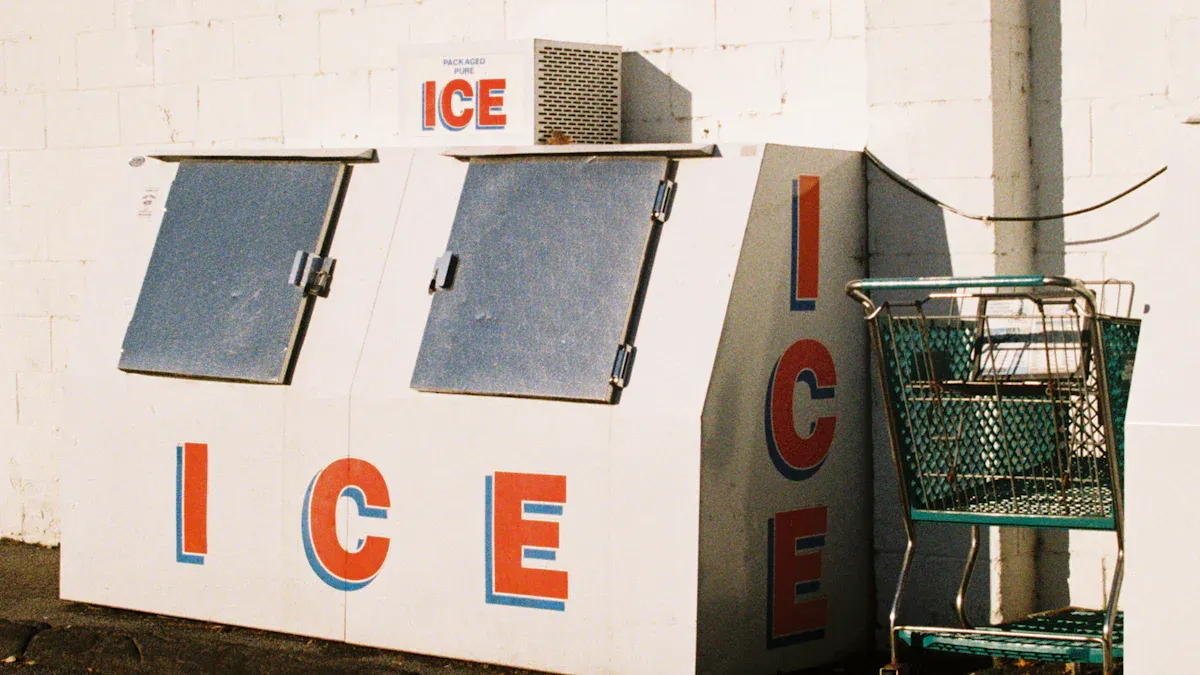
You must consider key factors when choosing a commercial ice and water dispenser. The most important points are ice production capacity, the type of ice it makes, and its sanitation features. Making the right choice ensures you meet customer demand and maintain health standards, a wise investment in a growing market.
Key Takeaways
- Choose an ice machine that makes enough ice for your business. Also, pick the right type of ice for your drinks or food displays.
- Make sure your ice dispenser is clean and safe. Look for features like touch-free dispensing and built-in protection against germs.
- Consider the machine's size and how it cools. Also, check the brand's reputation and warranty for long-lasting use.
Calculate Your Ice Production and Storage Needs
Before you look at specific models, you must first estimate your daily ice needs. Running out of ice during peak hours can hurt your service and customer satisfaction. A careful calculation helps you choose a machine that keeps up with demand without wasting energy or money on a unit that is too large.
How to Determine Daily Ice Production
You can start by using industry averages to estimate your ice consumption. Your specific needs will vary based on your menu, climate, and customer traffic. However, these figures provide a strong baseline for your calculation.
This table offers a general guide for different business types:
| Business Type | Ice Consumption Rate |
|---|---|
| Restaurant | 2 pounds per customer |
| Hospital Cafeteria | 1 pound per person |
| Hospital (Patient) | 10 pounds per bed |
| Hotel | 5 pounds per room |
Use these numbers to find a rough daily production target. This target is the most important factor in selecting the right ice machine head.
Matching Storage Bin Capacity to Usage Patterns
Your ice machine produces ice over 24 hours, but you use it mostly during business hours. The storage bin holds the ice until you need it. You must consider your usage patterns, especially your busiest times, when choosing a bin size.
Pro Tip: Most operators aim for a storage bin that holds at least half to two-thirds of their daily ice demand. This ensures you have a reserve for peak periods while the machine works to replenish the supply.
Storage bins typically fall into these capacity ranges:
- Under 400 lbs
- 400-700 lbs
- Over 700 lbs
Choosing the right combination of production capacity and storage size ensures you always have ice ready for your customers and patients.
Select the Right Ice Type for Your Business
The type of ice you choose directly impacts beverage quality and customer experience. Different ice shapes have unique properties, making them better suited for specific applications. Understanding these differences helps you select the perfect ice for your needs.
Nugget Ice: The Chewable Favorite
Nugget ice is a top choice in the food service industry, which made up over 50% of the market in 2023. This ice is soft and chewable, making it a favorite in restaurants, cafes, and healthcare settings. It enhances the drink experience and is essential for patient hydration.
Why Choose Nugget Ice?
- It is soft and gentle on teeth.
- It absorbs a drink's flavor, making every sip enjoyable.
- It cools beverages quickly due to its high surface area.
Full and Half Cube Ice: The All-Purpose Standard
Full and half cube ice are the most common types you will find. Upscale restaurants and bars often prefer full cubes. Their large size means they melt slowly, which minimizes drink dilution and provides maximum cooling. This makes them perfect for cocktails and high-end spirits. Half cubes offer a great balance. They provide effective cooling and melt evenly, so they will not water down drinks too quickly.
Flake Ice: For Displays and Healthcare
Flake ice consists of small, soft, and flat pieces of ice. You can use it to create beautiful food displays for seafood or salad bars. The ice molds around products without causing damage, keeping them fresh and hydrated. In healthcare and physical therapy, flake ice is ideal for cold compresses. Its soft texture conforms to injuries, providing even cooling for faster recovery.
Evaluate Dispenser Type and Dimensions
You must choose a dispenser that fits your physical space and meets your service demands. The unit's size and type directly affect workflow and installation. Considering these factors early helps you avoid logistical problems later.
Countertop Models for Limited Space
Countertop dispensers are an excellent solution when floor space is limited. You can place them in office break rooms, nurse's stations, or small cafes. Their production capacity varies widely, from small personal units to more robust commercial models.
This table shows the difference between a small office model and a larger commercial countertop unit:
| Model | Daily Ice Production | Product Dimension (W x D x H) |
|---|---|---|
| Cuckoo CIM-AS09M10S | ~20 lbs | 9.6" x 14.3" x 12.4" |
| Follett 15 Series | 125 lbs | 14.6" x 23.5" x 22.5" |
Freestanding Units for High-Volume Needs
Freestanding units are the best choice for high-traffic environments. These powerful machines are perfect for large restaurants, hotel lobbies, and busy cafeterias. They produce and store large quantities of ice to keep up with constant demand.
High-Volume Production Ranges 🧊 Freestanding machines can produce a massive amount of ice each day:
- Dice and Cube Ice: 500 to over 1800 lbs
- Modular Units: 500 to 1900 lbs
Measuring for Installation and Ventilation
You must measure your installation area carefully before purchasing a dispenser. Remember to account for more than just the machine's footprint. Your unit needs proper airflow to operate efficiently and prevent overheating.
A lack of ventilation can strain the condenser and lead to equipment failure. Follow this general rule for placement:
- Provide 3 to 6 inches of clearance on all sides of the machine.
- Ensure nothing blocks the air vents.
This simple step protects your investment and ensures your machine runs smoothly.
Prioritize Sanitation in Your Commercial Ice and Water Dispenser
You must make sanitation a top priority when selecting a commercial ice and water dispenser. Ice is considered a food product by the FDA, and contaminated ice can pose serious health risks. Choosing a machine with modern hygiene features protects your customers and your business's reputation.
Touch-Free Dispensing for Optimal Hygiene
Manual dispensing levers and buttons are high-touch surfaces that can easily spread germs. Studies show that ice from self-service machines can contain harmful bacteria. For example, one study found that 37% of ice samples had unacceptable levels of coliform bacteria.

Touch-free dispensing eliminates this risk. These models use advanced sensors to dispense ice and water.
- Infrared (IR) sensors activate when you place a cup in front of them.
- Position Sensitive Detector (PSD) sensors let you wave your hand over a specific area to get ice or water.
This technology provides a cleaner, safer experience for everyone.
Built-in Antimicrobial Protection
Leading manufacturers build antimicrobial agents directly into machine components. This technology helps stop the growth of bacteria, mold, and slime inside your commercial ice and water dispenser.
Examples of Antimicrobial Technology:
- Hoshizaki uses a compound called HoshiGuard in its key components.
- Icematic machines feature Microban technology to prevent bacterial growth on surfaces.
- Newer technologies like Q-Field use light to continuously eliminate microbes, offering a permanent defense.
These features provide an extra layer of protection between regular cleanings.
Ease of Cleaning and Maintenance Access
Even the best commercial ice and water dispenser requires regular cleaning. You should look for a model with easily removable parts and smooth surfaces. This makes daily and weekly sanitation tasks much simpler.
Follow a consistent cleaning schedule to ensure your ice is always safe.
- Daily: Wipe down all exterior surfaces and the dispensing area.
- Weekly: Clean the air filter and sanitize the storage bin according to the manufacturer's instructions.
Easy access for maintenance ensures you can keep your machine running hygienically and efficiently.
Understand Condenser Types and Utilities
You must understand your ice machine's condenser and utility needs before you buy. The condenser is the engine that removes heat to create ice. Choosing the right type and preparing for its utility requirements ensures a smooth installation and efficient operation.
Air-Cooled Condensers: The Standard Choice
Most businesses use air-cooled condensers. These units pull in the surrounding air with fans to cool the internal components. They are affordable and easy to install. However, they need plenty of space for airflow to prevent overheating.
Ideal Operating Temperatures 🌡️ Air-cooled units perform best within a specific temperature range.
- The ambient temperature should stay above 20°C (68°F).
- They are not recommended for areas where temperatures exceed 42°C (108°F).
Water-Cooled Condensers: For Hot Environments
You should consider a water-cooled condenser for hot environments like a busy kitchen or a poorly ventilated room. These machines use water to cool the condenser, making them more reliable in high heat. Water-cooled machines are also more energy-efficient and can use 10% less electricity than a similar air-cooled model. The main drawback is their high water consumption. A unit might use over 175 gallons of water to produce just 100 pounds of ice.
Water, Drain, and Electrical Requirements
Proper installation requires planning for your machine's utility needs. Every commercial ice and water dispenser needs:
- A dedicated water line for ice production.
- A floor drain to remove wastewater.
- The correct electrical circuit to handle its power load.
Your machine's electrical needs depend on its size. Larger machines that produce more ice require more power.
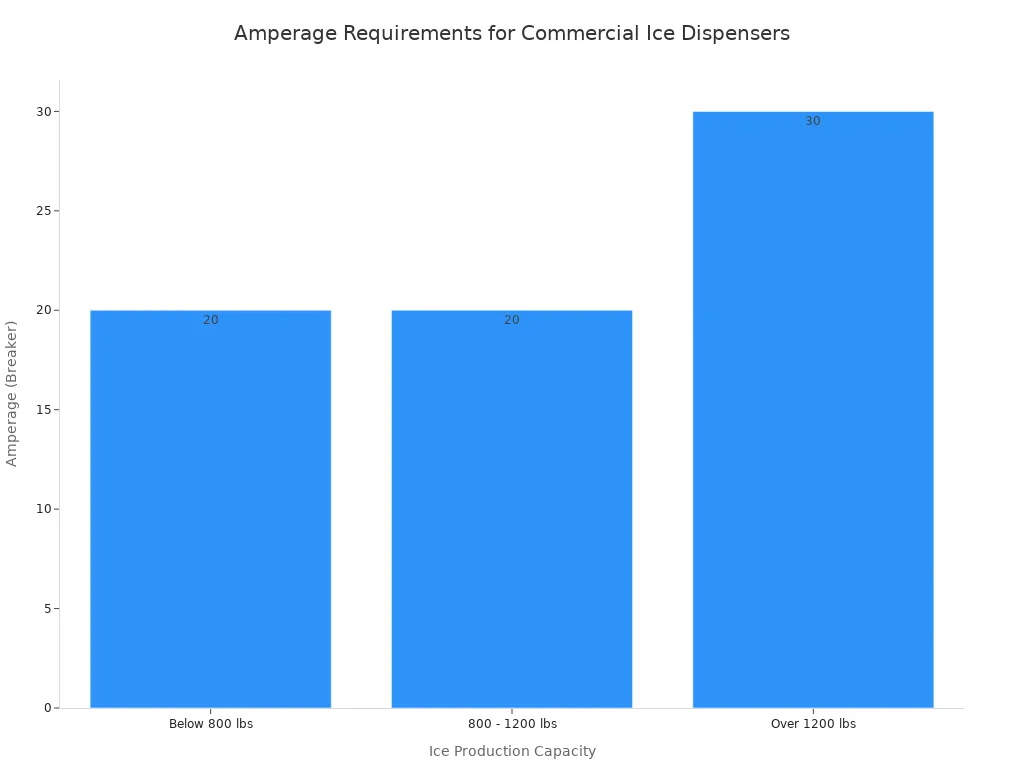
This table breaks down the typical electrical requirements:
| Ice Production Capacity | Voltage | Amperage / Breaker | Notes |
|---|---|---|---|
| Below 800 lbs | 115V | 15 amps (outlet), 20 amps (breaker) | Requires a dedicated 20 amp circuit |
| 800 - 1200 lbs | 220V | 20 amps | |
| Over 1200 lbs | 220V | 30 amps |
Assess Long-Term Reliability and Maintenance
You should think about the long-term costs and effort of owning an ice machine. A reliable machine saves you money on repairs and prevents service disruptions. Choosing a unit with good support ensures it runs well for years.
Brand Reputation and Warranty
You can trust brands with a strong reputation for quality. For example, Scotsman ice machines often last 8 to 15 years with proper care. A good warranty protects your investment. It shows that the manufacturer stands behind its product. You should compare the warranty coverage from leading brands.
| Brand | Standard Parts Warranty | Standard Labor Warranty | Compressor Parts Warranty |
|---|---|---|---|
| Scotsman | 3 years | 1 year | Additional 2 years (total 5 years) |
| Hoshizaki | 1 year | 1 year | Varies by machine |
| Manitowoc | 1 year | 1 year | Up to 1 year |
Filter Systems and Replacement Schedules
Your machine's water filter is crucial for producing clean, safe ice. You must replace it on schedule, usually every six months. A clogged filter can cause many problems.
- It creates cloudy or bad-tasting ice.
- It reduces ice production and makes the machine work harder.
- It can cause unusual noises or water leaks.
Health Warning ⚠️ Old filters can become breeding grounds for bacteria. Studies have linked contaminated ice machines in hospitals to serious mycobacterial infections in patients. Regular filter changes are essential for safety.
Serviceability and Parts Availability
Even the best machines will need repairs eventually. You should choose a brand with easily available parts and good local service. Common issues you might face include water leaks, strange noises, or the machine not dispensing ice. Quick access to parts and a qualified technician minimizes downtime and keeps your business running smoothly.
You must balance daily capacity, ice type, and unit size in your final decision. Prioritize a commercial ice and water dispenser from trusted brands for their sanitation and reliability. Use these key criteria to confidently select the perfect commercial ice and water dispenser for your establishment.
FAQ
How often should I clean my ice machine?
You should follow a simple cleaning schedule to ensure safety and performance.
- Daily: Wipe down the exterior surfaces and the dispensing area.
- Weekly: Sanitize the storage bin and clean the air filter.
What is the most popular type of ice?
Nugget ice is a customer favorite for its soft, chewable texture. It cools drinks quickly and is perfect for restaurants, cafes, and healthcare facilities.
How much space does an ice machine need for ventilation?
You must provide 3 to 6 inches of clearance on all sides of the unit. This ensures proper airflow, prevents overheating, and protects your machine from damage.