Never Buy an Electric Water Dispenser Without Checking This

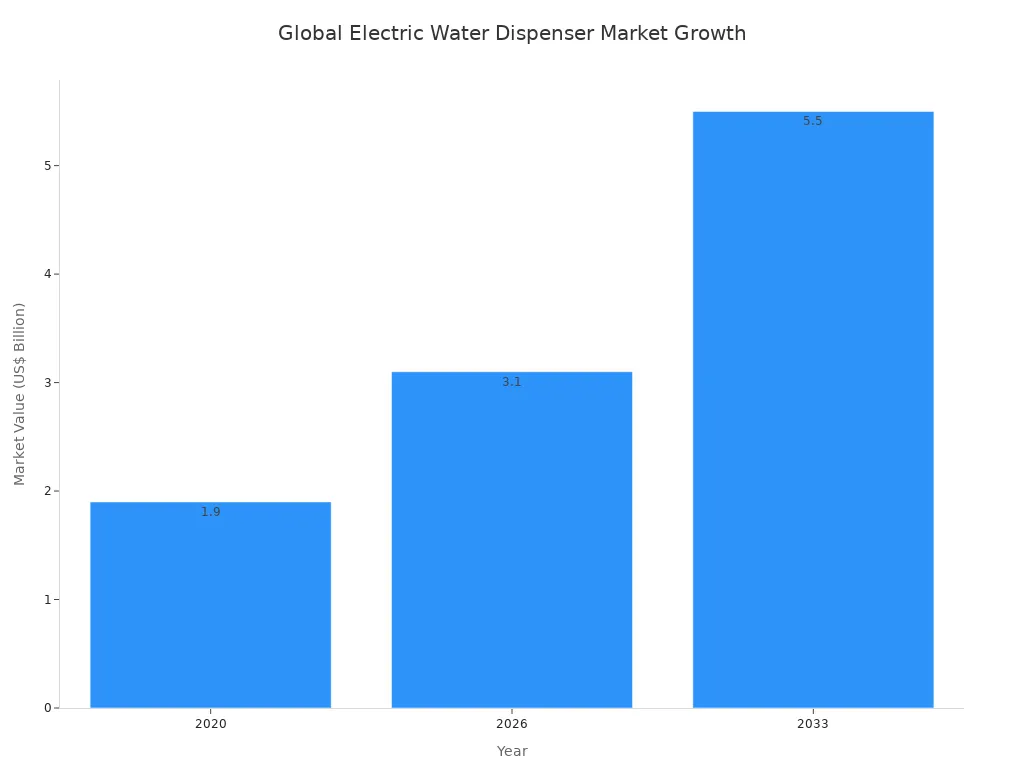
You are joining a rapidly growing market. Your health is the top priority. When selecting an electric water dispenser, always confirm it uses food-grade, BPA-free materials. Approximately 75% of consumers prioritize water quality. You should ensure the spout is 304 stainless steel and the tubing is food-grade silicone.
Key Takeaways
- Always choose an electric water dispenser made with safe, food-grade materials like 304 stainless steel and BPA-free silicone tubing.
- Look for a dispenser with a strong battery, a universal fit for water bottles, and quiet operation.
- Check for certifications like NSF/ANSI 51 and 61 to confirm the dispenser meets high safety standards.
The Non-Negotiables for Your Electric Water Dispenser
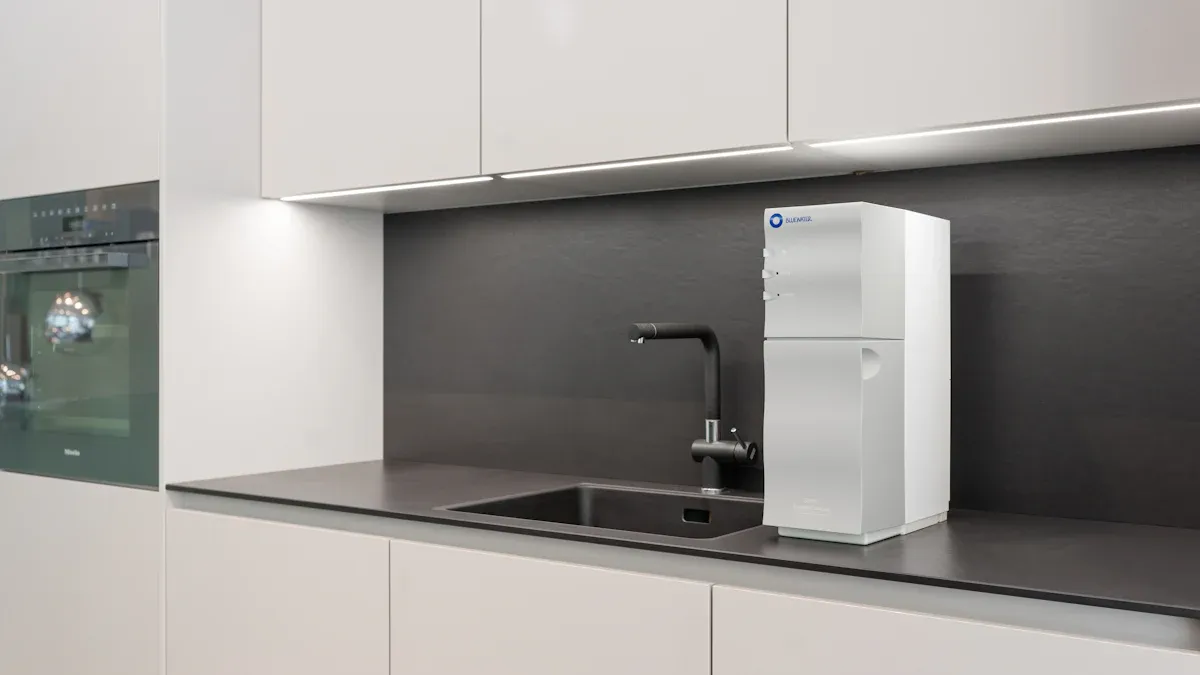
You must check a few critical features before you buy. These factors determine the safety, reliability, and overall value of your new gadget. Paying attention to these details ensures you get a product that serves you well for years.
Verify Material Safety and Certifications
Your top priority is the safety of the materials touching your water. Some plastics contain harmful chemicals like Bisphenol A (BPA). You should always choose a product labeled "BPA-Free." Exposure to BPA carries significant health risks.
- One study found participants' BPA levels in urine increased by two-thirds after just one week of using polycarbonate bottles.
- Animal studies connect early BPA exposure to reproductive health issues.
- Researchers detected BPA in over 92% of people in a major 2003–2004 study, showing widespread human exposure.
A safe electric water dispenser will use high-quality, food-grade components. Look for these two materials specifically:
-
304 Stainless Steel Spout: This material is often called "18/8" because it contains about 18% chromium and 8% nickel. The chromium creates a passive, protective layer of oxide on the surface. This layer stops rust and corrosion, keeping your water pure. It is the same trusted material used for professional food processing equipment.
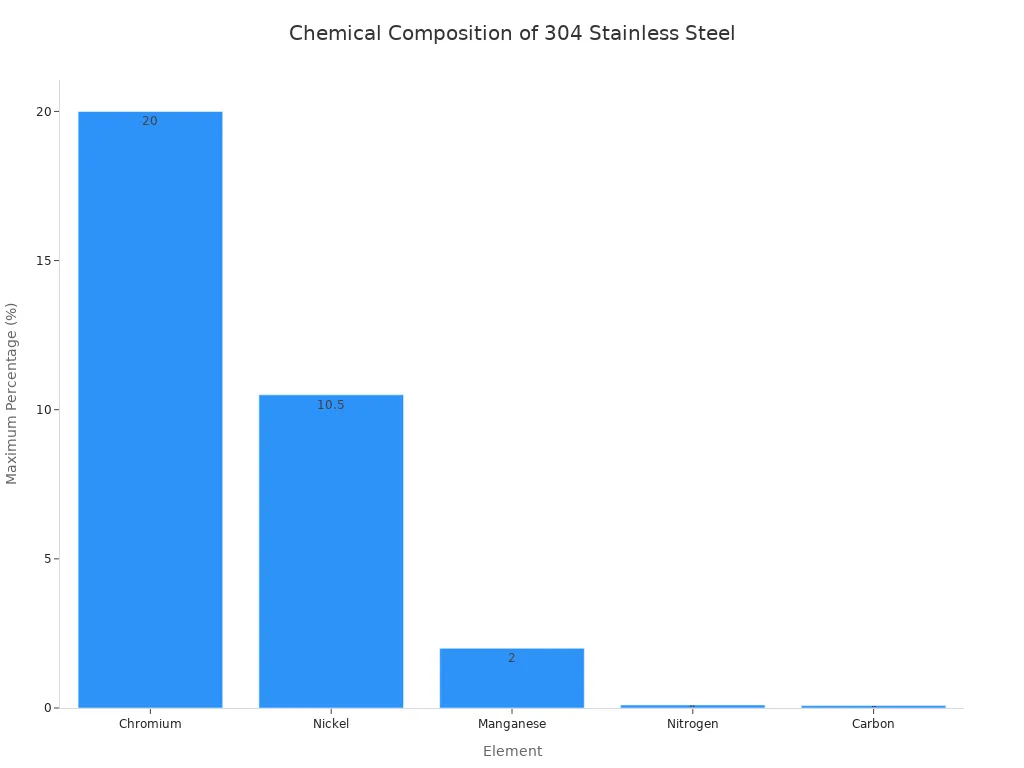
Image Source: statics.mylandingpages.co -
Food-Grade Silicone Tubing: The internal hose that pulls water from the jug must also be safe. Food-grade silicone is an excellent choice. It is a non-toxic, odorless, and tasteless material. It does not contain plasticizers, so it will not leach chemicals or a plastic taste into your water. Its smooth surface also resists bacteria buildup, helping maintain hygiene.
Pro Tip: Look for official certifications on the product packaging or description. These marks confirm the materials meet strict public health standards. Manufacturers should seek both NSF/ANSI 51 (for food equipment materials) and NSF/ANSI 61 (for drinking water components) to guarantee the highest safety level.
| Standard/Certification | Purpose/Function | Key Aspects/Application |
|---|---|---|
| FDA | Sets guidelines for materials that contact food. | Lists approved ingredients for safe use. A material is "FDA compliant" if it follows these rules. |
| NSF | Certifies products for food and water safety. | Tests materials to ensure they are safe for food contact (NSF 51) and drinking water systems (NSF 61). |
| 3A Sanitary Standards | Focuses on hygienic design for food processing. | Ensures materials can be cleaned easily and resist bacterial growth. |
Check Battery Capacity and Charging Port
An electric water dispenser offers freedom from manual pumping. This convenience depends entirely on its battery. You should check the battery's capacity, measured in milliampere-hours (mAh).
A higher mAh rating means a longer time between charges. A good benchmark is a 1200mAh battery. A dispenser with this capacity can typically pump 4-6 five-gallon jugs of water on a single charge. This gives you weeks of use without needing to plug it in.
Also, check the charging port. Modern devices use a USB-C port, which is more durable and convenient than the older micro-USB standard. It allows for faster charging and you can use the same cable you use for your phone or laptop.
Confirm Universal Bottle Compatibility
Water jugs come in various sizes, from 1-gallon bottles to 5-gallon carboys. Their neck openings can also differ. For example, some jugs have a 38-400 neck finish, while others use a wider 110-400 size. You need a dispenser that fits the bottles you use.
Many dispensers are designed for standard 5-gallon jugs with a 55mm neck. However, the best models offer universal compatibility. They achieve this with a flexible silicone adapter that creates a secure seal on various bottle necks. This design lets you place the dispenser directly on the bottle without removing the plastic cap, preventing dust and contaminants from entering the jug. Always confirm the dispenser you choose will fit your preferred water bottle size.
Key Factors for Performance and Convenience
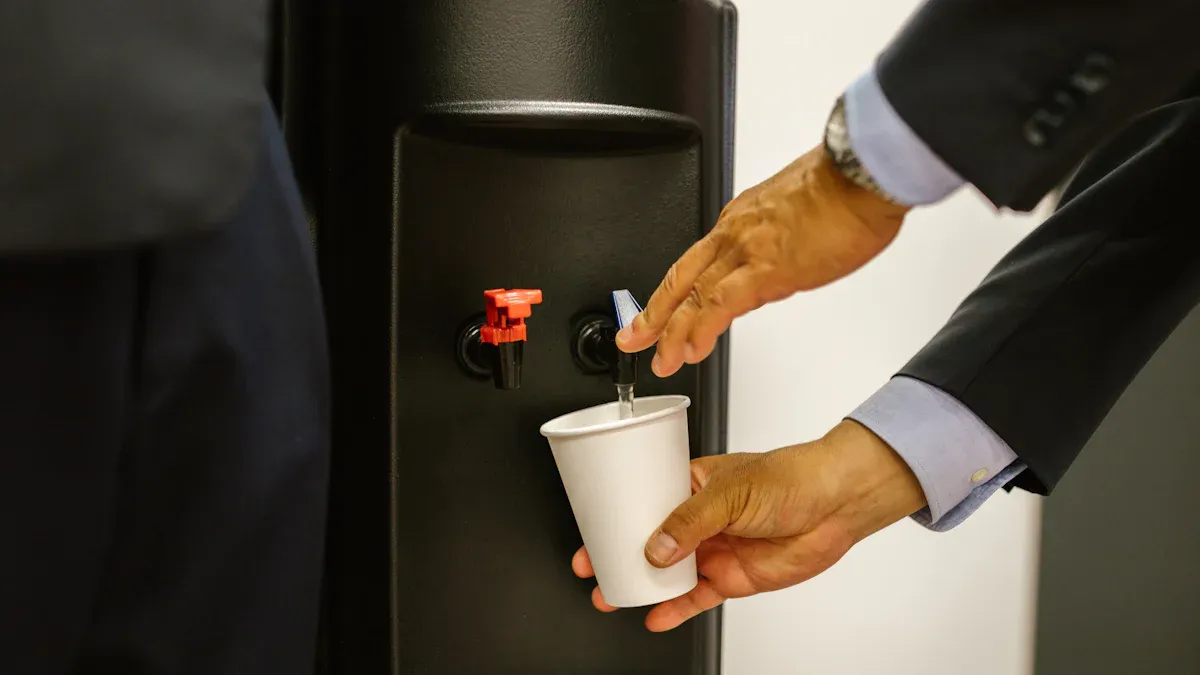
Beyond safety, you want an electric water dispenser that works well and fits your lifestyle. Performance and convenience features separate a basic device from a great one. You should evaluate these factors to ensure your dispenser is fast, quiet, and easy to take with you.
Assess the Water Flow Rate
The water flow rate determines how quickly the dispenser fills your cup or bottle. A slow dispenser can be frustrating, especially when you are in a hurry. This speed is directly related to the power of the internal pump motor. A more powerful motor can move more water in less time.
Manufacturers use a formula to connect motor power to flow rate. It shows that pump power is directly proportional to the rate of flow.
The mathematical relationship is expressed as:
$ P_p = {{Q · H· s} \over {3960 · η_{p}}} $
Here,
Ppis the pump's power, andQis the rate of flow. This shows a clear link between the two.
You do not need to calculate this yourself. You just need to understand that a higher power rating (in watts) generally means a faster flow. A good flow rate for daily use is around 1 to 1.5 liters per minute. This speed fills a standard glass in about 10-15 seconds. Check the product specifications for the flow rate to make sure it meets your expectations.
Evaluate the Operational Noise Level
Nobody wants a noisy appliance buzzing in their kitchen, office, or bedroom. The operational noise level of a water dispenser is a critical factor for your comfort. Noise is measured in decibels (dB). For reference, a quiet library is around 40 dB, while a normal conversation is about 60 dB.
Many high-end dispensers are specifically engineered for quiet operation. They use better motors and sound-dampening designs to function with minimal noise. This ensures a peaceful environment wherever you use the device.
Pro Tip: 📝 Look for dispensers that advertise "quiet operation" or list a noise level below 50 dB. This will ensure the sound is unobtrusive and won't disturb your daily activities.
Prioritize Portability and Durability
One of the biggest advantages of these dispensers is their portability. You can easily move them from the kitchen counter to the dining table or take them on a camping trip. For a device to be truly portable, it must be lightweight and compact.
Pay close attention to the product's weight. A heavy dispenser is difficult to carry around. The industry has made great strides in reducing weight without sacrificing performance.
| Category | Average Weight |
|---|---|
| Industry Standard | 3.5kg (7.7 lbs) |
| Lightweight Base Model | 2.5kg (5.5 lbs) |
| Advanced Portable Model | 1.8kg (4.0 lbs) |
A portable device also needs to be durable. It will likely get bumped or jostled during travel. The housing material is key to its longevity. You should look for dispensers made from strong, impact-resistant plastics.
- ABS (Acrylonitrile Butadiene Styrene) is an excellent choice. It is known for its toughness, strength, and impact resistance. This is the same durable material used in computer keyboards and phone cases. It is also lightweight, making it perfect for portable electronics.
Always check the product description to confirm the materials used. A dispenser with a sturdy ABS plastic body will withstand the rigors of daily use and travel, giving you a reliable source of water wherever you go.
You are now ready to choose the right electric water dispenser. Before you buy, run through this final checklist to make a confident choice.
Final Checklist: ✅
- Food-Grade & BPA-Free Materials
- High-Capacity Battery (1200mAh+)
- Universal Bottle Fit
- Simple, Quiet Operation
Verifying these points helps you avoid common issues like leaks or noise. This ensures you get a dependable device, often protected by a 1-year warranty, that is perfectly suited to your needs.
FAQ
How do I clean my electric water dispenser?
You should clean the silicone tube and steel spout regularly. Use a mild soap and warm water for cleaning. This simple step ensures your water always tastes fresh.
Can I use the dispenser for hot water?
No, you should not use it for hot liquids. These devices are designed for cold or room-temperature water only. Hot water can damage the internal motor and silicone tubing.
What if the dispenser is too noisy?
A quality dispenser should operate below 50 decibels. If yours is too loud, it may have a low-quality motor.
Pro Tip: 💡 Always check the product description for a "quiet operation" feature. This ensures the device will not disturb you at home or in the office.