What is In-shell nut sorting
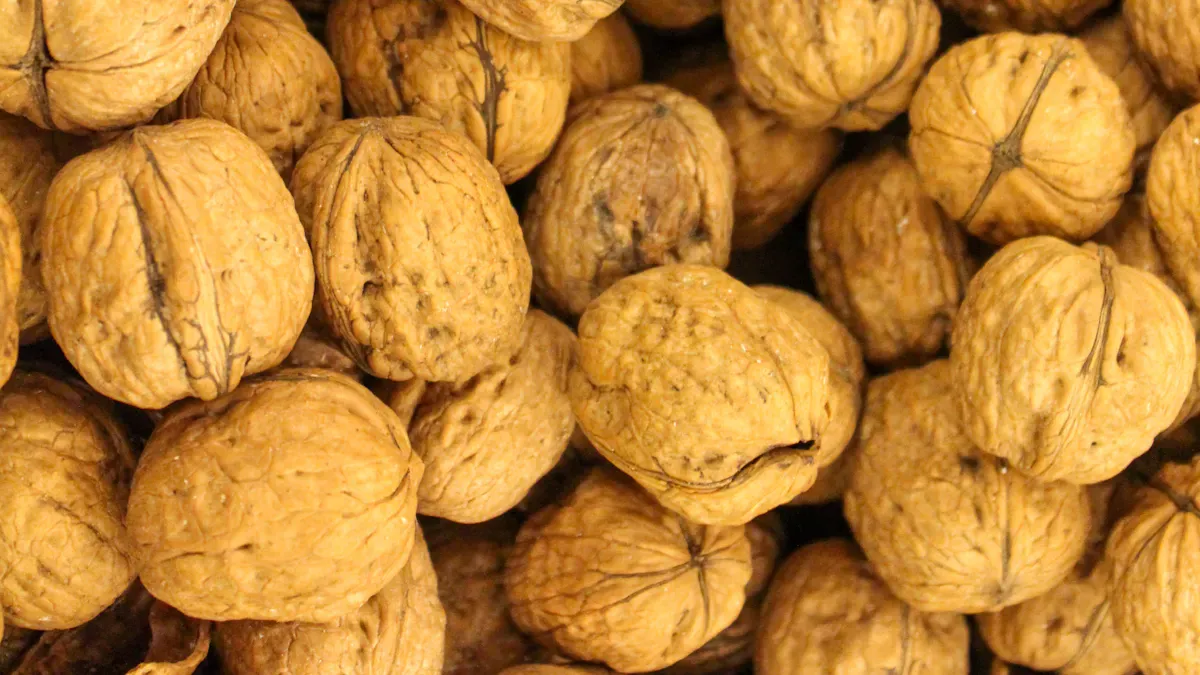
In-shell nut sorting is a process that separates nuts by examining their shell for defects, size, and quality. This method plays a major role in the nut industry. The shell protects the pecan and helps keep the nut fresh. Sorting in-shell pecan ensures only high-quality pecan reach the next stage. Many processors use advanced technology to improve in-shell nut sorting. In-shell nut sorting removes damaged shell and foreign items. Pecan with unbroken shell are easier to store and process. In-shell nut sorting helps producers deliver better pecan. The shell must be inspected to guarantee a safe, market-ready nut. Pecan processors rely on in-shell nut sorting to meet industry standards.
In-shell nut sorting supports food safety, product consistency, and efficiency for pecan and other nuts.
Key Takeaways
In-shell nut sorting ensures only high-quality nuts reach consumers by inspecting shells for defects and foreign materials.
Automated sorting systems increase efficiency, allowing processors to handle large volumes of nuts quickly and reduce labor costs.
Advanced technologies like optical sorting and AI improve accuracy, achieving up to 99.5% retention of high-quality nuts.
Regular maintenance and staff training are essential for keeping sorting machines effective and ensuring product quality.
Investing in modern sorting solutions enhances food safety, product consistency, and overall market competitiveness.
In-shell nut sorting process
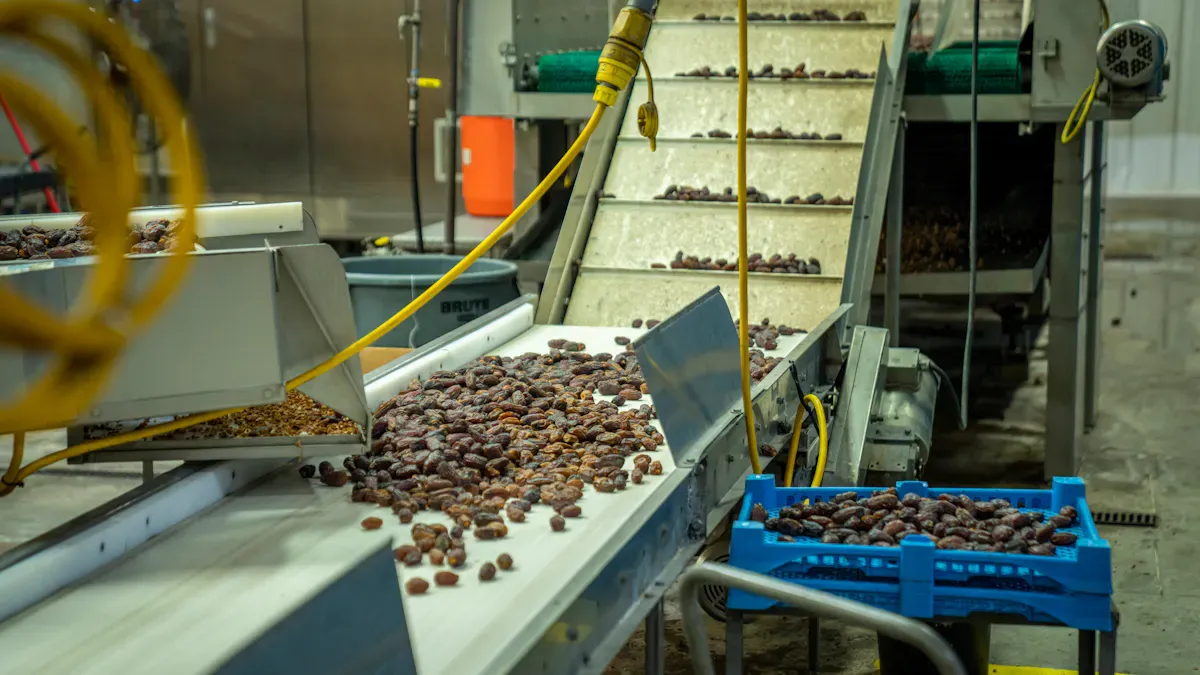
Typical processing stages
In-shell nut sorting involves several important stages. Each stage helps ensure that only the best nuts move forward in the process. The shell of each nut must be checked for quality and safety. Here are the main stages:
Receiving and Pre-cleaning: Nuts arrive at the facility with their shell still intact. Workers remove large debris like leaves, sticks, and stones. This step protects the machines and keeps the process safe.
Initial Inspection: Workers or machines check the shell for cracks, holes, or mold. Damaged nuts are removed early to prevent problems later.
Mechanical Sorting: Machines separate nuts by size and weight. This helps group nuts with similar shell thickness and quality.
Optical Sorting: Advanced systems, such as Bühler’s optical sorting technology, use cameras and sensors to scan each shell. These systems can spot defects like stains, insect damage, or foreign materials. Shape recognition helps remove broken pieces and packing materials.
Final Quality Check: Workers or machines do a last check to make sure only high-quality nuts with strong shell move forward.
Note: Each stage uses different equipment to improve sorting accuracy and protect the shell. Removing foreign materials and damaged nuts keeps the final product safe and clean.
Step-by-step sorting
Sorting in-shell nuts follows a careful process. Each step focuses on the shell and the quality of the nut inside. Here is a simple breakdown:
Loading: Workers load nuts with their shell onto conveyors. The nuts move through the sorting line.
Pre-cleaning: Machines remove dust and large debris. This step protects the shell and keeps the process smooth.
Metal Detection: Metal detectors scan for any metal pieces that may have entered with the shell. This keeps the nuts safe for eating.
Mechanical Sorting: Machines sort nuts by size and weight. Nuts with similar shell thickness are grouped together.
Optical Sorting: Cameras and sensors scan each shell. The system removes nuts with stains, cracks, or insect damage. Foreign objects like stones or sticks are also removed.
Manual Inspection: Workers check the shell for any missed defects. They remove any nuts that do not meet quality standards.
Final Cleaning: Dust collection systems with HEPA filters keep the air clean and remove fine particles from the shell.
Packaging: Only nuts with strong, clean shell are packed for storage or further processing.
Quality control is important at every step. The table below shows some common quality control measures used during sorting:
Quality Control Measure | Description |
|---|---|
Product Contamination Control | Multi-stage quality controls like metal detectors and optical sorting to remove foreign materials and damaged kernels. |
Dust Collection System | Certified systems with HEPA filtration to maintain air quality and comply with safety standards. |
Waste Management and Disposal | Protocols for handling waste to prevent cross-contamination and ensure safe disposal. |
Emergency Stop Mechanisms | Easily accessible emergency stop buttons to cut power during emergencies. |
Machine Guards and Safety Interlocks | Enclosures for moving parts to prevent accidental startup during maintenance. |
Operator Training and Procedures | Comprehensive training for staff on safe operation and hygiene practices. |
Sorting in-shell nuts helps producers deliver a safe, high-quality product. Each shell is checked many times to make sure it meets industry standards. Advanced sorting systems and careful quality control keep the process efficient and reliable.
Sorting methods and technologies
Manual and mechanical sorting
Manual sorting is the oldest method used for in-shell nut sorting. Workers inspect each shell by hand, looking for cracks, mold, or other defects. This approach allows for careful quality control and oversight. Mechanical sorting uses machines to separate nuts based on size, weight, and shell thickness. These sorting machines speed up the process and reduce labor costs.
Sorting Method | Advantages | Limitations |
|---|---|---|
Manual Sorting | - Highly effective at identifying subtle defects | - Labor-intensive and costly over time |
- Low initial investment | - Subject to human error and fatigue | |
- Flexible and adaptable to various nut types | - Lower throughput compared to automated systems | |
- Promotes quality control and oversight | ||
Mechanical Sorting | - Efficiency and high accuracy | - Higher initial investment |
- Significant reduction in labor costs | - Requires skilled operation and maintenance |
Mechanical sorting solutions often use weight-based systems and aspiration columns. These technologies help group nuts with similar shell characteristics. Mechanical sorting machines can handle large volumes, but they require skilled operators and regular maintenance.
Manual sorting is flexible and adaptable, but mechanical sorting solutions offer higher throughput and efficiency.
Optical and AI sorting systems
Optical sorting systems use advanced imaging to scan each shell. These sorting machines rely on visible light, color, and shape recognition to detect defects. AI-based sorting solutions add deep learning technology, which adapts to new defect patterns and nut varieties. RaymanTech Optical Sorting Systems use high-resolution imaging and AI to identify and remove defective shells, foreign objects, and impurities.
360° optical imaging provides full-surface inspection of each shell.
HD vision systems accurately identify cracks, stains, and insect damage.
AI deep learning technology adapts to different nut varieties and defect types.
Optical sorting machines detect and separate nuts based on color, shape, and size.
Surface contaminants are detected using hyperspectral imaging systems.
Spectral analysis identifies internal defects, such as mold or insect damage.
Automated sorting solutions achieve high accuracy and consistency.
AI-based optical sorting machines have a retention rate of high-quality nuts at 99.5%. Traditional equipment retains only 88% of high-quality nuts. The detection rate of moldy and insect-damaged nuts with AI sorting reaches 99.2%. GOLDENSORTER optical sorting machines achieve over 98% sorting accuracy, which is much higher than manual sorting.
Optical and AI sorting solutions improve product quality, reduce labor costs, and increase sorting efficiency.
Key technologies for in-shell sorting
Modern sorting solutions use a range of technologies to inspect and classify nuts in their shell. RaymanTech Optical Sorting Systems are designed for high-speed processing, sorting up to 35 pieces per second. These systems integrate seamlessly into processing lines and do not cause bottlenecks.
Key technologies include:
High-resolution cameras for detailed imaging of each shell.
AI-driven shape recognition for uniformity in size and classification.
Detection and removal of surface defects, such as discolored or cracked shells.
Automated removal of unwanted items, including closed shells and half-shells.
Integration with X-ray inspection for enhanced safety checks.
Hyperspectral imaging systems for advanced detection of internal and external defects.
Weight-based sorting machines for grouping nuts with similar shell thickness.
Aspiration columns for separating light debris from the shell.
Visible light and color sorting technologies for identifying shell discoloration.
Hyperspectral imaging technology combines visible and infrared light to analyze the shell and kernel. This technology detects subtle differences in shell color, texture, and internal quality. Hyperspectral imaging systems provide detailed imaging and classification, helping processors achieve higher sorting accuracy.
RaymanTech Optical Sorting Systems offer flexible configurations, labor replacement, and advanced AI detection capabilities. These sorting solutions enhance product quality, efficiency, and safety.
Sorting solutions continue to evolve with new imaging and hyperspectral technologies. Processors can now achieve higher accuracy, better quality control, and improved productivity. The shell is inspected using multiple imaging methods, ensuring only the best nuts move forward.
Quality and benefits
Improving nut quality
Nut processors rely on advanced sorting systems to improve quality and reduce defects. Automated machines perform thorough inspection and assessment of each nut during post-harvest processing. These systems remove foreign material, such as stones or shells, and detect defects like cracks, mold, or discoloration. The nuts color sorter machine ensures only high-quality nuts reach the market. High-tech sorting machines improve quality control with minimal effort. Color sorting machines enhance product quality by removing defective nuts and foreign material. The table below shows how different machines contribute to quality improvement:
Machine Type | Key Benefit |
|---|---|
Nuts Color Sorter | Maintains consistent quality by removing defective or discolored nuts |
High-Speed Peanut In Shell Color Sorter | Achieves perfect quality control with less effort and ultra-high consistency |
High Capacity Peanut Color Sorting Machine | Automatically sorts different color particles to enhance quality |
Cashew Colour Sorting Machine | Removes foreign materials and detects defects based on various characteristics |
Quality assessment of tree nuts depends on accurate detection of defects and foreign material. Nut quality assessment ensures that only premium nuts are delivered to consumers.
Efficiency and productivity
Automated in-shell nut sorting increases efficiency in post-harvest processing. Machines can inspect hundreds of pounds of nuts per hour, which is much faster than manual inspection. This speed allows nut processors to plan production better and meet market demand. Automated systems reduce labor needs and operational costs. Staff can focus on higher-value tasks, which boosts productivity. Consistent inspection and assessment of nuts also reduce waste and improve kernel recovery. The technology stabilizes product quality and purity, leading to better outcomes for nut processors.
Benefits of automated sorting
Automated sorting systems offer many benefits for nut processors. These systems operate continuously, maximizing throughput and uptime. Automation reduces human error, which improves food safety and product quality. The table below highlights key benefits:
Benefit | Description |
|---|---|
Increased Throughput | Handles large volumes without breaks, maximizing uptime |
Enhanced Food Safety | Reduces human error, ensuring higher safety standards |
Improved Product Quality | High precision sorting ensures only premium nuts are packaged |
Automated systems achieve classification accuracy of 99.7% for Brazil nuts, surpassing human capabilities. Consistent separation of premium kernels enhances brand reputation. Reduced reliance on manual labor allows nut processors to streamline operations and focus on quality assessment. Continuous operation leads to higher processing efficiency and purity. Automated inspection and assessment help meet FDA and EU standards for foreign material and spoilage limits, supporting food safety and market access.
Tip: Investing in automated in-shell nut sorting systems helps nut processors achieve better quality, higher efficiency, and improved food safety in post-harvest operations.
Applications and challenges
Commonly sorted nuts: pecan and pecan shelled products
Pecan sorting is a major part of the pecan processing industry. The United States grows hundreds of thousands of acres of pecan trees. In 2022, farmers harvested 278 million pounds of pecan. Out of this, 42.3 million pounds were sold as in-shell pecan, and 235.4 million pounds became pecan shelled products. The classification of pecan shelled products is important for market value. Pecan shelled products include halves, pieces, and meal. Sorting helps discriminate pecan shelled products by size, color, and quality. The nut processing industry uses advanced machines to sort pecan and pecan shelled products quickly and accurately.
Pecan has unique features that affect sorting:
Shell thickness and hardness
Kernel size and color
Moisture content
Susceptibility to mold or insect damage
Pecan shelled products must meet strict standards for export and domestic sales. Sorting ensures only high-quality pecan reach consumers.
Industry uses and standards
The pecan processing industry relies on sorting to meet safety and quality standards. Pecan and pecan shelled products must pass several checks before reaching the market. The table below shows common safety measures and regulations:
Safety Measure | Description |
|---|---|
Product Contamination Control | Multi-stage quality controls like metal detectors and optical sorting to ensure safe, high-grade pecan. |
Dust Collection System | Certified systems to manage dust and meet OSHA and NFPA standards. |
Emergency Stop Mechanisms | Easily accessible E-stops to cut power in emergencies, meeting ISO 13850. |
Regulatory Compliance | Adherence to USDA, FDA, and 3-A standards for legal and market access. |
Pecan shelled products must meet USDA and FDA rules for food safety. Sorting removes foreign material and defective pecan. This process helps the nut processing industry deliver safe, high-quality pecan shelled products.
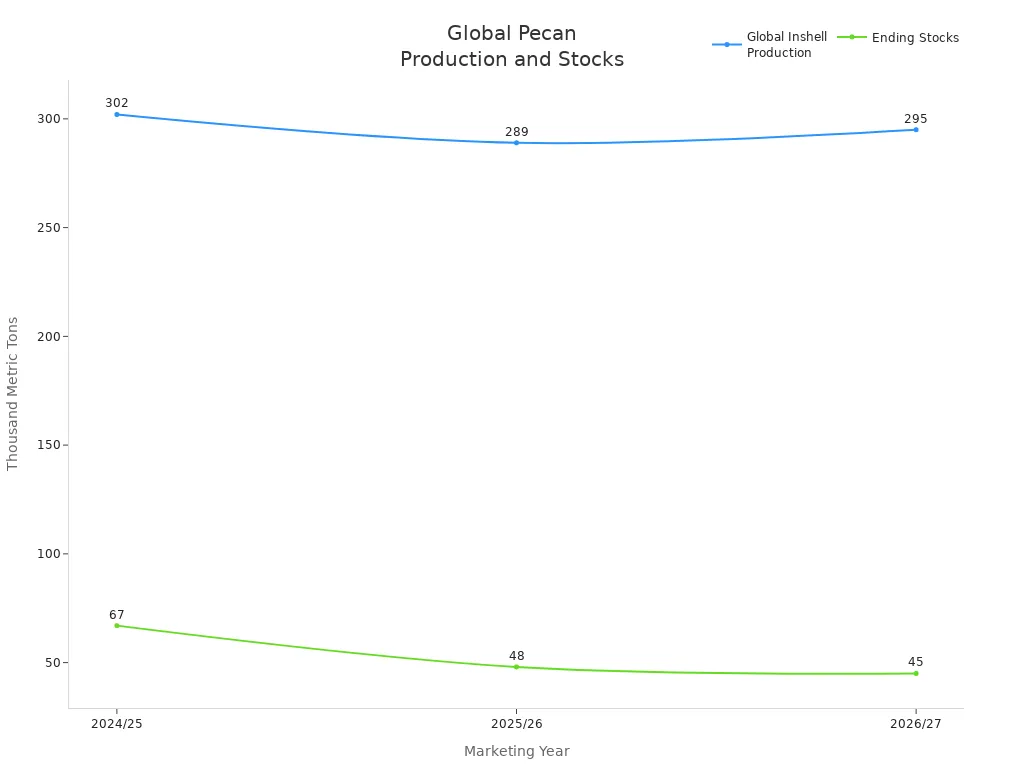
Global production of in-shell pecan continues to grow. The chart below shows recent trends:
Metric | 2024/25 | 2025/26 | 2026/27 |
|---|---|---|---|
Global Inshell Production (kt) | 302 | 289 | 295 |
Ending Stocks (kt) | 67 | 48 | 45 |
Avg. Grower Price (USD/lb, Desirable 55%) | $3.25 | $3.50–$3.70 | $3.70–$4.00 |
Sorting challenges and considerations
Sorting pecan and pecan shelled products presents several challenges. Processors must remove many types of defects and foreign materials. Common issues include:
Discolored kernels from oxidation or moisture
Surface mold or insect damage
Shell fragments after cracking
Broken or shriveled pecan
Size inconsistencies that affect grading
Leaves, wood, stones, plastic, or glass mixed with pecan
Empty shells, cracked shells, half-shells, and closed-shell pecan
Advanced systems like RaymanTech Optical Sorting Systems help address these problems. New solutions use AI, imaging, and even acoustic sensing to improve sorting. These methods allow for rapid, non-destructive quality checks. The pecan processing industry continues to adopt new technology to improve the sorting of pecan and pecan shelled products.
Tip: Regular maintenance and staff training help keep sorting machines working well and ensure high-quality pecan shelled products.
In-shell nut sorting improves product quality and helps processors meet strict industry standards. Advanced technologies, such as RaymanTech systems, increase efficiency and accuracy. These systems use high-resolution cameras, AI algorithms, and X-ray inspection to detect defects and ensure food safety. Consumer demand for high-quality nuts and strict regulations drive innovation in sorting processes.
Innovation Type | Description |
|---|---|
Fully-Integrated Processing Line | Combines sorting, roasting, and seasoning for better quality and less waste |
Optical Sorting Machine (4C) | Dual-AI detection with a false reject rate under 1% |
X-ray Sorting Machine | Identifies foreign matter and quality issues using X-ray technology |
Nut sorting technology continues to evolve. Producers benefit from consistent quality and stronger market positions. Ongoing innovation will shape the future of nut processing worldwide.
FAQ
What is in-shell nut sorting?
In-shell nut sorting is the process of separating nuts based on the quality and condition of their shells. This step helps remove damaged, dirty, or foreign materials before further processing.
Which nuts are commonly sorted in-shell?
Processors sort pecans, walnuts, hazelnuts, almonds, and pistachios in-shell. Sorting helps improve quality and safety for these popular nuts.
How does optical sorting work for in-shell nuts?
Optical sorting uses cameras and sensors to scan each nut. The system detects defects, color differences, and foreign objects. AI technology helps improve accuracy and speed.
Why is automated sorting important in the nut industry?
Automated sorting increases efficiency and consistency. It reduces labor costs and human error. Processors can meet strict food safety standards and deliver high-quality products.