what is dtf transfer film
DTF transfer film is a specialized polyethylene terephthalate (PET) sheet. It acts as the primary carrier for printed designs in the direct-to-film process. The film holds water-based ink and adhesive powder together, enabling the heat-press transfer of full-color graphics onto diverse fabrics. The industry's projected 5.97% CAGR through 2033 underscores the growing demand for quality dtf transfer film.
Key Takeaways
- DTF transfer film helps print colorful designs on many types of fabric. It uses a special film, ink, and powder to put the design on clothes.
- The DTF process has three main steps: printing the design on film, adding and melting a powder, and then pressing it onto the fabric with heat.
- DTF printing is better than some other methods because it works on more fabrics and makes detailed designs faster without needing to cut out parts.
Understanding the Components and Process of DTF Transfer Film
The direct-to-film process is a multi-step method. Each stage relies on specific components and precise actions to create a high-quality, durable graphic. Understanding this workflow reveals how the technology achieves its impressive results on various textiles.
The PET Film Base and Release Coating
The foundation of any DTF print is the PET (polyethylene terephthalate) film. This sheet is not just a simple piece of plastic; it is an engineered carrier. Its primary role is to hold the ink design in perfect registration until it is transferred to the final garment. The film must be dimensionally stable, meaning it will not shrink or warp when exposed to the heat of the curing oven or heat press.
A critical element of the dtf transfer film is its release coating. This microscopic layer faces the printer's printhead and receives the ink. Its formulation ensures two opposing but necessary functions: it must absorb the water-based ink effectively, yet also release the entire cured design cleanly during the final peeling stage. Common components in these coatings include:
- Polydimethylsiloxane (PDMS): A silicone polymer that provides excellent non-stick properties.
- Silicon dioxide (silica): Acts as an adsorbent, helping the coating manage ink spread and absorption.
- Specialized Layers: Manufacturers often use proprietary multi-layer coatings, including ink-receptive, release, and anti-static layers, to optimize performance.
Step 1: Printing the Design
The process begins at a specialized DTF printer. The printer first lays down the full-color image using CMYK (Cyan, Magenta, Yellow, and Black) inks directly onto the coated side of the dtf transfer film. The image is printed in reverse, like a mirror image of the final design.
Immediately after the color layer, the printer applies a layer of opaque white ink on top of the CMYK design. This white ink layer is crucial. It serves two purposes:
- It acts as a base color, ensuring the design's colors appear vibrant and true, even on dark or colored fabrics.
- It functions as the primary bonding surface for the adhesive powder in the next step.
Step 2: Applying and Curing the Adhesive
While the white ink is still wet, the printed film moves to an adhesive application station. Here, a hot-melt adhesive powder is sprinkled evenly across the entire design. The powder sticks only to the wet ink, leaving the non-printed areas of the film clean. Excess powder is shaken off for reuse.
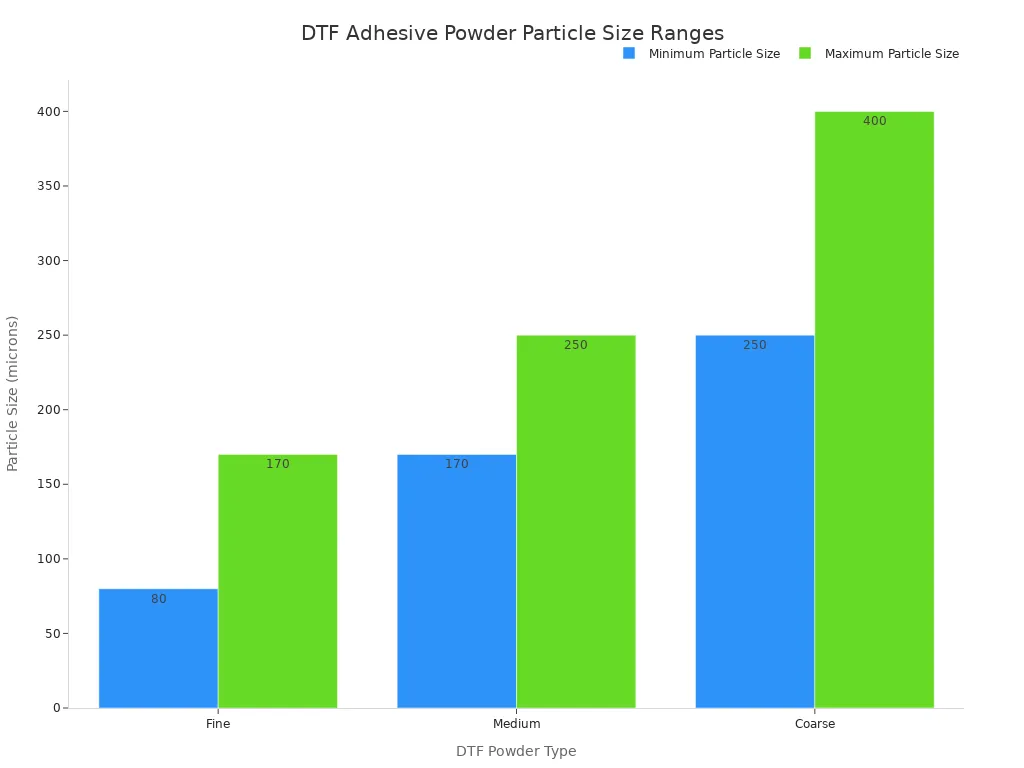
The choice of adhesive powder affects the final feel and durability of the transfer. Powders are categorized by their particle size, measured in microns.
| DTF Powder Type | Particle Size Range | Characteristics & Uses |
|---|---|---|
| Fine | 80-170 microns | Feel: Softest hand feel. Uses: Ideal for intricate designs and lightweight fabrics like t-shirts. |
| Medium | 170-250 microns | Feel: Good hand feel. Uses: Versatile for most designs and fabrics, including hoodies and sportswear. |
| Coarse | 250-400 microns | Feel: Most noticeable, textured feel. Uses: Best for heavy-duty fabrics like workwear, canvas, and denim. |
After powder application, the film passes through a curing oven or under a heat source. The heat melts the adhesive powder, which then fuses with the underlying ink layer. This creates a single, solid, and flexible transfer sheet, ready for application.
Step 3: Heat Pressing and Peeling
The final step is transferring the design to the garment. The operator places the cured film on the fabric and presses it using a commercial heat press. The heat reactivates the adhesive, bonding the design securely to the fabric's fibers. The required temperature and pressure vary by fabric type.
Tip: For the most common apparel material, 100% cotton, specific settings yield the best results. Operators should always test their settings first.
| Material | Temperature (Fahrenheit) | Pressure |
|---|---|---|
| 100% Cotton | 300-320°F | Medium |
Once the pressing time is complete, the operator opens the press and peels the PET film away. This leaves only the ink and adhesive design on the garment. The film type dictates whether this peeling happens immediately while hot (hot peel) or after the transfer has cooled (cold peel).
Types of DTF Transfer Film and Key Differences
Not all DTF films are created equal. Manufacturers produce various types to achieve different finishes, feels, and production efficiencies. Understanding these differences helps businesses select the right material for each project.
Cold Peel vs. Hot Peel Film
The primary distinction among films is the peeling method. Hot peel films allow operators to remove the carrier sheet immediately after heat pressing, speeding up production. Cold peel films require the transfer to cool completely before peeling. Cold peel is often preferred for specific results.
- Modern Matte Finish: It creates a non-glossy finish that integrates well with high-end apparel.
- Exceptional Detail: The stable release is ideal for designs with fine lines or small text.
- Increased Durability: A full cooling period creates a stronger adhesive bond, improving wash performance.
Specialty Films: Glitter, Reflective, and More
Beyond standard films, specialty options add unique visual effects. Glitter films embed glitter particles into the transfer for a sparkling finish. Reflective films use materials that reflect light, making them popular for safety gear and fashion apparel. These films allow for creative, high-value customizations.
DTF Film vs. Sublimation Paper
DTF and sublimation both use heat to transfer designs, but their materials and mechanisms differ. Sublimation paper works only on polyester or poly-coated items, while dtf transfer film is compatible with cotton, blends, and more. Sublimation offers zero "hand" or feel, as the dye becomes part of the fabric.
| Feature | DTF Transfer | Sublimation Print |
|---|---|---|
| Hand/Feel | Slightly raised feel | Zero hand feel |
| Integration | Sits on top of the fabric | Dye infused into the fibers |
Both methods provide excellent wash fastness. Cost-wise, DTF film can be more economical for materials.
| Material | Cost per Square Meter |
|---|---|
| DTF PET Film | US$0.07–$0.39 |
| Sublimation Paper | US$0.25–$0.39 |
DTF Film vs. Heat Transfer Vinyl (HTV)
DTF offers a significant advantage over HTV for complex, multi-color graphics. HTV requires cutting and weeding each color separately, a labor-intensive process. DTF prints all colors at once, eliminating weeding entirely. This makes DTF far more efficient for detailed designs and high-volume orders. DTF transfers are also more elastic and less prone to cracking than HTV.
| Feature | DTF (Direct to Film) | HTV (Heat Transfer Vinyl) |
|---|---|---|
| Multi-color Design | Faster; no weeding required | Slower; requires layering |
| Weeding | Not required | Required; slows production |
DTF transfer film is a coated PET sheet that serves as the essential medium for the DTF printing method. Its key function enables the transfer of durable, high-quality, full-color designs onto various materials, including dark-colored cotton, without pre-treatment. The technology's future promises even greater advancements.
Future Outlook: Industry experts predict significant evolution in DTF technology.
- Automation will play a vital role in improving efficiency and reducing labor costs.
- DTF printers will become more sophisticated, integrating features to enhance color accuracy.
- A growing demand for personalized apparel will drive significant growth in the custom merchandise sector.
This adaptability allows diverse businesses to achieve specific goals, from small brands to corporate suppliers.
| Business Type | DTF Printing Application | Achieved Business Goals |
|---|---|---|
| Small Apparel Brand | Custom t-shirts and hoodies | Faster production, reduced inventory, and improved print quality. |
| Local Sports Team Supplier | Team jerseys and fan merchandise | Ability to fulfill small, on-demand orders with vibrant prints. |
| Online Custom Gift Store | Personalized t-shirts and tote bags | Efficient production of one-off custom orders with high satisfaction. |
FAQ
How durable are DTF transfers?
DTF transfers offer excellent durability. They withstand numerous wash cycles without cracking or fading. Proper care ensures a long-lasting, vibrant design on the garment.
Can DTF film be used on any fabric?
DTF film works on many fabrics. It adheres to cotton, polyester, blends, leather, and more. This versatility makes it a superior choice for diverse apparel and accessory printing.
What does a DTF print feel like on a shirt?
A DTF print has a soft, flexible feel. It sits on the fabric surface but is much thinner and more pliable than traditional vinyl, offering superior comfort.
See Also
Leading Precoating Materials for Advanced Filtration Systems: A 2025 Outlook
Industrial Applications and Dissolution Methods of 2,5-Furandicarboxylic Acid Explored
Automatic UV Coaters: Essential Technology for High-Speed Printing Operations
Assessing the Value of TDC Residential Door Hinges for Your Home
Boosting 2,5-Furandicarboxylic Acid Sustainability: Data-Driven Strategies for Industry