Inline Checkweigher 101 Your Top Questions Answered

An inline checkweigher is a critical tool for modern production. It automates the weighing process directly within a production line. This system weighs every product as it moves. It ensures each item meets a specific target weight. The machine automatically rejects items that are too heavy or too light. This action happens without stopping the production flow.
The global market for these systems shows significant growth. Projections indicate a substantial increase in market size over the next decade.
| Metric | Value (USD Million) | Year |
|---|---|---|
| Market Size | 1,320.6 | 2025 |
| Projected Market Size | 2,500.0 | 2035 |
| CAGR | 6.6% | 2025-2035 |
Specialized versions, like the Hairy Crabs Multi-Level Weight Sorting Checkweigher Weight Grading Machine, demonstrate the technology's adaptability across various industries.
Key Takeaways
- An inline checkweigher weighs products as they move on a production line. It removes items that are too heavy or too light. This keeps production running smoothly.
- These machines help businesses save money by preventing overfilling. They also ensure products meet quality standards and follow legal rules.
- Checkweighers make production faster and more reliable. They automatically adjust filling machines to keep product weights correct.
How Does an Inline Checkweigher Work?
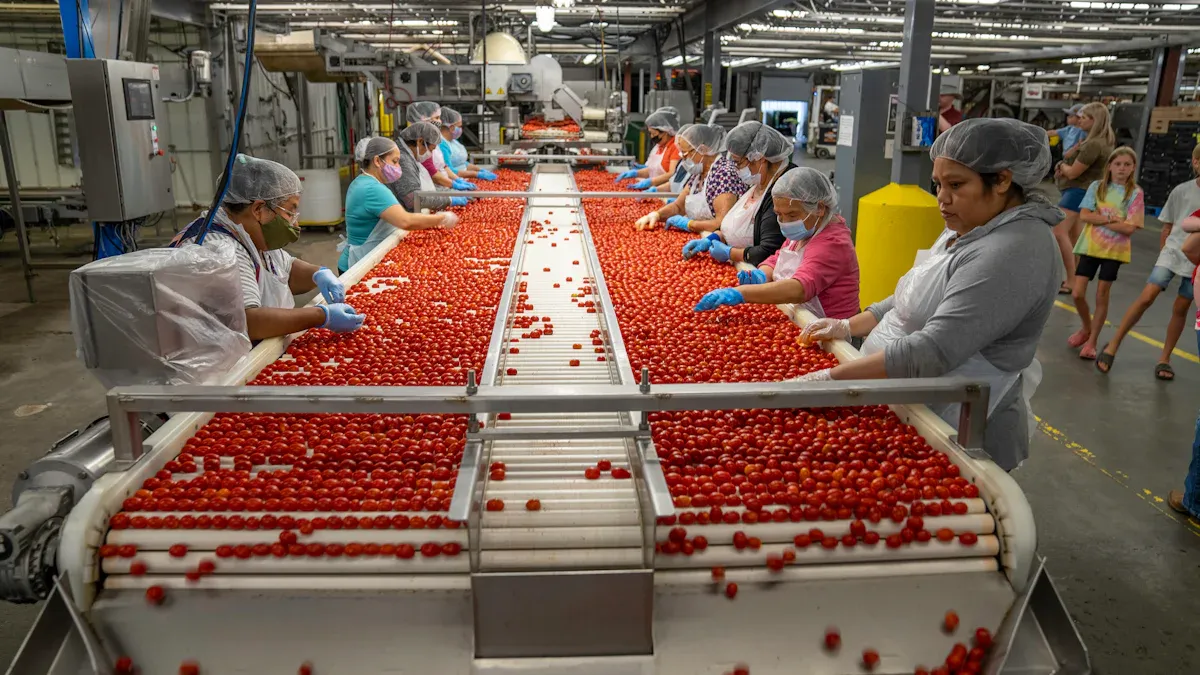
An inline checkweigher operates through a precise, automated sequence. It seamlessly integrates into a production line to weigh products without causing delays. The system identifies and separates items that do not meet weight standards.
The Step-by-Step Weighing Process
The weighing process is a rapid, three-stage journey that every product takes. This ensures 100% weight inspection.
- Infeed and Spacing: Products enter the checkweigher on an infeed conveyor belt. This belt properly spaces the items. Correct spacing is crucial for the system to weigh each product individually and accurately.
- Weighing: The product moves onto the weighing conveyor. A high-precision load cell under the conveyor measures the product's weight while it is in motion. This entire action takes only a fraction of a second. Modern systems are incredibly fast. Some dynamic checkweighers can weigh up to 600 products per minute. In high-rate food and beverage lines, speeds can even reach 1,000 products per minute. Slower lines handling larger items, like cases, may operate at over 20 cases per minute.
- Discharge and Rejection: After weighing, the product moves to an outfeed conveyor. The system's computer compares the measured weight to a preset target range. Products within the correct weight range continue down the production line. If a product is overweight or underweight, the system activates a rejection mechanism. This device removes the non-conforming item from the main product flow.
Key Components of an Inline Checkweigher
Three core components work together to make an inline checkweigher function effectively. Each part plays a vital role in achieving accurate and reliable results.
| Component | Primary Function |
|---|---|
| Conveyor System | Transports products smoothly and at a constant speed. |
| Load Cell | Measures the product's weight and converts it to an electronic signal. |
| Rejection Mechanism | Removes out-of-spec products from the production line. |
The conveyor system is more than just a belt. It must provide a stable platform for weighing. The system measures material weight as it moves, so belt speed and tension must remain constant. For best results, operators should install the scale away from vibrating equipment or steep inclines.
The load cell is the heart of the checkweigher. It is a highly sensitive sensor that performs two key tasks:
- It measures the force exerted by a product's weight.
- It converts that physical force into an electrical signal for the computer to process.
The rejection mechanism is the system's quality enforcer. Different mechanisms are suited for different products.
- Air Jet: Uses a sharp blast of air to blow lightweight items (under 1 lb) off the line.
- Pusher: Employs a pneumatic arm with a plate to push heavier items (up to 8 lbs) into a reject bin.
- Drop Bed: The conveyor section drops down, allowing faulty items to fall into a collection bin below. This is ideal for lightweight, durable products.
- Flipper/Diverter Arm: A gate or arm pivots to gently guide products into a separate lane. This method works well for boxes, bags, and unstable items like uncapped bottles.
Note: Choosing the right rejection mechanism is essential. The product's weight, shape, stability, and speed of the line all influence the best choice for your operation.
Dynamic Weighing vs. Static Weighing
An inline checkweigher uses dynamic weighing. This means it weighs products while they are in motion. This differs from static weighing, where an object must be completely still to be measured. Each method has distinct advantages and is used in different scenarios.
| Feature | Dynamic Weighing | Static Weighing |
|---|---|---|
| Process | Measures objects while moving on a conveyor. | Measures objects when stationary on a scale. |
| Speed | Very high speed, processes hundreds of items per minute. | Slower, requires the object to stabilize for each measurement. |
| Application | High-volume production lines (food, logistics, packaging). | Precise measurements in controlled settings (labs, pharmacies). |
| Accuracy | Less precise due to motion and vibrations. | Generally more accurate as it eliminates movement errors. |
Dynamic weighing is essential in high-throughput environments. Industries like transportation and warehousing rely on it. For example, weigh-in-motion systems on highways check vehicle weights without requiring trucks to stop. Static weighing, however, is preferred when precision is the top priority. Applications like dosing medication or formulating scientific compounds require the high accuracy that only static weighing can provide.
Why Is an Inline Checkweigher Essential for Your Business?
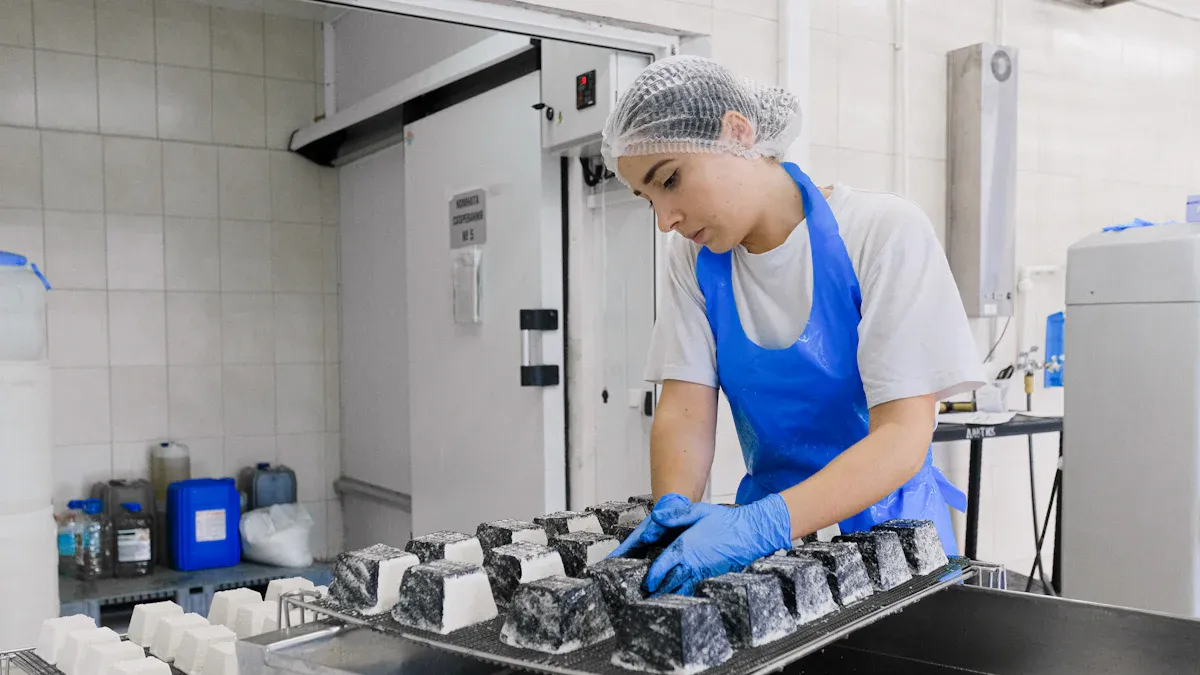
An inline checkweigher is more than a quality control tool. It is a strategic asset that drives profitability and protects a brand's reputation. Businesses that integrate this technology gain a significant competitive advantage. They improve product quality, reduce costs, ensure legal compliance, and boost overall operational speed.
Ensuring Product Consistency and Quality
Customers expect consistency. They want the same high-quality product with every purchase. An inline checkweigher helps businesses deliver on this promise. It ensures every package leaving the facility meets precise weight specifications.
This system is especially valuable for multi-component products, like frozen meals or variety packs. It continuously monitors fill weights and quantities. The machine provides immediate alerts if it detects weight variations, signaling a problem with the filling equipment. This process guarantees that every package contains the correct amount of each component.
A checkweigher performs several key verification tasks:
- It identifies problems in filling systems for packages, bottles, or containers.
- It verifies the correct number of items in a box or boxes in a carton.
- It ensures containers like kegs are empty before filling and correctly filled afterward.
Did You Know? 🤔 By maintaining uniform weight, a checkweigher ensures that the customer's experience is the same every time. This consistency builds brand trust and loyalty.
Reducing Product Giveaway and Minimizing Waste
Product giveaway, or overfilling, is a hidden cost that silently erodes profits. Manufacturers often add a little extra product to each package to avoid underweight violations. This small amount adds up to a significant financial loss over time.
For example, a baker might overfill a 100g package of cookies by 4g. This 4% giveaway means the company loses revenue on thousands of units produced daily. It also represents a 4% loss in production capacity and labor.
A checkweigher minimizes this giveaway. It allows manufacturers to set their fill targets closer to the stated net weight with confidence. This precision leads to a fast return on investment (ROI).
| Initial Scenario | With Checkweigher | Annual Savings |
|---|---|---|
| 100,000 packs/month | 100,000 packs/month | |
| 0.5g overfill per pack | 0.2g overfill per pack | |
| $125 monthly loss | $50 monthly loss | $900 |
Based on a product cost of $2.50/kg.
Reducing overfill also supports sustainability goals. Precise weighing prevents the excess use of raw materials. Automated systems also reduce reject rates, which lowers wasted product, packaging, and energy. This optimization helps businesses operate more efficiently and responsibly.
Meeting Regulatory Compliance
Governments worldwide enforce strict regulations on package weights to protect consumers. Non-compliance can lead to severe consequences. These include hefty fines, forced product recalls, and damage to a company's reputation.
Key regulations include:
- Fair Packaging and Labeling Act (FPLA) in the United States.
- British Weights and Measures Act in the United Kingdom.
- European Union Directives for goods sold in the EU.
Violating these laws is costly. For instance, violations of certain U.S. regulations can result in civil penalties of up to $75,000 per violation. Each day a violation continues can be counted as a separate offense.
A checkweigher provides the documentation needed to prove compliance. It creates an automated audit trail with timestamps, batch numbers, and weight data. This system also helps businesses meet industry-specific standards like HACCP, BRC, and SQF. It acts as a Critical Control Point (CCP) by monitoring weights and ensuring they remain within safe and legal limits.
Improving Overall Production Efficiency
An automated weighing system eliminates production bottlenecks and boosts throughput. Manual spot-checking is slow, prone to human error, and cannot inspect 100% of products. An inline checkweigher automates this process, allowing for faster and more reliable production.
This technology can significantly improve a company's Overall Equipment Effectiveness (OEE). An OEE-driven approach can increase production output by up to 20% by reducing waste and improving accuracy.
One of the most powerful features is the feedback loop.
- The checkweigher detects if a filler machine is consistently producing overweight or underweight packages.
- It sends an automatic signal back to the filler.
- The filler adjusts its settings in real-time to correct the fill volume.
This intelligent communication minimizes giveaway and ensures compliance without stopping the line. The data collected by the checkweigher also helps managers identify trends and resolve issues before they become major problems. By automating weight monitoring and providing actionable insights, the system streamlines workflows and enhances overall operational efficiency.
An inline checkweigher is a critical investment for any modern production facility. It automates quality control and ensures regulatory compliance, which protects a brand's reputation. The system prevents overfilling to reduce material costs and waste. Businesses that prioritize consistency and efficiency find this technology essential for success.
FAQ
What industries use inline checkweighers?
Many industries use this technology. Food and beverage, pharmaceutical, and logistics companies rely on checkweighers for quality control. They ensure product consistency and regulatory compliance.
How accurate are inline checkweighers?
Accuracy depends on line speed, product size, and the environment. Modern systems achieve high precision. They often measure items within a fraction of a gram.
Can a checkweigher be combined with other equipment?
Yes. Manufacturers often combine checkweighers with metal detectors or X-ray systems. This creates a single, compact unit for comprehensive product inspection and safety.
See Also
Defining Pharmaceutical Checkweighers: Unveiling Their Crucial Features and Functions
Essential Industrial Checkweighers: The Top 3 for Every Food Processing Plant
2025 Guide: Key Capsule Checkweighers for Informed Buyer Consideration
Capsule Sorters Explained: Their Vital Role in Effective Defect Elimination
ISO 15547-1: Essential Insights You Absolutely Need To Understand