What Is A Water Refill Station And How Does It Work
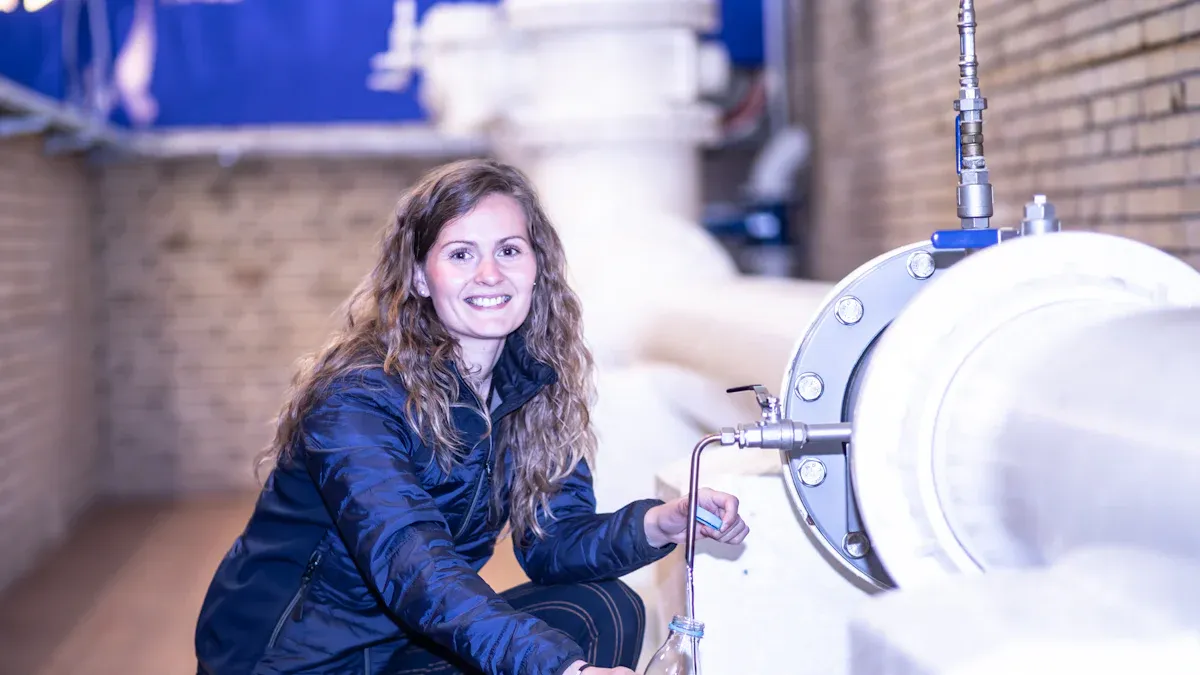
You can find a water refill station in many public spaces like airports and parks. These stations connect to the main water supply, filter the water for you, and dispense it into your reusable bottle. A refillable water dispenser offers a simple way to get clean drinking water on the go.
Did You Know? Globally, people use over 1.3 billion plastic bottles every day. Sadly, more than 90% of these bottles are not recycled and end up in landfills or our oceans.
Key Takeaways
- Water refill stations give you clean, filtered water. They connect to a building's water supply and use filters to remove bad things.
- These stations help the environment. You use fewer plastic bottles. This saves money and reduces trash.
- Water refill stations are easy to use. Many have touchless sensors. This keeps them clean and safe for everyone.
How Water Refill Stations Work
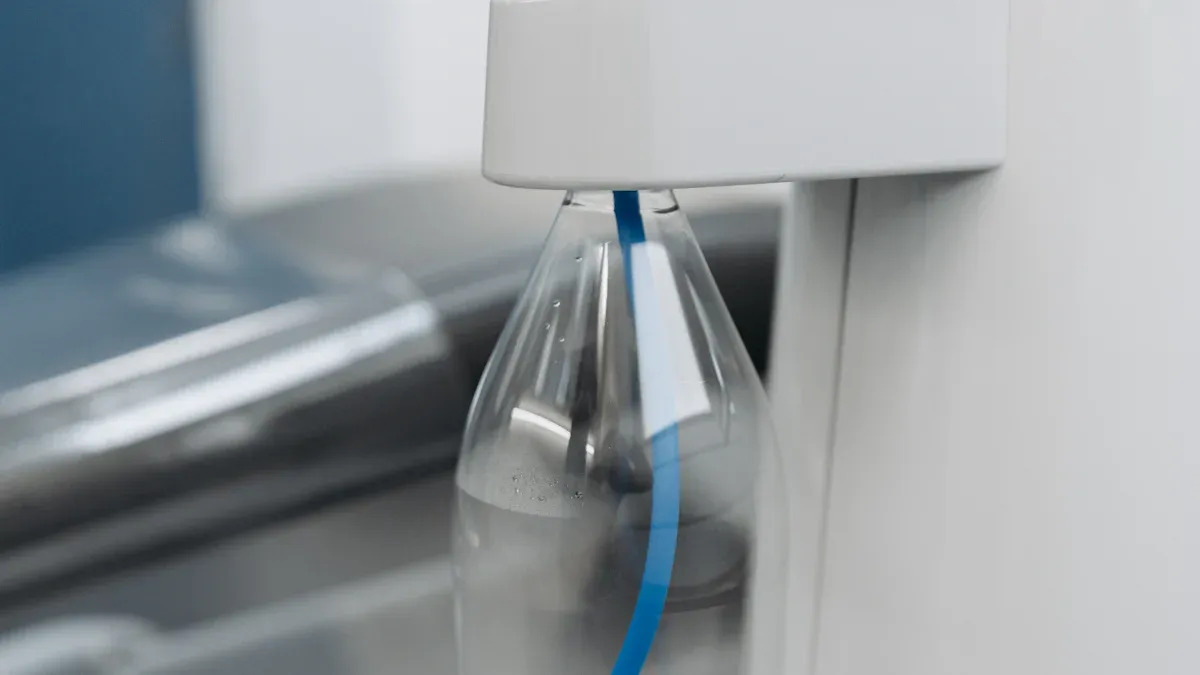
A water refill station seems simple on the outside. You place your bottle under a spout and get clean water. However, a sophisticated process happens inside the machine to deliver that fresh, filtered water. Let's explore the three main stages: connection, filtration, and dispensing.
The Water Source and Connection
Every water refill station starts with a reliable water source. These units connect directly to a building's main water supply, the same potable (safe to drink) water that flows to your kitchen sink. Plumbers follow specific rules to install these stations correctly and safely.
A proper installation ensures the station receives a steady water flow and drains correctly. Key plumbing requirements include:
- A 1-inch water inlet to supply enough water to the system.
- A 1-inch drain line to carry away any excess water.
- Compliance with NSF 61, a public health standard for water system components.
These connections guarantee that the station operates efficiently and meets safety codes, providing a trustworthy foundation for the entire process.
The Filtration Process
The filtration system is the heart of a refillable water dispenser. It turns standard tap water into purified, great-tasting drinking water. Most stations use a multi-stage process to remove a wide variety of impurities.
First, a sediment filter acts as the initial barrier. It traps larger particles and improves water clarity.
- Gravel
- Sand
- Rust
- Dust
- Fibers
Next, the water usually passes through an activated carbon filter. This filter is a game-changer for taste and smell. Activated carbon works through a process called adsorption. Tiny pores on the carbon's surface act like magnets, trapping contaminants as water flows past. This step is excellent at removing chlorine, which often causes a chemical taste in tap water. By removing these substances, the filter leaves you with clean, crisp water while keeping healthy minerals like calcium.
Some advanced stations use even more powerful filtration methods, such as Reverse Osmosis (RO) or UV-C sterilization.
Filtration vs. Reverse Osmosis You might see different types of filtration advertised. Standard filtration is great for general use, but Reverse Osmosis offers a higher level of purification. Here’s a quick comparison:
| Feature | Standard Filtration | Reverse Osmosis (RO) |
|---|---|---|
| Mechanism | Uses a physical barrier to trap particles. | Uses pressure to force water through a very fine membrane. |
| What It Removes | Removes sediment, chlorine, and improves taste. | Removes a wider range of contaminants, including dissolved salts, lead, arsenic, and microplastics. |
| Mineral Removal | Keeps beneficial minerals in the water. | Removes almost everything, including healthy minerals. |
| Water Waste | Produces no wastewater. | Creates wastewater as it flushes away impurities. |
Finally, many high-end stations add a UV-C sterilization stage for ultimate safety. This technology uses ultraviolet light, often at a wavelength of 254-265 nanometers, to neutralize microorganisms. The UV light damages the DNA and RNA of bacteria, viruses, and protozoa. This damage stops them from reproducing, making them harmless. It is a physical process, so no chemicals are added to your water.
The Dispensing Mechanism
The final step is getting the purified water into your bottle. Most stations use a simple and efficient dispensing mechanism. You will typically find either a push-button system or a modern touchless sensor.
Touchless stations are becoming very popular, especially in high-traffic areas like airports and gyms. They use an infrared sensor to detect your bottle.
- You place your bottle in the filling area.
- The sensor detects the bottle's presence.
- The station automatically dispenses water.
- The water stops once you remove the bottle.
This hands-free operation is a major advantage. It prevents the spread of germs because you never have to touch a surface that hundreds of other people have touched. This simple feature significantly reduces the risk of cross-contamination.
These stations are also designed for speed. A typical commercial unit dispenses water at a rate of 1.1 to 1.5 gallons per minute (GPM). This fast flow rate means you can fill a standard reusable bottle in just a few seconds and get back on your way. 💧
Types and Benefits of Using a Water Refill Station
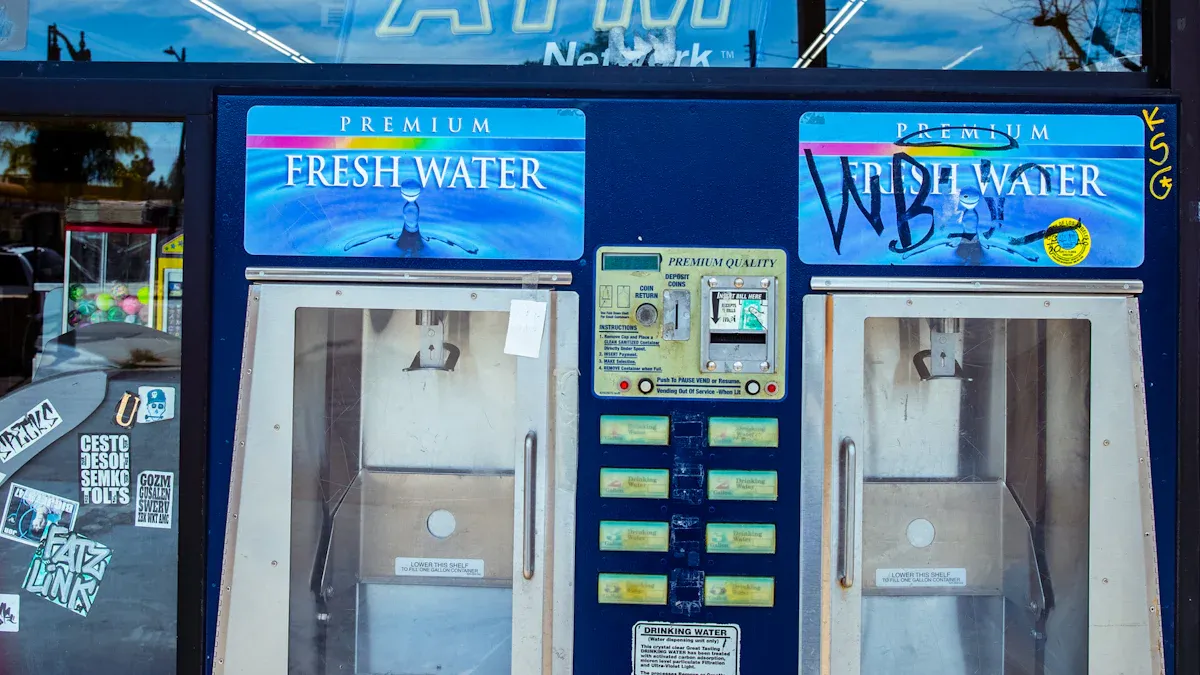
Now that you understand how a water refill station works, you can explore the different types available and the major benefits they offer. Choosing to use one is a great decision for your health, your wallet, and the planet.
Common Types of Stations
Water refill stations are not one-size-fits-all. Manufacturers design them for specific environments, from busy school hallways to quiet office breakrooms.
Wall-Mounted and Combo Units You often see wall-mounted units in high-traffic public spaces like schools, gyms, and airports. These stations save valuable floor space. Many are combination units, which include a traditional drinking fountain alongside the bottle filler.
These combo stations are built to be tough and accessible.
- They are often made from durable materials like 304 stainless steel to resist vandalism and heavy use.
- Many models are ADA-compliant, ensuring people in wheelchairs can easily access them.
- They feature hands-free sensors for hygienic refilling.
- A digital "Green Counter" often shows you how many plastic bottles have been saved, encouraging more people to refill.
Indoor vs. Outdoor Units The location of a station determines its design. Indoor units, found in offices and lobbies, often have a sleek look. Outdoor units, however, must be much more rugged. Manufacturers build them to be weatherproof and vandal-resistant to withstand extreme temperatures and public use in parks or on school playgrounds.
Did you know? Most outdoor stations do not contain filters. This is because the filter could be damaged by freezing weather. For this reason, advanced filtration is more common in indoor models.
Countertop Dispensers In an office setting, you might find a countertop refillable water dispenser. These compact units sit on a counter and connect directly to the building's water line. They offer a range of features perfect for a workplace.
- Space Efficiency: Their small size fits easily in a breakroom or kitchenette.
- Advanced Features: Many provide instant hot and cold water, and some even offer sparkling water.
- Smart Technology: Some models include usage monitoring and send alerts when maintenance is needed.
These bottleless dispensers eliminate the need for storing and lifting heavy water jugs, making them a convenient and modern choice for any office.
The Refillable Water Dispenser Advantage
A modern refillable water dispenser offers significant advantages over older water coolers that use large plastic jugs, especially when it comes to water quality and hygiene. The biggest difference is the sealed, clean pathway your water travels.
| Feature | Traditional Water Cooler | Modern Refillable Water Dispenser |
|---|---|---|
| Water Source | Comes from large, pre-filled plastic jugs. | Connects directly to your building's water line. |
| Filtration | No filtration as water is dispensed. | Filters water right before you drink it. |
| Hygiene | Uses an open reservoir, exposing water to air and germs. | Uses sealed pathways, minimizing contamination. |
| Supply | Limited; you must replace empty jugs. | Unlimited; water is always available. |
Because a refillable water dispenser uses a closed system, it greatly reduces the risk of contamination. Touchless sensors further improve hygiene by eliminating a common contact point. These stations also meet strict public health standards. Certifications from organizations like NSF International ensure that no harmful substances from the machine's parts get into your water. This guarantees the water you drink is not only fresh but also safe.
Environmental and Cost Benefits
Using a water refill station is one of the easiest ways you can make a positive impact. The benefits for the environment and your budget are clear and significant.
A Greener Planet Every time you refill your bottle, you prevent a single-use plastic bottle from becoming waste. The impact adds up quickly. By switching to a reusable bottle, one person can save an average of 156 plastic bottles from being produced each year.
Your choice also reduces your carbon footprint. A reusable bottle becomes more environmentally friendly than single-use plastic after just 10 to 30 uses. Over a year, consistent refilling can prevent up to 70 kg of CO2 emissions. It’s a simple action with a powerful effect on planetary health. 🌎
More Money in Your Pocket Besides helping the environment, you also save a surprising amount of money. Buying bottled water is expensive. Individuals in the U.S. can spend over $1,200 a year on it.
By simply refilling a reusable bottle, you could save anywhere from $300 to $1,350 annually. That's extra money you can use for other things, just by making a different choice about how you drink water.
Choosing to use a water refill station is a win-win. You get access to clean, filtered water while actively contributing to a healthier planet and a healthier bank account.
Water refill stations give you a reliable way to get safe, filtered drinking water. You save money and reduce plastic waste with every refill. Success stories from places like the University of Illinois Chicago prove their impact. Future stations will get even better with smart IoT technology, making your choice powerful for your health and the planet. 🌎
FAQ
Is the water from a refill station safe to drink?
Yes, the water is very safe. These stations use advanced filters to remove impurities like chlorine and sediment. This process ensures you get clean, great-tasting water with every refill.
How do I find a water refill station near me?
You can easily find nearby stations using your smartphone. Many free apps and online maps show the locations of public water refill points in your area.
Can I use any type of bottle at a refill station?
Most reusable bottles fit perfectly. The dispensing area is designed to accommodate various bottle sizes. Just place your bottle under the sensor or spout to start filling.