What Is the Magic Behind DTF Transfer Film Rolls?
A DTF transfer film roll is a specially coated PET (polyethylene terephthalate) sheet. It acts as a temporary carrier for a printed design. This film securely holds the ink and a special adhesive powder together. A heat press then transfers the complete, full-color design onto the chosen fabric.
Key Takeaways
- DTF transfer film rolls help print designs on many types of fabric.
- The process uses special ink and powder to make strong, colorful designs.
- DTF printing is easy to use and makes clothes look good for a long time.
How Does a DTF Transfer Film Roll Work? The Step-by-Step Process
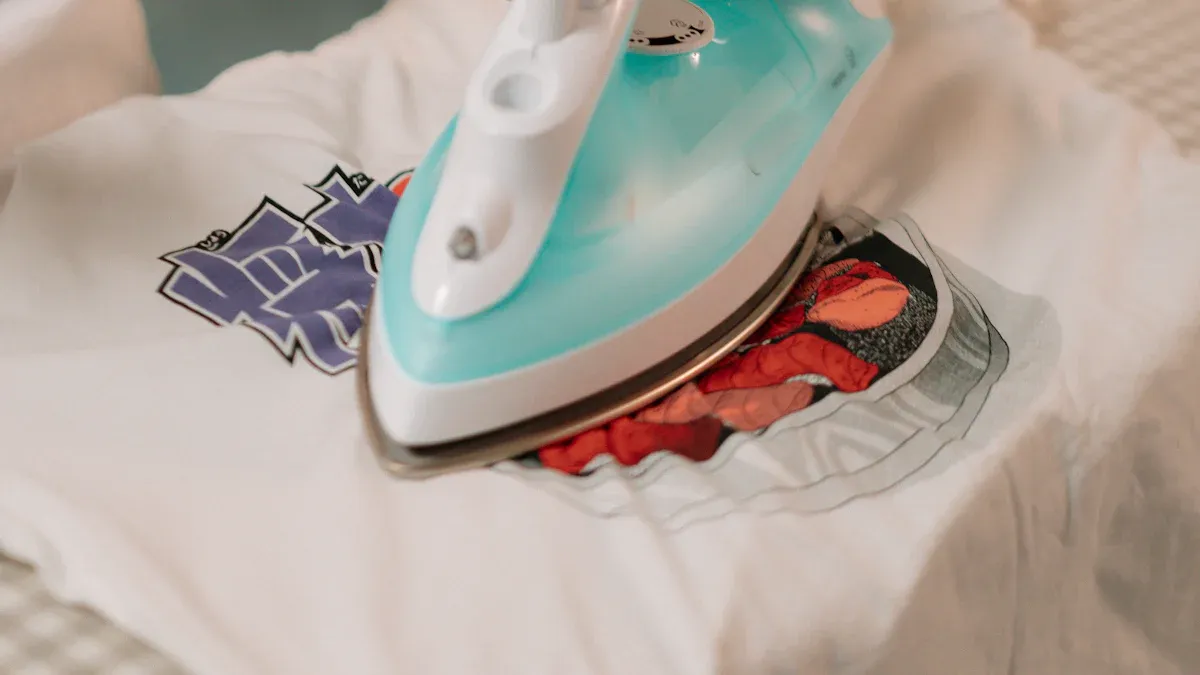
The magic of DTF printing unfolds in a precise, multi-stage process. Each step builds upon the last, transforming a digital design into a durable, wearable graphic. The dtf transfer film roll is the foundation for this entire workflow.
Step 1: Printing the Design onto the Film
The process begins with a specialized DTF printer. This machine does not print directly onto fabric. Instead, it applies the design onto the coated side of the DTF film.
The printer first lays down a layer of CMYK (Cyan, Magenta, Yellow, Black) colors. It then prints a layer of white ink on top. This white layer is crucial. It acts as an opaque base that makes the colors appear vibrant on any color of fabric, including dark ones.
DTF ink is a specialized, water-based formulation engineered for this task. Its core components include:
- Pigments: These provide the color and opacity. Titanium dioxide creates the brilliant white base, while other organic pigments form the CMYK colors.
- Polymer Binders: These resins, often polyurethane and acrylic, act as a glue. They ensure the ink adheres to the film and later bonds with the fabric fibers.
- Additives: Various other agents improve ink flow, prevent pigment clumping, and enhance the final print's durability and washfastness.
Step 2: Applying the Adhesive Powder
The ink remains wet on the film after printing. The operator then applies a hot-melt adhesive powder over the entire design. This fine, granular powder sticks only to the wet ink, not the dry parts of the film. The operator shakes off any excess powder, leaving a clean and precise adhesive layer.
This powder is typically a thermoplastic polyurethane (TPU). Its unique chemical structure gives it both elastic and adhesive properties.
| Type of DTF Powder | Composition |
|---|---|
| Polyurethane (TPU) | Thermoplastic polyurethane hot melt adhesive in fine powder form. |
| Ethylene Copolymers | Ethylene–vinyl acetate (EVA) or other ethylene-based copolymers. |
Step 3: Curing the Ink and Adhesive
The printed film, now coated with powder, moves to a curing stage. The operator uses a heat source like a curing oven or a heat press set to hover mode. Heat is applied without direct contact.
The Goal of Curing: This step melts the adhesive powder and partially cures the ink. The melted powder forms tiny "bridges," physically bonding with the ink layer. This process transforms the separate layers of ink and powder into a single, solid, and stable transfer sheet.
This physical and chemical change requires a specific temperature. The optimal melting range is typically between 110°C and 160°C (230°F and 320°F). The heat activates the polymers in the ink and adhesive, preparing them for a permanent bond with the fabric.
Step 4: Transferring the Design to Fabric
The cured design on the dtf transfer film roll is now ready for its final destination. The operator places the film onto the garment in the desired position. A heat press then applies both heat and pressure to the film. This heat reactivates the adhesive, causing it to melt again and bond securely with the fibers of the fabric.
Settings can vary based on the fabric, but for a common material like cotton, the following parameters are a professional standard:
| Setting | Value |
|---|---|
| Temperature | 315°F (157°C) |
| Pressure | Medium to firm |
| Peel Type | Cold peel recommended |
Step 5: The Final Reveal - Peeling the Film
After pressing, the final step is to remove the carrier film. This reveals the vibrant, finished design on the garment. The peeling method depends on the type of film used.
| Feature | Hot Peel | Cold Peel |
|---|---|---|
| Peel Timing | Immediately after pressing (while hot) | After the design has fully cooled |
| Main Difference | Film is removed immediately, allowing for faster production. | Film cools entirely before peeling, often resulting in better detail and a smoother finish. |
Cold peel film requires waiting for the transfer to cool completely, often for about 30 seconds. Peeling it while warm can damage the design.
Pro Tip: Troubleshooting Peeling Issues 💡 If a design peels after washing, the cause is often incorrect curing temperature or insufficient adhesive powder. Always verify your heat press settings against the manufacturer's guidelines. Ensure the powder is applied in a thin, even layer. If issues persist, you can try re-pressing the finished print for a few seconds with parchment paper on top to strengthen the bond.
Why is DTF Film the Key to Versatility and Durability?
The DTF process offers remarkable flexibility and resilience. The film acts as a universal bridge between ink and material, unlocking new possibilities for custom apparel and product creators. This method's unique properties make it a superior choice for a wide range of applications.
Unlocks All Fabrics and Colors
DTF printing breaks the barriers of fabric limitations. The adhesive powder bonds to almost any material, giving creators immense freedom. This technology works on many surfaces, including:
- 100% Cotton and Polyester
- Cotton/Polyester Blends
- Denim and Canvas
- Nylon and even leather
A key advantage is its performance on dark garments. The opaque white ink base ensures designs are significantly more vibrant and saturated compared to DTG prints on similar dark fabrics. This versatility allows businesses to expand their product offerings easily.
Creates a Durable, Flexible Finish
A properly applied DTF transfer delivers a finish that is both strong and elastic. The polyurethane adhesive creates a bond that can endure extensive wear and washing. Professionally applied designs can withstand 50 or more wash cycles without significant fading or cracking.
On stretchable fabrics like spandex, the transfer moves with the material. Using stretchable inks and films prevents the design from cracking, ensuring it remains intact on athletic wear and other flexible garments.
This durability makes the dtf transfer film roll an excellent tool for producing long-lasting custom apparel.
Eliminates the Need for Pre-Treatment
DTF printing streamlines the production workflow by removing the need for chemical pre-treatment. Other methods, like DTG, require applying and drying a pre-treatment solution, adding at least one minute to each garment's production time. By skipping this step, businesses save time and labor. This efficiency helps small businesses increase profitability. For example, some shop owners using desktop DTF machines can net between $500 and $1,000 in profit per hour, partly due to this simplified process.
The magic of the dtf transfer film roll is its role as a temporary carrier. It perfectly combines ink and adhesive before application. This unique process creates vibrant, durable prints on almost any garment.
By simplifying the workflow and removing pre-treatment, DTF technology is positioned for significant market growth and increased automation, making it an accessible and powerful method for print shops.
FAQ
What is the difference between DTF and DTG?
DTF prints onto a film for transfer. DTG prints directly onto the fabric. DTF offers greater fabric versatility and does not require pre-treatment, unlike most DTG applications.
How long do DTF transfers last?
A professionally applied DTF transfer is highly durable. It can typically withstand 50 or more wash cycles before showing significant signs of fading, cracking, or peeling.
Can a standard inkjet printer be used for DTF?
No, DTF printing requires specialized equipment. This includes a dedicated DTF printer, specific water-based pigment inks, adhesive powder, and a heat press for curing and application.
See Also
Why Automatic UV Coaters Are Crucial for Rapid Printing Operations
Demystifying Sterile Filter Devices: How They Function Effectively
Leading Precoating Materials for Advanced Filtration Systems in 2025
Innovative Folder Gluer Features Dominating 2025 Carton Production Lines
Industrial Applications and Dissolution of 2,5-Furandicarboxylic Acid Explored