What Contaminants Will an X-Ray Inspection System Find?
An x ray inspection system factory produces technology that is crucial for food safety. These systems find contaminants by detecting density differences. They identify materials denser than the food product itself. This includes metal, glass, mineral stone, and calcified bone. They can even find high-density plastics and rubber, protecting consumers.
A Guide to Detectable Contaminants
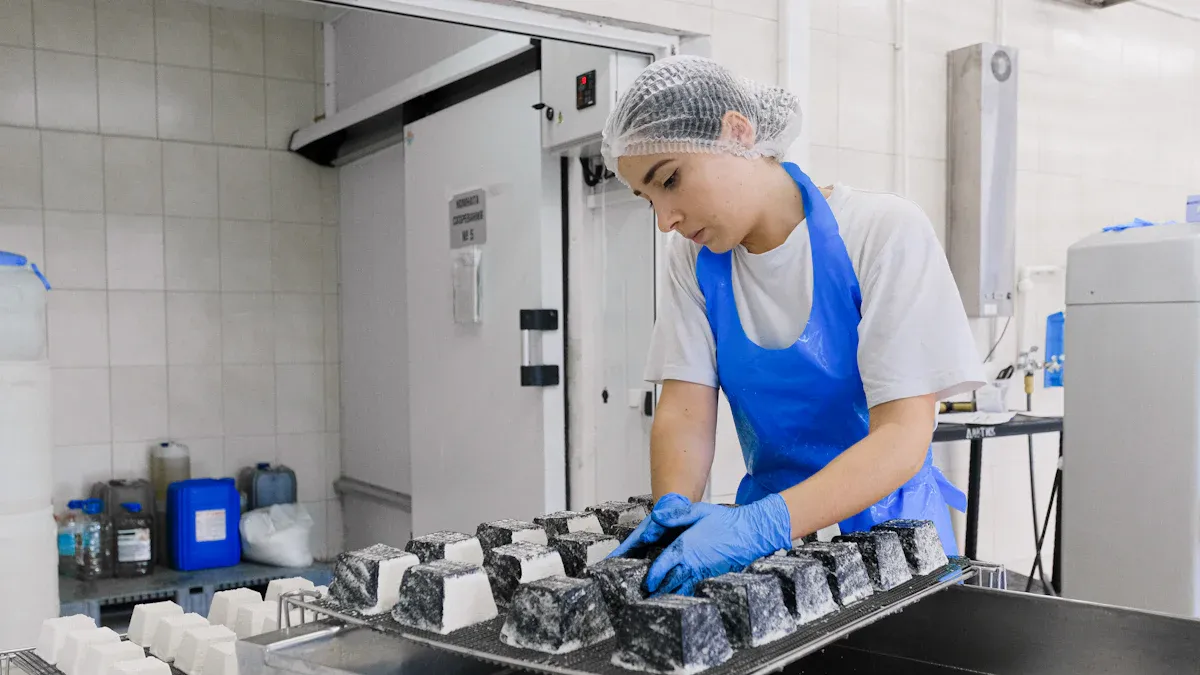
An x-ray inspection system identifies foreign bodies by analyzing density. Materials denser than the food product absorb more x-ray energy, creating a clear contrast on an inspection image. This allows the system to flag and reject contaminated items automatically. Let's explore the primary types of contaminants these systems excel at finding.
Metal Fragments
Metal is one of the most common physical contaminants in the food industry. Its high density makes it highly detectable by x-ray inspection. Fragments can enter the production line from several sources.
- Raw Ingredients: Foreign bodies can arrive with raw materials that have not been properly screened or sorted.
- Employee Practices: Human error, such as wearing jewelry or mishandling metallic tools, can introduce contaminants.
- Equipment Disrepair: The most frequent source is processing machinery itself. Components like sieves, conveyor belts, and tanks are made of metal alloys. Over time, wear mechanisms like abrasion, fatigue, or corrosion cause small pieces to break off and fall into the product.
Real-world incidents highlight the importance of detection. Hormel Foods Corporation once recalled over 4.8 million pounds of frozen chicken after customers found metal pieces originating from a conveyor belt. Similarly, Great Lakes Cheese Co. issued a voluntary recall for over 250,000 cases of shredded cheese due to potential metal fragments from a supplier's raw material. An x ray inspection system factory designs equipment specifically to prevent such large-scale recalls.
Glass and Ceramic Shards
Glass and ceramic are brittle materials that can shatter into dangerous shards. Because glass has a much higher density than most food products, x-ray systems can effectively identify it. The risk of this contamination is higher in certain product categories.
- Tomato Sauce
- Fruit Juices
- Wine
- Coffee
The acidity in these products can accelerate the breakdown of glass and ceramic containers. Advanced systems offer remarkable precision. For example, in sensitive products like baby food jars, an x ray inspection system factory can produce machines that reliably detect glass fragments between 2.5mm and 4.0mm.
Note: Not all glass is the same. The ability to detect glass depends on its density, which varies by type. Glass ceramic, for instance, has a higher density than standard soda-lime glass, making it even easier to detect.
| Material | Experimental LAC (cm⁻¹) at 356 keV |
|---|---|
| Soda-lime glass | 0.2167 |
| Glass ceramic | 0.2335 |
The table above shows the Linear Attenuation Coefficient (LAC), a measure of how much x-ray energy a material absorbs. The higher LAC of glass ceramic indicates it is denser and therefore more detectable.
Mineral Stones and Rocks
Stones, rocks, and pebbles are common contaminants in foods sourced directly from the field. Products like grains, legumes, nuts, and fresh produce are at high risk. These contaminants often include fragments of:
- Granite
- Quartz
- Other field minerals
Detecting these materials can be challenging if their density is similar to the food product. This is where advanced dual-energy technology becomes essential. A modern x ray inspection system factory often produces both single-energy and dual-energy machines.
| Feature | Single-Energy X-ray | Dual-Energy X-ray |
|---|---|---|
| Detection Principle | Density differences only | Atomic number and density |
| Stone Detection | Limited if density is similar to product | Highly effective, even with similar density |
| False Rejects | Higher likelihood | Significantly reduced |
Dual-energy systems use two separate x-ray beams to differentiate materials based on their atomic number (chemical makeup). This allows the system to distinguish a stone from a dense piece of food, dramatically reducing false rejections and improving safety. Detection is further enhanced during bulk-flow inspection, where a consistent product depth allows for outstanding sensitivity.
Calcified Bone
Bone fragments are a major concern in the meat, poultry, and fish processing industries. While all bone is dense, calcified bone is particularly hard and poses a significant safety risk. Its presence in products like chicken breasts, ground meat, or fish fillets can lead to consumer injury and costly recalls. USDA regulations now mandate that processors guard against such contaminants.
High-performance bone detection systems are integrated directly into processing lines to find these fragments. Processors have successfully used this technology to detect calcified poultry bones as small as 2-4mm. Specialized equipment, like the Foodman Dual Energy X-Ray Inspection System or the Marelec MXV-Slim, is engineered to find even minute bone fragments in chicken wings, nuggets, and sausages, protecting both consumers and brand reputation.
High-Density Plastics and Rubber
While x-ray systems cannot detect all plastics, they are very effective at finding high-density plastics and rubber compounds. These materials are often used in machinery components, and pieces can break off during production. Detectable types include:
- PVC (Polyvinyl Chloride)
- PTFE (Teflon)
- Viton (a brand of synthetic rubber)
The technology that makes this possible is known as Material Discrimination X-ray (MDX). MDX is a dual-energy technology that analyzes a material's atomic number. By measuring how different x-ray energies pass through an object, MDX can differentiate organic materials (the food) from inorganic contaminants like rubber or dense plastic. This allows the system to identify and reject contaminants that a standard x-ray system might miss. However, detection depends on the specific type of plastic, so actual product testing is always recommended.
What an X-Ray Inspection System Factory Can't Detect

An x ray inspection system factory designs powerful tools for food safety, but these systems have limitations. Understanding what they cannot detect is just as important as knowing what they can. The technology's effectiveness hinges on one critical factor: density.
Low-Density Foreign Materials
X-ray systems struggle to identify contaminants that are not significantly denser than the food product itself. Many foods are water-based, giving them a density similar to water. Foreign materials with a comparable or lower density will not create enough contrast on an x-ray image to be flagged. Common examples of undetectable contaminants include:
- Wood and cardboard
- Hair and string
- Insects
- Most plastics (e.g., Polypropylene)
- Fruit pits, like cherry pits
These materials, while posing a safety or quality risk, simply do not absorb enough x-ray energy to stand out from the surrounding product. For these challenges, manufacturers often turn to alternative methods like optical sorters, which use cameras and lasers to identify contaminants based on color and shape.
Why Density Is the Deciding Factor
Density is the fundamental principle behind x-ray inspection. An x-ray system measures radiodensity, often expressed in Hounsfield Units (HU), where distilled water is the baseline at 0 HU and air is -1000 HU. A material must have a sufficiently different HU value from the food product to be detected.
Product characteristics also play a crucial role.
Product Effect: The uniformity and thickness of a product influence detection. A homogeneous product like yogurt provides a stable signal, making it easier to spot anomalies. In contrast, a non-uniform product like a bag of trail mix has varying densities and air pockets, which can mask low-density contaminants.
Greater product thickness or density leads to more x-ray absorption, which can make it harder for the system to "see" a contaminant inside.
Beyond Contaminants: Added Quality Checks
Modern x-ray systems offer value far beyond just finding foreign bodies. They serve as multi-functional quality control stations. An x ray inspection system factory can equip machines with software to perform several checks simultaneously in a single pass. These capabilities include:
- Mass Measurement: Calculating product weight and volume to ensure consistency.
- Component Counting: Verifying the correct number of items in multi-packs, like candy assortments or dinner trays.
- Integrity Checks: Identifying broken or deformed products by analyzing their shape and size.
- Fill Level Assessment: Ensuring jars and bottles are filled to the correct level, preventing underfills and overfills.
These added checks help manufacturers maintain product quality, meet regulatory requirements, and protect their brand's reputation.
X-ray inspection is an essential tool for identifying dense contaminants like metal, glass, and bone. Understanding its density-based capabilities is crucial for protecting consumers and brand reputation. Preventing a single recall, which can cost over $10 million, justifies the investment. An x ray inspection system factory continues to innovate with AI, ensuring these systems remain vital for quality control.
FAQ
How does an x-ray system detect contaminants?
The system identifies materials denser than the food. These dense contaminants absorb more x-ray energy. This creates a clear contrast on an image, flagging the contaminated product.
Can x-ray inspection find all types of plastic?
No. X-ray systems only detect high-density plastics like PVC and Teflon. Low-density plastics, such as polypropylene, do not create enough contrast to be reliably identified by the system.
Is x-ray inspection safe for food products?
Yes. The radiation levels are extremely low and do not harm the food. An x ray inspection system factory ensures the technology is safe for all food applications.
See Also
Discovering Premier Sources for X-Ray Inspection Equipment Acquisition in China
Capsule Sorters: Essential Tools for Efficient Defect Elimination and Quality Control
Leading Precoating Solutions for Advanced Filtration Systems Expected in 2025
Evaluating the Investment in Automated Virus Sampling Tube Assembly Line Technology
Essential Industrial Checkweighers: Must-Have Equipment for Every Food Processing Facility