A Complete Guide to Water Purifier Machines for Commercial Use
A water purifier machine delivers clean and safe water for commercial environments. Businesses rely on high-quality water to protect customers and staff.
Food and beverage operations require pure water to maintain product safety and meet strict regulations.
Healthcare facilities depend on clean water for patient safety and equipment sterilization.
Poor water quality can lead to health risks and costly recalls.
The Mejec Commercial Central Pure Water System stands as a reliable solution, offering advanced purification for large-scale needs.
Key Takeaways
Water purifier machines ensure clean and safe water for businesses, protecting customers and staff.
Commercial systems offer high capacity and advanced filtration, meeting strict quality standards.
Investing in a water purifier machine reduces operational costs and enhances business efficiency.
Routine maintenance and service contracts ensure long-term reliability and consistent water quality.
Choosing the right system involves assessing needs, comparing options, and considering budget and customization.
What Is a Water Purifier Machine
A water purifier machine for commercial use plays a crucial role in business operations. It ensures that water meets strict quality standards, which is essential for customer satisfaction and product integrity. Many businesses, such as water stores, apartment complexes, industrial bottling plants, and food production facilities, depend on these machines to maintain efficiency and safety. The system removes contaminants and delivers clean water, supporting both daily operations and long-term business goals.
Commercial vs. Residential Systems
Commercial and residential water purification systems differ in several key areas. Commercial systems are designed for higher capacity and more demanding applications. They use larger membranes and can include hundreds of filtration elements. Residential systems focus on household needs, such as drinking and cooking water. The table below highlights the main differences:
Feature | Residential RO Systems | Commercial RO Systems |
|---|---|---|
Capacity | 50–100 gallons per day (GPD) | 2,000-100,000+ GPD |
Membrane Size | 2-4 inches in diameter | 4-8 inches in diameter |
Number of Membrane Elements | 1-5 elements | 1 to hundreds of elements |
Typical Applications | Household needs | Manufacturing, healthcare, food production |
Commercial systems offer greater flexibility and reliability for businesses with high water demands.
How It Works
A commercial water purifier machine operates through multiple stages to ensure water quality. Each stage targets specific contaminants and improves the overall purity. The process typically includes:
Stage | Description |
|---|---|
Sediment Filtration | Removes large particles and sediments using a series of filters. |
Water Softening | Ions and metals are removed through an ion exchange process. |
Carbon Filtration | Absorbs chlorine, pesticides, and herbicides from water. |
Ultraviolet Disinfection | Sterilizes water by killing bacteria and microorganisms using UV light. |
Reverse Osmosis | Exerts osmotic pressure through a semi-permeable membrane to remove contaminants. |
Ozonation and Circulation | Introduces ozone to sterilize water and eliminate bacteria. |
Storage | Water is stored in large tanks before bottling and packaging. |
These stages work together to deliver safe, clean water for commercial environments. Advanced systems, such as the Mejec Commercial Central Pure Water System, combine high-capacity output with efficient multi-stage filtration to meet the needs of modern businesses.
Importance of Water Quality in Business
Health and Safety
Water quality stands as a critical factor in protecting both customers and staff in commercial environments. Contaminated water can introduce a range of health hazards. Microorganisms, including bacteria, viruses, and parasites, often originate from human sewage or animal waste. Consuming water with these contaminants can result in gastrointestinal illnesses and infections. In healthcare settings, poor water quality can lead to the growth of harmful bacteria such as Legionella and Pseudomonas, which pose significant infection risks.
Common contaminants found in water used by businesses include:
Heavy metals such as lead and mercury
Volatile organic compounds (VOCs)
Large particles
Chlorine and chloramines
Sediment like rust, sand, and dirt
These contaminants can affect the taste, odor, and safety of water. For patients and customers, unpleasant taste or smell can diminish their experience and trust in the business. A reliable water purifier machine helps remove these risks, ensuring every drop meets strict safety standards.
Operational Impact
Water quality also influences the performance and longevity of commercial equipment. Hard water, which contains high levels of minerals, can cause scale buildup in dishwashers, boilers, and other water-dependent devices. This buildup leads to frequent malfunctions, increased energy consumption, and higher maintenance costs. The following table highlights the operational differences between hard and soft water:
Factor | Hard Water | Soft Water |
|---|---|---|
Energy Efficiency | Increases energy costs due to scale buildup in water heaters and boilers. | Allows efficient operation of water heaters and boilers, reducing energy consumption. |
Equipment Lifespan | Reduces lifespan of dishwashers and boilers due to mineral buildup. | Extends lifespan of water-dependent equipment, lowering replacement costs. |
Operational Downtime | Frequent breakdowns lead to unexpected downtime and lost revenue. | Fewer breakdowns ensure uninterrupted business operations. |
Investing in a high-quality water purifier machine supports consistent operations, reduces unexpected downtime, and protects valuable equipment. Clean water is not only a health requirement but also a foundation for business efficiency and reputation.
Technologies and Components
Filtration Methods
Commercial water purification relies on a combination of advanced filtration techniques to ensure optimal water quality. Multi-stage filtration is standard in modern systems. Each stage targets specific contaminants and enhances overall purity. Common methods include mechanical filters, cartridge and bag filters, ion exchange, ultrafiltration, reverse osmosis, and electrodeionization. Reverse osmosis removes up to 99% of total dissolved solids, making it ideal for laboratories and breweries. Carbon filtration is widely used in office buildings and gyms to eliminate chlorine and improve taste. UV sterilization kills bacteria and viruses, supporting healthcare and private well applications. Nanotechnology is applied in high-tech manufacturing to remove particles at the atomic scale.
Multi-stage filtration ensures that water meets strict safety and taste standards for commercial environments.
System Capacity
System capacity determines how much purified water a business can access at any given time. High-capacity machines are essential for restaurants, schools, and public facilities. The Mejec Commercial Central Pure Water System delivers up to 250 liters per hour, supporting large-scale operations with ease. Centralized design allows consistent water quality across multiple usage points. Businesses benefit from reliable supply, minimizing interruptions and downtime.
High-capacity output supports peak demand.
Centralized systems simplify water management.
Adaptable designs fit diverse commercial needs.
Advanced Features
Modern water purification systems offer advanced features that enhance performance and user convenience. Stainless steel components provide durability and resist corrosion, extending service life. Water quality monitoring ensures compliance with health standards. Maintenance and installation are streamlined, reducing operational downtime. The Mejec Commercial Central Pure Water System stands out for its reliability and efficiency, allowing extended operation with minimal maintenance.
Feature | Description |
|---|---|
Filtration Efficiency | Removes contaminants for safe drinking water |
Maintenance and Installation | Simple upkeep and setup, minimizing downtime |
System Capacity | Handles large volumes to meet business needs |
Water Quality Monitoring | Ensures safety and compliance with regulations |
A water purifier machine with these features supports business success and protects both customers and staff.
Benefits of a Water Purifier Machine for Business
Cost Savings
Businesses gain significant financial advantages by investing in a water purifier machine. Continuous operation generates passive income around the clock. After installation, the system requires minimal effort, eliminating the need for inventory or extra staff. Purified water sales often deliver high profit margins, with markups reaching up to 4,000%. Many companies achieve a quick return on investment, sometimes within two years. Startup costs remain low compared to other passive income ventures. Operations can scale easily by adding machines in high-traffic locations. Some systems even include ice vending, creating dual revenue streams.
Generate passive income 24/7
Minimal labor and inventory requirements
High profit margins and quick ROI
Low startup costs
Scalable for different business sizes
Dual revenue streams with ice vending
Compliance and Reputation
Meeting water quality regulations is essential for business success. Advanced cartridge filtration removes contaminants such as sediment, chlorine, bacteria, and viruses. This process helps businesses comply with standards set by organizations like the FDA and NSF/ANSI. Commercial systems also capture lead, PFAS compounds, and microplastics, ensuring water meets strict safety thresholds. Maintaining clean water supplies enhances guest satisfaction and protects equipment. Companies that manage water responsibly build trust and avoid legal issues. Societal expectations for sustainability continue to rise. Businesses that demonstrate efficient water management improve their reputation and attract environmentally conscious customers.
Efficiency and Convenience
Modern water purification systems improve operational efficiency and user convenience. The Mejec Commercial Central Pure Water System offers high-capacity output and centralized design, supporting large-scale operations. Stainless steel components provide durability and long service life. User-friendly controls and advanced purification technology ensure clean, fresh-tasting water. The table below highlights features that enhance efficiency and convenience:
Feature | Description |
|---|---|
High-flow dispensing | Reduces waiting times during peak usage |
Dual-temperature function | Provides hot and cold water for diverse needs |
User-friendly controls | Simplifies water selection and operation |
Advanced purification | Delivers consistently clean water |
Adaptable design | Fits various commercial settings and scales easily |
Choosing a reliable water purifier machine supports business growth, reduces costs, and strengthens brand reputation.
Choosing a Water Purifier Machine
Assessing Needs
Selecting the right water purifier machine begins with a thorough assessment of business requirements. Each commercial environment presents unique challenges and priorities. Decision-makers should consider several critical factors before making a purchase:
Type of Contaminants: Identify the specific impurities present in the local water supply. Common contaminants include heavy metals, chlorine, bacteria, and sediments. Water testing provides valuable data for this step.
Technology Used: Evaluate which purification technologies best address the identified contaminants. Options include reverse osmosis, ultraviolet sterilization, and activated carbon filtration.
Maintenance Costs: Factor in the ongoing expenses for filter replacement and routine servicing. These costs can impact the total cost of ownership over time.
Certifications: Confirm that the system meets industry standards and holds relevant certifications. Compliance ensures safety and regulatory approval.
Tip: Understanding the water quality profile and operational needs helps businesses avoid under- or over-investing in equipment.
Comparing Options
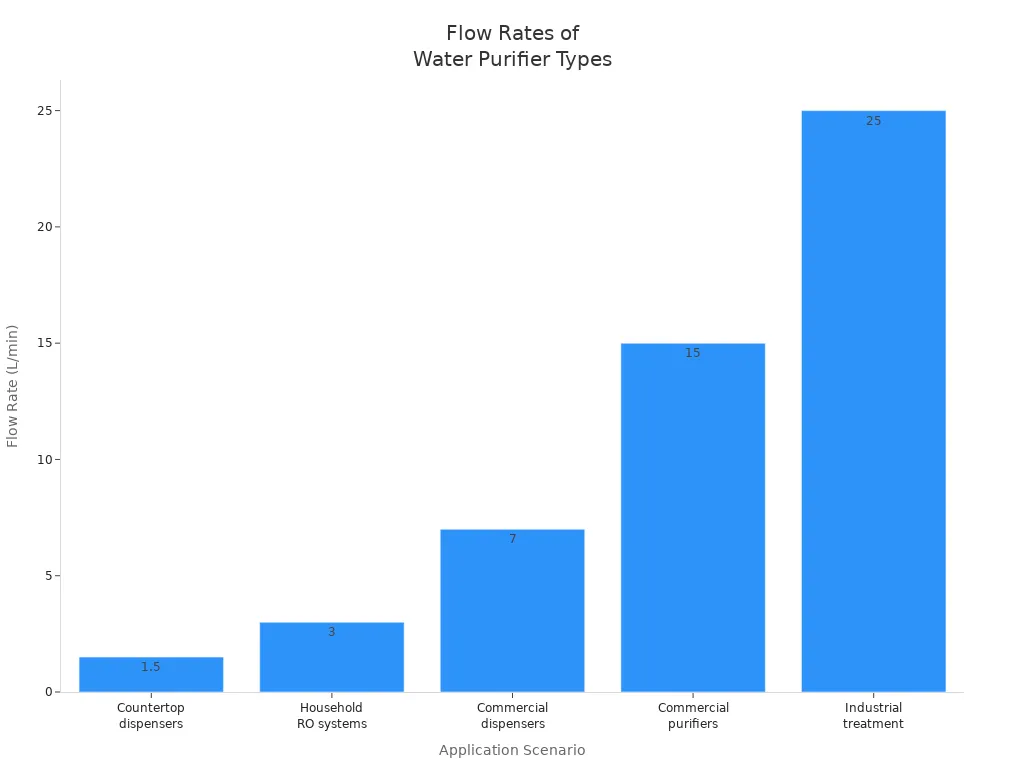
A wide range of commercial water purification systems exists, each with distinct features and installation requirements. Comparing these options involves analyzing performance, reliability, and suitability for the intended application.
Application Scenario | Flow Rate | Installation Location & Function |
|---|---|---|
Countertop water dispensers / Direct drinking fountains | 1–2 L/min | Before the faucet / After the filter – ensures terminal water safety |
Household water purifiers (RO systems) | 2–4 L/min | After the RO membrane – prevents secondary pollution in storage tanks |
Commercial water dispensers / Coffee machines | 4–10 L/min | Outlet of water tank / Before heating device – avoids bacterial growth |
Commercial water purifiers (food service) | 10–20 L/min | End of main pipeline – supports multiple users/devices |
Industrial / large-scale commercial water treatment | >20 L/min | After circulating pump / Before usage points – full-flow disinfection |
When comparing systems, businesses should prioritize:
Equipment Preservation: Choose a system that prevents limescale buildup, protecting valuable kitchen and production equipment.
Flavor Profile: Select a solution that maintains or enhances the taste of beverages and food products.
Employee Wellness: Ensure the system provides safe, palatable water to support staff hydration and productivity.
Modern systems, such as the Mejec Commercial Central Pure Water System, offer high flow rates and centralized management. These features support simultaneous use by multiple devices and users, making them ideal for busy commercial settings.
Budget and Customization
Budget planning and customization play a significant role in the selection process. Commercial water purification systems vary widely in price, installation type, and available features.
Installation Type | Cost |
|---|---|
Prepackaged/Modular System | 15% - 40% of total project cost |
State-of-the-art Feed/Control | $10,000 or more |
Cost Type | Amount |
|---|---|
Initial Investment | $700 - $1200 |
Annual Filter Cartridge Replacement | $200 |
Leasing Options | $7000 per year |
Customization options allow businesses to tailor systems to their unique needs:
Different filtration methods, such as reverse osmosis, UV, or activated carbon
Smart monitoring and instant heating features
Integrated advertising screens for customer-facing units
Adjustments based on flow rate, contaminant removal, and available installation space
Note: Investing in a customizable water purifier machine ensures long-term value and operational flexibility. Businesses can scale their systems as demand grows or as regulations change.
Careful evaluation of needs, comparison of available options, and consideration of budget and customization will guide businesses toward the most effective solution for their environment.
Maintenance and Support
Routine Care
Routine care is essential for ensuring the longevity and performance of commercial water purifier machines. Business owners should implement a regular maintenance schedule to prevent unexpected breakdowns and minimize downtime. Cleaning the water cooler and sanitizing dispensing systems help maintain optimal performance. The following table outlines common maintenance tasks:
Maintenance Task | Description |
|---|---|
External Cleaning | Daily wipe-down of surfaces with a mild soap solution, focusing on high-touch areas. |
Stain Removal | Use a vinegar-water solution for stubborn stains, rinse, and dry thoroughly. |
Dispensing System Care | Sanitize nozzles before and after use, and perform weekly deep cleaning. |
Drip Tray Maintenance | Clean and disinfect the drip tray daily to prevent bacterial growth. |
Internal Checks | Monitor filter performance and inspect tanks and pipes for issues. |
Operational Testing | Conduct water quality checks and functionality tests on the machine. |
Preventive Measures | Protect units from extreme weather and manage inventory of consumables. |
Record-Keeping | Maintain a log of maintenance activities and use digital tools for tracking. |
Regular filter replacements, system sanitization, and inspections for leaks are critical. These practices prevent clogs, bacterial buildup, and costly repairs. Implementing routine care extends the lifespan of the equipment and ensures consistent water quality.
Troubleshooting
Troubleshooting helps resolve common issues quickly and efficiently. Operators should monitor the system for signs of malfunction and address problems promptly. Here are typical troubleshooting steps:
Cloudy or murky water may indicate issues with the RO membrane or pre-filters.
Unpleasant taste or odor suggests filters or membranes are not removing contaminants effectively.
Low water pressure often points to clogged filters or a malfunctioning pump.
Inconsistent filling volumes require calibration and checking valve seals.
Bottle jamming on conveyor lines can be fixed by adjusting guide rails.
System instability due to wear can be managed with predictive maintenance using machine data.
Regular filter replacement and membrane cleaning are necessary for optimal performance.
Inspect connections for leaks and repair immediately.
Tip: Early detection and prompt action reduce downtime and protect equipment.
Service Contracts
Service contracts provide structured support and predictable maintenance costs for commercial water purifier machines. Businesses can choose from several contract types:
Type of Service Contract | Coverage Description |
|---|---|
Service Level Agreement (SLA) | Defines response times for breakdowns and routine maintenance schedule. |
Annual or Quarterly Service Contracts | Typically include parts and labor, priced as fixed yearly fees, aiding in budgeting and reducing emergency downtime. |
These agreements ensure timely maintenance, cover essential repairs, and help businesses plan expenses. Service contracts also reduce the risk of unexpected failures and support long-term reliability.
Investing in a commercial water purifier machine delivers lasting value for businesses. These systems reduce operational costs, optimize resource use, and ensure consistent water quality. Clean water supports improved health, boosts efficiency, and strengthens brand reputation.
Prevents disease and promotes wellness
Enhances productivity and customer trust
Demonstrates commitment to safety and hygiene
Professional consultation services help businesses select tailored solutions.
Service Type | Description |
|---|---|
Personalized Consultations | Advice for specific water needs |
Proactive Maintenance | Regular upkeep and filter replacements |
Customer Education | Information on water quality and treatment |
Consider the Mejec Commercial Central Pure Water System for reliable, scalable, and efficient water purification. Seek expert guidance to maximize benefits for your commercial environment.
FAQ
What types of businesses benefit from commercial water purifier machines?
Restaurants, schools, healthcare facilities, office buildings, and public venues gain advantages from commercial water purification. These systems ensure consistent water quality, protect equipment, and support compliance with health regulations.
How often should filters be replaced in a commercial water purifier?
Filter replacement frequency depends on usage and water quality. Most commercial systems require filter changes every 6 to 12 months. Regular maintenance ensures optimal performance and water safety.
Can the Mejec Commercial Central Pure Water System handle high-demand environments?
Yes. The Mejec system delivers up to 250 liters per hour. It supports large-scale operations, including busy restaurants, schools, and public facilities, providing reliable purified water across multiple usage points.
Is installation complicated for commercial water purifier machines?
Installation varies by model. The Mejec system features a centralized design that simplifies setup. Professional installation is recommended to ensure proper operation and compliance with local standards.
What maintenance tasks are necessary for commercial water purification systems?
Routine care includes cleaning surfaces, sanitizing dispensing nozzles, replacing filters, and checking for leaks. Scheduled inspections and preventive maintenance extend service life and maintain water quality.