Rethinking Your Water Source in 2026 Delivery vs DIY
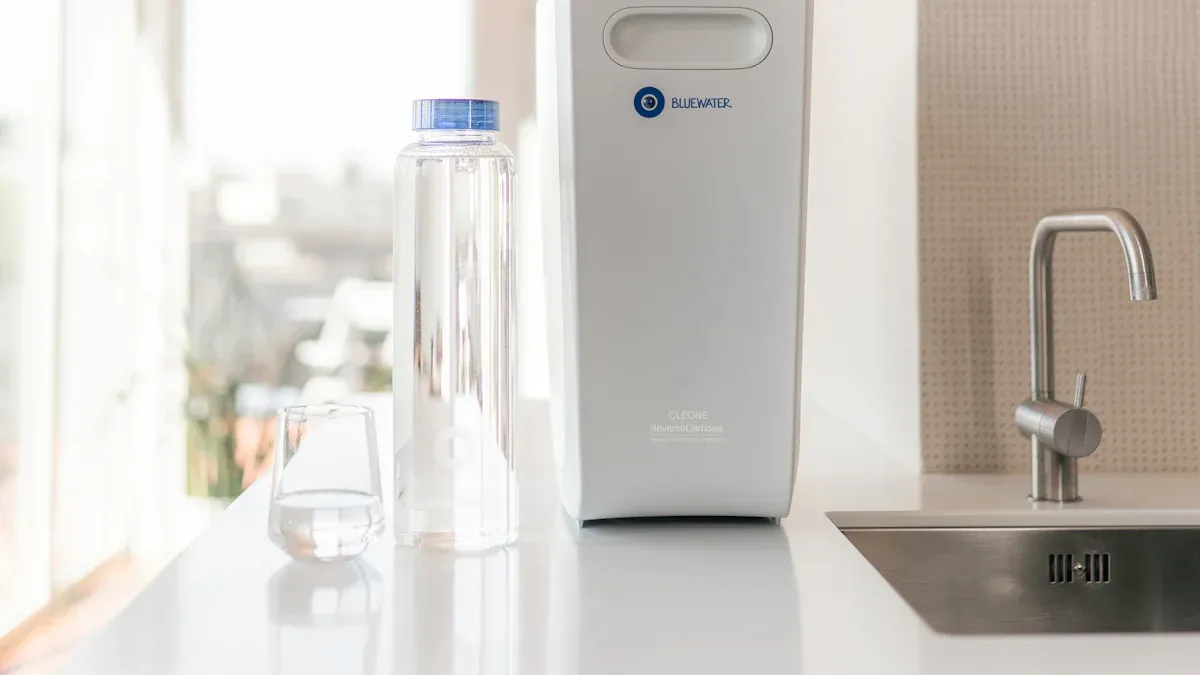
An increasing number of households are choosing water delivery services. This market is expected to grow significantly, reaching an estimated US$ 22,940 million by 2031. You might find delivery is the best choice for your busy family. It provides consistent quality and ultimate convenience. Others may choose a do-it-yourself approach. Buying your own water for water dispenser use at the store can save money. This option gives you more control if you have the time and space.
Key Takeaways
- Water delivery offers convenience and consistent quality. It uses reusable jugs. This choice is good for busy families.
- Buying water at the store can save money. But it takes time and effort. You must lift heavy jugs and drive to the store.
- Consider your budget, time, and values. Then choose the best water source for your home.
Cost Breakdown: Delivery Service vs. Store-Bought
Money is a major factor in any household decision. You need to look beyond the sticker price to understand the true cost of your water. Let's break down the numbers to see which option offers the best value for your budget.
The Per-Gallon Price Comparison
At first glance, buying water at the store seems much cheaper. The price per gallon is almost always lower than a delivery service. However, this initial price does not tell the whole story.
Here is a typical cost comparison for a 5-gallon jug:
| Water Source | Average Price per 5-Gallon Jug | Average Price per Gallon |
|---|---|---|
| Water Delivery Service | $7.00 - $9.00 | $1.40 - $1.80 |
| Store-Bought (Refill) | $2.00 - $3.00 | $0.40 - $0.60 |
| Store-Bought (New Jug) | $5.00 - $7.00 | $1.00 - $1.40 |
These numbers show the DIY approach has a lower shelf price. But you must also consider other expenses.
Delivery Fees vs. Your Fuel and Time
The DIY method has hidden costs that add up over time. A delivery service bundles these costs into a clear, predictable fee.
- Delivery Service Costs: You typically pay a monthly equipment rental fee for the dispenser. You also pay a set price for each jug delivered. These costs are transparent and easy to budget for.
- DIY Hidden Costs: You spend money on gas for your car to get to the store. You can figure out this expense. Online tools like the 'Fuel Cost Calculator' on calculator.net help estimate fuel costs for your trip. The government's fueleconomy.gov website also offers a 'Trip Calculator' to see these expenses.
What is your time worth? ⏰ Think about the time you spend on a water run. You drive to the store, find a parking spot, carry empty jugs inside, refill them, pay, and carry the heavy, full jugs back to your car. This process can easily take 30 to 60 minutes. Assigning a dollar value to your personal time reveals the true cost of convenience.
Long-Term Savings Analysis
To find the most economical choice for your family, you need to analyze the costs over a longer period, like a month or a year.
A delivery service offers predictable monthly billing. You know exactly what you will spend. This makes managing your household budget simpler. The DIY approach will likely save you money if you live very close to a store or combine water runs with your regular grocery shopping. The fuel and time costs become very small in that case.
You can find your personal breakeven point with a simple calculation:
- Calculate Your Monthly Delivery Cost: (Jug Price x Jugs per Month) + Monthly Fees = Total Delivery Cost.
- Estimate Your Monthly DIY Cost: (Jug Price x Jugs per Month) + (Fuel & Time Cost per Trip x Trips per Month) = Total DIY Cost.
- Compare the Totals: Seeing the two numbers side-by-side will show you which method saves you more money over time for your specific situation. This helps you decide the best way to get water for water dispenser use.
Convenience Factor: What Is Your Time Worth?
Your time is a valuable resource. The choice between water delivery and DIY often comes down to how much time and physical effort you want to spend. Let's explore the convenience of each option. You can then decide which one fits your lifestyle best.
The Effort of DIY: Shopping and Lifting
The DIY method requires a significant physical commitment. You must plan trips to the store specifically for water. This involves loading empty jugs into your car, driving to the store, and then the real work begins.
A full 5-gallon water jug is surprisingly heavy. A plastic jug weighs about 42 pounds. A glass bottle can weigh over 45 pounds. Lifting one of these is a challenge. Lifting several requires serious effort. You have to carry them from your car, into the store, onto a refill station, and back to your car. Once home, you must carry these heavy jugs inside and lift one onto your dispenser.
Health Risks of Heavy Lifting 🏋️ Regularly lifting heavy water jugs can put your body at risk. This repeated strain can lead to serious health issues.
- Back and Shoulder Strain: Lifting heavy jugs from the ground or reaching for them can strain your lower back and shoulders.
- Musculoskeletal Problems: Over time, this activity can contribute to spinal pain and other joint problems.
- Awkward Movements: Hoisting a 48-pound bottle up and over onto a cooler is an awkward task. It strains your back, shoulders, arms, and legs all at once.
- Risk of Falls: Spilled water during the loading process creates a slip hazard, which can lead to falls and other injuries.
This physical labor and time commitment are the trade-offs for the lower per-gallon cost of DIY water.
The Ease of Scheduled Home Delivery
A water delivery service eliminates nearly all the physical work and planning. The entire process is designed for your convenience. You no longer need to schedule water runs or lift heavy jugs from the store.
Modern delivery services give you complete control through online accounts and mobile apps. The process is simple and automated.
- Set Your Schedule: You first choose a delivery frequency that matches your household's needs. Options often include weekly, bi-weekly, or monthly deliveries. You can adjust this schedule anytime.
- Manage Your Orders: Through an app or website, you can view your delivery calendar, change the number of jugs you receive, or pause service if you go on vacation.
- Receive Notifications: The service keeps you informed. You will get reminders before a scheduled delivery and confirmations after the driver drops off your water.
- Enjoy Effortless Delivery: The delivery driver brings the full jugs right to your doorstep and takes the empty ones away. Your only task is to place the empty jugs outside.
This system ensures you have a steady supply of fresh water for water dispenser use without ever leaving your home. It turns a recurring chore into a simple, automated service.
Storing Your Water Supply
Whether you choose delivery or DIY, you need a place to store your water jugs. The amount of space required can be surprising. For example, a family of four needs about 36 five-gallon jugs for a one-month emergency supply. Storing these jugs would take up approximately 36 square feet of floor space. That is the size of a small walk-in closet.
Proper storage is crucial to keep your water safe and fresh. You should follow a few key practices to protect your water quality.
- Find a Cool, Dark Place: Store your water jugs in an area away from direct sunlight and heat. A pantry, closet, or cool basement is ideal. Light and heat can degrade the plastic and affect the taste of the water.
- Avoid Chemicals: Plastic can absorb fumes. Never store your water jugs near gasoline, pesticides, or other strong chemicals. These substances can seep through the plastic and contaminate your drinking water.
- Choose Safe Containers: If you refill your own jugs, make sure they are made from safe, food-grade plastic. Look for jugs made from HDPE (plastic #2), #4, or #5. Avoid using containers that previously held toxic substances like bleach or chemicals.
Properly storing your water ensures that every glass you pour is as clean and safe as the day it was bottled.
Choosing the Best Water for Water Dispenser Use
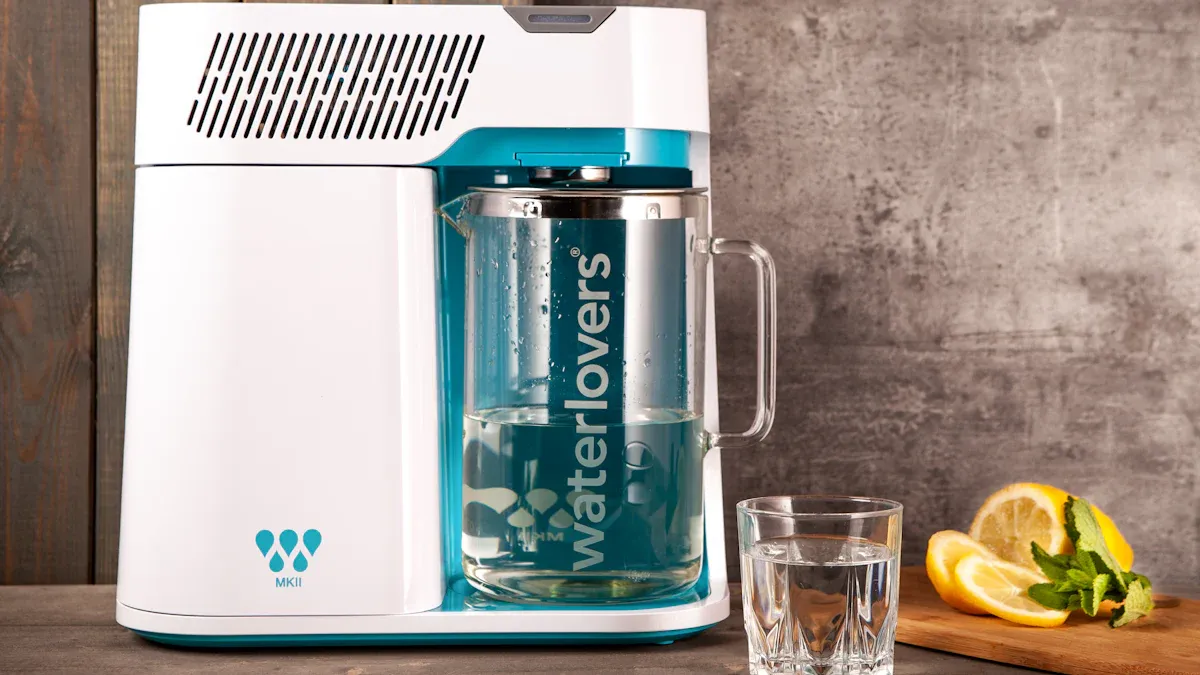
The type of water you use directly affects its taste and your dispenser's lifespan. Understanding the differences between delivery and store-bought options helps you make the best choice for your home.
The Purity Promise of Delivery Services
Water delivery services offer consistent quality you can trust. Many companies use advanced purification methods like reverse osmosis to remove impurities, chemicals, and contaminants. This process ensures you get clean, great-tasting water every time. Reputable services often hold certifications from the International Bottled Water Association (IBWA) or NSF International. These standards require annual third-party inspections to guarantee safety and quality. Using purified water for water dispenser models also prevents mineral buildup, which extends the life of your machine.
Quality Variability in Store Brands
The quality of store-brand water can be unpredictable. While some brands source their water from protected springs, many others simply sell filtered municipal tap water. This means the taste and mineral content can vary greatly from one brand to the next. Using water with high mineral content, like hard water, can cause limescale to build up inside your dispenser. This buildup can clog the machine and shorten its lifespan, requiring more frequent cleaning.
How to Read Water Jug Labels
You can become an expert by learning to read the labels on water jugs. This knowledge helps you select the best water for water dispenser use. Look for these key terms:
- Purified Water: This water has been treated by distillation or reverse osmosis. It is free of most chemicals and minerals.
- Spring Water: This comes from an underground source and is collected as it flows naturally to the surface.
- From a Community Water System: This label indicates the water is treated tap water.
Environmental Impact: The Greener Choice
Your choice of water source has a direct effect on the planet. Understanding the lifecycle of water jugs helps you make a more environmentally friendly decision.
The Reusable Jug Model
Water delivery services operate on a circular system. The large 5-gallon jugs are built for durability and reuse. A single jug can be refilled and delivered up to 50 times before being retired. After each use, the company puts the jugs through a rigorous, multi-step sanitation process. This system significantly reduces plastic waste because it prioritizes reuse over single-use manufacturing. By choosing delivery, you participate in a model that extends the life of each container, minimizing its environmental footprint over time.
The Recycling Burden of DIY Jugs
The DIY approach creates a different environmental story. Most store-bought jugs are single-use plastics. While they are recyclable, the reality is that most are not recycled. In 2023, the recycling rate for these PET plastic bottles was only 33%. This means the majority of jugs you buy at the store end up in landfills or oceans. This constant cycle of producing, using, and discarding single-use plastic places a heavy burden on our waste management systems and ecosystems.
Comparing Carbon Footprints
When you compare the two options, the long-term impact becomes clear. A reusable jug has a higher carbon footprint during its initial manufacturing. However, its environmental cost drops with every reuse. After just 10 to 20 uses, its carbon footprint breaks even with single-use plastic bottles. The carbon footprint of single-use bottled water can be up to 1,000 times higher than tap water. The delivery service model, with its emphasis on reuse, offers a more sustainable path by reducing overall plastic production and waste.
This table summarizes your options.
| Feature | Delivery Service | DIY (Store-Bought) |
|---|---|---|
| Cost | Higher | Lower |
| Convenience | ✅ High | ❌ Low |
| Quality | Consistent | Variable |
| Environment | Reusable | Recyclable |
Delivery offers ultimate convenience and quality. The DIY approach saves you money if you have the time. You should choose the water source that best fits your household's main priority.
FAQ
Do I have to buy a water dispenser for a delivery service?
No, you do not need to buy one. Most delivery services rent dispensers to you for a small monthly fee. This makes starting the service easy and affordable.
Can I change my water delivery schedule?
Yes, you can easily change your schedule. Most services let you adjust delivery dates or pause service online. You have full control over your water supply.
What is the best plastic for refillable water jugs?
You should look for jugs made from safe, food-grade plastic. Choose containers marked with recycling numbers #2 (HDPE), #4 (LDPE), or #5 (PP) for safety.