What to Know About Wastewater Treatment Equipment in 2026
You see many facilities rely on wastewater treatment equipment in 2026. Screw presses, DAF systems, lamella separators, and ultrafiltration units help you remove contaminants. Automation and monitoring systems support you in meeting regulatory standards. Knowing these options helps you make smart choices for reliable wastewater management.
Key Takeaways
- Screw presses efficiently reduce sludge volume by up to 80%, lowering disposal costs and enhancing sustainability.
- DAF systems remove pollutants effectively while using fewer chemicals, making them a cost-effective choice for various industries.
- Automation and monitoring systems improve efficiency and compliance, allowing for real-time data tracking and reduced operational costs.
Common Types of Wastewater Treatment Equipment
Screw Presses
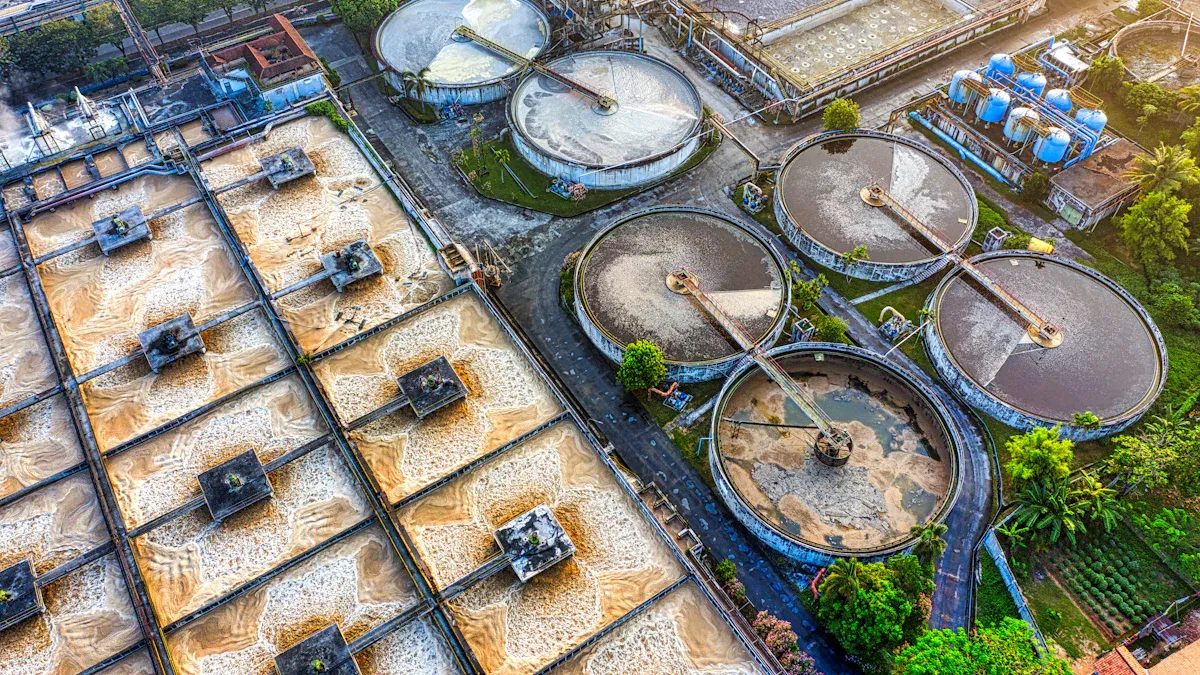
You can use screw presses to separate water from sludge in many industries. These machines work well for municipal and industrial wastewater treatment. They also help in food processing and mining. Screw presses are known for their efficiency in waste management, especially when handling organic waste. They can reduce solids in sludge by up to 80%. This means you spend less on transportation and send less waste to landfills.
| Application Type | Industry/Region |
|---|---|
| Municipal Wastewater Treatment | Various Municipalities |
| Industrial Wastewater Treatment | Various Industries |
| Sludge Dewatering | Waste Management |
| Food and Beverage Industry | Food Processing |
| Mining and Minerals | Mining Sector |
- Screw presses help you lower costs and improve sustainability.
- You can rely on them for consistent performance in different settings.
Dissolved Air Flotation (DAF) Systems
DAF systems help you remove suspended solids, oils, and other pollutants from water. These systems use air dissolved under pressure. When released, the air forms tiny bubbles that stick to particles. The bubbles lift the particles to the surface, where you can remove them easily.
- Air dissolution: High pressure dissolves air in water.
- Bubble formation: Releasing pressure creates bubbles.
- Particle-bubble attachment: Bubbles stick to particles and float them to the top.
- Removal efficiency: DAF systems remove solids and pollutants well.
- Hydraulic loading rate: This shows how much water moves through the system.
- Air-to-solids ratio: Enough bubbles must be present to lift solids.
DAF systems stand out for their efficiency and flexibility. You use fewer chemicals compared to other methods. Newer DAF technologies can save about 50% energy, making them cost-effective for your facility.
Lamella Separators
Lamella separators, also called lamella clarifiers, help you remove solids from wastewater. These units use inclined plates to increase the settling area. This design lets you treat more water in less space.
| Parameter | Lamella Clarifier | Conventional Clarifier |
|---|---|---|
| Solids Removal Efficiency (%) | 90-95 | 80-90 |
| Feature | Lamella Clarifier | Conventional Sedimentation Tank |
|---|---|---|
| Space Efficiency | Saves over 85% of space | Larger footprint |
| Energy Requirements | Minimal mechanical parts | Higher energy demands |
| Maintenance Needs | Lower, self-cleaning | Higher maintenance |
You can choose lamella separators when you need high removal rates and want to save space and energy.
Activated Sludge Systems
Activated sludge systems use microorganisms to break down organic matter in wastewater. You add air to the water, which helps bacteria grow and form clumps called flocs. These flocs settle at the bottom, making it easy to separate clean water from solids.
- Aerobic microorganisms digest organic matter.
- Flocculation helps particles stick together and settle.
- Anoxic compartments improve nitrogen removal.
- The process removes nutrients like nitrogen and phosphorus.
You find these systems in many municipal and industrial plants. They offer reliable treatment at a reasonable cost.
| Treatment System | Cost per m³ |
|---|---|
| CAS-N | $0.27 |
| MBR | $0.43 |
Ultrafiltration Systems
Ultrafiltration systems use special membranes to filter out tiny particles, bacteria, and viruses. You can trust these systems to provide a strong barrier against pathogens and micropollutants.
The hybrid PAC-UF system provided a robust barrier against pathogens, achieving substantial bacterial log reductions (>3 log removal for E. coli) and effectively retaining antibiotic-resistant bacteria, antibiotic-resistance genes, and viruses. E. coli concentrations met EU regulatory class A water quality standards for agricultural irrigation (<10 CFU/100 mL).
- Backwashing keeps the membranes clean. You usually backwash every 30 to 90 minutes.
- Cleaning frequency depends on water quality and system use.
Ultrafiltration helps you meet strict water quality standards for reuse or discharge.
Reverse Osmosis Systems
Reverse osmosis systems push water through a semi-permeable membrane. This process removes dissolved salts, heavy metals, and other contaminants.
- You can achieve rejection rates of 95-99% for most dissolved salts and heavy metals.
- Sodium chloride rejection often exceeds 99%.
- Other contaminants like nitrates, sulfates, and metals (lead, copper, arsenic) also see high removal rates.
| Description | Energy Consumption (kWh/m³) |
|---|---|
| Predicted energy consumption range | 0.85–1 |
| Reported energy consumption range | 1.1–1.4 |
| Estimated range by Sim and Mauter | 0.9–2.2 |
Reverse osmosis is a key part of advanced wastewater treatment equipment, especially when you need high-quality water.
Vacuum Evaporation and Distillation Units
Vacuum evaporation and distillation units help you recover clean water from wastewater. These systems work by heating water under reduced pressure, which lowers the boiling point and saves energy.
| Benefits of Vacuum Evaporation | Limitations of Vacuum Evaporation |
|---|---|
| High recovery rates of clean water | Requires pretreatment for some contaminants |
| Reduced waste volume | Issues with compounds similar to water's boiling point |
| Compliance with regulations | |
| High quality of distillate | |
| Zero Liquid Discharge possible | |
| Low electricity consumption | |
| Compact and flexible design | |
| Reliable and easy to use |
- The best evaporator structures recover about 87% clean water.
- These units can achieve up to 88% removal of chemical oxygen demand (COD).
You can use these units when you want to minimize waste and recover valuable water.
Biological Treatment Systems
Biological treatment systems use living organisms to clean wastewater. You can choose from aerobic, anaerobic, or anoxic processes. Each method targets different pollutants and nutrients.
- Aerobic treatment uses oxygen.
- Anaerobic treatment works without oxygen.
- Anoxic treatment uses nitrate instead of oxygen.
These systems are efficient and cost-effective. They help you remove organic matter and nutrients in an environmentally friendly way.
| Challenge Type | Description |
|---|---|
| Sludge Management | Inorganic coagulants can increase sludge, raising disposal costs. |
| Energy Consumption | Aeration and operation need a lot of energy, often the biggest expense. |
| Skilled Operators | You need trained staff to run complex automated systems. |
Automation and Monitoring Systems
Automation and monitoring systems make your wastewater treatment equipment smarter and more reliable. These systems help you control processes, reduce costs, and meet regulations.
-
Automation reduces manual labor and boosts productivity.
-
Continuous monitoring improves water quality by tracking key parameters.
-
You can cut energy and chemical costs with optimized operations.
-
Real-time monitoring helps you spot problems early and stay compliant with regulations.
-
Real-time data lets you act quickly to prevent issues.
-
You can use resources more efficiently and lower the risk of contamination.
By using automation and monitoring, you make your facility safer, more efficient, and ready for future challenges.
Features, Benefits, and Selection Factors for Wastewater Treatment Equipment
Key Advantages of Each Equipment Type
You can find unique benefits in each type of wastewater treatment equipment. Screw presses help you lower sludge volume and save on disposal costs. DAF systems remove oils and solids quickly, making them ideal for industries with high grease content. Lamella separators let you treat more water in less space, which is helpful if your facility has limited room. Activated sludge systems break down organic matter and nutrients, supporting strong environmental performance. Ultrafiltration and reverse osmosis systems give you high-quality water by removing tiny particles and dissolved salts. Vacuum evaporation units recover clean water and reduce waste, which helps you meet strict regulations. Biological treatment systems use natural processes to clean water and lower chemical use. Automation and monitoring systems let you track water quality and improve efficiency.
Tip: You can combine different equipment types to reach your treatment goals and handle changing water quality.
Important Factors When Choosing Equipment
When you select wastewater treatment equipment, you need to consider several key factors:
- Water Quality: You should monitor water quality all the time to plan effective treatment.
- Goals: Set clear regulatory and performance goals, including sustainability targets.
- Operational Capabilities: Make sure your staff can operate and maintain new equipment.
- Site Restrictions: Check the physical space and environmental limits of your facility.
- Budget: Plan your budget carefully and allow for possible cost increases.
Regulatory requirements also play a big role. The EPA and local agencies set rules that guide your choices. These rules can change depending on your location, so you must stay informed about both state and local standards. You can use decision-making tools like laboratory testing, online monitoring, and decision trees to compare options and predict outcomes.
| Framework Type | Description |
|---|---|
| Laboratory Testing | Test samples for pH, TSS, and other parameters. |
| Online Monitoring | Use sensors for real-time data. |
| Decision Trees | Map out choices and possible results. |
Choosing the right equipment helps you meet regulations, control costs, and protect the environment.
You see new trends shaping wastewater treatment equipment in 2026:
- Decentralized and modular systems
- Water reuse and resource recovery
- Energy efficiency and digitalization
“Proper sizing and balancing costs help you avoid failures and save money.”
| Strategy | Description |
|---|---|
| Real-Time Monitoring | Track system performance for compliance. |
| Maintenance Schedule | Plan regular checks for reliable operation. |
Evaluate your needs and consult experts for the best solution.
FAQ
What is the most energy-efficient wastewater treatment equipment?
You can choose ultrafiltration or vacuum evaporation units. These systems use less energy and help you save money on electricity.
How often should you maintain wastewater treatment equipment?
You should check and clean your equipment every month. Regular maintenance keeps your system running well and prevents breakdowns.
Can you reuse water after treatment?
Yes! You can reuse treated water for irrigation, cooling, or cleaning. This helps you save resources and protect the environment.
See Also
Innovative Materials Transforming Heat Exchanger Supply Chain
Comprehensive 2025 Overview of Semi-welded Plate Heat Exchangers
Best Precoating Materials for Filtration Systems This Year
Understanding Advantages of Commercial Heat Exchangers in 2025
Innovations in Heat Exchanger Manufacturing Boost Industrial Efficiency