5 Simple Ways to Use Vinyl Acetate-Ethylene Copolymer Emulsion VAE Emulsion White Latex in Wood Glue
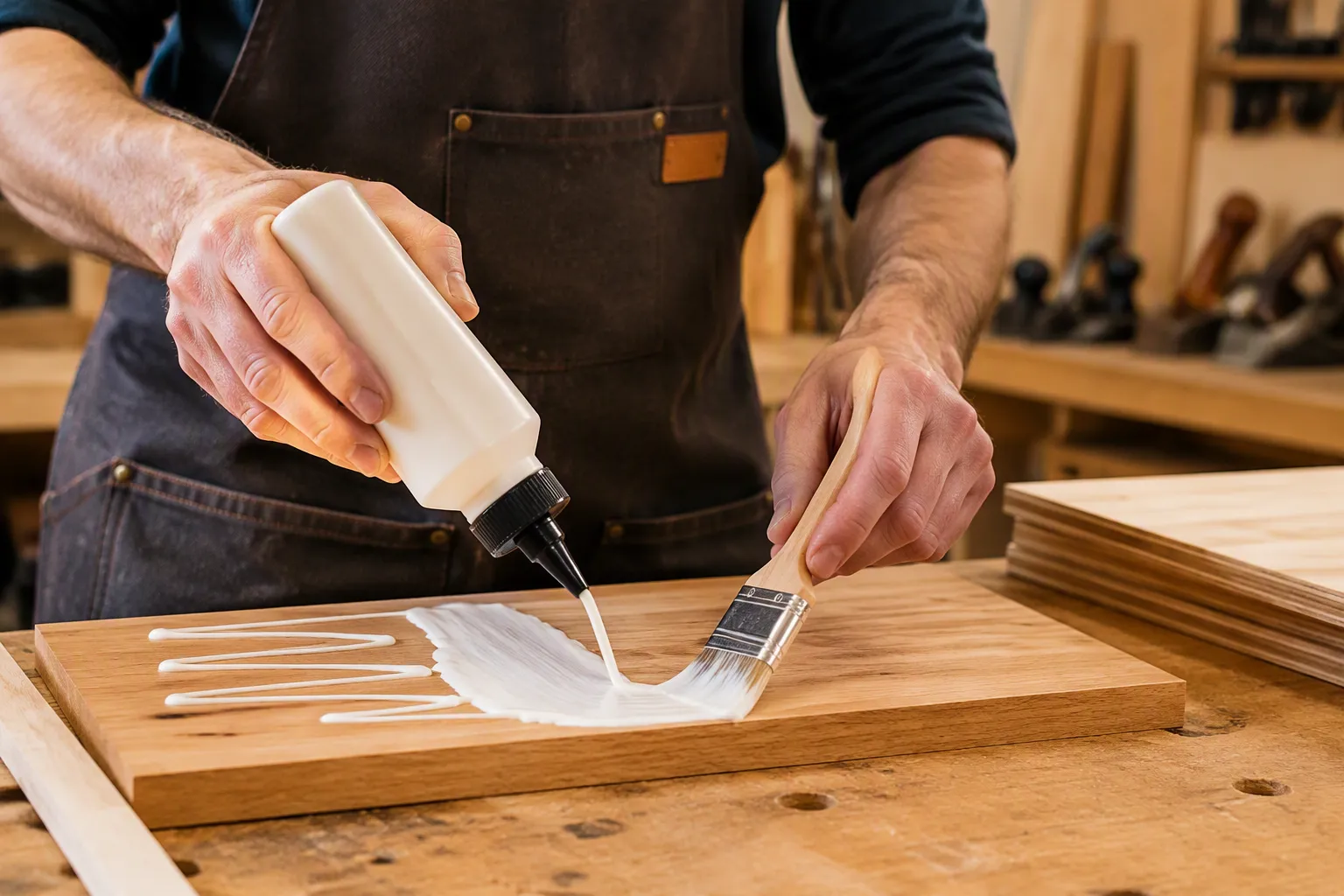
You can use Vinyl Acetate-ethylene Copolymer Emulsion VAE Emulsion White Latex in wood glue five simple ways. Apply it as a base polymer for stronger bonds. Use it as an additive for flexibility. Make your glue water-resistant. Extend open time for easier workability. Or stretch your budget as a cost-effective extender. These techniques boost performance while lowering costs. Start with these methods today.
Key Takeaways
- Use VAE emulsion as your main glue ingredient for stronger wood joints that resist moisture.
- Add VAE emulsion to your glue formula to make the bond flexible and prevent cracks from wood movement.
- Mix VAE emulsion with a catalyst to create water-resistant glue for kitchens, bathrooms, and outdoor projects.
Understanding Vinyl Acetate-Ethylene Copolymer Emulsion VAE Emulsion White Latex
What Is VAE Emulsion?
Vinyl Acetate-ethylene Copolymer Emulsion VAE Emulsion White Latex is a milky-white liquid. Manufacturers produce it through a pressurized process. They copolymerize vinyl acetate and ethylene monomers together. This process creates a stable, non-toxic, and odorless product. The ethylene component provides internal plasticization. This feature gives the emulsion excellent film-forming ability without external plasticizers. You will find it used widely in adhesives, paints, paper coatings, and construction materials. Its versatility makes it a favorite among formulators.
Why Use It in Wood Glue?
You gain several clear advantages when you choose VAE emulsion over traditional polyvinyl acetate homopolymer. First, you get comparable machining properties. Your wood joints will cut and sand just as cleanly as with standard white glue. Second, you achieve better flexibility. The ethylene component allows the adhesive film to bend without cracking. This flexibility proves essential for woodworking projects exposed to movement or vibration.
Third, you receive enhanced water resistance. VAE emulsion performs better than homopolymer when moisture contacts the bond line. Fourth, you enjoy superior adhesion to non-porous surfaces. Materials like vinyl, aluminum, and plastic films bond more effectively with VAE-based formulations. You also benefit from a lower film-forming temperature. This means you can apply the glue in cooler conditions and still achieve strong bonds. The emulsion maintains tack and adhesion even in low-temperature and wet environments. Additionally, VAE provides strong initial adhesion and high wet tack. Your pieces stay in place during assembly. Finally, you get good creep resistance. Your joints remain stable under sustained load. All these properties come at a cost-effective price point, making VAE emulsion a smart choice for your wood glue formulations.
5 Simple Ways to Use Vinyl Acetate-Ethylene Copolymer Emulsion VAE Emulsion White Latex in Wood Glue
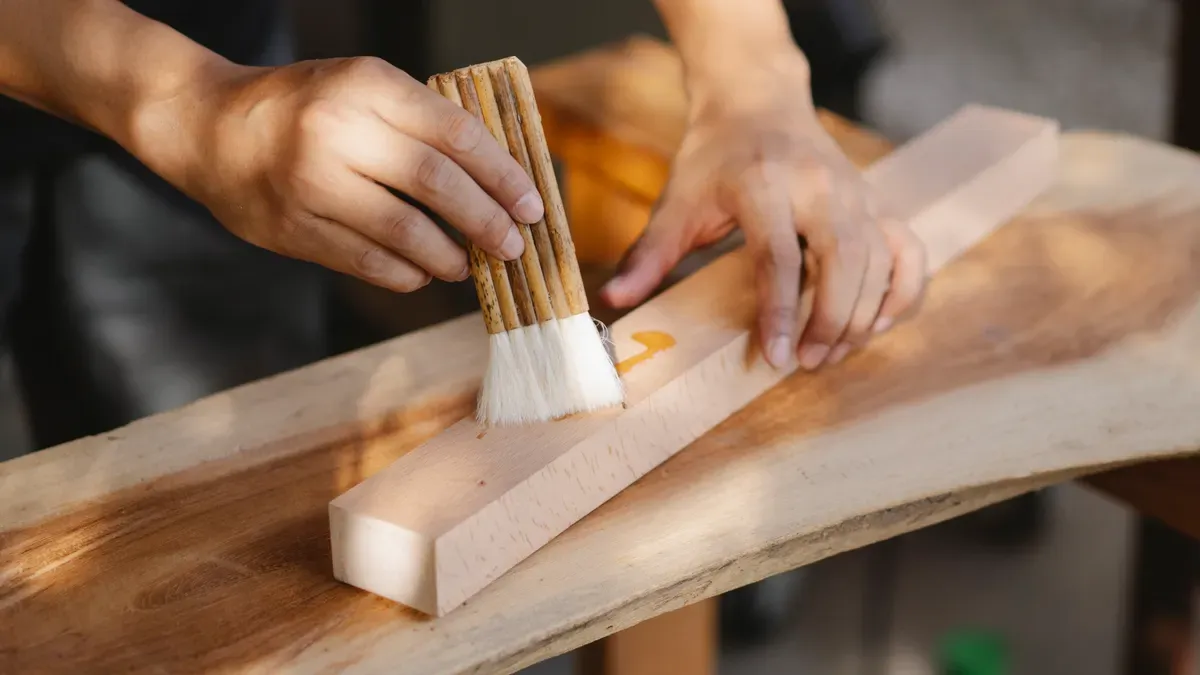
As a Base Polymer for Enhanced Bonding
You can replace standard polyvinyl acetate with Vinyl Acetate-ethylene Copolymer Emulsion VAE Emulsion White Latex as your primary adhesive polymer. This substitution creates stronger wood joints that withstand demanding conditions. The ethylene component modifies the polymer structure at a molecular level. This modification produces a more resilient bond line compared to traditional white glue.
The performance data confirms this advantage. When you formulate wood glue with VAE emulsion as the sole base polymer, you achieve impressive shear strength values:
- Wet tensile shear strength for D3 wood joints reaches at least 1.5 MPa on beech after a 4-day water soak at 20°C
- Oak substrates yield 0.9–1.1 MPa due to natural tannin interference
- Comparative wet shear strength on beech measures 2.3–2.8 N/mm² with proper catalysts
These numbers translate to real-world reliability. Your furniture joints stay intact even when exposed to moisture. Your cabinets resist failure in humid environments. The adhesive forms a durable connection that outperforms conventional options.
You need to catalyze the formulation with aluminium chloride hexahydrate to achieve these results. This catalyst activates the crosslinking mechanism within the emulsion. The process creates a three-dimensional network that locks the adhesive molecules together. Your bond strength increases substantially without adding complexity to your mixing process.
As an Additive to Improve Flexibility
You can blend VAE emulsion into your existing wood glue formula to enhance flexibility. Wood naturally expands and contracts with changes in humidity. Rigid adhesives crack under this constant movement. VAE emulsion introduces elasticity that accommodates these dimensional changes.
The polymer content in your formulation determines the final flexibility. You need the right balance to achieve optimal performance.
When formulations contain around 40 to 55 percent polymer, they tend to form those nice continuous elastic films we want.
This concentration range produces a film that bends without breaking. Your glue line flexes as the wood moves. The bond remains intact through seasonal changes and temperature fluctuations.
The technical properties of VAE emulsion explain its superior flexibility. The glass transition temperature ranges from -5°C to 25°C. This wide range means the adhesive stays flexible across various climates. The elastic modulus of 400–600 MPa aligns closely with wood's natural flexibility. Your joints move in harmony with the substrate rather than fighting against it.
| Property / Condition | VAE Performance | Comparative Context |
|---|---|---|
| Glass transition temperature (Tg) | -5°C to 25°C | Enables flexibility across climates |
| Minimum bonding temperature | 5°C | PVA requires ~15°C |
| Elastic modulus | 400–600 MPa | Aligns with wood's natural flexibility |
| Elongation before break | 12–18% | ~3x better than stiff epoxy alternatives |
| Temperature stability range | -20°C to 60°C | Remains intact without brittleness or peeling |
| Post-curing wood movement accommodation | 3–5% | Prevents delamination |
| Strength retention after humidity aging (30–90% RH, 15 years simulated) | ~92% | Epoxy retains ~78% |
The elongation before break reaches 12–18 percent. This value stands approximately three times higher than stiff epoxy alternatives. Your adhesive stretches when stress occurs. The bond absorbs energy rather than transferring it directly to the wood fibers.
For Water-Resistant Wood Glue
You can formulate water-resistant wood glue by incorporating VAE emulsion with appropriate crosslinkers. Standard PVA glue fails when moisture penetrates the bond line. VAE-based formulations resist water intrusion effectively.
The European standard EN 204 classifies wood adhesives by their water resistance. You can achieve different classifications depending on your formulation choices:
| Water Resistance Classification (EN 204) | Formulation Requirement |
|---|---|
| D1 or D2 (standard PVA) | No VAE emulsion; standard PVA glue only |
| D3 | VAE emulsion formulated with appropriate crosslinkers |
| D4 | VAE emulsion with isocyanate hardener addition |
You achieve D3 classification when you combine VAE emulsion with crosslinking agents. This level suits interior applications with occasional water exposure. Your kitchen cabinets, bathroom vanities, and outdoor furniture under cover benefit from this protection.
For complete water immersion resistance, you add an isocyanate hardener. This combination reaches D4 classification. Your glue withstands prolonged water contact without degradation. Marine applications and exterior projects demand this level of performance.
The inherent properties of VAE emulsion contribute to this water resistance. The ethylene component creates a hydrophobic barrier within the adhesive film. Water molecules struggle to penetrate this barrier. Your bond line remains dry and strong even in challenging conditions.
To Increase Open Time and Workability
You can extend the open time of your wood glue by adding VAE emulsion to your formulation. Open time refers to the window when you can position and adjust your workpieces after applying adhesive. Longer open time gives you more flexibility during assembly.
Standard PVA glue dries quickly. You rush to position your joints before the adhesive sets. This pressure leads to mistakes and misalignments. VAE emulsion slows the drying process. You gain valuable minutes to arrange your pieces perfectly.
The minimum film-forming temperature of VAE emulsion sits at 0°C. This low threshold means the adhesive remains workable in cooler environments. You can apply the glue in your workshop during winter months without heating issues. Standard PVA requires temperatures around 15°C for proper bonding. VAE emulsion performs effectively at just 5°C.
You also benefit from improved wet tack. The adhesive grips surfaces immediately upon contact. Your pieces stay in place while you adjust their position. This combination of extended open time and strong initial tack creates an ideal working experience. You achieve precise alignment without rushing.
The mechanical stability of VAE emulsion prevents separation during mixing and application. Your glue maintains consistent viscosity throughout the working process. You avoid the frustration of thinning adhesive or clumping particles.
As a Cost-Effective Extender
You can stretch your adhesive budget by using VAE emulsion as an extender in your wood glue formulations. This approach reduces your overall material costs without sacrificing performance quality.
VAE emulsion costs less than many specialized adhesive polymers. You blend it with your existing adhesive system to increase volume. The resulting mixture maintains strong bonding properties while reducing your per-unit cost. This strategy proves especially valuable for large-scale production operations.
The compatibility of VAE emulsion with various adhesive systems makes this extension possible. You can blend it with polyvinyl acetate, acrylics, and other polymer dispersions. The emulsion integrates smoothly without separation or coagulation. Your final product maintains consistent quality throughout the batch.
You also reduce waste with this approach. VAE emulsion extends the usable life of your adhesive mixtures. You mix smaller batches more frequently. Each batch performs identically to the previous one. This consistency eliminates the need for costly rework or rejected products.
The environmental benefits add another dimension to the cost savings. VAE emulsion is non-toxic and odorless. You create a safer workplace for your employees. You reduce your environmental compliance costs. Government agencies recommend this material for its eco-friendly profile. Your customers appreciate the sustainable choice.
You achieve the ideal balance between cost and performance. Your glue bonds effectively. Your flexibility meets project demands. Your water resistance satisfies application requirements. Your budget remains intact. This combination makes VAE emulsion a smart financial decision for your woodworking operation.
You now have five proven methods to enhance your wood glue with Vinyl Acetate-ethylene Copolymer Emulsion VAE Emulsion White Latex. Use it as a base polymer, flexibility booster, water-resistant agent, open-time extender, or cost-effective extender. These approaches work together to improve performance while keeping costs low. This versatile, eco-friendly material adapts to many woodworking needs. Test different ratios and mixing methods to discover your perfect formulation. Share your experiences or ask questions in the comments below.
| Product | Environmental Certification | Key Claim |
|---|---|---|
| Celanese Dur-O-Set® CP3220 | Meets VOC regulations | Lower-emission product |
| UCAR EVOCAR™ Latex DA 282 | EnVia™ sustainable program | Eco-friendly formulation |
FAQ
What ratio of VAE emulsion should I use for D3 water resistance?
Mix 100 parts VAE emulsion with 6-8 parts aluminium chloride hexahydrate catalyst. This combination achieves D3 classification under EN 204 standards.
Can I mix VAE emulsion with regular PVA glue?
Yes, you can blend them in any ratio. VAE emulsion improves the flexibility and water resistance of standard PVA formulations.
How long does VAE emulsion wood glue last after mixing?
Use your mixed formulation within 24 hours. The catalyst triggers crosslinking over time, and the glue loses workability after one day.
See Also
Clever Methods to Incorporate Beef Gelatin Into Your Cooking
Evidence-Based Strategies to Enhance FDCA Eco-Friendliness
Silicone Sealant for Building and Design: The Hidden Adhesive in Contemporary Houses
Popular Folder Gluer Innovations for 2025 Packaging Production
Genuine Customer Feedback on Top Wood and Bamboo Organizer Containers