The Secret to 718 Inconel Bar Pricing Revealed
Volatile raw material costs and complex manufacturing determine the price of 718 Inconel bar. This high-performance superalloy contains expensive elements like nickel and niobium. Industries demand it for critical applications where failure is not an option.
For example, in aerospace, it is essential for:
- Turbine disks and compressor blades
- High-temperature fasteners and casings
- Structural load-bearing components
Stringent, energy-intensive production processes and rigorous certification requirements further contribute to its final cost, reflecting its value in extreme environments.
Raw Material Costs: The Foundation of Pricing
The chemical composition of Alloy 718 is the primary determinant of its base cost. Each element in its formulation has a distinct market, and their combined price creates the starting point for the final price of a 718 Inconel bar. Understanding these individual components reveals why this superalloy commands a premium.
Nickel (50-55%): The Core Price Driver
Nickel constitutes the largest portion of Inconel 718, making its price the most significant factor in the alloy's overall cost. The direct relationship is clear; a surge in nickel cost during the first quarter of 2025, for instance, caused Inconel prices to climb by over $28,000 per metric ton. When prices on the London Metal Exchange (LME) rise, manufacturers and suppliers feel the impact on feedstock costs, and customers can expect upward price pressure within weeks or months.
However, the nickel market is far from static. Over the past year, prices have trended downward, underperforming other base metals. This recent dip is largely due to an oversupplied market, driven by the significant expansion of Indonesia's nickel sector. This volatility means that timing and market awareness are crucial for both suppliers and buyers.
Niobium (4.75-5.5%): The High-Value Strengthener
Niobium is the magic ingredient that gives Inconel 718 its exceptional strength and resistance to creep at high temperatures. Although it makes up a much smaller percentage of the alloy than nickel, its high value and concentrated supply chain make it a critical cost component. Brazil dominates the global market, controlling over 90% of niobium production and therefore holding substantial influence over its price and availability.
Demand for this strategic metal continues to grow across several key sectors:
- Infrastructure: It enhances the tensile strength of structural steel used in bridges, stadiums, and buildings.
- Automotive & Aerospace: Its use in high-performance engines and lightweight vehicle components improves fuel economy.
- Technology: It is essential for new-age applications, including space travel and the development of ultra-rapid rechargeable batteries for electric vehicles.
Geopolitical factors, supply-demand dynamics, and its status as a 'strategic metal' for major governments ensure that niobium remains a high-cost, high-impact element in the pricing equation.
Chromium, Iron, and Other Alloying Elements
Beyond nickel and niobium, a blend of other elements contributes to the alloy's final properties and cost. Chromium (17-21%) is essential for corrosion and oxidation resistance. Its price is also subject to market forces, as shown by recent data.
| Product | Average Price (USD/mt) | Change | Date |
|---|---|---|---|
| Chromium 99A | $9,542.57 | +0.12% | Nov 06, 2025 |
| Chromium 99.2A (China) | $9,713.53 | +14.90% | Oct 31, 2025 |
Other elements like Molybdenum, recently priced around 485.50 CNY/Kg, and Iron, which makes up the balance of the alloy, add to the total material cost. Even minor elements like Titanium and Aluminum play an indispensable metallurgical role.
These elements are not just fillers; they are crucial for creating the alloy's unique microstructure. The strength of Inconel 718 comes from the carefully controlled precipitation of γ′ (Ni₃(Al, Ti)) and γ″ (Ni₃Nb) phases during heat treatment. This metallurgical complexity requires precise amounts of each element to ensure consistent mechanical performance.
Ultimately, the raw material cost is a sophisticated calculation based on the fluctuating prices of over half a dozen different metals, each sourced from a unique global supply chain.
Manufacturing and Processing Costs
Raw materials are only the beginning of the cost story. Transforming those elements into a high-performance alloy requires sophisticated, energy-intensive processes. Each manufacturing step adds significant value and cost, ensuring the final product meets the extreme demands of its applications.
Melting: VIM and VAR/ESR Processes
Creating a clean, homogenous, and reliable alloy like Inconel 718 is not a simple melting process. Manufacturers employ a multi-step approach to achieve the required purity.
- Vacuum Induction Melting (VIM): The process begins in a vacuum. Raw materials are melted inside a crucible using electromagnetic induction. The vacuum environment prevents contamination from atmospheric gases like oxygen and nitrogen, which could compromise the alloy's integrity. This initial step produces a large, refined electrode.
- Remelting (VAR or ESR): The electrode from the VIM process undergoes a second melting stage to further enhance its quality.
- Vacuum Arc Remelting (VAR): The electrode is remelted under a vacuum via an electric arc, dripping into a water-cooled copper mold. This refines the grain structure and removes remaining impurities.
- Electroslag Remelting (ESR): The electrode is remelted through a reactive slag bath, which purifies the metal as it solidifies in the mold.
Why the two-step process? 💡 This dual-melting technique is essential for producing the ultra-clean metal required for critical aerospace and industrial applications. It eliminates defects and ensures a consistent, high-integrity microstructure. However, these processes are extremely energy-intensive and require specialized, expensive equipment, forming a major component of the final cost.
Mechanical Working: Forging, Rolling, and Drawing
Once a purified ingot is produced, it must be shaped into its final form. This is achieved through mechanical working processes like forging, rolling, or drawing. These methods deform the metal at high temperatures to create the desired dimensions and refine the grain structure, enhancing its mechanical properties.
However, Inconel 718's inherent strength makes it a difficult-to-machine material. Its properties present significant challenges that directly increase costs.
- Strong Work-Hardening: The material hardens rapidly during machining, which places immense stress on cutting tools.
- High Heat Generation: Machining generates extreme heat at the cutting edge, leading to rapid tool wear and potential damage to the workpiece.
- Expensive Tooling: Standard tools are ineffective. Machining a 718 Inconel bar requires specialized tools made from coated carbides, ceramics, or CBN, which are costly and wear down quickly.
- Specialized Operations: The process demands rigid machine setups, high-pressure coolant systems, and slow cutting speeds, increasing production time and requiring highly skilled operators.
These factors mean more downtime for tool changes, higher tooling expenses, and longer cycle times compared to conventional alloys.
Heat Treatment: Precipitation Hardening
A finished bar of Inconel 718 does not possess its final, exceptional strength until it undergoes a precise heat treatment process known as precipitation hardening, or age hardening. This critical step develops the unique microstructure responsible for the alloy's high-temperature performance.
This is not a quick process. It involves a carefully controlled, multi-stage thermal cycle that takes place over many hours in highly calibrated furnaces. According to aerospace specification AMS 5663, a typical two-step aging process includes:
- Heating the material to 1325°F (718°C) and holding it for 8 hours.
- Cooling it in the furnace down to 1150°F (620°C).
- Holding it at 1150°F (620°C) until the total aging time reaches 18 hours.
This extended, high-temperature cycle consumes a tremendous amount of energy. The need for precise temperature control and certified equipment further adds to the manufacturing overhead, directly impacting the final price of the superalloy.
Quality Assurance and Certification Costs
Producing high-quality Inconel 718 is only half the battle; proving its quality is just as critical and costly. Every bar must undergo rigorous testing and certification to verify it meets the demanding standards of industries like aerospace and defense. This assurance process adds a significant layer of expense to the final price.
Meeting AMS and ASTM Specifications
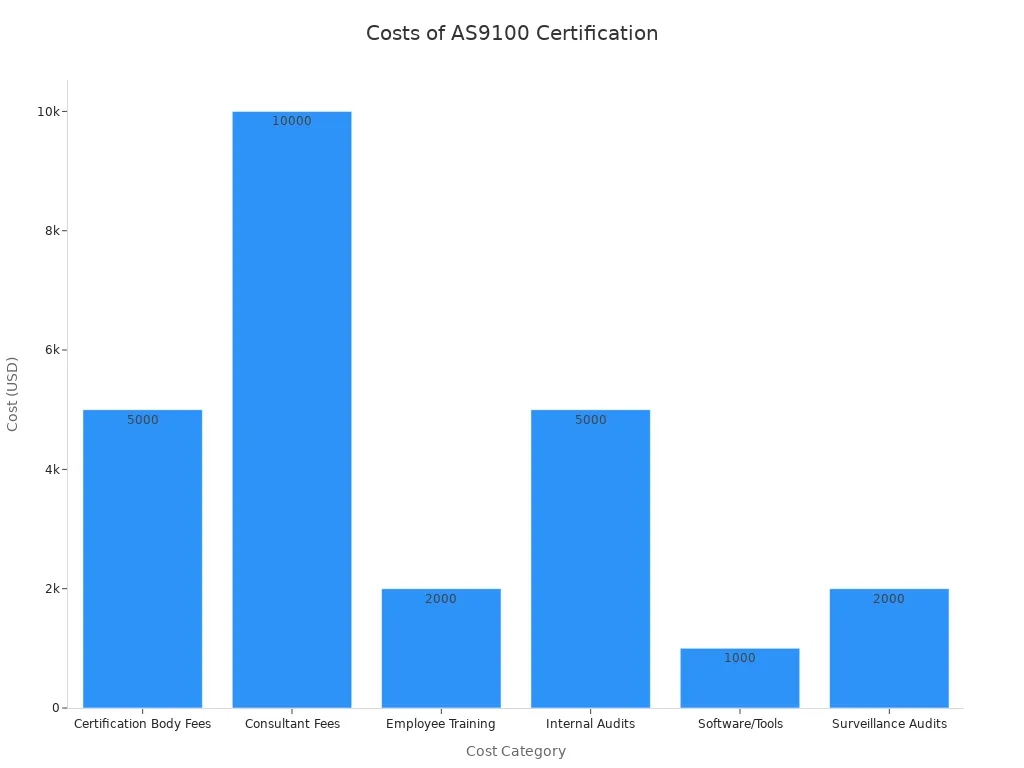
For critical applications, 718 Inconel must conform to strict industry standards, such as those from the Society of Automotive Engineers (AMS) and ASTM International. These specifications dictate everything from chemical composition to mechanical properties. Achieving and maintaining the necessary certifications, like AS9100 for aerospace, involves substantial investment.
Key cost factors include:
- Direct Costs: Fees for initial and ongoing audits, payments to consultants for system implementation, and expenses for creating detailed documentation.
- Internal Costs: Companies dedicate significant employee time to managing the quality system, conducting internal audits, and implementing corrective actions.
- Training: Staff must be trained on new quality procedures, which requires time and resources.
These requirements ensure every bar is produced to the same high standard, but they also build cost into the supply chain.
Destructive and Non-Destructive Testing (NDT)
To confirm that the material meets specifications, manufacturers perform a battery of tests. These checks are divided into two categories: destructive tests, where a sample is tested to failure to measure properties like tensile strength, and non-destructive tests (NDT), which inspect the bar for internal flaws without damaging it.
Common tests for 718 Inconel include Ultrasonic Testing (UT) to find internal voids and Positive Material Identification (PMI) to verify the alloy's composition. Each test requires certified technicians and calibrated equipment, contributing to the overall production cost.
Certification and Material Traceability (MTR)
The final step in the quality assurance process is documenting the results. Every batch of 718 Inconel comes with a Material Test Report (MTR), a formal document that serves as its birth certificate. This report provides complete traceability from the initial melt to the final product.
For a specification like AMS 5663, an MTR must include:
- A full chemical analysis and mechanical test results tied to the specific heat number.
- Hardness test results (e.g., Brinell or Rockwell).
- Confirmation of the melting process, such as VIM/VAR.
- Documentation of all NDT performed.
- Details of the heat treatment cycle used.
This comprehensive documentation guarantees the material's integrity and provides the accountability required for mission-critical components. The administrative effort to create, manage, and verify these records is a necessary but often overlooked cost driver.
Market and Supply Chain Factors for 718 Inconel Bar
Beyond raw materials and manufacturing, external market forces and supply chain logistics play a crucial role in determining the final price. These factors introduce variability and can significantly influence what a buyer pays for a finished product.
Global Supply and Demand Dynamics
The supply chain for Inconel 718 is global, making it susceptible to geopolitical events and trade policies. Recent market shifts highlight this vulnerability:
- Sanctions on major exporting nations have increased raw material prices and created supply chain uncertainties.
- Protectionist trade policies and tariffs raise operational costs for manufacturers.
- Regional tensions can disrupt maritime security, leading to higher shipping costs and delivery delays.
This volatility pressures companies to adopt resilient sourcing strategies. Metallurgical experts emphasize the need for diversification to mitigate risk.
The unpredictability stemming from international relations makes it vital for companies to establish multiple sources across different regions.
— Dr. Lisa Ransom, metallurgical expert at TechMet Consultancy
Other analysts suggest a more proactive approach to gain greater control over the supply chain.
By developing domestic facilities or forming joint ventures with local operators in key resource-rich areas, firms can gain more control over their supply chains.
— Mark Chen, Global Metals Insights
Order Quantity and Supplier Markup
The principle of economy of scale heavily applies to superalloy purchasing. Suppliers price a 718 Inconel bar based on the quantity ordered. Large, mill-run orders receive preferential pricing, while smaller, cut-to-length orders carry a significant premium.
| Product Form | Typical Price (USD/lb) |
|---|---|
| Mill bar / plate (bulk, mill grade) | $20 – $50 / lb |
| Small-quantity retail (cut lengths, low MOQ) | $14 – $73 / lb |
Small orders incur higher per-unit costs due to factors like Minimum Order Quantity (MOQ) requirements, administrative overhead for smaller lot sizes, and disproportionate freight costs. Suppliers apply higher markups to these buys to cover the handling and processing expenses associated with servicing low-volume requests.
Bar Dimensions and Surface Finish
The physical specifications of the bar itself are a final cost driver. Larger diameter bars naturally cost more due to the increased volume of material. Custom or non-standard dimensions may also require special tooling or processing, adding to the expense.
Surface finish is another key factor. A standard "mill finish" is the most economical option. However, applications requiring tighter tolerances or a smoother surface may specify finishes like "centerless ground" or "polished." Each additional finishing step involves more machine time, specialized equipment, and skilled labor, which directly increases the final price of the product.
The final price of a 718 Inconel bar is a direct reflection of its complex journey from raw elements to a finished product. Expensive materials like nickel and niobium, combined with energy-intensive manufacturing and strict quality protocols, form the foundation of its cost.
Understanding these key drivers empowers buyers. It enables them to forecast budgets accurately, negotiate effectively, and recognize the inherent value delivered by this premier superalloy in demanding applications.
FAQ
Why is Inconel 718 so expensive?
The high price stems from its costly raw materials, primarily nickel and niobium. Additionally, complex manufacturing like dual-melting (VIM/VAR) and difficult machining add significant expense. Rigorous testing and certification requirements for critical applications also contribute to the final cost.
How can buyers get a better price on 718 Inconel bar?
Buyers achieve better pricing by ordering larger quantities. Mill-run orders offer significant cost advantages over small, cut-to-length purchases. Strategic, bulk purchasing is the most effective way to reduce the per-unit cost from suppliers.
Is there a cheaper alternative to Inconel 718?
While other alloys exist, they involve performance trade-offs. For example, stainless steels like 316L offer excellent corrosion resistance but cannot match the high-temperature strength of Inconel 718. The best material choice always depends on the specific application's demands.
What is a Material Test Report (MTR) and why is it important?
An MTR is a quality assurance document that certifies the material's properties. It provides full traceability, detailing the chemical composition, mechanical test results, and manufacturing processes for a specific batch. This report guarantees the alloy meets strict industry standards like AMS 5663.
See Also
Mastering Pass Partition Plate Welding: Expert Strategies for 2025 Success
Unlock Easier Cutting: Essential Guide Bar Tips for Enhanced Efficiency
Elevate Your TIG Welding: Key Facts About WT20 Thoriated Electrodes
Molybdenum Plugs in Seamless Steel Pipe: A 2025 Production Evaluation
Aminoguanidine Bicarbonate Supplier Pricing: Key Insights for This Year