The Pros and Cons of an Under Sink Instant Hot Water Dispenser

An under sink instant hot water dispenser can be a great addition to your kitchen. It provides convenience and saves you time. You need to weigh its daily benefits against the initial cost and upkeep. This helps you decide if an under sink instant hot water dispenser fits your lifestyle and budget.
Key Takeaways
- An instant hot water dispenser gives you hot water fast. It saves time and clears counter space.
- These dispensers cost money to buy and install. They also need regular cleaning and filter changes.
- Think about how often you use hot water. This helps you decide if a dispenser is right for your home.
What Is an Under Sink Instant Hot Water Dispenser?
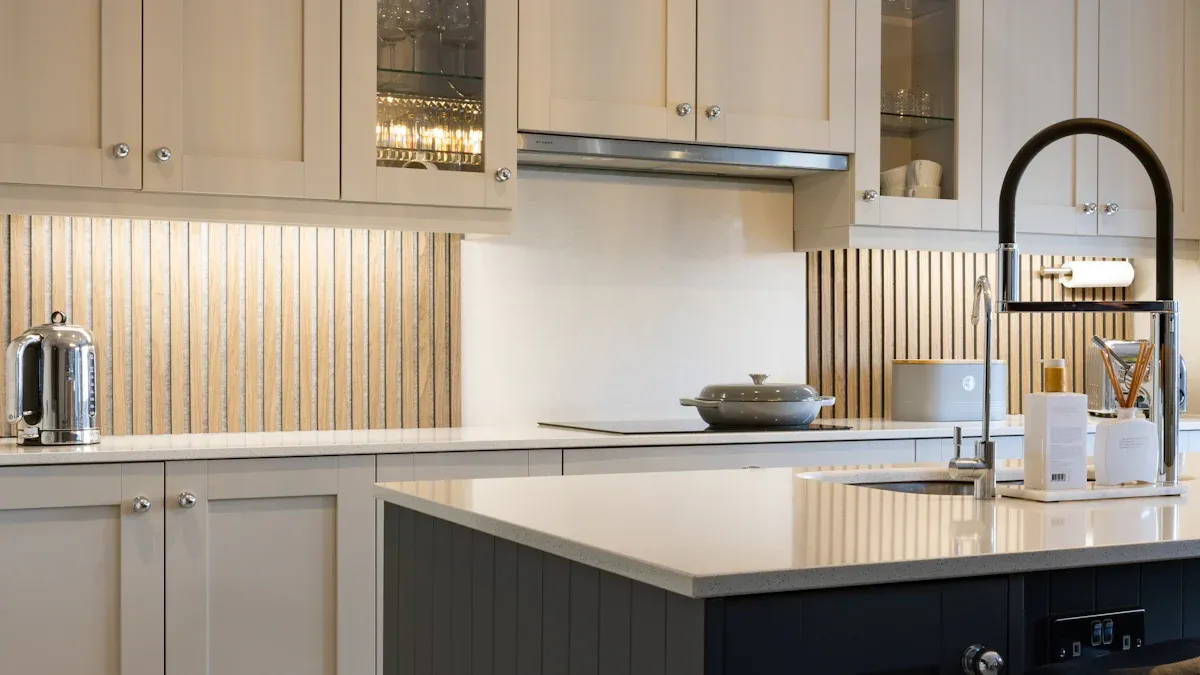
An under sink instant hot water dispenser is a kitchen appliance that gives you near-boiling water right from a tap. It sits neatly out of sight in your cabinet. This system saves you time when you want to make hot drinks or speed up your cooking. It also helps keep your counters clear.
How It Works
The process is simple and efficient. You can get hot water in just a few steps.
- The system connects to your kitchen's cold water supply line.
- Cold water flows into a small, insulated tank mounted under your sink.
- A heating element inside the tank heats the water to a near-boiling temperature, often around 200°F.
- When you use the faucet, cold water enters the tank and pushes the hot water up through the spout.
- The tank then heats the new cold water, so it is ready for the next time you need it.
Note: Many systems include a filter. The water passes through this filter before it enters the tank. This removes impurities and improves the taste.
Key Components
Several key parts work together in an under sink instant hot water dispenser. Each component has an important job.
- Insulated Tank: This small tank, usually holding less than a gallon, keeps the water hot and ready. Its insulation helps save energy.
- Heating Element: This is the part inside the tank that heats the water quickly.
- Thermostat: You can use the thermostat to set the water temperature. It also keeps the water at a consistent heat and includes safety features to prevent overheating.
- Dispenser Faucet: This is the special tap you install on your sink. Many models include child safety locks to prevent accidental burns.
The Pros: Why an Instant Hot Water Dispenser is Worth It
You may wonder if this appliance is a worthwhile investment. An instant hot water dispenser offers several compelling advantages. These benefits can transform your daily kitchen routine.
Unmatched Convenience on Demand
Imagine having near-boiling water available at the turn of a handle. This is the primary benefit of an under sink instant hot water dispenser. You no longer need to wait for a kettle to boil or a pot to heat up on the stove. The convenience simplifies many daily tasks.
You can instantly:
- Make tea, coffee, or hot chocolate
- Prepare instant soup or noodles
- Warm baby bottles and food
- Loosen tough, baked-on food residue from pans
- Rinse dishes for a quicker clean
This on-demand access to hot water streamlines your activities. It makes your kitchen a more efficient and enjoyable space.
A Major Time-Saver in the Kitchen
Your time is valuable. An instant hot water dispenser gives you more of it. An electric kettle typically needs 3 to 5 minutes to boil. A dispenser provides hot water immediately. This eliminates waiting entirely. For a busy household, these saved minutes add up quickly. One survey found that office workers spend about 24 minutes each day just getting hot drinks. You can significantly reduce this time at home.
Kitchen Tip: Hot water speeds up many cleaning tasks. It cuts through grease on utensils and pans much faster than cold or warm water. This helps you finish your cleanup in record time.
Specific tasks become much faster:
- Blanching vegetables: Drop them in hot water instantly.
- Washing greasy utensils: The heat helps dissolve grease on contact.
- Sanitizing cutting boards: A rinse with near-boiling water improves cleaning.
Frees Up Valuable Counter Space
Kitchen counters often become cluttered with appliances. An electric kettle is a common source of this clutter. It creates what some call "permanent countertop clutter." An under-sink system removes this problem. The tank is hidden in your cabinet, and only a small, stylish faucet is visible on your sink. This frees up 100% of the space a kettle would occupy.
For perspective, a typical electric kettle has a noticeable footprint.
| Dimension | Measurement |
|---|---|
| Length | 5.8 inches |
| Width | 8.5 inches |
| Height | 10 inches |
Reclaiming this area gives you more room for food prep or simply a cleaner, more open look.
Potential Energy Efficiency
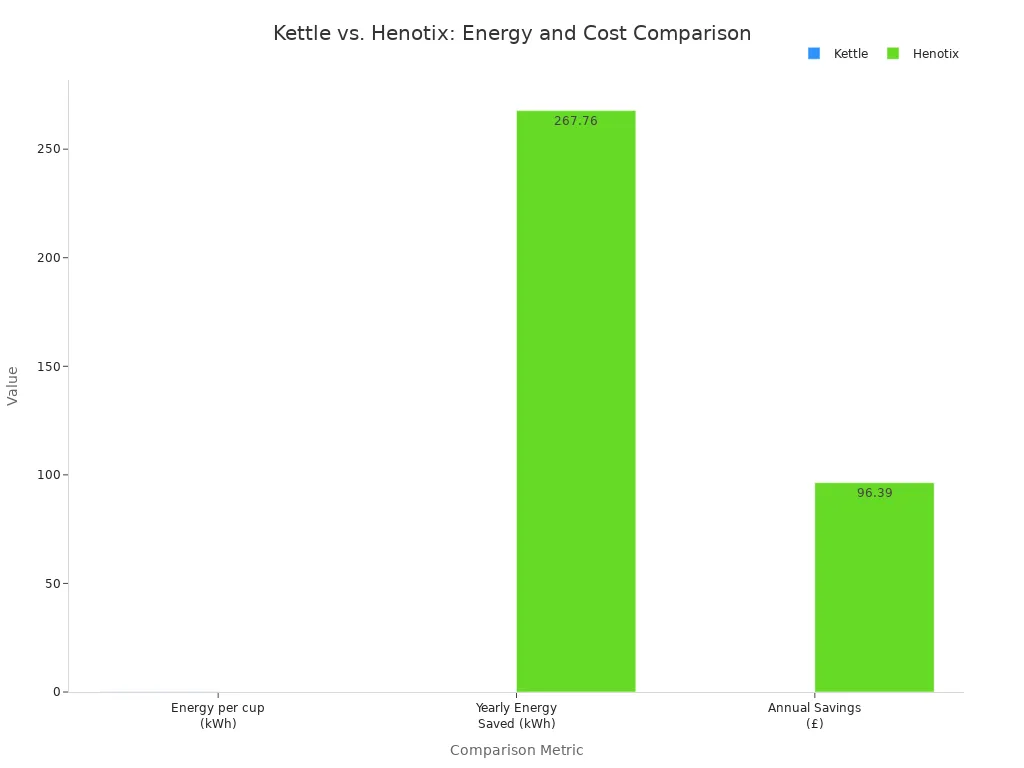
You might think that keeping water hot all day uses a lot of energy. However, modern dispensers can be more efficient than boiling a kettle multiple times. These units use a small, well-insulated tank. It requires minimal energy to maintain the water's temperature. A kettle, on the other hand, uses a large burst of power every time you turn it on.
For households that use hot water frequently, a dispenser often consumes less total energy. The chart below shows how the energy use per cup compares.
Modern dispensers also include smart features to boost efficiency.
- Precise Temperature Control: You can set the exact temperature you need, from 113°F to 208°F. This avoids wasting energy by overheating the water.
- Programmable Timers: Some models let you schedule on/off times. This prevents the unit from running when you do not need it.
- Heating on Demand: The system only heats the small amount of water in its tank, reducing waste.
Modern Kitchen Upgrade
An instant hot water dispenser is more than just a convenient tool. It is a modern upgrade that enhances your kitchen's style and functionality. Manufacturers offer these faucets in a wide range of sleek, compact designs. You can find finishes like chrome, brushed nickel, and matte black to match your main faucet and other fixtures.
This appliance elevates your entire kitchen experience. It declutters your counter, speeds up cooking and cleaning, and adds a touch of sophistication. The combination of high-end style and practical function makes it a popular feature in contemporary kitchen designs.
The Cons: What to Consider Before Buying
While an instant hot water dispenser offers many benefits, you should also consider the potential downsides. Understanding the costs, installation needs, and upkeep will help you make a well-informed decision. These factors ensure the appliance is a good fit for your kitchen and budget.
The Initial Purchase Cost
The first hurdle for many is the upfront price. An under sink instant hot water dispenser is a significant investment compared to a simple electric kettle. The cost varies widely based on the brand, features, and finish. You can expect to find models across several price points.
- Entry-Level Models: These typically cost between $329 and $349. They provide basic hot water functionality.
- Mid-Range Systems: These often include a filtration system and range from $419 to $499.
- High-End and Premium Models: These can offer both hot and cool water, digital controls, and designer finishes. Prices for these units can range from $519 to $799.
This cost only covers the unit itself. You must also budget for potential installation fees.
Installation Complexity and Cost
Installing the dispenser can be a complex task. If you are not comfortable with plumbing and electrical work, you will likely need to hire a professional. This adds to the total cost. The installation involves several specific steps.
- You must connect various tubes for the water supply and dispenser faucet. These tubes need to be routed carefully to avoid kinks or damage.
- You need to make plumbing connections to your cold water line. This may require cutting tubes and ensuring they are fully inserted into fittings to prevent leaks.
Beyond the plumbing, you must consider the electrical requirements. Most dispensers need their own power source.
A 110 volt, 60Hz, AC only 15 or 20 ampere fused, grounded electrical supply is required. It is recommended that a separate circuit serving only your hot water dispenser be provided.
This means you may need an electrician to install a new, dedicated outlet under your sink. This is a crucial safety step to prevent overloading your kitchen's circuits.
Requires Under-Sink Cabinet Space
The system's heating tank, though compact, requires dedicated space in your under-sink cabinet. This is an important consideration, especially for smaller kitchens where storage is limited. Before you buy, measure the area under your sink. You need to ensure there is enough room for the tank, filter, and all the necessary tubing. This may mean reorganizing or giving up storage space you currently use for cleaning supplies or other items.
Ongoing Maintenance Needs
To keep your dispenser working correctly, you must perform regular maintenance. Neglecting these tasks can lead to poor performance or even damage the unit. Common issues like heating element failure can result from limescale buildup, especially in areas with hard water.
Key maintenance tasks include:
- Descaling the Tank: You should descale the tank every 3 to 6 months to remove mineral buildup. This involves filling the tank with a vinegar solution or commercial descaler, letting it sit, and then flushing the system.
- Replacing the Water Filter: If your system has a filter, you need to replace it every 6 to 12 months. You might need to replace it sooner if you notice weaker water flow or a change in taste.
These tasks require time and the cost of supplies like descaling solutions and replacement filters.
Continuous Energy Use
Unlike a kettle that only uses power when you boil it, an instant hot water dispenser uses energy continuously to keep its tank heated. This standby energy consumption adds to your monthly electricity bill. While a well-insulated unit is efficient, it is always drawing power.
| Parameter | Typical Value |
|---|---|
| Standby Energy Use | 25–40W |
This constant power draw is similar to other appliances that run in the background. For comparison, a dishwasher uses around 330 watts per hour when running a cycle. While the dispenser's standby use is lower, it runs 24/7. Some estimate the daily cost is less than $1 a day, but this adds up over a month. If you only use hot water once or twice a day, boiling a kettle might be more energy-efficient.
Your daily habits will help you decide. If you often make coffee or cook, the convenience of an under sink instant hot water dispenser likely outweighs the cost. These units can last 8 to 12 years. For minimal hot water needs, the investment may not be justified. Your routine, budget, and space are the deciding factors.
FAQ
How hot does the water get?
Most dispensers heat water to around 200°F (93°C). You can adjust the temperature on many models. This lets you set the heat from hot to near-boiling.
Can I install the dispenser myself? 🛠️
You can install it yourself with basic plumbing skills. You might need a professional for complex jobs. An electrician may be required to install a new power outlet.
Does the dispenser filter the water?
Many systems include a water filter. The filter improves taste and reduces mineral buildup. You must replace the filter cartridge every 6 to 12 months for best results.