Breaking Down the Types of Food Packaging Machines in 2025
Food manufacturers rely on advanced technology to improve efficiency and product quality. The main types of packing machine for food products in 2025 include systems that weigh, seal, and automate packaging tasks.
Choosing the right equipment depends on product characteristics, production volume, and required shelf life.
Checkweighers as Packing Machine for Food Products
What Checkweighers Do
Checkweighers play a vital role in modern food packaging lines. These machines measure the weight of each product as it moves along the conveyor. Operators use checkweighers to ensure every package meets strict weight standards. If a package falls outside the acceptable range, the machine automatically rejects it. This process helps companies maintain consistency and comply with regulations.
Tip: Checkweighers can handle a wide variety of food items, from snacks to frozen meals.
Key Features of Checkweighers
Manufacturers design checkweighers with advanced technology to improve accuracy and speed. Common features include:
- High-precision load cells for reliable measurements
- Touchscreen interfaces for easy operation
- Automatic rejection systems for underweight or overweight packages
- Data logging capabilities for quality control
- Integration with other packing machine for food products
The table below highlights some typical specifications:
| Feature | Description |
|---|---|
| Accuracy | Up to 0.1 grams |
| Speed | 100-300 packs per minute |
| Connectivity | Ethernet, USB, wireless options |
| Construction | Stainless steel, hygienic design |
Benefits for Food Packaging
Checkweighers offer several advantages for food manufacturers. They help reduce product giveaway by ensuring each package contains the correct amount. Companies use checkweighers to improve quality control and meet legal requirements. These machines also boost efficiency by automating the weighing process. As a result, businesses can maintain high standards and protect their brand reputation.
Vertical Form Fill Seal Machines for Food Packaging

How Vertical Form Fill Seal Machines Work
Vertical form fill seal machines automate the process of creating sealed packages from rolls of film. The machine pulls the film downward, shapes it into a tube, and seals the edges vertically. The system then fills the tube with food products, such as snacks, grains, or powders. After filling, the machine seals the top and bottom of each package. Operators can adjust the machine to handle different bag sizes and product types. This technology allows manufacturers to produce hundreds of packages per minute.
Note: Vertical form fill seal machines work well for high-speed production environments.
Features of Vertical Form Fill Seal Machines
Manufacturers equip these machines with advanced controls and sensors. The following features help improve reliability and efficiency:
- Programmable touchscreens for easy setup
- Automatic film tracking to reduce waste
- Servo-driven motors for precise movement
- Integrated weighing and dosing systems
- Quick-change parts for fast product switches
| Feature | Benefit |
|---|---|
| Touchscreen controls | Simplifies operation |
| Film tracking | Minimizes material waste |
| Servo motors | Ensures accurate sealing |
| Integrated weighing | Maintains product consistency |
These features support consistent packaging quality and reduce downtime.
Advantages for Food Packaging
Vertical form fill seal machines offer several advantages for food manufacturers. They increase packaging speed and reduce labor costs. The machines create airtight seals that help preserve freshness and extend shelf life. Companies use this packing machine for food products to improve efficiency and meet high-volume demands. The flexible design allows manufacturers to package a wide range of foods, from chips to frozen vegetables. By automating the packaging process, businesses can maintain product quality and respond quickly to market changes.
Vacuum Sealers for Food Products
What Vacuum Sealers Do
Vacuum sealers remove air from packaging before sealing it. This process creates a tight seal around the food product. Operators use vacuum sealers to protect food from oxygen, moisture, and contaminants. The machine draws out air, then applies heat to seal the package. Many food manufacturers rely on vacuum sealers to extend product shelf life and maintain freshness. These machines handle a wide range of foods, including meats, cheeses, and prepared meals.
Note: Vacuum sealing helps prevent spoilage and reduces the risk of freezer burn.
Main Features of Vacuum Sealers
Modern vacuum sealers offer advanced features that improve efficiency and reliability. Manufacturers design these machines for both small and large-scale operations. Key features include:
- Adjustable vacuum strength for different food types
- Digital controls for precise operation
- Double or triple sealing bars for extra protection
- Stainless steel construction for hygiene and durability
- Automatic bag detection and cutting
The table below highlights some important specifications:
| Feature | Description |
|---|---|
| Vacuum Pressure | Up to -0.98 bar |
| Seal Width | 5-10 mm |
| Cycle Time | 10-30 seconds per pack |
| Chamber Size | Various sizes for different needs |
Benefits for Food Preservation
Vacuum sealers offer significant benefits for food preservation. By removing air, these machines slow down the growth of bacteria and mold. Food stays fresher for longer periods. Companies use vacuum sealers as a packing machine for food products to reduce waste and improve product quality. Vacuum-sealed packages also take up less space in storage and transport. This method supports both food safety and cost savings.
Tip: Vacuum sealing works especially well for bulk packaging and sous vide cooking.
Tray Sealers in Packing Machine for Food Products
How Tray Sealers Operate
Tray sealers automate the process of sealing food products in pre-formed trays. Operators place filled trays onto the conveyor. The machine then moves each tray into the sealing station. A film covers the tray, and the system applies heat and pressure to create an airtight seal. Some tray sealers use modified atmosphere packaging (MAP) to replace the air inside the tray with a protective gas. This method helps preserve freshness and extend shelf life. Tray sealers handle a wide range of tray sizes and materials, making them suitable for many food applications.
Tip: Tray sealers work well for packaging fresh produce, ready meals, and deli items.
Features of Tray Sealers
Manufacturers design tray sealers with advanced features to improve efficiency and hygiene. Common features include:
- Automatic tray feeding and film cutting
- Touchscreen controls for easy operation
- Quick-change tooling for different tray sizes
- Hygienic stainless steel construction
- MAP capability for extended shelf life
The table below highlights key features and their benefits:
| Feature | Benefit |
|---|---|
| Automatic feeding | Reduces manual labor |
| MAP capability | Preserves product freshness |
| Quick-change tooling | Increases production flexibility |
| Stainless steel build | Ensures easy cleaning |
Benefits for Ready-to-Eat Foods
Tray sealers offer significant advantages for ready-to-eat foods. They create secure, tamper-evident seals that protect food from contamination. This packing machine for food products helps maintain product quality during transport and storage. Tray sealers also support attractive presentation, which appeals to consumers in retail settings. Companies use tray sealers to improve shelf life, reduce food waste, and meet strict food safety standards. The automation provided by tray sealers increases production speed and consistency, making them a valuable asset in modern food packaging operations.
Robotic Packaging Systems for Food Products
What Are Robotic Packaging Systems
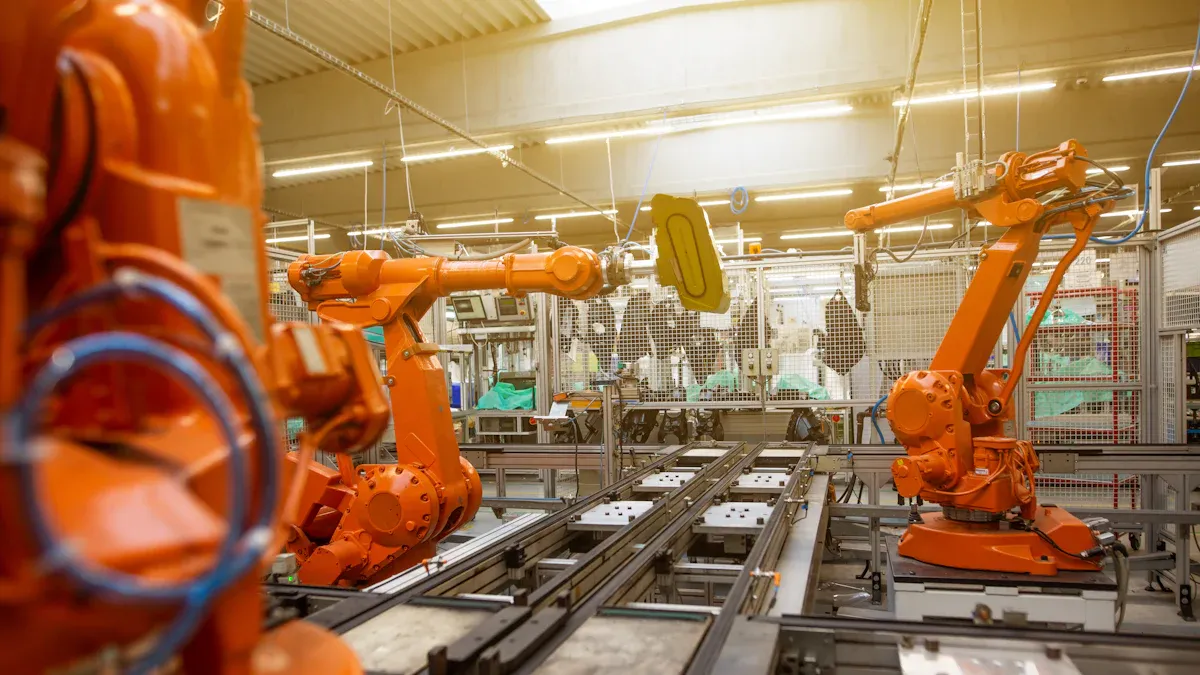
Robotic packaging systems use advanced robotics to automate food packaging tasks. These systems include robotic arms, sensors, and vision technology. They pick, place, sort, and pack food items with high precision. Manufacturers rely on robotic packaging systems to handle repetitive tasks that require speed and accuracy. The technology adapts to different product shapes and sizes, making it suitable for various food categories. Companies use robotic systems to improve consistency and reduce human error in the packaging process.
Note: Robotic packaging systems can integrate with other equipment, such as conveyors and checkweighers, to create a seamless production line.
Key Features of Robotic Packaging
Robotic packaging systems offer several advanced features that enhance performance. The following list highlights some important capabilities:
- Multi-axis robotic arms for flexible movement
- Vision systems for product identification and quality inspection
- Programmable controls for quick changeovers
- High-speed operation for increased throughput
- Hygienic design for food safety compliance
| Feature | Description |
|---|---|
| Vision technology | Detects product position and quality |
| Programmable controls | Allows fast setup and adjustments |
| Hygienic construction | Supports easy cleaning |
| Multi-axis movement | Handles complex packing tasks |
Manufacturers select robotic packaging systems based on product type, packaging speed, and integration needs.
Benefits for Automation and Efficiency
Robotic packaging systems deliver significant benefits for food manufacturers. They increase automation, which reduces labor costs and improves productivity. The systems maintain consistent packaging quality, even during high-speed operations. Companies use robotic systems to minimize downtime and respond quickly to changing production demands. The packing machine for food products with robotic technology supports flexible packaging formats and rapid product switches. Businesses gain a competitive edge by adopting robotics, as they can scale operations and meet strict food safety standards.
Tip: Robotic packaging systems help manufacturers achieve higher efficiency and adapt to future market trends.
Food manufacturers in 2025 have access to advanced equipment. The main types include checkweighers, vertical form fill seal machines, vacuum sealers, tray sealers, and robotic packaging systems. Each packing machine for food products brings unique features that suit different business needs. Companies should review their product type, packaging requirements, and production goals before making a decision.
Careful selection helps ensure efficiency, product safety, and long-term success.
FAQ
What factors should companies consider when choosing a food packaging machine?
Companies should evaluate product type, packaging speed, shelf life requirements, and available space. They should also consider integration with existing equipment and future scalability.
How do food packaging machines improve food safety?
Food packaging machines reduce human contact with products. They create airtight seals and use hygienic materials. These features help prevent contamination and extend shelf life.
Can one machine handle multiple types of food products?
Many modern machines offer quick-change parts and programmable controls. This flexibility allows operators to switch between different products with minimal downtime.
What maintenance do food packaging machines require?
Operators should perform regular cleaning, inspect moving parts, and check for wear. Manufacturers recommend scheduled servicing to ensure optimal performance and prevent breakdowns.
Are robotic packaging systems suitable for small businesses?
Robotic systems now come in scalable designs. Small businesses can benefit from increased efficiency and reduced labor costs. Many manufacturers offer compact models for limited production spaces.
See Also
Innovative Folder Gluer Capabilities for Carton Lines in 2025
Cost Benefits and Features of Plate Packs in 2025
Essential Capsule Checkweighers for Buyers in 2025
Enhancing Pharma Efficiency with Modern Capsule Decapsulation Machines