Types of Hinges That Change How You Build
You face many choices when you pick the right hinge. Different types of hinges change how your doors or cabinets move.
- The product of hinges affects how sturdy and smooth your build feels.
- Your hinge choice shapes the look and strength of your project.
Understanding Types of Hinges and Their Functions
What Hinges Do and Why They Matter
You might think hinges are just small pieces of metal, but they play a huge role in how your doors and cabinets work. Hinges connect two parts and let them move smoothly. When you open a cabinet or swing a door, the hinge controls how easy that feels. Some hinges help doors close softly, while others keep them steady and secure. If you pick the wrong hinge, your door might sag or stick. The right hinge makes your furniture last longer and look better.
Tip: Always check how much weight your hinge can hold before you install it. This helps you avoid problems later.
Key Factors That Differentiate Types of Hinges
You have many choices when it comes to types of hinges. Each type works best for certain jobs. Some hinges, like butt hinges, give you basic movement and strong support. Others, such as pivot hinges, let doors swing open in a special way. If you want a clean look, knife hinges hide inside the furniture. Entertainment center hinges open wider, making it easier to reach inside. Glass door hinges hold glass panels safely and often close by themselves. Demountable hinges make it simple to remove doors for cleaning. Youngdale hinges fit different door thicknesses and often close on their own. Wrap hinges let doors sit flush with the cabinet frame.
Here’s a quick look at how different types of hinges affect movement and stability:
| Hinge Type | Impact on Movement and Stability |
|---|---|
| Knife Hinges | Sleek, minimalist look for high-end furniture. Clean and elegant movement. |
| Pivot Hinges | Smooth, precise swinging. Good balance of style and function. |
| Entertainment Center Hinges | Wide-angle opening for easy access. Smooth operation. |
| Glass Door Hinges | Secure hold for glass. Seamless movement, often self-closing. |
| Demountable Hinges | Easy door removal for maintenance. Simplifies cabinet care. |
| Butt Hinges | Basic, reliable movement. Strong support for doors and cabinets. |
| Youngdale Hinges | Fits many door thicknesses. Often self-closing for convenience. |
| Wrap Hinges | Flush fit with cabinet frame. Plates wrap around for a neat look. |
When you choose the right types of hinges, you make your build stronger and easier to use. You also get to decide how your project looks and feels.
Types of Hinges and How to Choose the Right One
Butt Hinges
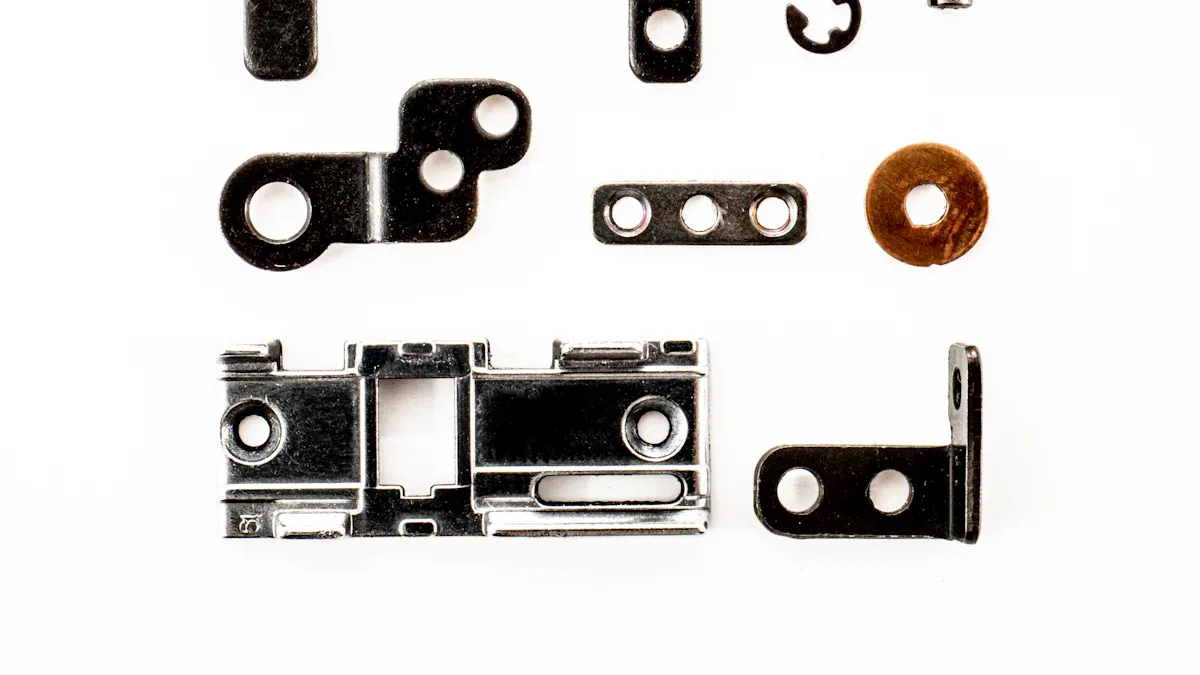
You see butt hinges everywhere. They work well for doors, cabinets, and even gates. You install them by cutting a small pocket, called a mortise, into the edge of the door and frame. This lets the hinge sit flush when closed, so nothing sticks out. Butt hinges have two identical leaves and a strong knuckle in the middle. They can hold a lot of weight, which makes them perfect for heavy doors.
Here’s a quick look at how butt hinges compare to other types:
| Feature | Butt Hinges | Other Hinge Types |
|---|---|---|
| Leaf Design | Identical leafs | Varies (may not be identical) |
| Installation Method | Mortised construction | Surface-mounted or other methods |
| Flush Installation | Sits flush when closed | May be exposed when closed |
| Knuckle Size | Larger knuckle | Smaller knuckles |
| Load Capacity | Can accommodate heavier objects | Generally lower load capacity |
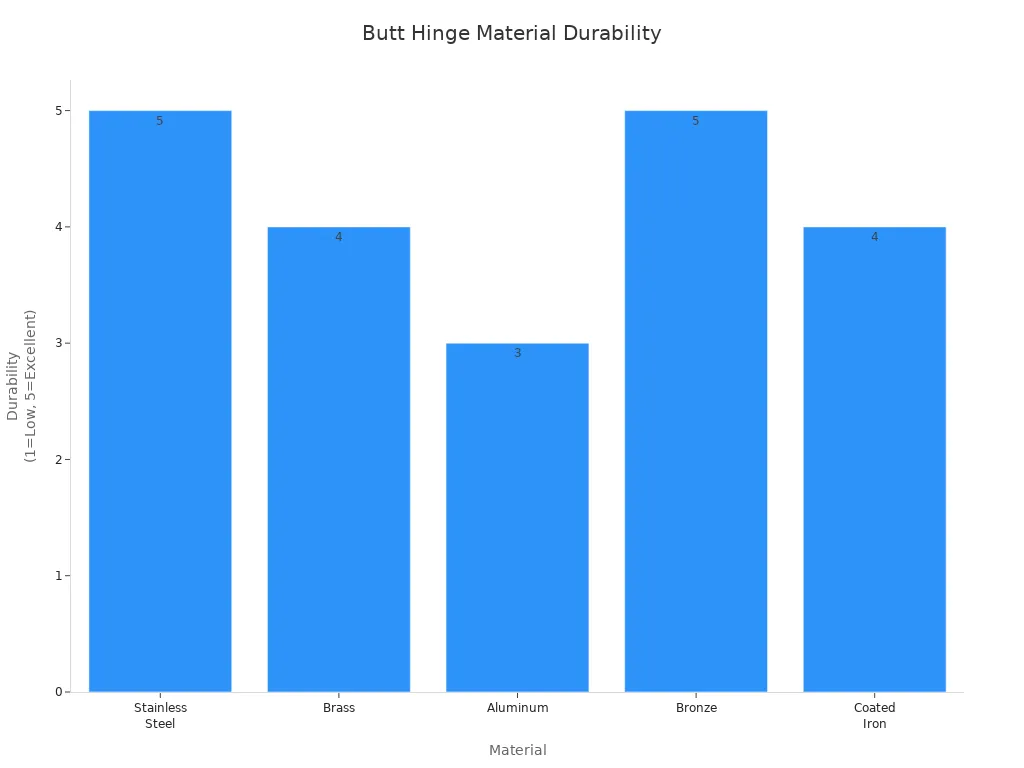
Butt hinges come in different materials. Each one has its own strengths:
| Material | Durability | Corrosion Resistance | Sustainability | Best Applications |
|---|---|---|---|---|
| Stainless Steel | Excellent | Excellent | High | Exterior doors, bathrooms, kitchens |
| Brass | Very Good | Good | High | Interior doors, decorative doors |
| Aluminum | Good | Good | Excellent | Lightweight doors, cabinets |
| Bronze | Excellent | Very Good | High | Coastal doors, luxury applications |
| Coated Iron | Very Good | Good | Moderate | Heavy-duty, industrial, interior/exterior |
Tip: Use stainless steel for outdoor projects. It stands up to rain and humidity.
Continuous (Piano) Hinges
Continuous hinges, also called piano hinges, run the full length of a door or lid. You often see them on piano covers, but they work great for doors, cabinets, and toolboxes too. These hinges spread the weight evenly, so the door won’t sag over time. You get extra strength and smooth movement.
You find continuous hinges in many places:
- Retail stores use them for busy entrance doors.
- Hospitals and clinics need them for fire safety and durability.
- Schools put them on classroom doors to handle lots of use.
- Offices use them for doors between workspaces.
- Hotels and restaurants rely on them for doors that see heavy traffic.
- They offer strength and durability for tough jobs.
- They work well in heavy-duty equipment and cabinetry.
Continuous hinges can handle more weight than most other types of hinges. They spread the load along the whole door, which keeps everything stable. Strap hinges are also strong, but concealed hinges usually can’t hold as much.
Concealed (European) Hinges
Concealed hinges, sometimes called European hinges, hide inside the cabinet. You don’t see them when the door is closed. This gives your cabinets a clean, modern look. You need to cut a special hole, or mortise, inside the cabinet to install them. This is different from butt hinges, which you mount on the surface and can see from the outside.
- Concealed hinges go inside the cabinet for a smooth exterior.
- Butt hinges stay visible and mount on the outside.
You often use concealed hinges for kitchen cabinets, bathroom vanities, and modern furniture. They let you adjust the door easily, so you get a perfect fit.
Pivot Hinges
Pivot hinges let doors swing from a point at the top and bottom, not from the side. You see them on big, heavy doors in modern homes and offices. Pivot hinges help doors glide open with little effort. They keep heavy doors stable and prevent them from sagging or getting misaligned.
| Benefit | Description |
|---|---|
| Enhanced Functionality | Doors glide open easily, even if they are oversized. |
| Improved Stability | Heavy doors stay secure and straight. |
| Versatility | Works with wood, glass, or metal. Fits many designs. |
You find pivot hinges in:
- Modern and minimalist homes
- Contemporary offices
- Frameless glass doors
- Large wooden panels
- Industrial-style metal doors
Note: Pivot hinges make a bold statement and work best for wide or tall doors.
Barrel Hinges
Barrel hinges look like small metal barrels. You drill them into the edge of a door or box. When closed, you can barely see them. They work well for small boxes, cabinets, and hidden doors. Barrel hinges are great when you want a clean look and don’t need to support a lot of weight.
Strap Hinges
Strap hinges have long, flat plates that stretch across the door or gate. You often see them on barn doors, garden gates, and sheds. These hinges support heavy doors and keep them from sagging. The long plates spread the weight, which helps the door swing smoothly and last longer.
Strap hinges are perfect for big, heavy doors. They add a rustic or industrial style to your project.
Butterfly Hinges
Butterfly hinges get their name from their shape. They look like a butterfly with wings spread out. You use them for cabinets, chests, wardrobes, and small boxes. Butterfly hinges add a decorative touch and work well for light to medium doors.
| Furniture Type | Description |
|---|---|
| Cabinets | Adds elegance and support to kitchen and bathroom cabinets. |
| Chests | Decorative and functional for opening and closing. |
| Wardrobes | Supports doors and improves appearance. |
| Jewelry Boxes | Delicate and functional for small cases. |
| Keepsake Boxes | Small and decorative, perfect for special boxes. |
Tip: Choose butterfly hinges when you want both style and function.
Spring Hinges
Spring hinges close doors automatically. You see them on doors that need to shut by themselves, like in schools, offices, and apartment buildings. Spring hinges look like regular hinges, so you don’t need a big, bulky door closer.
| Advantage | Description |
|---|---|
| Aesthetic Appeal | Looks like a regular hinge. No need for extra hardware. |
| Cost-Effectiveness | Cheaper than adding a separate door closer. |
| Compliance with Standards | Meets rules for accessibility and fire safety. |
Spring hinges help keep buildings safe. They make sure doors close on their own, which is important for fire safety and energy savings. In public buildings, spring hinges help meet ADA and fire codes. If you install them wrong, doors might not close, which can be dangerous.
| Aspect | Spring Hinges | Door Closers |
|---|---|---|
| Minimum Closing Time | 1.5 seconds from 70 degrees | 5 seconds from 90 degrees to 12 degrees |
| Reliability | Less reliable over time | More reliable with adjustable settings |
| Fire Safety Compliance | Good if adjusted properly | More reliable for fire doors |
- In some fires, doors failed to close because of bad spring hinge installation.
- Always check and adjust spring hinges for safety.
Specialty Hinges
Specialty hinges solve unique problems. You use them when regular hinges won’t work. Some examples include:
| Type of Hinge | Application |
|---|---|
| Rotating hinges | Lift-up doors |
| Corner hinges | Corner cabinets |
| Pocket door hinges | Sliding doors that hide in cabinets |
Specialty hinges help with heavy loads, odd angles, or hidden doors. They work well in custom furniture and creative projects. You pick these when you need something special for movement or design.
Callout: Specialty hinges let you build things that standard hinges can’t handle.
Step-by-Step Guide to Selecting the Best Hinge
Choosing the right hinge makes your project last longer and work better. Here’s a simple guide:
- Know your application: What are you building? Is it a door, cabinet, or box?
- Check the size and weight: Heavy doors need strong hinges like butt or strap hinges.
- Pick the right type: Think about how you want the door to move. Do you want it to swing, slide, or close by itself?
- Choose the material and finish: Stainless steel works best for wet places. Brass looks nice for indoor furniture.
- Count your hinges: Use two for small doors. Add more for bigger or heavier doors.
- Think about the environment: Humidity and temperature can affect your hinges. Stainless steel and engineering plastics resist rust and noise.
- Check the style: Do you want the hinge to show or stay hidden?
- Look at your budget: Some hinges cost more, but last longer.
| Criteria | Description |
|---|---|
| Application | Type of door and frame for proper hinge configuration. |
| Hinge Size | Based on door size, thickness, weight, frequency of use, and required clearance. |
| Hinge Type | Depends on door weight and usage frequency; heavy weight for heavy doors, anti-friction for closers. |
| Metal and Finish | Consider atmospheric conditions and special environments; nonferrous metals for extreme exposure. |
| Fasteners | Standard fasteners are specified; other options must be specified. |
| Hand of Hinge | Specify right or left hand for loose joint hinges and others. |
| Hinge Edge of Door | Determine if the door edge is square or beveled. |
| Tip Options | Options include hospital type tips and decorative tips. |
| Special Hinge Types | Includes raised barrel, electric hinges, and security features. |
| Quality Level, Budget | Consider the quality and budget constraints. |
| Number of Hinges Required | Use two hinges for doors up to 5′ and one additional for every 2.5′. |
| Location of Hinges on Doors | Follow US Standards for hinge placement on doors. |
Remember: The types of hinges you choose can change how your project looks, feels, and lasts. Take your time and pick the best one for your needs.
The right hinge changes everything. You boost durability, save money, and improve how your project works.
| Benefit | Description |
|---|---|
| Improved Durability | Your build lasts longer with the right hinge. |
| Enhanced Performance | Reliable movement and better integration. |
Try new hinge styles!
- Smart hinges add cool tech features
- Eco-friendly options support green building
- Soft-close hinges make spaces safer and quieter
FAQ
What hinge should you use for a heavy door?
You should pick a butt hinge or a continuous hinge. These types hold more weight and keep your door from sagging.
Can you install hinges without special tools?
Yes! You can use a screwdriver for most hinges. For mortised hinges, you might need a chisel. Most projects need only basic tools.
How do you hide hinges for a cleaner look?
Try concealed or European hinges. These stay hidden when you close the door. Your cabinets will look smooth and modern.
Tip: Always check the hinge instructions before you start. This helps you avoid mistakes!