Find Your Perfect Desktop Water Dispenser Type
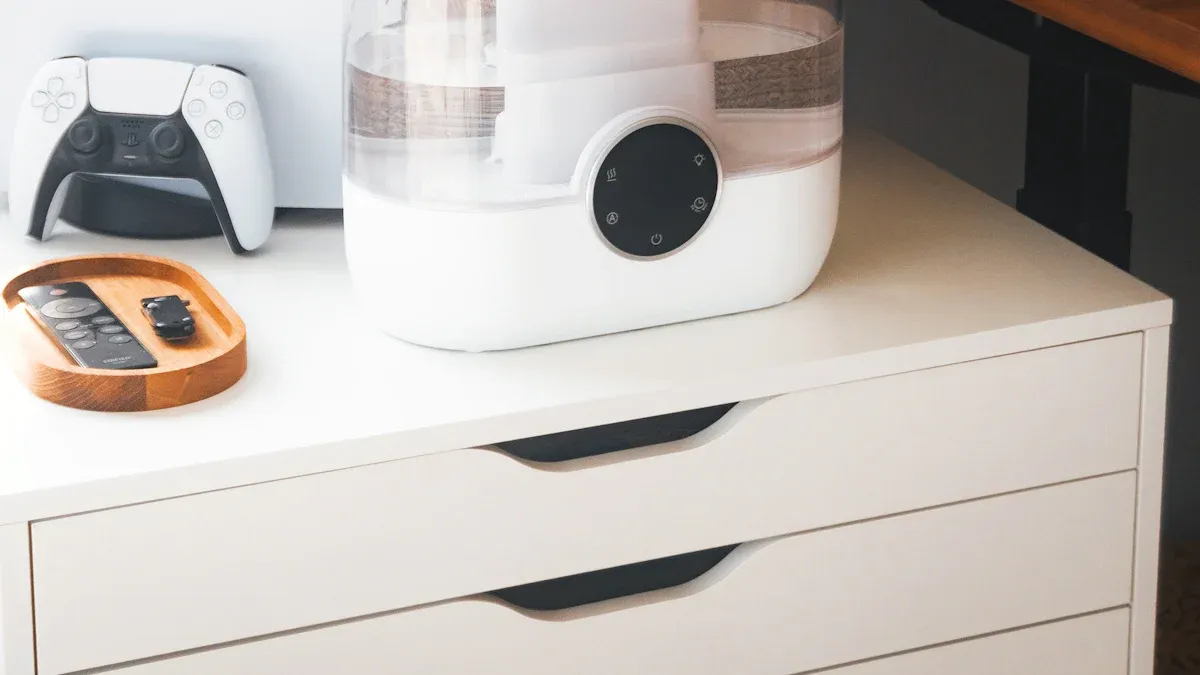
You have three main options for a desktop water dispenser. Bottled dispensers use large water jugs. Bottleless models connect to your water line for an endless supply. Countertop filter dispensers are simple, gravity-fed systems you fill manually. Each type offers a unique way to stay hydrated.
💡 Market Growth: The water dispenser market is expanding quickly, with a projected size of USD 5.35 billion by 2030, up from USD 2.98 billion in 2023.
Key Takeaways
- Desktop water dispensers come in three main types: bottled, bottleless, and countertop filter models. Each type offers different benefits for your home, office, or dorm.
- Bottled dispensers are easy to use, but you must lift heavy water jugs. Bottleless dispensers connect to your water line for endless, filtered water. Countertop filter dispensers are portable and affordable, but you fill them by hand.
- Choose your dispenser based on your needs. Think about how much water you use, if you have a water line, and your budget. This helps you find the best fit.
The 3 Main Types of Desktop Water Dispensers
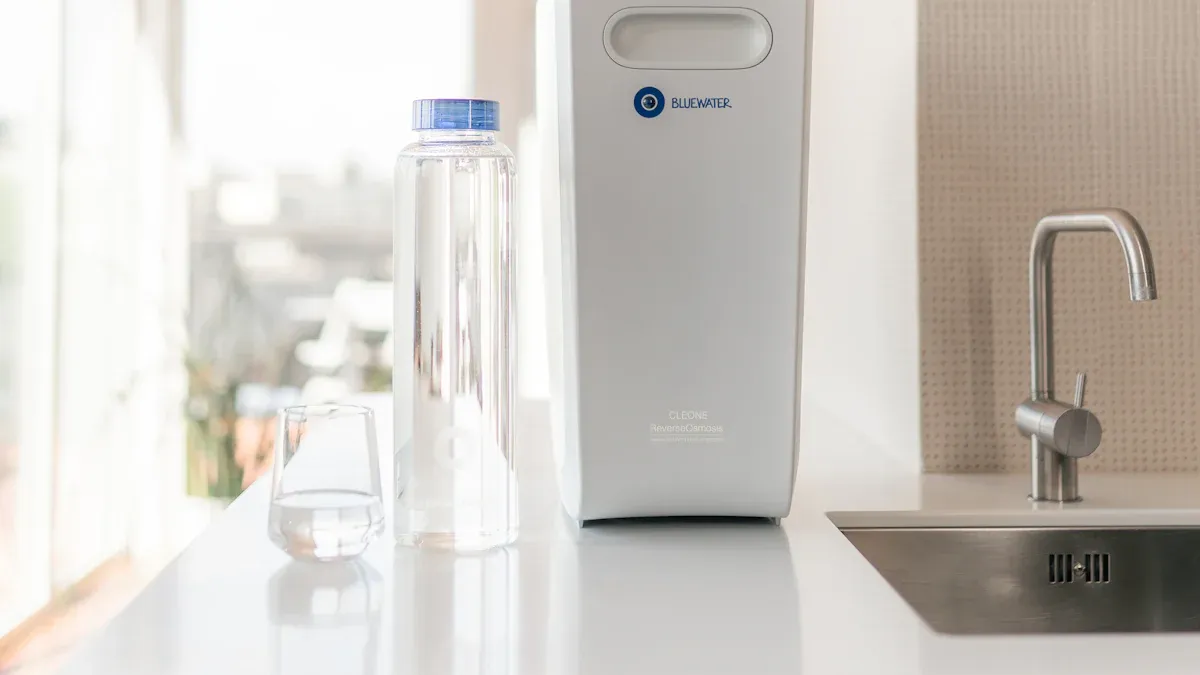
Choosing the right dispenser depends on your needs for convenience, water quality, and budget. You can explore the three main types below to see which one fits your lifestyle.
Bottled Dispensers: Simple & Convenient
A bottled desktop water dispenser is a classic choice for many homes and offices. You simply place a 3- or 5-gallon water jug on top of the unit. The setup is incredibly easy. You just plug it in, load the bottle, and you have instant access to water.
These dispensers often provide water at multiple temperatures. You can enjoy a variety of drink options with a single machine. Common settings include:
- Tri-temp (hot, cold, and ambient temperatures)
Many models are also energy-efficient. You can find units with an Energy Star certification. This certification means they use less than 0.16 kWh per day, helping you save on electricity costs. The main consideration for you is storage space for the large water jugs and the physical effort needed to lift and replace them.
Bottleless Dispensers: Unlimited & Filtered
Bottleless dispensers, also known as point-of-use (POU) models, connect directly to your building's water line. This gives you an endless supply of purified water. You never have to worry about running out of water or replacing heavy jugs. Brands like Bevi offer compact and stylish countertop models. They are designed for smaller spaces and hide the plumbing for a clean look.
The biggest advantage of this desktop water dispenser is its advanced filtration. These systems turn your tap water into high-quality drinking water. A typical unit uses a multi-stage process to purify the water.
- Stage 1: PP Sediment Removal
- Stage 2: Carbon Fiber PFAS Removal
- Stage 3: GAC and KDF Composite Filter
- Stage 4: GAC Taste-polishing Carbon
💧 Powerful Purification: This filtration process is highly effective. It removes a wide range of contaminants, including 99.9% of chlorine, fluoride, pesticides, drug residues, heavy metals, bacteria, and viruses. You get peace of mind with every glass.
Countertop Filter Dispensers: Portable & Affordable
Countertop filter dispensers are simple, gravity-fed systems. You manually fill the top reservoir with tap water. The water then passes through a filter into a lower chamber, ready for you to dispense. These units do not require any plumbing or electricity, making them highly portable and affordable.
Their capacity varies to fit different needs. Some smaller units hold around 0.5 gallons (64 ounces). Larger models can hold nearly 2 gallons of filtered water. The filters also have different lifespans.
- Most filters last between three and twelve months.
- Smaller pitcher-style filters typically need replacement every two months or after filtering 40 gallons.
Manufacturers use safe, high-quality materials for these dispensers. You can find models made from medical-grade, BPA-free polypropylene, like the Epic Pure dispenser. Others, such as those from GlacierFresh, use high-quality borosilicate glass for a plastic-free option that ensures a pure taste.
Many excellent brands are available for you to consider:
- Brondell (Best Overall)
- Aquasana (Best Compact)
- Brita Hub (Best with Presets)
- LifeStraw (Best Budget)
Comparison: Which Desktop Water Dispenser is Right for You?
Now you know the three main types. You can compare them side-by-side to find the best fit for your needs. Your decision will depend on your water source, budget, and where you plan to use the dispenser.
Water Source and Installation
Your access to a water line and your willingness to handle installation are key factors. Each type has very different requirements.
- Bottled Dispensers: These offer the simplest setup. You just plug the unit into an outlet. The main task for you is managing the water source. You must buy and store large 3- or 5-gallon jugs. Lifting these bottles can be difficult. A full 5-gallon jug weighs between 42 and 45 pounds.
- Bottleless Dispensers: These require a connection to a water line. You can choose a DIY installation if you are handy. You will need several tools for the job.
- Wrench set and adjustable pliers
- Screwdrivers
- Teflon tape
- Bucket and towels
- Utility knife
- Drill and tubing cutters
Note: If DIY seems too complex, you can hire a professional. Many companies, like GNG Plumbing and Business Water Solutions (BWS), offer installation services. Their certified technicians ensure your system runs perfectly.
- Countertop Filter Dispensers: These require no installation at all. You simply fill the top reservoir with tap water. This makes them the easiest to set up and use immediately.
Maintenance and Ongoing Costs
You should consider both the initial price and long-term expenses. The costs can vary significantly between dispenser types.
| Dispenser Type | Initial Cost | Ongoing Costs | Maintenance Tasks |
|---|---|---|---|
| Bottled | Low to Moderate | Cost of water jugs, electricity | Regular cleaning of drip tray and spigots |
| Bottleless | High | Filter replacements, electricity | Changing filters every 6-12 months, sanitizing lines |
| Countertop Filter | Low | Filter cartridge replacements | Replacing filters every 2-6 months, washing the unit |
A bottleless desktop water dispenser has a higher upfront cost but can be more economical over time. The annual cost for its replacement filters is often around $120. Bottled dispensers require you to constantly buy water, which adds up. Countertop filter dispensers have a low initial price, and your only recurring expense is the filters.
Best Use Cases: Home, Office, or Dorm
The ideal dispenser for you also depends on your environment. Think about who will be using it and how much water they need.
For Your Home 🏠 A bottleless dispenser provides an endless supply of pure water for cooking and drinking, which is great for busy families. If you have young children, look for a model with a child safety lock on the hot water spigot. This feature prevents accidental burns. A bottled dispenser is also a good choice if you prefer a simple, plug-and-play option without plumbing.
For Your Office 🏢 Bottleless dispensers are excellent for offices. They eliminate the need to store heavy jugs and prevent you from running out of water during busy workdays. This convenience keeps your team hydrated and productive. For smaller offices with lower water consumption, a bottled dispenser can be a cost-effective alternative.
For Your Dorm Room 🎓 A countertop filter dispenser is the perfect solution for a dorm or small apartment. It requires no plumbing and has a small footprint. Its portability allows you to move it easily. You get filtered water without the hassle of installation or the expense of a more complex system.
You have clear choices for your hydration needs. Select a Bottled dispenser for plug-and-play convenience, a Bottleless unit for an unlimited filtered supply, or a Countertop Filter for simple portability. By matching these types to your space and lifestyle, you can find the perfect desktop water dispenser to keep you hydrated.
FAQ
How often should I clean my dispenser?
You should clean your dispenser every three to six months. This practice prevents bacteria buildup. It also ensures your water always tastes fresh and pure.
Do all dispensers need filter changes?
No, only bottleless and countertop filter models require filter changes. Bottled dispensers use pre-purified water, so they do not have internal filters for you to replace.
Why choose a desktop model over a floor-standing one?
Desktop models save you valuable floor space. They are perfect for small kitchens, dorms, or offices. You get a compact hydration solution without cluttering the room.