Top Precoating Materials for Filtration Systems in 2025
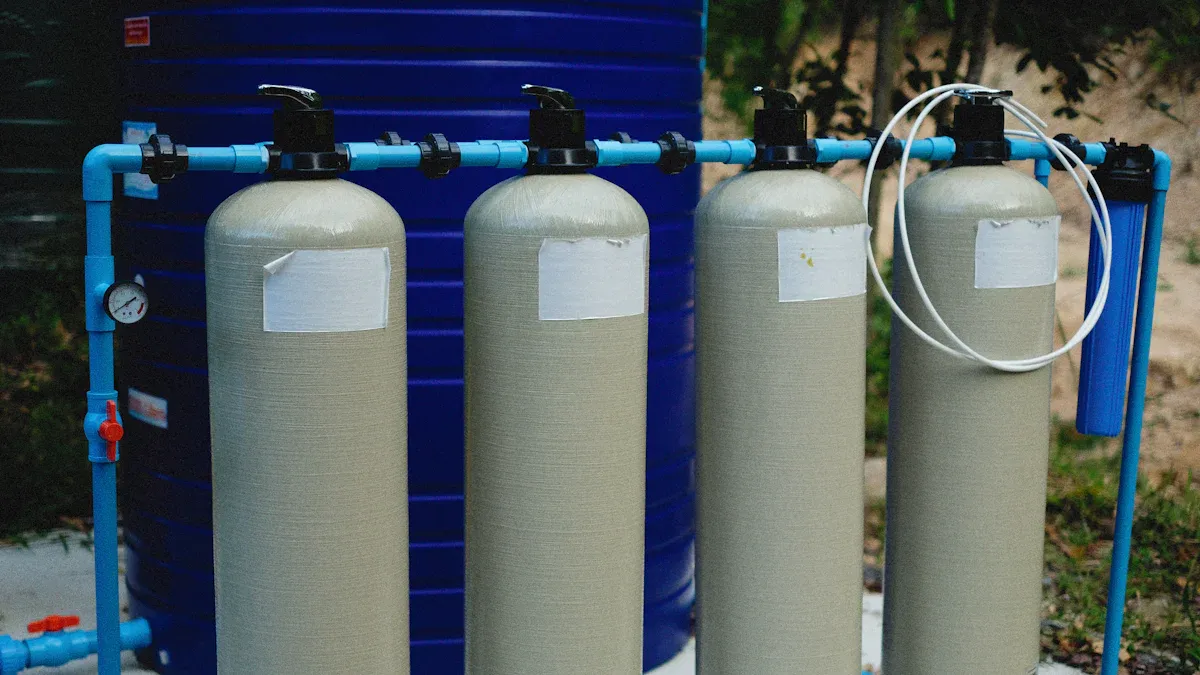
Diatomaceous Earth, Perlite, Cellulose, and Calcium Carbonate lead as precoating materials in 2025. These materials help filtration systems stay efficient and reliable. In a Precoating Filtration System, the right choice forms a strong, porous layer that stops clogging and keeps filters working longer. This layer prevents early blinding by fine particles, reduces how often systems need cleaning, and helps equipment last longer. Treated filter fabrics also offer extra strength and resistance, making them valuable in tough environments.
Key Takeaways
- Precoating forms a protective layer on filters that traps fine particles, keeps filters cleaner, and extends their life.
- Diatomaceous Earth, Perlite, Cellulose, and Calcium Carbonate each offer unique benefits for different filtration needs and industries.
- Choosing the right precoating material depends on factors like filtration efficiency, chemical stability, cost, and system compatibility.
- Proper application and regular maintenance of precoating materials improve filtration speed, reduce downtime, and save costs.
- Blending materials like Cellulose and Diatomaceous Earth can enhance filter life, clarity, and cake stability for better performance.
Precoating Filtration System: What and Why
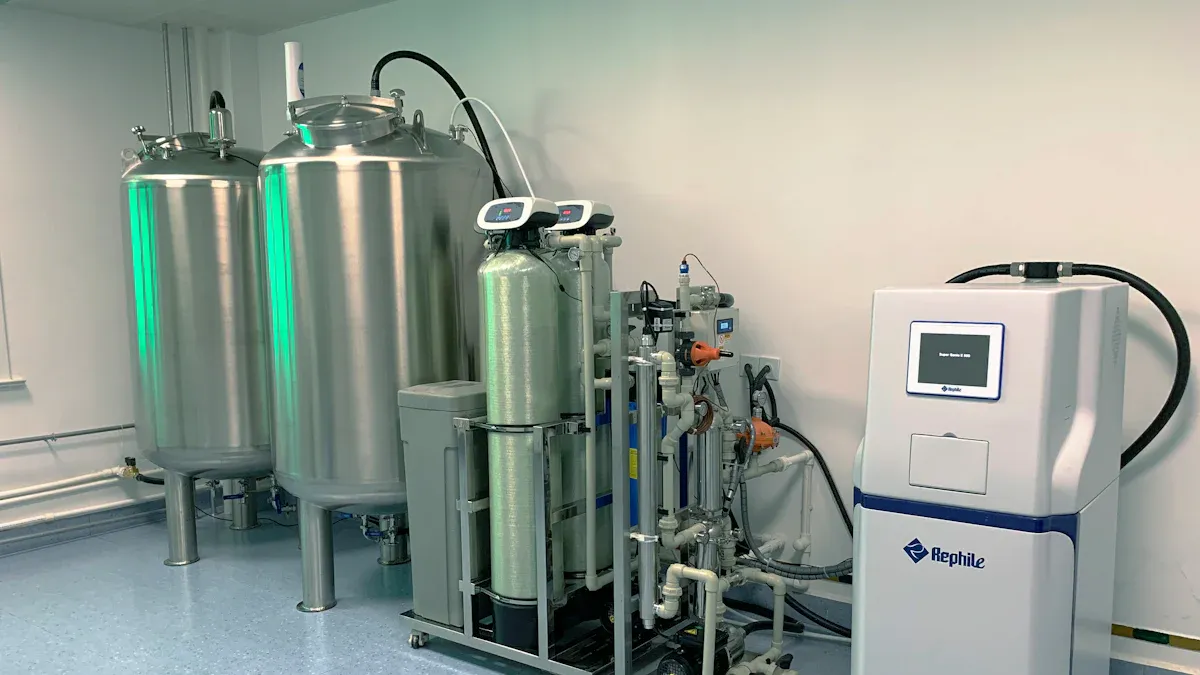
What Is Precoating?
Precoating is a special technique used in many filtration systems. In this process, operators apply a thin layer of fine particles, such as diatomaceous earth or perlite, to the surface of a filter before starting filtration. This layer forms a protective bed that traps very small particles, including sticky dust and metallic nanoparticles. The precoating layer acts like a shield, keeping the main filter cleaner and making it easier to remove trapped dirt during cleaning.
- Precoating uses micron-sized particles to create a dust layer that protects the filter surface.
- The precoating layer captures ultrafine particles and boosts collection efficiency.
- Cleaning becomes much easier, with efficiency rising from about 10% without precoating to 90% with precoating.
- Operators must reapply the precoating layer after each cleaning cycle to keep the system working well.
- Good precoating materials are chemically safe, non-toxic, affordable, and have the right particle size.
- A layer thickness of at least 1 mm works best for most systems.
- Precoating helps with sticky or hard-to-clean dust and can even add extra features, like humidity control or flame resistance.
Why Precoating Matters in Filtration Systems
Precoating plays a key role in keeping filtration systems efficient and reliable. It protects the filter media from getting clogged by fine or sticky solids. This sacrificial layer captures most of the unwanted particles, which keeps the main filter sheet cleaner and extends its life. Precoating also increases the porosity and permeability of the filter cake, which means liquids or gases can pass through more easily. This reduces pressure drop and allows for faster filtration.
- Precoating is essential in high-solid or sticky situations, such as wastewater treatment or food processing.
- It helps maintain product quality by protecting the filter and reducing downtime.
- The process improves filtration speed and allows for longer filter runs.
- Proper selection and dosing of precoating materials are important for the best results.
- Precoating Filtration System users see better throughput and more consistent performance, even when handling tough contaminants.
Tip: Precoating not only protects filters but also helps meet strict industry standards for cleanliness and efficiency.
Diatomaceous Earth in Precoating Filtration System
Properties of Diatomaceous Earth
Diatomaceous Earth comes from fossilized remains of tiny aquatic organisms called diatoms. This material forms a soft, siliceous sedimentary rock that is lightweight and highly porous. Its structure contains many tiny holes, some as small as 0.1 micron, which allows it to trap very fine particles and even microorganisms. Chemically, Diatomaceous Earth is mostly silica, making it stable and inert. It does not react with liquids during filtration, so it keeps the filtered product pure. Processing steps like drying, milling, and calcining help create a consistent particle size and porosity, which are important for forming an even precoat layer in a Precoating Filtration System.
| Property Type | Property Description | Relevance to Precoating in Filtration Systems |
|---|---|---|
| Physical | Low density and lightweight structure | Enables easy handling and formation of a uniform precoat layer |
| Physical | High porosity and microporous exoskeleton with pores as small as 0.1 micron | Allows trapping of fine particles and microorganisms, enabling filtration precision down to submicron levels |
| Physical | Wide particle size distribution | Facilitates cake formation necessary for effective filtration |
| Chemical | Primarily composed of silica (siliceous sedimentary rock) | Chemically inert and stable, ensuring no chemical interference with filtered liquids |
| Processing | Drying, milling, classification, calcining | Refines DE to achieve consistent porosity and permeability, enhancing filtration performance |
Advantages of Diatomaceous Earth
Diatomaceous Earth offers several benefits for filtration. Its high surface area and sharp microscopic particles trap dirt, bacteria, and other contaminants very well. This makes it a popular choice in water treatment, brewing, and winemaking. Studies show that using the right thickness of Diatomaceous Earth as a precoat can reduce filter fouling by up to 60%. The fouling that does occur is usually easy to reverse, which helps keep the filtration process running smoothly. Operators also find that Diatomaceous Earth maintains a high filtration flux, allowing liquids to pass through quickly while still removing unwanted particles. Many beverage companies use it to improve clarity and extend shelf life.
Note: Diatomaceous Earth is widely used in the beverage industry, especially for beer and wine, because it helps achieve clear products and meets food safety standards.
Disadvantages of Diatomaceous Earth
Despite its strengths, Diatomaceous Earth has some drawbacks. Handling the dry powder can be risky, as inhaling it may cause lung problems. Workers should always wear masks and gloves. The filters can clog easily, so regular cleaning is needed. This adds to maintenance time and cost. Using too much or too little powder can damage filter parts or reduce filtration quality. Disposal of used Diatomaceous Earth requires care, since it should not enter sewers or open water. The process of backwashing and replacing the powder can waste water and may be restricted by local rules. Diatomaceous Earth filters also tend to cost more than sand or cartridge filters. In rare cases, contact with the powder can irritate skin, and swallowing it can harm pets or children.
- Inhalation of dry powder can cause respiratory issues.
- Filters require frequent cleaning and careful powder dosing.
- Disposal and backwashing can create environmental concerns.
- Higher cost and more complex maintenance compared to other filter types.
- Skin and digestive irritation possible with improper handling.
Best Applications for Diatomaceous Earth
Diatomaceous Earth (DE) stands out as a top choice for many filtration systems. Its unique structure and chemical stability make it valuable in several industries. Companies often select DE when they need to remove very fine particles or improve product clarity.
Key industries and uses for Diatomaceous Earth include:
- Beverage Production: Breweries and wineries use DE to filter beer, wine, and juices. The material helps remove yeast, bacteria, and haze-forming particles. This process results in clear drinks with longer shelf life.
- Water Treatment: Municipal water plants and swimming pool operators rely on DE to trap bacteria, algae, and other small contaminants. The fine pores in DE catch particles that other filters might miss.
- Pharmaceutical Manufacturing: Factories use DE to filter medicines and vaccines. The material ensures that products meet strict purity standards.
- Food Processing: Sugar refineries and edible oil producers use DE to remove impurities. The result is a cleaner, safer product for consumers.
- Chemical Processing: DE helps separate solids from liquids in chemical plants. It supports the production of paints, resins, and solvents.
- Environmental Cleanup: DE assists in cleaning up wastewater and industrial spills. Its high absorbency helps capture oils and heavy metals.
Tip: Diatomaceous Earth works best in systems that need high clarity and fine particle removal. Operators should always check the compatibility of DE with their specific process.
| Application Area | Why Use Diatomaceous Earth? | Typical Benefit |
|---|---|---|
| Beverage Filtration | Removes haze and microbes | Clear, stable drinks |
| Water Treatment | Traps bacteria and fine particles | Safe, clean water |
| Pharmaceuticals | Ensures product purity | High-quality medicines |
| Food Processing | Filters out impurities | Safe, pure food products |
| Chemical Processing | Separates solids from liquids | Efficient production |
Diatomaceous Earth offers flexibility and strong performance. Many industries trust it to deliver reliable filtration and meet safety standards.
Perlite in Precoating Filtration System

Properties of Perlite
Perlite is a volcanic glass that expands when heated. This process creates a lightweight, porous material. Several properties make perlite a strong choice for filtration:
- Perlite has a low bulk density, making it 20 to 50% lighter than many other filter aids.
- The particles form a porous filter cake that does not compact, which helps with easy cleaning and cake release.
- Its jagged, interlocking structure creates many microscopic channels. These channels allow liquids to flow while trapping unwanted particles.
- Perlite is inert and sterile. It does not add taste, color, or odor to filtered products, which is important for food, beverage, and pharmaceutical uses.
- It works well with both pressure and vacuum filtration equipment.
- Perlite comes in different grades, offering a range of flow rates to match various filtration needs.
- The lightweight nature of perlite can lower disposal costs after use.
Advantages of Perlite
Perlite offers several benefits in a Precoating Filtration System. Its low weight makes handling and disposal easier. The porous filter cake stays open, so filtration remains efficient and cleaning is simple. Perlite does not react with liquids, so it keeps products pure. Many industries use perlite because it meets strict standards for safety and quality. For example:
- Breweries use perlite to make beer clear and stable.
- Edible oil producers rely on perlite to remove unwanted flavors and colors.
- Mining operations use perlite to filter metals from ore solutions.
- Pool operators choose perlite for its ability to remove microbes and contaminants.
| Application Area | Effectiveness |
|---|---|
| Edible Oils Filtration | Improves taste and quality by removing impurities. |
| Beer Filtration | Ensures clarity and flavor, meeting high standards. |
| Extractive Metallurgy | Helps filter leached metals, supporting mineral processing. |
| Recreational Water Filtration | Removes bacteria and contaminants, providing clean pool water. |
| Industrial Filtration | Forms a rigid, porous cake that retains solids and allows liquid flow. |
Tip: Perlite’s rigid structure makes dosage control easier and keeps filtration stable.
Disadvantages of Perlite
Perlite does have some drawbacks. Its larger particle size means it may not filter out the smallest particles as well as other aids. Most research on perlite comes from lab tests, so its long-term performance in tough environments like deep drilling is less certain. Some studies use static tests, which do not always match real-world conditions. There is also limited information about how perlite interacts with other additives or affects certain types of rock. These gaps mean operators should test perlite in their own systems before large-scale use.
Best Applications for Perlite
Perlite serves many industries as a reliable filtration aid. Its lightweight and porous nature makes it a top choice for processes that need fast flow and easy cleaning. Companies often select perlite when they want to filter liquids without changing taste, color, or chemical makeup.
Industries that benefit most from perlite include:
- Food and Beverage: Juice makers use perlite to remove pulp and cloudiness. Breweries rely on it to clarify beer and cider. The material keeps drinks clear and fresh.
- Pharmaceuticals: Medicine manufacturers use perlite to filter out unwanted particles. This step helps ensure purity and safety in final products.
- Water Treatment: Municipal plants and pool operators choose perlite to trap dirt, algae, and microbes. The result is cleaner water for homes and recreation.
- Chemical Processing: Factories use perlite to separate solids from liquids in paints, resins, and solvents. The filter cake releases easily, which saves time during cleaning.
- Mining and Metallurgy: Perlite helps extract metals from ore solutions. Its structure supports high flow rates and efficient solid removal.
Tip: Perlite works best in systems that need quick filtration and easy filter cleaning. Operators should test different grades to match their process needs.
The table below shows common uses for perlite in filtration:
| Application Area | Why Use Perlite? | Key Benefit |
|---|---|---|
| Juice and Beverage | Removes pulp and haze | Clear, appealing drinks |
| Pharmaceuticals | Filters out fine particles | Pure, safe medicines |
| Water Treatment | Traps microbes and debris | Clean, safe water |
| Chemical Processing | Separates solids from liquids | Fast, efficient filtration |
| Mining | Filters leached metals | High recovery rates |
Perlite stands out for its versatility. Many operators value its ability to keep filtration systems running smoothly with less downtime.
Cellulose in Precoating Filtration System
Properties of Cellulose
Cellulose stands out as a natural, biodegradable material with a unique microscopic structure. It forms a dust cake that blocks fine and submicron particles from reaching and clogging filter media. This property helps extend filter life and reduces how often operators need to replace filters. Cellulose is lightweight, inert, and safe to handle, making it suitable for many industrial settings. It provides a consistent, porous layer that improves filtration efficiency right from startup. The material also cleans easily and releases dust cakes well, especially in moist or oily environments. Cellulose’s high purity and neutral pH support compatibility with different filtration systems.
- Forms a stable, permeable precoating layer
- Prevents bleed-through and contamination
- Biodegradable and non-toxic
- Lightweight and non-abrasive
- High purity (≥99% cellulose content)
- Neutral pH (5-7)
- Excellent flowability and compressibility
Cellulose’s inert nature means it does not affect the taste, color, or quality of filtered products. This makes it a reliable choice for sensitive applications like food and beverage production.
Advantages of Cellulose
Cellulose offers several benefits in a Precoating Filtration System. It enables fast filter preparation and provides good cake stability, which ensures a durable filtration layer. Cleaning is quick and easy, reducing maintenance time. Cellulose prevents bleed-through, so the filtrate stays pure. Its biodegradable and non-toxic qualities make it environmentally friendly and safe for workers. The material is lightweight and non-abrasive, protecting filter media and lowering material consumption. Operators can remove cellulose easily by backwashing, which allows efficient filter regeneration. Cellulose is also cost-effective and inert, so it does not interfere with chemical processes.
- Extends filter life and reduces labor costs
- Improves initial filtration efficiency
- Facilitates easy maintenance
- Protects sensitive membranes
- Reduces operational and disposal costs
Studies show that cellulose nanofiber films provide excellent oxygen barrier properties and selective gas permeability. Composite cellulose filters can achieve high filtration efficiency for fine particles, with low pressure drop. Chemical modifications allow cellulose filters to target specific contaminants, such as toxic vapors.
Disadvantages of Cellulose
Cellulose does have some limitations. Its flow rate may be lower than synthetic polymer filters, which can slow down some filtration processes. In certain cases, cellulose-based filters may not match the mechanical strength of advanced synthetic materials. Operators may need to combine cellulose with other filter aids to achieve the best results for challenging applications. Cellulose can absorb moisture, which may affect performance in very humid environments. Some systems require frequent monitoring to ensure the precoating layer remains stable and effective.
| Disadvantage | Description |
|---|---|
| Lower flow rates | May slow filtration compared to synthetics |
| Moisture absorption | Can affect performance in high humidity |
| Mechanical strength limits | May need reinforcement for tough jobs |
| Layer stability | Requires regular monitoring |
Operators should test cellulose in their specific filtration system to confirm compatibility and performance.
Best Applications for Cellulose
Cellulose works well in many filtration systems. Its natural and biodegradable qualities make it a top choice for industries that value safety and sustainability. Operators often select cellulose when they need a filter aid that will not harm the environment or change the taste and color of products.
Industries that benefit most from cellulose include:
- Food and Beverage: Cellulose helps filter juices, syrups, and edible oils. It removes fine particles and keeps drinks clear. Many juice makers use cellulose to improve product quality and shelf life.
- Pharmaceuticals: Medicine manufacturers rely on cellulose to filter out dust and bacteria. The material keeps medicines pure and safe for patients.
- Water Treatment: Cellulose traps dirt and organic matter in municipal and industrial water systems. It supports clean water for homes and factories.
- Chemical Processing: Factories use cellulose to separate solids from liquids in paints, adhesives, and resins. The filter cake releases easily, which saves time during cleaning.
- Biotechnology: Cellulose supports the filtration of enzymes, proteins, and cell cultures. It protects sensitive membranes and helps maintain product purity.
Tip: Cellulose works best in systems that need a gentle, non-abrasive filter aid. Operators should test cellulose in their process to find the right grade and dosage.
The table below shows common uses for cellulose in filtration:
| Application Area | Why Use Cellulose? | Key Benefit |
|---|---|---|
| Juices and Syrups | Removes fine particles | Clear, high-quality drinks |
| Pharmaceuticals | Filters dust and microbes | Pure, safe medicines |
| Water Treatment | Traps organic matter | Clean, safe water |
| Chemical Processing | Separates solids from liquids | Fast, easy cleaning |
| Biotechnology | Protects sensitive membranes | High product purity |
Cellulose stands out for its safety, ease of use, and environmental benefits. Many operators trust it to deliver reliable filtration and meet strict industry standards.
Calcium Carbonate in Precoating Filtration System
Properties of Calcium Carbonate
Calcium carbonate is a common mineral found in rocks and shells. It forms mainly as calcite crystals, which are dense and cube-like. These crystals fill small spaces and create a compact layer on filter surfaces. This layer helps block tiny particles and protects the filter. Calcium carbonate reduces porosity by almost half after carbonation, making the filter cake more solid. The material also resists corrosion and damage from salt or sunlight. It keeps its strength even after long exposure to UV light or salt spray. The slurry made from calcium carbonate stays stable and easy to apply. When used in a Precoating Filtration System, it quickly forms a strong layer that improves filter performance.
| Property/Characteristic | Description/Value |
|---|---|
| Crystal Type | Mainly calcite with trace aragonite; cube-like dense crystals |
| Porosity Reduction | About 47.1% decrease after carbonation |
| Microstructure | Dense, compact crystals filling micropores |
| Corrosion Resistance | Enhanced due to low porosity and dense structure |
| UV Aging Resistance | Retains over 95% pull strength after 30 days of UV exposure |
| Salt Fog Resistance | No rust after 1200 hours of salt spray testing |
| Slurry Viscosity | Stable at about 0.45 Pa·s |
| Carbonation Process | Rapid strength development; over 95% CO2 uptake |
Advantages of Calcium Carbonate
Calcium carbonate offers several benefits for filtration. It is one of the most abundant minerals, which makes it affordable and easy to find. The preparation process uses simple salts and does not need harsh chemicals. Its high surface area and porosity allow it to capture many types of particles. The structure can hold molecules of different sizes, which helps remove heavy metals and other contaminants. Calcium carbonate can also work with other treatment methods, such as microalgae or membrane systems, to boost filtration results. Studies show that it removes heavy metals by forming solid compounds that do not dissolve easily. Some filters use calcium carbonate to bind phosphate in water, improving water quality and supporting aquatic life.
- Calcium carbonate is cost-effective and widely available.
- It captures heavy metals and other pollutants efficiently.
- The material works well with other filtration technologies.
- It helps remove phosphate from water, making it safer for the environment.
- The structure supports high loading capacity for different substances.
Tip: Calcium carbonate can be used in green filtration systems, such as those using recycled eggshells, to reduce waste and improve sustainability.
Disadvantages of Calcium Carbonate
Calcium carbonate also has some drawbacks as a precoating material. The precoat layer is temporary and gets removed during cleaning, which means the filter loses its extra protection. This process can increase airflow resistance, causing a higher pressure drop and more energy use. Applying and removing the precoat adds extra costs and creates waste that needs proper disposal. After cleaning, the filter acts like a regular, untreated filter, so the benefits do not last. Some premium filters with permanent coatings may offer better efficiency and longer life without these issues.
- The precoat layer is lost after cleaning, reducing long-term protection.
- Airflow restriction increases, leading to higher energy consumption.
- Extra costs come from applying and disposing of the precoat.
- The filter returns to normal performance after cleaning, limiting its lifespan extension.
- Permanent filter treatments may provide better results than precoating.
Best Applications for Calcium Carbonate
Calcium carbonate serves many industries as a reliable precoating material. Its dense structure and chemical stability help filtration systems remove unwanted particles and protect filter media. Operators choose calcium carbonate when they need a strong layer that blocks fine solids and supports high filtration rates.
Industries that benefit from calcium carbonate include:
- Water Treatment Plants: Teams use calcium carbonate to remove heavy metals, phosphates, and other pollutants. The material helps keep drinking water safe and clear.
- Food and Beverage Processing: Factories rely on calcium carbonate to filter juices, syrups, and edible oils. The precoat layer traps impurities and improves product quality.
- Chemical Manufacturing: Workers use calcium carbonate to separate solids from liquids in paints, adhesives, and cleaning agents. The dense filter cake supports efficient production.
- Environmental Remediation: Specialists apply calcium carbonate in systems that clean up industrial wastewater. The material captures toxic metals and supports safe disposal.
- Aquaculture and Fish Farming: Operators use calcium carbonate to control phosphate levels and maintain healthy water for fish and plants.
Tip: Calcium carbonate works best in systems that need strong protection against corrosion and high removal rates for heavy metals.
The table below shows common applications and benefits:
| Application Area | Why Use Calcium Carbonate? | Key Benefit |
|---|---|---|
| Water Treatment | Removes metals and phosphates | Safe, clean water |
| Food & Beverage | Traps fine solids | High product quality |
| Chemical Processing | Separates solids from liquids | Efficient production |
| Environmental Cleanup | Captures toxic contaminants | Safer waste disposal |
| Aquaculture | Controls phosphate levels | Healthy aquatic systems |
Calcium carbonate stands out for its versatility and cost-effectiveness. Many operators trust it to deliver strong filtration and protect equipment in demanding environments.
Comparison and Selection Guide for Precoating Filtration System
Material Comparison Table
Choosing the right precoating material depends on several important factors. Each material has unique properties that affect filtration efficiency, cost, and maintenance. The table below compares Diatomaceous Earth, Perlite, Cellulose, and Calcium Carbonate based on available performance data.
| Filter Media | Filtration Efficiency (Nutrient Removal) | Adsorption Capacity (Ortho-Phosphate) | Notable Properties | Cost Data | Maintenance Data |
|---|---|---|---|---|---|
| Diatomaceous Earth | Phosphate removal up to 98% (sand:diatomite 2:1 ratio); Ammonium removal up to 94%; Nitrogen removal improved from 9% (sand alone) to ~44% with diatomite addition | N/A | High porosity, supports nitrifying bacteria, effective for heavy metals | N/A | N/A |
| Perlite | Ortho-phosphate adsorption capacity ranges from 0.01 to 7.82 mg/g | 0.01 to 7.82 mg/g | Lightweight, high surface area, retains water, maintains aeration, acid insoluble | N/A | N/A |
| Cellulose | No comparative data provided | N/A | Biodegradable, non-toxic, good water retention, nutrient supply | N/A | N/A |
| Calcium Carbonate | No comparative data provided | N/A | Acid-soluble, buffering capacity, reduces pH fluctuations, dense structure | N/A | N/A |
Note: Diatomaceous Earth shows high nutrient removal efficiency. Perlite offers moderate phosphate adsorption and is easy to handle. Cellulose and Calcium Carbonate provide other benefits, such as environmental safety and pH stability, but lack direct comparative data for filtration efficiency.
How to Choose the Right Precoating Material
Selecting the best precoating material for a Precoating Filtration System requires careful consideration of both chemical and physical properties. Operators should look at how each material interacts with the filtration process and the specific needs of their system.
- Chemical Stability and Buffering: Calcium carbonate stands out for its acid-soluble nature and buffering capacity. This property helps prevent large pH swings in biofilters, which protects sensitive microbes and supports stable filtration. Perlite and cellulose also help retain water and supply nutrients, which can boost microbial activity in biofilters.
- Mechanical Integrity: The strength of the precoat layer matters. Operators must maintain continuous hydraulic pressure to keep the layer intact during filtration. Materials with low specific gravity, such as perlite and diatomaceous earth, are easier to handle and layer evenly.
- Particle Size and Morphology: The shape and size of particles affect how well the precoat forms and how efficiently it filters. Engineered particle size distributions help minimize fine particles, which can reduce long-term pressure drop and improve filter performance.
- Filtration Efficiency: Diatomaceous earth provides high removal rates for nutrients and heavy metals. Perlite offers moderate adsorption for phosphates and supports good aeration. Cellulose and calcium carbonate contribute to water retention and pH control, which can be important for certain applications.
- Cost and Handling: Perlite’s low density reduces shipping and handling costs. Cellulose is biodegradable and safe for workers. Calcium carbonate is abundant and affordable.
- System Compatibility: Some systems require precoats that absorb moisture and form non-cohesive cakes for easy removal. Others need chemically basic materials to neutralize acids or moisture.
Tip: Experts recommend choosing precoating materials with engineered particle sizes, chemical inertness, and moisture absorbency. Commercial products like PreKote® and high-purity limestone are popular for their reliability and ease of use.
Operators should also consider the type of filter fabric and any special finishes needed. For example, acid-resistant or oleophobic coatings can protect against harsh chemicals. Static conductive fabrics with membrane treatments improve safety in combustible dust environments.
Checklist for Selecting Precoating Materials:
- Identify the main contaminants to remove (nutrients, heavy metals, organics).
- Check the chemical compatibility with your filtration system.
- Evaluate the need for pH buffering or nutrient supply.
- Assess the mechanical strength and ease of cake removal.
- Consider cost, availability, and environmental impact.
- Match the particle size and morphology to your system’s requirements.
- Review any special needs, such as dust control or static safety.
By following these steps, operators can select the most effective precoating material for their filtration system. This approach helps maximize efficiency, reduce maintenance, and extend equipment life.
Application and Maintenance for Precoating Filtration System
How to Apply Precoating Materials
Applying precoating materials in a filtration system requires careful preparation and attention to detail. Operators start by cleaning dust from hoppers and turning off dust removal equipment. They then deactivate the cleaning cycle to help the precoat stick to the filter surface. Reducing airflow to about half of the normal rate helps control the speed and prevents filter blinding. Next, they mix the precoat material, such as diatomaceous earth or cellulose, with clean liquid to form a slurry. This slurry circulates through the system, creating a uniform layer on the filter media. Operators check the layer thickness, aiming for about 1/16 to 1/8 inch. Once the liquid runs clear, the precoat is set, and normal operations can resume. This method improves clarity and makes cleaning easier.
Proper mixing and even application of the precoat layer help prevent premature clogging and extend filter life.
Maintenance Tips
Regular maintenance keeps the Precoating Filtration System working well. Operators should mix and feed chemicals correctly to ensure the precoat forms as intended. They need to monitor filter performance, especially during changes in water quality. Timely backwashing and quick return of filters to service help maintain efficiency. Inspections for damage or buildup prevent water quality problems and filter wear. Some facilities reuse precoat materials by collecting, dispersing, and reinjecting them. This practice can lower costs and reduce waste, but operators must watch for changes in particle properties that could affect filtration.
- Mix precoat materials thoroughly before use.
- Monitor system performance and pressure regularly.
- Backwash filters on schedule and inspect for damage.
- Consider reusing precoat materials when possible.
Maximizing Efficiency and Lifespan
Proper application and maintenance lead to better efficiency and longer equipment life. When operators optimize the amount and type of precoat, they improve filtrate clarity and speed up filtration. Regular checks and adjustments prevent filter aid loss and cake cracking. Many modern systems use real-time monitoring tools to track performance and predict maintenance needs. These technologies help reduce downtime and lower costs. Industries that follow these practices see better product quality and meet strict environmental standards.
Smart maintenance and careful application help filtration systems run longer and more efficiently, saving money and supporting sustainability.
Diatomaceous Earth, Perlite, Cellulose, and Calcium Carbonate stand out as top choices for filtration in 2025. Each material supports different needs in a Precoating Filtration System. Recent research shows that blends of cellulose and diatomaceous earth improve filter life and clarity. These blends also help repair small tears and keep filter cakes stable. Operators see better results when they match the right material to their system.
- Cellulose blends extend filter cycle lengths.
- Diatomaceous Earth creates porous cakes that prevent blockage.
- Perlite keeps flow steady and works with standard equipment.
| Mineral / Topic | Key Takeaways from Recent Research |
|---|---|
| Diatomaceous Earth (DE) | Honeycomb structure, captures solids, maintains flow. |
| Perlite | Porous, inert, easy to apply, supports pharmaceutical filtration. |
| Cellulose | Blends with DE, extends filter life, repairs small tears. |
Operators should use the quick-selection guide to choose the best precoating material for their filtration needs.
FAQ
What is the main purpose of precoating in filtration systems?
Precoating creates a protective layer on the filter. This layer traps fine particles and keeps the main filter clean. It helps the system work better and last longer.
Can operators reuse precoating materials after cleaning?
Some facilities collect and reuse precoating materials. They must check the material for changes in quality. Reusing can save money and reduce waste, but it may not work for every system.
Which industries benefit most from precoating materials?
Industries such as water treatment, food and beverage, pharmaceuticals, and chemical processing use precoating materials. These materials help remove tiny particles and improve product quality.
Are precoating materials safe for the environment?
Many precoating materials, like cellulose and calcium carbonate, are biodegradable or non-toxic. Operators should follow local rules for disposal to protect the environment.
How often should operators reapply the precoat layer?
Operators need to reapply the precoat after each cleaning cycle. Regular checks help keep the filtration system working well and prevent clogging.