Top Penne Optical Sorter Companies for Pasta Production
The top five manufacturers—TOMRA Food, Key Technology, Bühler Group, Satake, and Cimbria—set the industry standard. These leaders provide proven penne optical sorter technology. They ensure high-throughput sorting, detect subtle defects, and handle fragile pasta gently. The market for this technology shows significant growth.
| Metric | Value |
|---|---|
| Estimated Market Size (2023) | USD 1.5 billion |
| Projected Market Size (2032) | USD 3.2 billion |
| CAGR (Forecast Period) | 8.5% |
1. TOMRA Food
TOMRA Food establishes its leadership through powerful and versatile sorting solutions. The company excels in developing machines that combine high throughput with exceptional sorting accuracy. Its technology is specifically engineered to handle the unique challenges of pasta production, ensuring a premium final product.
Advanced Sensor Technology
TOMRA Food utilizes advanced sensor technology for comprehensive inspection. The company pioneers sensor fusion. It combines high-resolution cameras, powerful lasers, and Near-Infrared (NIR) spectroscopy in a single platform. This multi-faceted approach enables its sorters to detect a wide range of imperfections with unmatched precision.
Key defects identified in penne include:
- Color and Shape Defects: Misshapen, broken, or discolored pasta.
- Foreign Material: Unwanted items like plastic, wood, or insects.
- Product Blemishes: Black spots or specks from raw material impurities.
Pro Tip: TOMRA's Biometric Signature Identification (BSI+) technology goes beyond standard color sorting. It analyzes the material composition of objects, allowing it to easily distinguish foreign materials from the actual pasta.
Key Sorter Models for Pasta
TOMRA offers several models well-suited for the delicate nature of penne pasta. These machines prioritize gentle handling to minimize breakage while maintaining high efficiency.
⚙️ TOMRA 5B: A high-capacity belt sorter providing a 360-degree view of each piece of pasta. Its intelligent design ensures optimal product spread, leading to highly accurate sorting and minimal rejection of good products.
⚙️ Nimbus BSI+: This free-fall sorter is ideal for producers focused on removing foreign material. Its compact design and advanced BSI+ sensor make it a powerful tool for enhancing food safety and product purity.
2. Key Technology
Key Technology champions intelligent automation in food processing. The company integrates powerful artificial intelligence (AI) and machine learning into its sorting platforms. This focus on smart technology allows processors to achieve new levels of sorting accuracy and operational efficiency, making Key Technology a strong contender for pasta production lines.
AI-Driven Sorting Capabilities
Key Technology leverages its proprietary AI software to enhance defect removal. Its sorters make intelligent, real-time decisions based on data collected from high-resolution cameras and laser sensors. The AI algorithms learn and adapt, continuously improving their ability to classify materials. This capability is crucial for identifying subtle imperfections in penne.
Common defects targeted by the AI include:
- Foreign Material (FM): Detects and ejects plastics, wood, and other contaminants.
- Color Defects: Identifies off-color pasta, including dark spots and discoloration.
- Structural Defects: Removes broken, cracked, or misshapen penne pieces.
Smart Sorting: Key Technology's AI enables "Sort-to-Grade" (STG) functionality. Processors can define specific quality grades, and the sorter automatically diverts product to meet those standards, maximizing yield and profitability.
Key Sorter Models for Pasta
The company offers robust sorters designed for high-volume, delicate applications like penne pasta. These machines combine algorithmic precision with gentle product handling.
⚙️ VERYX® Digital Sorting Platform: A highly configurable belt-fed sorter. Its unique sensor positioning provides a complete 360-degree surface inspection of each piece of penne. This eliminates blind spots and ensures maximum detection of all defects and foreign material.
⚙️ Zephyr™ Horizontal Sorter: This sorter is engineered for gentle handling. It effectively slows down the product's velocity before inspection and ejection. This design significantly reduces the risk of breakage, preserving the integrity of fragile penne while ensuring high sorting efficiency.
3. Bühler Group
The Bühler Group brings Swiss engineering and a legacy of reliability to the food processing industry. The company is renowned for its high-performance optical sorters that deliver exceptional precision and efficiency. Bühler designs its technology to maximize product quality and yield, making it a trusted partner for pasta manufacturers worldwide.
Precision and Efficiency
Bühler sorters excel at distinguishing between acceptable penne and defective products. This precision minimizes the accidental rejection of good pasta, a critical factor for profitability. The technology focuses on delivering a clean, uniform final product while protecting the producer's bottom line. Bühler achieves this low false reject rate through advanced software.
Key technological features include:
- Innovative ejection algorithms that target defects with pinpoint accuracy.
- Advanced calibration and tracking algorithms that ensure consistent machine performance over long production runs.
Yield Maximization: Bühler's precise sorting ensures that high-quality penne remains in the product stream, directly boosting overall production yield and reducing food waste.
Key Sorter Models for Pasta
Bühler provides versatile sorters capable of handling the specific demands of penne pasta sorting. These machines combine powerful inspection with robust construction.
⚙️ SORTEX A: This flagship optical sorter uses high-resolution, multi-chromatic cameras to detect the slightest color and shape deviations. Its flexible configuration allows processors to target specific defects, from black specks to misshapen pieces, ensuring a premium quality output.
⚙️ SORTEX F: Known for its open, hygienic design, the SORTEX F is easy to clean and maintain. It offers excellent sorting performance in a compact footprint, making it a practical solution for lines where space and sanitation are top priorities.
4. Satake
Satake is a global leader in food processing technology with a strong reputation in optical sorting. The company leverages decades of experience to deliver reliable and precise machines. Satake's core strength lies in its advanced full-color imaging systems, which provide exceptional accuracy for pasta manufacturers.
Full-Color RGB Sorting
Satake's full-color RGB technology enhances foreign material detection with remarkable precision. The system provides highly accurate true-color imaging that closely mimics human vision. It uses high-power LEDs and full-color cameras to capture a near-identical representation of natural color variations. This capability is essential for distinguishing subtle defects and contaminants from good penne pasta.
This technology effectively identifies:
- Same-Color Foreign Material: Detects inorganic materials like glass that might otherwise blend in.
- Shape and Size Defects: Removes broken or malformed pasta pieces.
- Color Imperfections: Ejects discolored pasta or pieces with dark specks.
Shape Recognition: Satake combines its color sorting with advanced shape recognition algorithms. This dual approach allows the sorter to identify foreign objects based on their structure, even if their color is similar to the pasta.
Key Sorter Models for Pasta
Satake offers sorters that are well-suited for the specific challenges of pasta production, focusing on both quality and safety.
⚙️ BELTUZA: This versatile belt sorter is specifically engineered for pasta and other dried noodles. It utilizes full-color RGB cameras and shape sorting to provide a comprehensive inspection. The BELTUZA excels at removing both color defects and difficult-to-detect foreign materials.
⚙️ PIKASEN FMS-2000: A compact and efficient free-fall sorter. The PIKASEN is an excellent choice for processors focused on removing foreign materials to ensure final product safety. Its simple operation and reliable performance make it a valuable addition to any production line.
5. Cimbria
Cimbria, a brand within the AGCO corporation, provides robust and high-capacity solutions for the food and agricultural industries. The company designs its optical sorters for large-scale industrial environments. Cimbria technology emphasizes reliability and high throughput, making it an excellent choice for major pasta producers running continuous operations.
High-Capacity Industrial Solutions
Cimbria engineers its sorters to handle demanding production volumes without sacrificing performance. The machines are built for durability and consistent operation in 24/7 processing plants. This industrial focus ensures maximum uptime and efficiency for high-volume pasta lines.
Key benefits of their industrial design include:
- High Throughput: Processors can sort large quantities of penne pasta quickly.
- Robust Construction: Machines are built to withstand the rigors of continuous industrial use.
- Consistent Performance: Advanced calibration maintains sorting accuracy over long production runs.
Plant Integration: Cimbria specializes in providing complete processing lines. Its sorters integrate seamlessly with other conveying and storage equipment, offering a turnkey solution for large-scale facilities.
Key Sorter Models for Pasta
Cimbria's SEA series offers powerful sorting capabilities suitable for the quality control demands of penne production. These machines use advanced imaging to ensure a clean and uniform final product.
⚙️ SEA.IQ: This advanced optical sorter uses high-resolution, full-color cameras to detect the smallest imperfections. It effectively removes foreign materials, discolored penne, and products with black specks, ensuring a premium-grade output.
⚙️ SEA.CX: A versatile and efficient sorter known for its reliability and ease of use. The SEA.CX provides excellent defect detection in a cost-effective platform, making it a practical choice for producers looking to upgrade their quality control with a high-capacity machine.
Key Factors for Choosing a Penne Optical Sorter
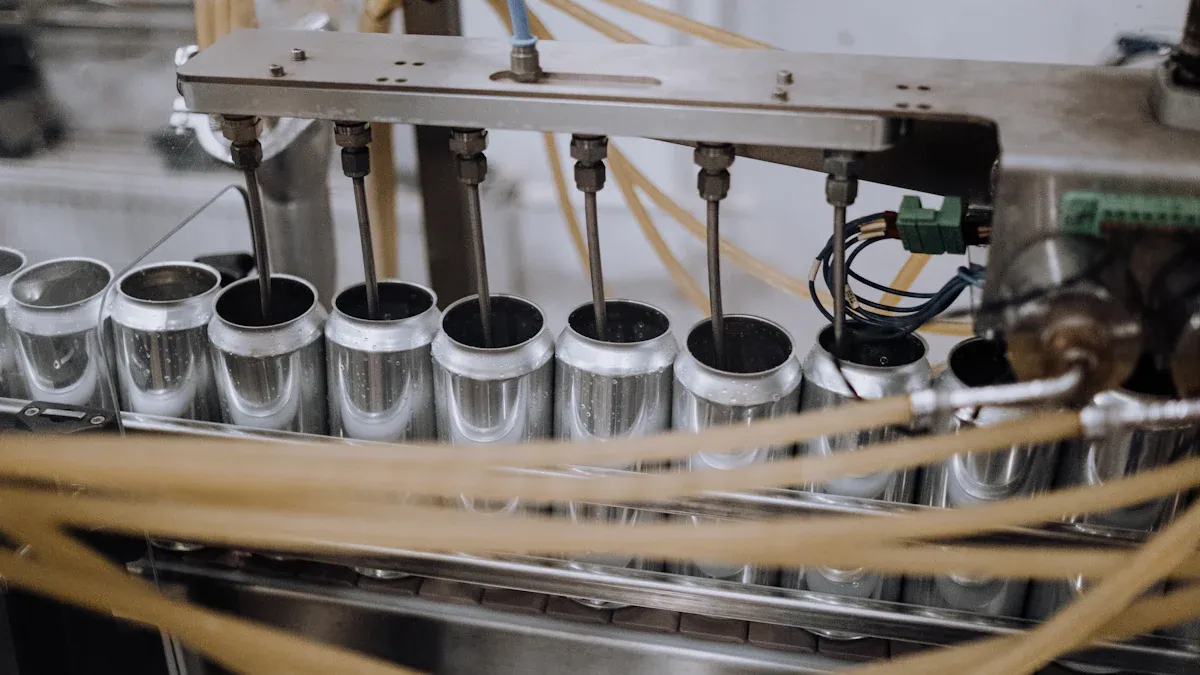
Selecting the right equipment requires a careful evaluation of your specific production needs. Processors must balance technology, capacity, and product care to maximize their return on investment. A thorough analysis of these factors ensures the chosen penne optical sorter aligns perfectly with operational goals.
Sorting Technology and Defect Detection
The core function of a penne optical sorter is its ability to identify and remove imperfections. Different technologies target different defects.
- Camera Systems (RGB, BSI+): These are essential for detecting color defects like black specks, discoloration, and misshapen pasta.
- Laser and NIR Sensors: These technologies excel at identifying foreign materials, including plastics, wood, and glass, based on their structural or chemical properties.
Expert Tip: A manufacturer should analyze its most common defects. If foreign material is the primary concern, a sorter with advanced laser or NIR capabilities is critical. If color uniformity is the goal, high-resolution cameras are the priority.
Capacity and Throughput
A sorter’s capacity must match the production line's output. Throughput, often measured in tons per hour, determines how much product the machine can process effectively.
Choosing a sorter with insufficient capacity creates a bottleneck, slowing down the entire production line. Conversely, an oversized machine leads to unnecessary capital expenditure and inefficient operation. Processors should select a model that comfortably handles their current peak volume with room for future growth.
Product Handling and Breakage
Penne pasta is a fragile product. Aggressive handling can lead to significant breakage, reducing yield and profitability. The design of a penne optical sorter directly impacts product integrity.
Look for features that promote gentle handling:
- Belt-fed systems provide a stable platform for inspection, minimizing drops.
- Soft landing and ejection systems reduce the impact force on the product.
- Optimized product velocity controls slow the pasta down before sorting.
A machine engineered for gentle handling preserves the final product's quality and appearance.
Quick Comparison of Top Manufacturers
Choosing the right manufacturer depends on matching their technological strengths to your specific production goals. Each company offers a unique specialization that makes it a better fit for certain applications. This quick comparison helps clarify which partner aligns best with your needs.
Technology and Specialization
Each industry leader brings a distinct technological focus to optical sorting. Their specializations directly influence machine performance and capabilities.
- TOMRA Food: A global pioneer in sensor-based sorting. The company integrates advanced imaging with powerful AI and deep learning algorithms for exceptional accuracy.
- Key Technology: Focuses on complete process automation systems. Its sorters use high-resolution cameras and advanced image processing for sorting flexibility.
- Bühler Group: Employs multispectral sorting technology. This allows its machines to identify materials based on their chemical composition for precise defect removal.
- Satake: A leader in grain processing technology. It is known for high-precision sorting using advanced optical sensors and shape recognition.
- Cimbria: Specializes in high-capacity industrial solutions. Its technology is designed for handling large volumes of grain and other bulk products.
Ideal Application
The ideal sorter for your penne production line depends on your primary quality control objective.
| Manufacturer | Ideal Application |
|---|---|
| TOMRA Food | Producers requiring the highest level of food safety and foreign material removal. |
| Key Technology | Lines where gentle handling and Sort-to-Grade functionality are top priorities. |
| Bühler Group | Operations focused on maximizing yield by minimizing the rejection of good pasta. |
| Satake | Manufacturers aiming for superior aesthetic quality through precise color and shape sorting. |
| Cimbria | Large-scale industrial plants needing robust, high-throughput machines for continuous operation. |
Selecting the right penne optical sorter from industry leaders is a critical investment for quality control. Processors must evaluate their specific production volume, common defects, and budget to make an informed decision.
Partnering with the right manufacturer enhances product quality. A well-chosen penne optical sorter reduces waste and maximizes production efficiency.
FAQ
Can these sorters handle other pasta shapes?
Yes. Manufacturers design these optical sorters with flexibility. They can effectively sort various pasta shapes, including fusilli, rotini, and farfalle, with simple software adjustments for different product profiles.
What is the primary difference between belt and free-fall sorters?
Belt sorters provide a stable platform for 360-degree inspection, ideal for fragile products. Free-fall sorters offer a compact, high-capacity solution focused on removing foreign material with gravity-fed efficiency.
How do sorters improve food safety?
Optical sorters significantly enhance food safety. They identify and eject dangerous foreign materials like glass, plastic, and metal. This process protects consumers and upholds brand integrity.
See Also
Essential Folder Gluer Innovations for Modern Carton Production Lines by 2025
Capsule Sorters: Key Players in Efficient Pharmaceutical Defect Elimination
Three Indispensable Industrial Checkweighers for Optimal Food Plant Operations
Comparing Leading Manufacturers of Ampoule Filling Production Lines Today
Automatic UV Coaters: Crucial for Achieving Peak High-Speed Printing Performance