Discover the Top Municipal Wastewater Equipment Suppliers of 2026
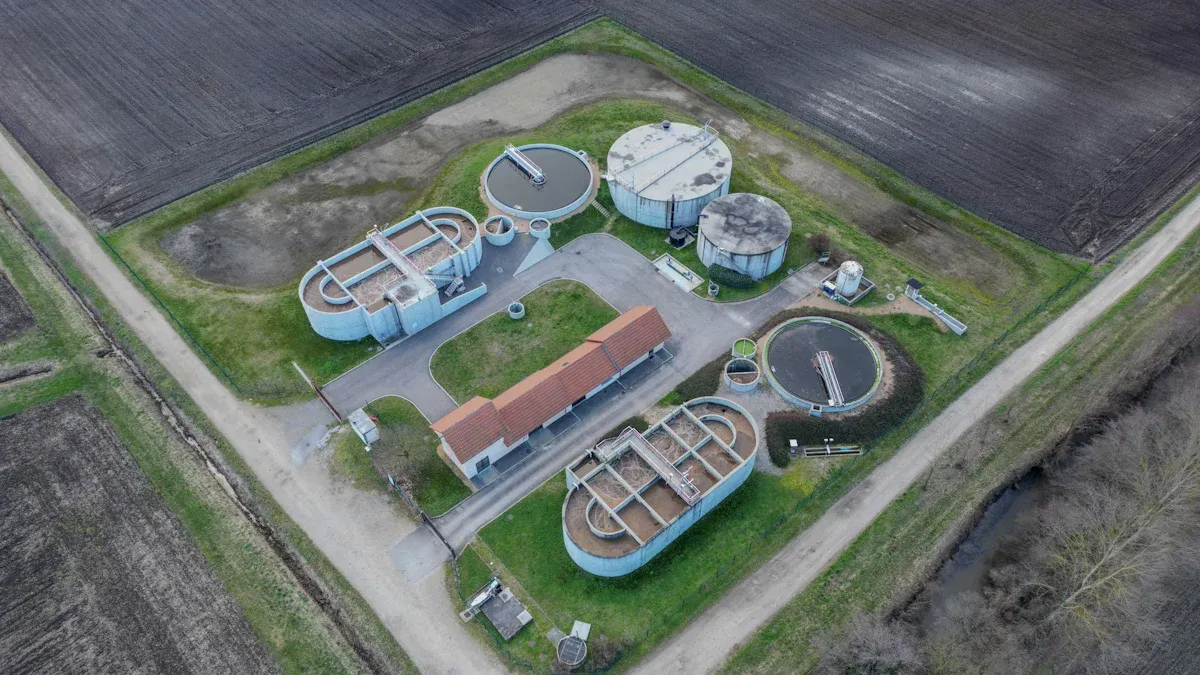
Veolia, Xylem, and SUEZ are the premier suppliers of municipal wastewater treatment equipment for 2026. Veolia excels in large-scale operations. Xylem leads with smart water technology. SUEZ offers advanced membrane solutions for resource recovery. Other top contenders like Evoqua and Ecolab provide specialized filtration and chemical solutions for a growing market.
Key Takeaways
- Top suppliers like Veolia, Xylem, and SUEZ offer different strengths for wastewater treatment.
- Choosing a supplier means looking at your project needs, their technology, and the total cost over time.
- Smart technologies and advanced filtration help plants work better and save money.
Top 7 Municipal Wastewater Equipment Suppliers for 2026
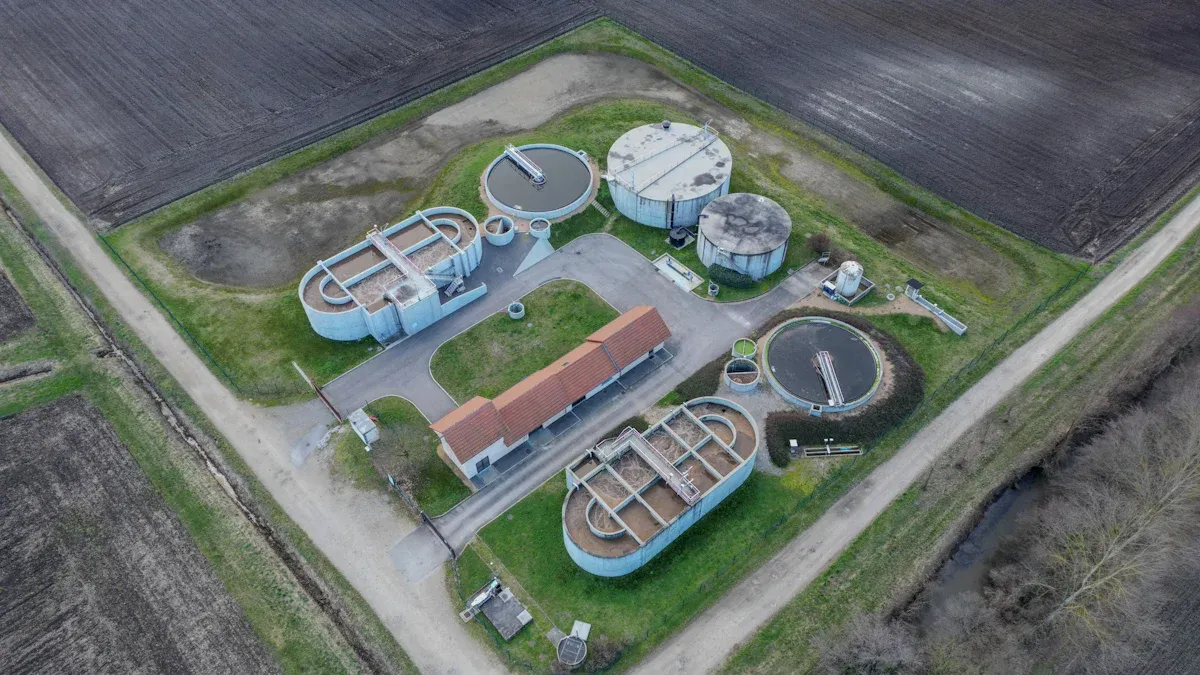
Selecting the right supplier is a critical decision for any municipality. The top companies in 2026 offer a mix of comprehensive portfolios, specialized technologies, and robust global support. This section details the strengths of the seven leading suppliers, providing the insights needed to match their capabilities with your project requirements.
1. Veolia
Veolia stands as a global titan in water, waste, and energy management. The company's expertise in large-scale Design-Build-Operate (DBO) projects makes it a preferred partner for municipalities undertaking major infrastructure upgrades. Veolia's comprehensive approach integrates advanced technologies with operational services, ensuring long-term efficiency and compliance.
A recent case study highlights Veolia's problem-solving capabilities. A large municipal authority on the U.S. west coast faced an 80% flow reduction in its heat exchangers due to severe mineral scaling. Veolia's chemical cleaning service dissolved over 5.6 tons of scale, restoring system flow to 150% of its designed capacity. In another project, Veolia upgraded a lagoon treatment plant for Ste-Julie, Quebec, using an AnoxKaldnes™ Moving Bed Biofilm Reactor (MBBR) to meet stricter effluent standards within a small footprint.
Financial Snapshot: Veolia's Water Technologies division demonstrates strong financial health and consistent growth, reinforcing its market leadership.
Metric Value (2024) Organic Growth (vs. Dec 31, 2023) Water Technologies Division EBITDA 612 million euros +15.7% Water Technologies & New Solutions Sales - +7.0% (like-for-like) Overall Water Revenue 18.03 billion euros -
2. Xylem Inc.
Xylem is a leader in developing innovative water technology to solve complex water challenges. The company is particularly recognized for its advanced pumping solutions and its pioneering work in smart water management. Xylem's focus is on creating intelligent systems that optimize the entire water network, from transport to treatment.
The company's flagship smart solution, Xylem Edge Control, is transforming plant operations. This digital platform offers modules for pulsed aeration, ammonia removal, and total nitrogen removal. It can reduce energy consumption by up to 25% by automating process control. Xylem Edge Control provides real-time data visualization and alerts, empowering operators to cut operating costs and improve efficiency. Key offerings include:
- Xylem Edge Control Pulsed Aeration
- Xylem Edge Control Ammonia Removal
- Xylem Edge Control Ammonia + Nitrogen Removal
3. SUEZ
SUEZ has a long-standing reputation for innovation, especially in membrane technology and resource recovery. The company provides municipalities with cutting-edge solutions designed to treat wastewater to the highest standards, often enabling water reuse and nutrient recovery. SUEZ's equipment is engineered for performance, reliability, and a low total cost of ownership.
The company's advanced membrane solutions are a cornerstone of its portfolio. The AG 400 series, for example, showcases SUEZ's technical prowess in reverse osmosis.
| Specification | Value |
|---|---|
| Membrane Type | Thin-Film Nanocomposite (TFN) |
| Membrane Active Area | 400 ft² |
| Flow Rate | 10,500 GPD (39.6 m³/day) |
| Salt Rejection | 99.5% |
| pH Range (Continuous) | 2 – 11 |
These high-rejection membranes are ideal for producing high-quality effluent suitable for reuse, helping municipalities achieve their sustainability goals.
4. Evoqua Water Technologies
Now part of Xylem, Evoqua Water Technologies brings a formidable portfolio of filtration, disinfection, and electrochemical treatment solutions. The brand is synonymous with reliability and has a deep history of providing proven technologies for municipal wastewater treatment. Evoqua's strength lies in its diverse and trusted product lines that address nearly every stage of the treatment process.
Two of its most impactful innovations are MEMCOR® membrane filtration and ETS-UV™ disinfection systems.
- MEMCOR® Membrane Filtration: These ultrafiltration (UF) and microfiltration (MF) systems produce superior quality water, reduce plant footprint, and minimize chemical usage.
- ETS-UV™ Disinfection Systems: Using advanced UV light, these systems provide chemical-free disinfection that complies with the most stringent regulatory standards.
5. Pentair plc
Pentair is a key player in the water treatment industry, offering a wide range of products for moving, treating, and storing water. For the municipal sector, Pentair's primary strength is its extensive lineup of durable and efficient pumps. The company is also a recognized competitor in the membrane separation market.
Pentair's municipal wastewater equipment portfolio is heavily focused on fluid handling, ensuring reliable performance in demanding environments. Core products include:
- Grinder Pumps
- Solids Handling Pumps
- Submersible Solids Handling Pumps
- Vortex Pumps
This specialization makes Pentair a go-to supplier for lift stations, influent pumping, and sludge transfer applications. Its position as a leading company in membrane separation technology further solidifies its role as a versatile supplier.
6. Ecolab
Ecolab provides integrated water treatment solutions that combine chemistry, data, and service. While often known for its industrial applications, Ecolab offers powerful digital technologies and chemical programs for the municipal sector. Its core value proposition is optimizing operational efficiency and ensuring regulatory compliance through data-driven insights.
Ecolab's 3D TRASAR™ technology is a game-changer for wastewater operations. This automated system provides real-time monitoring and control to:
- Dispense proper chemistry doses automatically.
- Collect key wastewater performance indicators (KPIs).
- Feed data into the ECOLAB3D™ analytics engine.
- Calculate performance metrics against operational goals.
- Display system performance on an intuitive dashboard.
This technology helps municipalities minimize downtime, reduce energy costs, and improve their ability to meet strict effluent limits.
7. Kurita Water Industries Ltd.
Kurita Water Industries, a Japan-based company with a growing global presence, offers a unique blend of water treatment chemicals, equipment, and operational services. Kurita's philosophy centers on creating sustainable solutions that conserve natural resources. The company provides customized technologies to solve specific customer challenges, from scaling and corrosion to advanced wastewater treatment.
Kurita's expertise in water chemistry allows it to optimize treatment processes, reduce sludge production, and improve overall plant efficiency. Its comprehensive service model ensures that municipalities receive ongoing support to maintain peak performance and adapt to changing regulatory landscapes.
Key Types of Municipal Wastewater Treatment Equipment
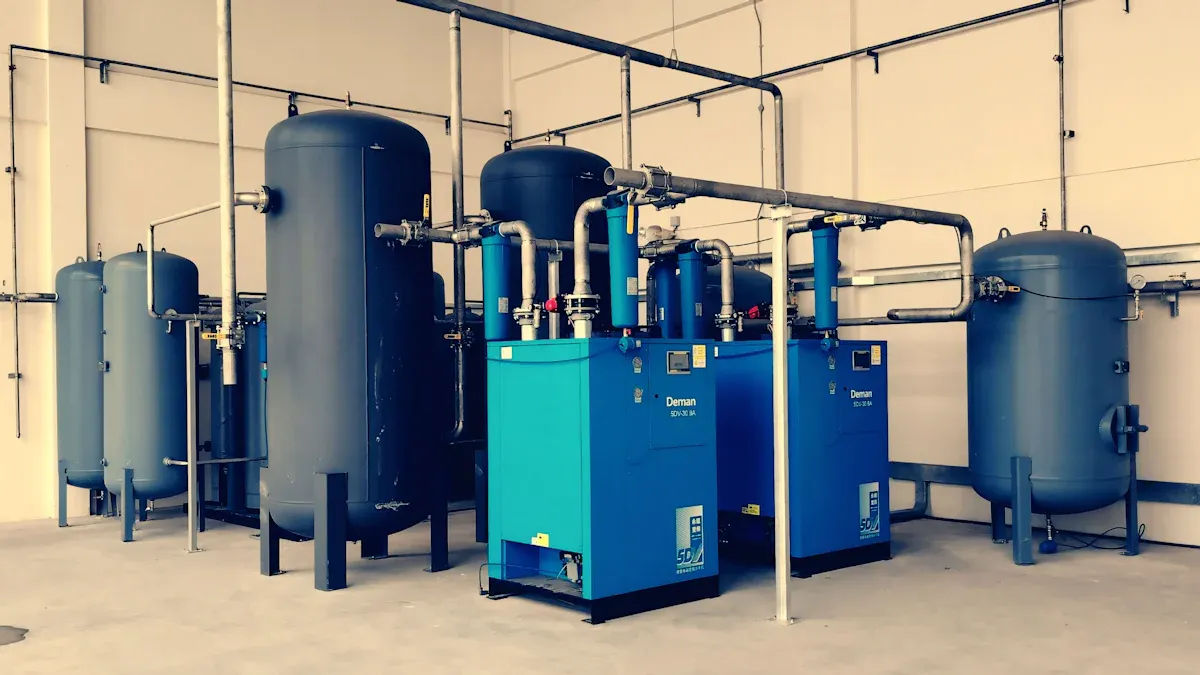
Understanding the core technologies is essential for selecting the right supplier. Modern municipal wastewater treatment equipment is designed for efficiency, compliance, and resource recovery. This section explores four critical categories of equipment that form the backbone of today's treatment plants.
Advanced Filtration and Membrane Systems (MBR)
Membrane Bioreactors (MBRs) combine biological treatment with membrane filtration. This technology produces exceptionally high-quality effluent. MBRs are known for their small footprint, requiring up to 50% less land than conventional systems. They achieve superior pollutant removal, with BOD often exceeding 99%. While historically energy-intensive, modern MBR systems consume about 0.5 to 0.8 kWh per cubic meter of treated water, making them increasingly cost-effective.
Key MBR Benefits:
- Superior and consistent water quality
- Reduced plant footprint
- Lower sludge production (20-30% less)
Pumping and Aeration Solutions
Pumping and aeration are fundamental to wastewater treatment, but aeration can account for a large portion of a plant's energy use. The latest advancements focus on smart technology to optimize performance.
- Smart Pumping Systems use IoT sensors for real-time monitoring and adjustments.
- High-Efficiency Blowers with advanced energy management can reduce power consumption by up to 45%.
- AI and Machine Learning algorithms predict oxygen demand, allowing systems to adjust blower output automatically for maximum efficiency.
Disinfection Technologies (UV and Ozone)
Disinfection is the final barrier against pathogens before water is discharged or reused. Ultraviolet (UV) and ozone are two leading chemical-free technologies. Each has distinct operational characteristics.
| Feature | Ozone Disinfection | UV Disinfection |
|---|---|---|
| Effectiveness | Highly effective; oxidizes other contaminants | Effective, but can be hindered by cloudy water |
| Byproducts | Can form bromate | Generally forms no harmful byproducts |
| Capital Costs | Generally higher | Generally lower |
| Operating Costs | Higher (energy-intensive) | Lower (lamp replacement) |
| Residual Effect | Provides lasting disinfection | No residual protection |
Sludge Treatment and Resource Recovery
Managing sludge is a major operational challenge. Modern equipment focuses on dewatering to reduce volume and recovering valuable resources like phosphorus. Common dewatering technologies include centrifuges, screw presses, and belt filter presses.
Innovative technologies now allow for phosphorus recovery, turning waste into a valuable fertilizer product. Commercial systems like Ostara Pearl® and Crystalactor™ precipitate phosphorus from sludge liquors into pellets. Other methods, such as the AshDec® process, can even recover phosphorus from incinerated sludge ash.
Comparative Analysis of Leading Suppliers
Choosing a supplier requires a deep dive into their specific strengths. This analysis compares the top companies on technology, ideal project applications, and global support to help you align their capabilities with your municipality's needs.
Technology Strengths and Specializations
Each leading supplier has a distinct technological focus. Understanding these specializations is key to finding the right fit.
- Veolia: Offers comprehensive equipment, from MBRs to disinfection units. It excels at large, integrated projects requiring design and operational management.
- Xylem: Known for high-efficiency pumps, mixers, and smart controls. Its strength is combining mechanical hardware with digital monitoring for energy-efficient systems.
- SUEZ: Provides advanced membrane and process technologies. While Veolia often focuses on waste-to-energy, SUEZ emphasizes maximizing recycling and resource recovery.
These differences highlight their unique approaches to solving municipal wastewater challenges.
Ideal Municipal Project Applications
The best supplier often depends on the project's specific goals.
For large-scale urban plant upgrades, Veolia and SUEZ are top contenders due to their experience with complex, integrated solutions. For upgrading aging infrastructure with minimal disruption, suppliers like Genesis Water Technologies offer modular systems and engineering optimization services.
Municipalities facing strict nutrient removal regulations may turn to specialists. EOSi, for example, provides MicroC® carbon sources and automation to enhance biological nutrient removal (BNR). This technology helps facilities meet tough discharge limits safely and cost-effectively.
Global Reach and Service Support
Top-tier suppliers provide more than just municipal wastewater treatment equipment; they offer long-term partnership and support. Global leaders like Veolia and SUEZ have extensive service networks, ensuring municipalities receive ongoing operational assistance and maintenance.
Many offer long-term service contracts, such as 25-year concession agreements. These arrangements, a form of Build-Operate-Transfer (BOT), grant a private company the exclusive right to design, build, and operate a sewerage system. This model ensures sustained performance and transfers operational risk, providing municipalities with predictable costs and reliable service for decades.
How to Select the Right Supplier for Your Municipality
Selecting the right supplier is a strategic process. It requires a clear understanding of your municipality's unique needs and a thorough evaluation of potential partners. This structured approach ensures your investment is effective, compliant, and sustainable for the long term.
Define Project Scope and Effluent Goals
A successful project begins with clear goals. You must define the specific outcomes your facility needs to achieve. This includes meeting strict effluent quality standards set by discharge permits. Key parameters often include:
- Total Suspended Solids (TSS): Typically below 30 mg/L.
- Total Phosphorus (TP): Often 1.0 mg/L or less for sensitive water bodies.
- pH: Maintained between 6 and 9 to protect aquatic life.
- Biochemical Oxygen Demand (BOD): A measure of organic pollutants.
Clearly outlining these targets helps you communicate your needs effectively to potential suppliers.
Evaluate Technology and Proven Experience
Look for suppliers with a track record of success in similar applications. A supplier's technology should have proven experience solving challenges like yours. For example, the city of Arvada successfully sourced a new Enterprise Asset Management (EAM) system by working with an advisor to evaluate technologies and vendors. This process eliminated redundant systems and improved workflows. Ask for case studies demonstrating how a supplier's municipal wastewater treatment equipment has met specific project goals.
Assess Total Cost of Ownership (TCO)
The initial purchase price is only part of the story. A comprehensive Total Cost of Ownership (TCO) analysis is essential. OPEX, or operational expenditure, often makes up two-thirds of a plant's lifetime costs.
TCO Breakdown:
- Capital Expenditure (CAPEX): Initial equipment and installation costs.
- Operational Expenditure (OPEX): Ongoing costs for labor, energy, maintenance, and consumables. High-efficiency pumps, for instance, can significantly reduce energy consumption, which is a major OPEX factor.
Verify Regulatory Compliance and Certifications
Ensure any potential supplier meets industry standards for quality and safety. Certifications provide an independent verification of a company's commitment to excellence. | Certification | Purpose | | :--- | :--- | | ISO 9001 | Confirms a supplier has a robust quality management system. | | NSF/ANSI | Sets minimum performance and material requirements for treatment systems. | Verifying these credentials helps mitigate risk and ensures the equipment you procure is reliable and built to last.
Choosing the right supplier is critical for project success. You must align a supplier's core strengths with your specific municipal needs. For example, Veolia excels at DBO projects, while Xylem leads in smart network upgrades. A thorough evaluation ensures your investment is reliable, compliant, and cost-effective for years to come.
FAQ
What is the most important factor when choosing a supplier?
The most critical factor is aligning a supplier's proven experience with your project's specific needs. This ensures the technology and support match your municipality's long-term goals for compliance and efficiency.
How do smart technologies help municipalities?
Smart technologies automate plant processes. They use real-time data to reduce energy consumption, cut operating costs, and improve the plant's overall efficiency and reliability.
Why is Total Cost of Ownership (TCO) more important than initial price?
TCO includes long-term operational costs like energy and maintenance. A lower initial price can hide higher lifetime expenses. Assessing TCO ensures a more cost-effective investment over time.
See Also
Essential Industrial Vacuum Cleaners: Top Choices for Every Business Operation
Cutting-Edge Materials Transforming the Future of Heat Exchanger Manufacturing
Indispensable Industrial Checkweighers: Essential for Every Modern Food Processing Plant
Identifying the Foremost Nameplate Suppliers: Key Qualities for Excellence in 2025
Unveiling the Advantages: Commercial Heat Exchanger Benefits to Expect in 2025