Your 2026 Guide to the Top 5 AI X-ray Reading Tools
The leading 2026 platforms for ai reading x rays include Aidoc, Qure.ai, Viz.ai, Lunit, and Zebra Medical Vision. These tools employ advanced algorithms for a rapid, preliminary review of X-ray images. This market's significant growth, projected to reach $12.7 billion by 2033, drives innovation in this field.
Note: These platforms are designed to help individuals understand potential areas of concern before their official consultation with a healthcare professional.
How We Selected the Best AI X-ray Readers
Our team evaluated each platform using a structured framework. This process ensures our recommendations are based on objective, critical factors. We focused on four key areas to identify the most reliable and user-friendly tools available in 2026.
Accuracy and Regulatory Clearance
A tool's reliability is paramount. We prioritized platforms with proper regulatory approvals.
- Most top-tier AI imaging systems are classified as Class II medical devices by the FDA.
- They must obtain clearance through a rigorous 510(k) or De Novo submission process.
- Similarly, CE marking in Europe requires a conformity assessment, proving clinical performance and safety.
These certifications demonstrate that a tool has provided strong evidence of its safety and effectiveness.
Ease of Use for Patients
A powerful tool is only useful if patients can navigate it. Our evaluation emphasized a user-centric design. We assessed each platform on its interface clarity and the simplicity of uploading images and viewing results. This focus on user utility is a critical measure of success, ensuring the technology is accessible to its intended audience.
Range of X-rays Analyzed
The best tools offer versatility. We selected platforms capable of analyzing common X-ray types. Current AI development focuses heavily on chest and musculoskeletal (MSK) imaging. Therefore, our top picks demonstrate strong capabilities in these high-demand areas, making them suitable for a wider variety of preliminary screenings. The field of ai reading x rays continues to expand its analytical scope.
Data Privacy and Security
Your health information requires the highest level of protection. We exclusively selected tools that comply with strict data privacy laws like HIPAA and GDPR.
These regulations mandate robust security measures. This includes data encryption, secure access controls, and formal agreements with any third-party vendors to safeguard patient information.
Compliance ensures your sensitive data is handled responsibly and securely.
In-Depth Reviews: The Top 5 Tools for AI Reading X Rays
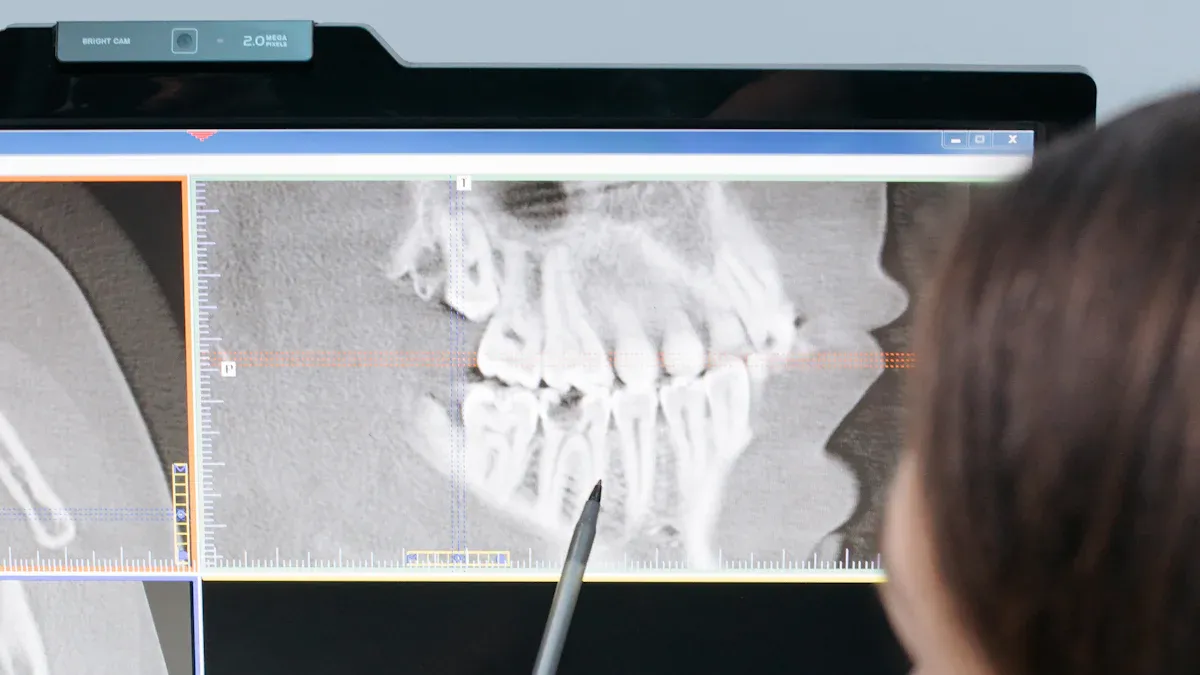
This section provides a detailed look at the top platforms for a preliminary review of your medical images. Each tool offers unique strengths, from comprehensive analysis to specialized disease detection. We examine their core functionalities, documented performance, and real-world applications.
Aidoc: The Comprehensive Analyst
Aidoc positions itself as a comprehensive solution for medical imaging analysis. Its AI-powered operating system (aiOS™) integrates directly into existing radiology workflows. This platform analyzes a wide array of scans to flag acute abnormalities. Its primary function is to help radiologists prioritize critical cases, ensuring urgent findings receive immediate attention.
The platform's widespread adoption highlights its reliability and effectiveness. For example, Mercy launched the aiOS™ platform across its hospitals and outpatient centers. Similarly, University Hospitals deployed Aidoc's AI across 13 hospitals. Advocate Health also integrated Aidoc's models at 22 sites. These large-scale deployments are part of Aidoc's presence in over 500 leading medical centers worldwide, demonstrating its trusted role in modern radiology.
Qure.ai: For Chest and Skeletal Insights
Qure.ai specializes in the automated interpretation of chest and skeletal X-rays. Its flagship algorithm, qXR, is particularly recognized for its ability to screen for tuberculosis (TB). The World Health Organization (WHO) has even recommended Computer-Aided Detection (CAD) technologies like qXR for TB screening. The platform's capabilities in ai reading x rays are supported by extensive research.
Multiple peer-reviewed studies validate qXR's performance:
- A study in Bangladesh found qXR met WHO criteria with high sensitivity and specificity.
- Research using X-rays from Nepal and Cameroon showed qXR outperformed human readers in detecting confirmed TB.
- An active-case finding program in India noted a 15% increase in TB detection when using qXR alongside radiologists.
- Interestingly, one study reported negligible performance differences when qXR analyzed smartphone photos of X-rays versus original digital files, showcasing its versatility.
Viz.ai: Rapid Triage Specialist
Viz.ai excels at rapid triage for time-sensitive conditions. The platform uses AI to analyze images and automatically alert care teams about suspected critical findings, such as stroke or pulmonary embolism. This system is designed to accelerate the entire care pathway, from diagnosis to treatment. It connects specialists in real-time through a secure, HIPAA-compliant mobile platform.
The goal is to reduce delays and improve patient outcomes. Dr. Kevin Abrams, Chief of Radiology at Baptist Hospital, describes its value clearly.
“Viz.ai acts as my co-pilot, it is as if I have a second set of eyes overseeing the triage process, allowing Radiologists to be more confident in their findings, as well as prioritization for critical findings.”
Case studies from major medical centers confirm its impact:
- A UC Davis study reported a 39% reduction in door-to-groin time for stroke patients.
- At Valley Baptist, physicians observed a 2.5-day reduction in hospital length of stay for stroke patients.
- One hospital streamlined its stroke triage process from 130 minutes down to just 57 minutes after implementing the Viz Trauma Suite.
Lunit: Advanced Cancer Detection
Lunit focuses on AI-powered cancer detection and screening. Its solutions, Lunit INSIGHT CXR for chest X-rays and Lunit INSIGHT MMG for mammography, assist radiologists in identifying malignant nodules and lesions that might be missed. The platform is a powerful tool for early cancer detection, which is critical for improving patient survival rates. The field of ai reading x rays has seen significant advances in oncology thanks to tools like this.
The accuracy of Lunit INSIGHT CXR is documented across numerous studies, though results vary by version and study design.
- One 2024 study reported a sensitivity of 92% and specificity of 95% for detecting lung nodules.
- Another study found a sensitivity of 56.4% but a very high specificity of 99.0% for actionable nodules.
- Other research has shown an Area Under the Curve (AUC), a key performance metric, in the range of 0.92–0.99.
Lunit's technology supports major national cancer screening programs in countries like Australia, Sweden, and Singapore, as well as in multiple regions across Italy.
Zebra Medical Vision: Population Health Focus
Zebra Medical Vision (now part of Nanox.AI) uses AI to analyze medical images for population health insights. Its "AI1" platform can identify patients at risk for chronic diseases by analyzing existing CT scans and X-rays. This approach allows healthcare providers to find early signs of conditions like osteoporosis and cardiovascular disease opportunistically, without requiring new scans. This capability makes ai reading x rays a proactive tool for preventative care.
The platform's capabilities are summarized below:
| Platform Name | Automated Identification | Automated Quantification | Specific Analysis for Risk Stratification |
|---|---|---|---|
| Zebra Medical Vision AI1 | Yes | Yes | Identifies and quantifies coronary plaques and calcium scores. |
In partnership with Clalit Health Services, Zebra's algorithms successfully identified patients at risk for osteoporotic fractures and cardiac events from existing CT data. The company also developed a patented algorithm to detect and quantify lung abnormalities related to COVID-19 pneumonia.
“Zebra-Med researchers and engineers used clinical data from a vast amount of medical images to train the AI model of the COVID-19 solution,” says Ohad Arazi, CEO of Zebra-Med.
This focus on leveraging existing imaging data makes Zebra a powerful tool for identifying at-risk populations and enabling early intervention.
At-a-Glance: Comparing the Top 5 AI Tools
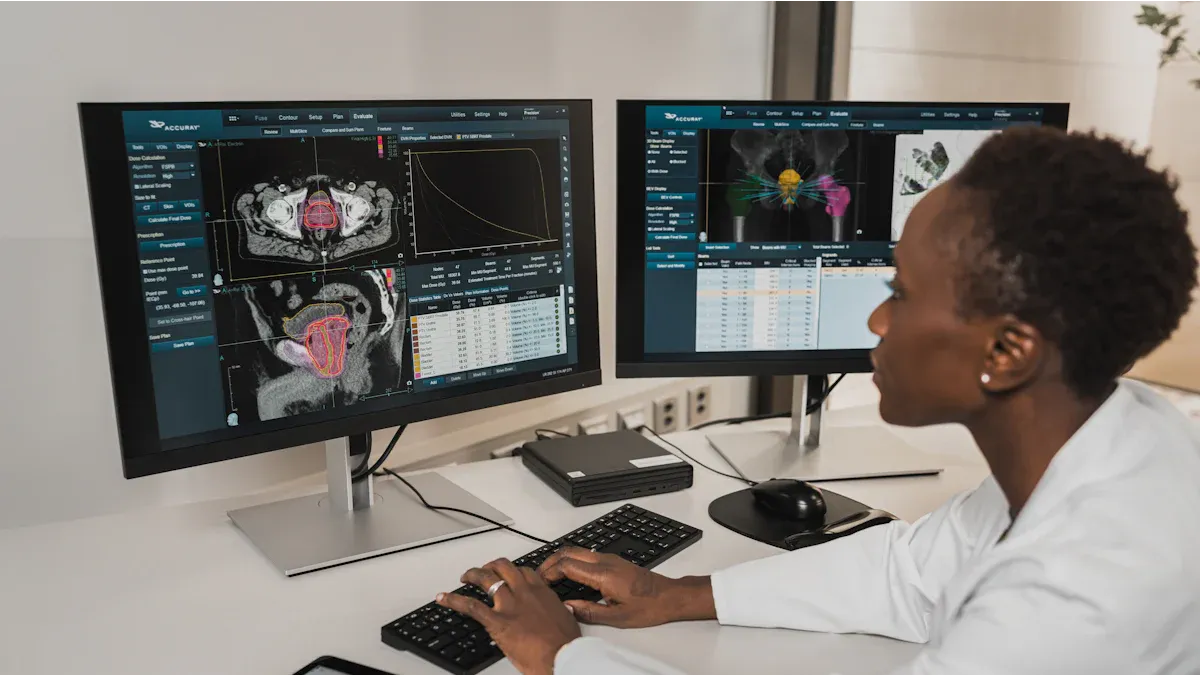
This section offers a comparative overview of the top platforms. It breaks down their ideal applications, core features, pricing, and usability to help you identify the best fit for your preliminary analysis needs.
Best For
Each tool excels in a specific area, catering to different user priorities.
- Aidoc: Best for comprehensive, hospital-wide analysis and flagging a wide range of acute conditions.
- Qure.ai: Ideal for focused chest and skeletal analysis. It accelerates lung cancer diagnostics and enhances workflow efficiency for radiologists.
- Viz.ai: The top choice for rapid triage in time-critical situations like stroke and pulmonary embolism.
- Lunit: Specialized for advanced cancer screening, particularly in mammography and chest X-rays.
- Zebra Medical Vision: Best for population health management, opportunistically identifying chronic disease risks from existing scans.
Key Features
The platforms offer distinct functionalities. Viz.ai, for instance, demonstrates a 30% higher Positive Predictive Value (PPV) than competitors in some studies. Lunit's platform significantly reduces radiologist reading time.
| Tool | Key Features |
|---|---|
| Aidoc | AI-powered operating system (aiOS™); broad algorithm portfolio; workflow integration. |
| Qure.ai | WHO-recommended TB screening; smartphone image analysis; ai reading x rays for chest and MSK. |
| Viz.ai | Real-time care team alerts; HIPAA-compliant mobile platform; reduced treatment times. |
| Lunit | High-precision cancer detection; reduces false positives; boosts screening detection rates. |
| Zebra | Population health insights; opportunistic disease detection; quantifies coronary calcium. |
Cost Structure
Pricing models vary, reflecting different business strategies.
Note: Most platforms offer custom enterprise pricing for large healthcare systems.
Aidoc provides tailored subscription models based on scan volume, with starter packages available. Zebra Medical Vision famously offers its "AI1" service at a flat rate of $1 per scan, though it also provides subscription plans for smaller clinics. Qure.ai, Viz.ai, and Lunit typically use enterprise-level subscription or licensing agreements based on institutional scale.
User-Friendliness
Usability is a key differentiator, especially for platforms designed for rapid response.
- Viz.ai stands out, with 90% of surveyed customers citing its ease of use as a primary benefit. Its interface is streamlined for quick, clear communication.
- Aidoc, Lunit, and Qure.ai are designed for seamless integration into professional radiology workflows, prioritizing efficiency for trained specialists.
- Zebra Medical Vision provides clear, actionable reports for population health managers, focusing on data visualization.
Crucial Disclaimer: Using AI for Your Health
Artificial intelligence offers powerful capabilities for preliminary image review. However, users must approach these tools with a clear understanding of their limitations. This technology is a supplement to, not a replacement for, professional medical expertise.
Not a Substitute for a Radiologist
AI platforms are designed to support radiologists, not to replace their critical judgment. A trained radiologist provides essential context that an algorithm cannot. The American College of Radiology (ACR) views AI as a supportive tool that requires continuous human oversight to validate its findings and identify potential errors.
The ACR emphasizes the ethical duty of radiologists to understand AI, communicate its risks, and ensure its benefits are applied equitably for all patients.
Ultimately, a qualified specialist must interpret the complete clinical picture.
For Informational Purposes Only
AI-generated reports should be treated as informational, not diagnostic. Patients using these tools without clinical guidance risk significant misinterpretation. A case study highlighted this danger when a patient used an AI tool to analyze his cognitive deficits. The AI generated a report with major inaccuracies, fabricating a link between his tinnitus and neurovascular changes. This misinformation validated the patient's fears and caused severe anxiety, demonstrating the psychological risks of using AI without a clinician to correct falsehoods.
Always Seek Professional Diagnosis
The insights from an AI tool can empower you for a more informed discussion with your doctor. However, they are not a final answer. Always schedule an appointment with a qualified physician or radiologist to review your X-ray images and results.
Key steps to remember:
- Use AI reports as a starting point for questions.
- Never alter treatment or ignore medical advice based on an AI analysis.
- A formal diagnosis can only come from a licensed healthcare professional.
Your health is paramount and requires expert human oversight.
AI provides powerful preliminary insights, but professional oversight is paramount. For comprehensive analysis and high accuracy, Aidoc emerges as a top choice for 2026. These platforms empower patients for informed discussions with their doctors.
Important: Always schedule an appointment with a qualified radiologist or physician to receive a formal diagnosis.
FAQ
What is the main purpose of these AI tools?
These AI platforms provide a preliminary analysis of medical images. They help radiologists prioritize critical cases. Their function is to support, not replace, professional medical review and diagnosis.
Is my health data safe with these platforms?
Yes, your data is secure. Top platforms comply with strict privacy laws like HIPAA and GDPR.
They use robust encryption and access controls to protect all patient information.
Can I buy these AI tools for personal use?
No, these are enterprise-level systems. Healthcare providers purchase them for integration into clinical workflows. Individuals cannot buy them directly for personal analysis of their own X-ray images.
See Also
Discover Top Chinese Manufacturers for X-Ray Inspection Machine Procurement
Understanding Tablet Sampling Machines: A Comprehensive Guide for Lab Selection
Essential Capsule Checkweighers for Buyers to Evaluate in the Year 2025
Three Essential Industrial Checkweighers for Modern Food Processing Plants
Exploring Trending Folder Gluer Innovations for 2025 Carton Production Lines