Essential Technologies for Cleaner Beans in 2026
Producers rely on five essential technologies for detecting foreign materials in beans: Advanced Optical Sorting Systems, Hyperspectral Imaging Technology, X-ray Inspection Solutions, AI-Powered Machine Vision, and Automated Air Jet Separation.
- Detection accuracy rates reach up to 97.31% with deep learning models.
- Mud ball detector beans technology targets specific contaminants, enhancing cleanliness and safety.
Why Foreign Material Detection Matters
Impact on Bean Quality
Foreign material detection plays a critical role in maintaining the quality of beans. Industry standards, such as those set by the International Organization for Standardization (ISO), require that foreign material in beans must not exceed 0.75% of the mass of the reference sample. Producers who fail to meet this threshold risk downgrading their product and losing market value. Effective quality inspection systems help reduce the incidence of foreign materials, ensuring that only high-quality beans reach consumers.
- The presence of foreign materials can lead to economic losses.
- Consumer acceptance often depends on the visible cleanliness of beans.
- Consistent quality inspection supports the delivery of safe products.
Modern detection technologies allow producers to meet strict grading requirements and maintain a competitive edge in the market.
Food Safety and Consumer Trust
Foreign materials in beans introduce physical, biological, and chemical hazards that can compromise food safety. Recalls due to contamination may be classified as high risk, with the potential for serious health consequences. These incidents can damage consumer trust and harm brand reputation.
- Consumers rely on food safety indicators when choosing products.
- Trust in these signals increases when credible third-party verification supports them.
- Misleading information, such as false labeling, can erode trust and negatively impact brands.
By investing in advanced detection systems, producers demonstrate a commitment to safety and transparency. This approach not only protects public health but also strengthens consumer confidence in the brand.
Advanced Optical Sorting Systems
How Optical Sorting Works
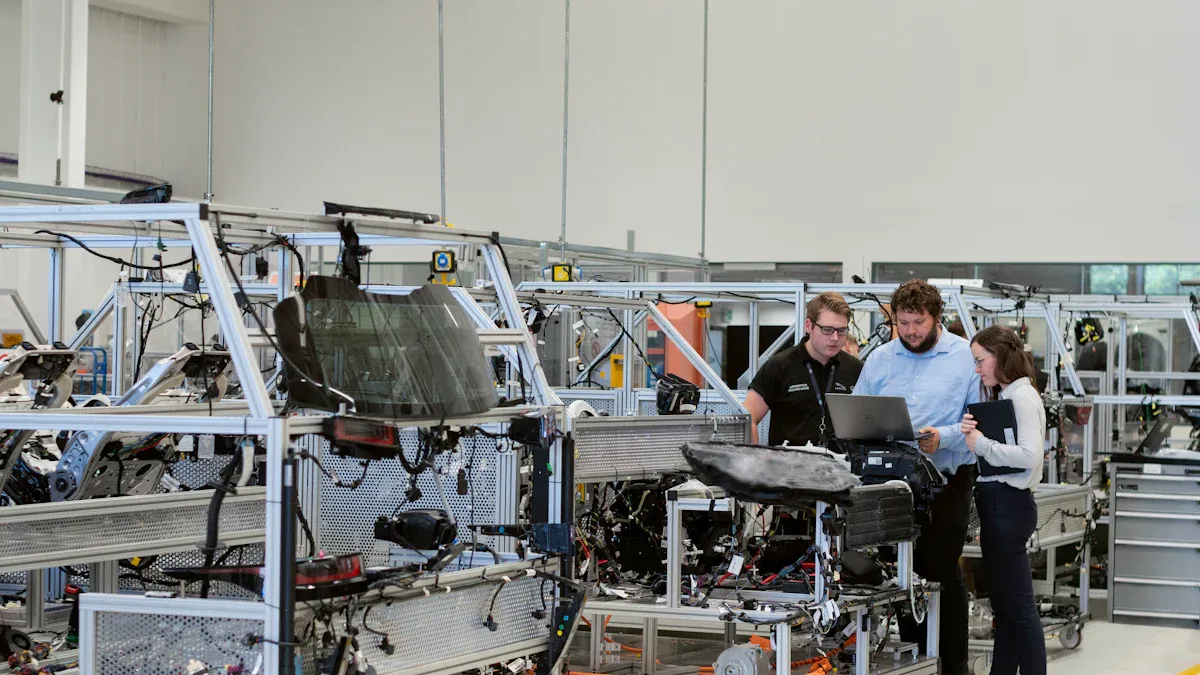
Optical sorting systems use advanced cameras and sensors to inspect beans as they move along conveyor belts. These machines capture high-resolution images of each bean. Specialized software analyzes color, shape, and texture to identify foreign materials or defects. When the system detects an unwanted object, it triggers a precise mechanism—often a burst of air—to remove the contaminant from the production line.
Different optical sorting methods offer varying levels of accuracy. The table below highlights performance data for two common approaches:
| Method | Accuracy Rate | Sample Size |
|---|---|---|
| NIR snapshot hyperspectral imaging | 95% | 444 coffee beans |
| SVM classifier for cocoa beans | 89.10% | N/A |
These figures demonstrate the high reliability of modern optical sorters in detecting foreign materials.
Key Benefits for Bean Cleaning
Optical sorting systems deliver several advantages for commercial bean processing:
- Advanced sensors and AI algorithms enable precise detection and removal of defects, which improves product quality and processing efficiency.
- High-volume facilities that use optical sorters report a 15% increase in processing efficiency. This improvement leads to better flavor profiles and higher customer satisfaction.
Note: Optical sorting not only reduces contamination but also supports consistent grading standards. Producers who invest in these systems can meet strict industry requirements and maintain a strong reputation for quality.
Hyperspectral Imaging Technology
Detection Capabilities and Precision
Hyperspectral imaging technology brings a new level of accuracy to bean cleaning. This system captures detailed spectral information from each bean, allowing for the identification of contaminants that traditional cameras might miss. Different camera types offer varying levels of detection effectiveness. The table below highlights key specifications:
| Camera Type | Spectral Range (nm) | Spectral Resolution (nm) | Pixel Size (mm) | Effectiveness in Detection |
|---|---|---|---|---|
| Specim FX10 | 400 - 1000 | 5.5 | 0.176 | Minimal differentiation |
| Specim FX17 | 900 - 1700 | 8 | 0.281 | Enhanced differentiation |
| SWIR | 1000 - 2500 | 12 | 0.520 | Highest accuracy |
These systems use spectral differences between beans and contaminants to achieve high classification accuracy. Operators can quickly screen seed compositions and properties, even for individual beans. This technology excels at detecting foreign materials mixed with seeds, making it a powerful tool for modern processing lines.
Advantages Over Traditional Methods
Hyperspectral imaging offers several advantages compared to conventional sorting technologies:
- Detects contaminants using spectral data, not just color differences.
- Provides non-destructive testing, preserving product integrity.
- Analyzes chemical composition, which traditional methods cannot achieve.
- Distinguishes between items with similar colors, where RGB cameras fail.
- Maintains effectiveness even when beans and contaminants share similar densities.
Hyperspectral imaging systems assess both visual and intrinsic physicochemical characteristics of beans. This capability significantly enhances quality monitoring and ensures a higher standard of food safety than traditional color imaging or X-ray systems.
| Advantage | Hyperspectral Imaging | Traditional Methods |
|---|---|---|
| Contaminant Detection | Spectral differentiation | Limited to visual color differences |
| Non-destructive Testing | Yes | Often requires physical alteration |
| Chemical Composition Analysis | Yes | Not possible |
| Effectiveness with Similar Colors | High | Low |
| Density Limitations | Effective | X-ray imaging ineffective |
X-ray Inspection Solutions

Identifying Hidden Foreign Materials
X-ray inspection solutions play a vital role in modern bean processing facilities. These systems use advanced imaging technology to scan beans and detect foreign materials that traditional sorting methods often miss. Operators rely on X-ray machines to identify contaminants that hide inside or beneath the surface of beans. The technology excels at finding materials that share similar colors or densities with beans, making it indispensable for quality control.
Common hidden foreign materials detected by X-ray inspection include:
- Stones
- Glass
- Metal
- Plastic
- Bone
- Other contaminants
X-ray inspection machines also reveal biological hazards such as insects and worms. This capability ensures that beans meet strict safety standards before reaching consumers. By identifying a wide range of contaminants, X-ray solutions help producers maintain product integrity and prevent costly recalls.
Safety and Efficiency Benefits
X-ray inspection systems deliver significant improvements in both safety and operational efficiency. Facilities that implement these solutions experience enhanced contaminant detection and streamlined processing. The following table summarizes key benefits:
| Improvement Type | Description |
|---|---|
| Contaminant Detection | Advanced X-ray systems can identify various contaminants, ensuring product safety. |
| Operational Efficiency | Customizable solutions enhance processing efficiency and quality control across different applications. |
Dual X-ray technology increases detection capabilities by analyzing contaminants based on atomic number. Photon-counting X-ray technology produces higher resolution images, which improves the identification of bone and other difficult-to-detect materials. Operators benefit from customizable solutions that adapt to different bean varieties and processing requirements.
X-ray inspection solutions provide reliable, non-destructive testing for beans and pre-packaged products. These systems help producers achieve consistent quality while protecting consumer health.
AI-Powered Machine Vision
Real-Time Analysis and Adaptability
AI-powered machine vision has transformed the way producers detect contaminants in beans. These systems use advanced algorithms to analyze images of beans as they move along processing lines. The technology delivers rapid, accurate results, making it ideal for high-volume operations. Machine vision adapts quickly to new types of defects, ensuring that even emerging threats do not compromise product quality.
The following table compares AI-powered machine vision with manual inspection:
| Feature | AI-Powered Machine Vision | Manual Inspection |
|---|---|---|
| Speed | High-speed detection of defects | Slower processing times |
| Accuracy | Superior defect detection rates | Prone to human error |
| Adaptability | Adapts to new defect types | Limited adaptability |
| Consistency | Ensures consistent quality in large-scale operations | Variable quality due to human factors |
| Real-time Analysis | Continuous monitoring and decision-making | Non-real-time, dependent on human pace |
Machine vision systems provide continuous monitoring and decision-making. Operators benefit from real-time analysis, which supports immediate corrective actions. This capability reduces the risk of contaminated beans reaching consumers.
Reducing Human Error
Manual inspection often leads to inconsistent results due to fatigue or oversight. AI-powered machine vision addresses these challenges by delivering reliable, repeatable performance. Key advantages include:
- Detection of subtle defects, color variations, and size discrepancies at high speeds.
- Seamless integration with conveyor-based sorting lines for efficient processing.
- Reduction in the need for manual inspection, freeing staff for higher-value tasks.
AI-powered machine vision ensures that every batch of beans meets strict safety and quality standards. Producers who adopt this technology gain a competitive advantage and build greater trust with consumers.
Automated Air Jet Separation
Removing Lightweight Contaminants
Automated air jet separation stands out as a reliable method for removing lightweight contaminants from beans. This technology uses controlled air currents to lift and eliminate materials such as dust, husks, and chaff. Heavier beans fall straight down, while lighter impurities move away from the main product stream. Operators value this process for its precision and speed. The system forms an essential part of multi-stage purification, significantly improving the cleanliness and quality of beans. Producers who use air jet separation report fewer foreign particles in their final product. This method also reduces the need for manual cleaning, which lowers labor costs and increases operational efficiency.
Automated air jet separation ensures that only the cleanest beans continue through the processing line. This approach supports strict quality standards and helps maintain consumer trust.
Integration with Other Technologies
Modern bean cleaning facilities often combine air jet separation with other advanced systems. Integration maximizes contaminant removal and enhances overall processing performance. The following table highlights how air jet separation works alongside other technologies:
| Feature | Description |
|---|---|
| Cleaning Function | Removes coarse and fine impurities, grading seeds by size through screening and air aspiration. |
| Working Principle | Utilizes variable screen configuration, suction systems, and air lifting blowers for effective cleaning. |
| Applications | Suitable for various grains and seeds including wheat, barley, lentils, and more. |
Facilities also use air jet systems for dust management. The table below outlines additional benefits:
| Feature | Description |
|---|---|
| Dust Removal | Effective for recycling and dust removal from various industries including grain and food. |
| Working Principle | Uses centrifugal force and filtration to separate dust from the air, ensuring clean operation. |
| Applications | Applicable in grain, food, feed, and chemical industries for dust management. |
Operators achieve optimal results by integrating air jet separation with optical sorters, X-ray inspection, and machine vision. This combination delivers cleaner beans and supports high standards of food safety.
Mud Ball Detector Beans
Specialized Detection for Mud Balls
Mud ball detector beans technology addresses a persistent challenge in bean processing. Mud balls often resemble beans in size and color, making them difficult to identify using standard sorting systems. Producers rely on specialized sensors and algorithms that distinguish mud balls from actual beans based on density, texture, and moisture content. These systems scan each bean rapidly, flagging anomalies for removal. Operators benefit from real-time alerts when mud ball detector beans identify contaminants. Facilities that implement this technology report a significant reduction in mud ball presence within final products.
Tip: Regular calibration of mud ball detector beans equipment ensures optimal detection accuracy and minimizes false positives.
Enhancing Overall Cleanliness
The integration of mud ball detector beans into modern cleaning lines elevates product purity. These detectors work alongside optical sorters and air jet separators, forming a multi-layered defense against contaminants. Producers observe improved batch consistency and fewer customer complaints related to foreign material. The following table highlights the impact of mud ball detector beans on cleanliness metrics:
| Metric | Before Implementation | After Implementation |
|---|---|---|
| Mud Ball Incidence (%) | 1.2 | 0.2 |
| Consumer Complaints | High | Low |
| Batch Consistency | Variable | Consistent |
Facilities that prioritize mud ball detector beans technology maintain higher standards of food safety and quality. This approach supports brand reputation and meets regulatory requirements for foreign material control.
Comparative Summary of Technologies
Key Features and Differences
Bean cleaning technologies each offer unique strengths for removing foreign materials. The table below summarizes the main features and performance metrics of leading solutions:
| Technology Type | Key Features | Performance Metrics |
|---|---|---|
| Vibrating Sieve Cleaners | Removes large debris such as pods, shells, and twigs from raw bean batches. | Effectiveness in debris removal |
| Aspirators | Uses air currents to separate lighter impurities like dust and husk fragments. | Efficiency in impurity separation |
| Destoners | Employs vibration and airflow to isolate stones and dense foreign objects. | Success rate in stone removal |
| Magnetic Separators | Captures ferrous metallic contaminants to protect equipment. | Rate of metallic contaminant removal |
| Optical Sorters | Utilizes cameras and AI to detect and eject discolored or moldy beans. | Accuracy in quality assessment |
Optical sorters and hyperspectral imaging systems excel at identifying subtle defects and color variations. X-ray inspection stands out for detecting dense materials like stones or metal. Mud ball detector beans technology targets contaminants that closely resemble beans in size and color, providing an extra layer of protection.
Choosing the Right Solution
Selecting the best technology depends on several factors. Producers should consider the types of contaminants most common in their operations. Hyperspectral imaging offers high accuracy, especially for complex foreign materials, achieving over 89.10% accuracy in cocoa bean classification. X-ray systems work well for dense objects but may miss lighter contaminants. Maintaining product quality and marketability requires a combination of methods. Facilities often integrate mud ball detector beans with optical sorters and aspirators for comprehensive cleaning. Producers should evaluate detection accuracy, operational needs, and the specific risks present in their supply chain.
Tip: Regularly reviewing performance metrics helps facilities adapt to changing contamination risks and maintain high standards.
Practical Considerations for Implementation
Cost and Return on Investment
Bean producers often evaluate technology investments by considering both upfront costs and long-term benefits. Advanced detection systems require significant capital, especially for high-capacity facilities. However, these systems deliver measurable returns. Producers experience fewer product recalls, reduced labor expenses, and improved market access. Regulatory requirements compel manufacturers to meet strict standards for safety, sustainability, and supply chain transparency. Companies invest in Industry 4.0-enabled traceability solutions to comply with these regulations and build consumer trust. Over time, facilities that adopt advanced cleaning technologies report higher product quality and stronger brand reputation.
Tip: Facilities should assess operational needs and expected throughput before selecting a technology. This approach helps maximize return on investment and ensures compliance with evolving industry standards.
Scalability for Different Operations
Scalability remains a key factor when implementing bean cleaning technologies. Small, medium, and large operations face unique challenges and opportunities. The table below summarizes how scalability varies across different segments:
| Segment Size | Target Operations | Scalability Issues | Growth Drivers |
|---|---|---|---|
| 1-2 t/h | Small & Medium | Limited by competition and operational complexity | Rising demand from local businesses and sustainability initiatives |
| 2-4 t/h | Small to Mid-Sized | Integration challenges persist | Technological advancements and operational flexibility |
| Above 4 t/h | Large Scale | Benefits from economies of scale | Capital investment trends and demand for high-capacity systems |
Small producers often struggle with integration and competition. Medium-sized facilities seek flexible solutions to adapt to changing market demands. Large-scale operations benefit from economies of scale and invest in high-capacity systems. Technological advancements continue to drive growth across all segments, enabling producers to meet rising demand and sustainability goals.
Adopting advanced detection technologies ensures cleaner beans and strengthens food safety. Producers should:
- Embrace automation and digitalization for efficiency.
- Invest in eco-friendly solutions.
- Choose modular systems for flexibility.
| Innovation Type | Impact on Industry Standards and Consumer Expectations |
|---|---|
| Automated sorting and grading | Enhance product quality and consistency. |
| Water recycling and filtration | Support sustainability and reduce waste. |
| Smart sensors and IoT | Enable real-time optimization and predictive maintenance. |
| Energy-efficient components | Lower costs and carbon footprint. |
| Fully automated processing lines | Drive smarter, more efficient cleaning solutions. |
FAQ
What is the main advantage of hyperspectral imaging in bean cleaning?
Hyperspectral imaging detects contaminants by analyzing chemical composition, not just color. This method increases accuracy and reduces the risk of missed foreign materials.
How do producers choose the right detection technology?
- They assess:
- Common contaminants
- Facility size
- Budget
- Required accuracy
A tailored approach ensures optimal results.
Are these technologies suitable for small-scale operations?
| Technology | Small-Scale Suitability |
|---|---|
| Optical Sorters | ✅ |
| Air Jet Separation | ✅ |
| X-ray Inspection | ⚠️ |
Many systems offer modular designs for flexible integration.
See Also
Essential Capsule Checkweighers To Evaluate For 2025
Three Must-Have Industrial Checkweighers For Food Facilities
Enhancing Pharma Efficiency With Advanced Capsule Decapsulation Machines
Understanding Advantages Of Commercial Heat Exchangers For 2025