Top 10 Prefabricated Sewage Treatment Plant Manufacturers in 2026
Selecting the best prefabricated sewage treatment plant manufacturer is vital for effective wastewater management. Here are the top 10 manufacturers for 2026:
Mejec (Johkasou-SB)
Veolia Water Technologies
SUEZ
Xylem
Fluence Corporation
Kubota
HUBER Technology
Aquatech Solutions Inc.
Kurita
BioMicrobics Inc.
Choosing the right partner ensures reliable performance and compliance with environmental standards.
Key Takeaways
Choosing the right prefabricated sewage treatment plant manufacturer is crucial for effective wastewater management.
Look for manufacturers that offer advanced technology and innovative solutions to ensure efficient treatment and compliance with environmental standards.
Evaluate manufacturers based on their experience, product quality, and customer support to ensure reliable operation and maintenance.
Consider sustainability practices and compliance with regulations when selecting a manufacturer to protect the environment.
Assess your project needs carefully to match the right sewage treatment plant features with your specific requirements.
Leading Prefabricated Sewage Treatment Plant Manufacturers
Mejec (Johkasou-SB)
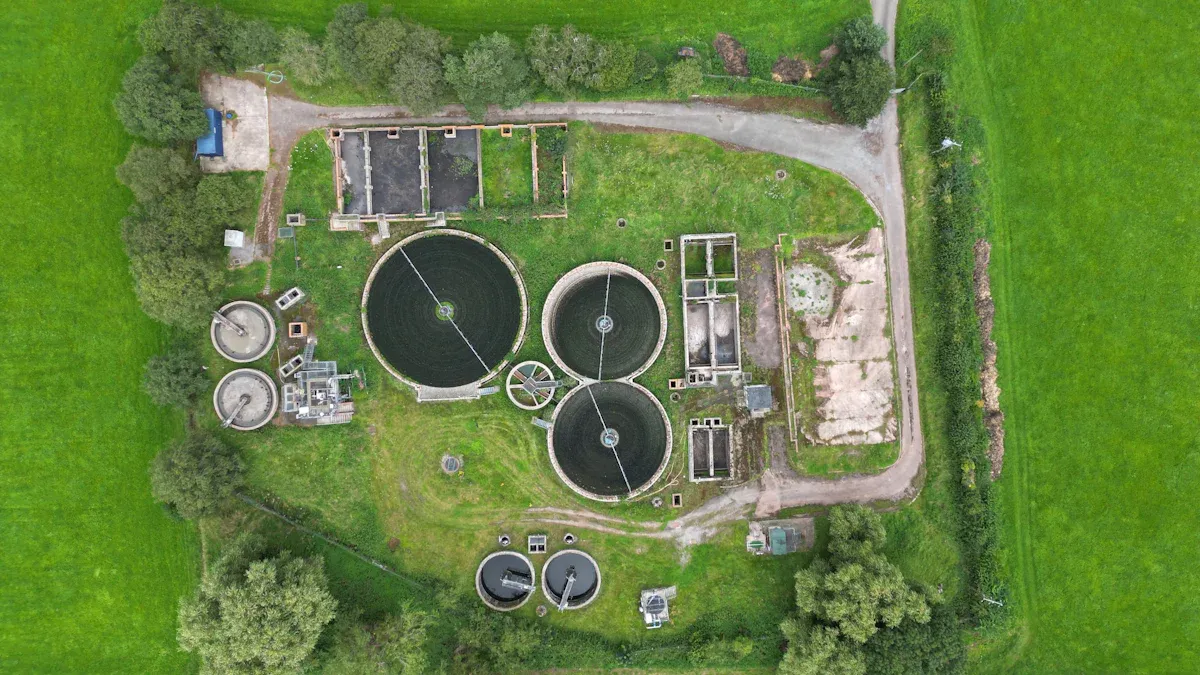
Mejec leads the market with its Johkasou-SB prefabricated sewage treatment plant. The Johkasou-SB uses an advanced AAO + MBBR combined biological treatment process. This system treats low-strength domestic wastewater efficiently. The daily capacity ranges from 5 to 100 m³ per unit, making it suitable for small and medium-sized projects. The plant features a fully integrated, ready-to-install design. Fast deployment and flexible configuration allow for quick setup in various locations.
The Johkasou-SB excels in decentralized treatment needs. It serves rural communities, tourist attractions, village homestays, highway service areas, schools, and enterprises. The horizontal-tank system optimizes process flow, saving space and simplifying installation. The plant operates quietly and produces minimal odor. Corrosion-resistant materials ensure long-term durability. Automatic management and stable operation provide high reliability. The system consistently meets strict discharge standards. Eco-friendly features include solar energy integration for off-grid sites.
Tip: Johkasou-SB is ideal for projects needing rapid installation and reliable performance in remote or space-limited areas.
Veolia Water Technologies
Veolia Water Technologies is a global leader in water and wastewater solutions. The company is based in France and operates in over 60 countries. Veolia offers a wide range of prefabricated sewage treatment plant options. Their core strengths include advanced membrane bioreactor (MBR) systems and modular designs. Veolia focuses on sustainability and energy efficiency. Their plants support both centralized and decentralized applications. Veolia’s digital monitoring tools help optimize plant performance and reduce operational costs.
SUEZ
SUEZ, headquartered in Paris, France, is known for its innovative water management solutions. The company provides prefabricated sewage treatment plant systems for municipal and industrial clients. SUEZ specializes in compact, modular plants that use biological and chemical treatment processes. Their unique offerings include smart sensors and remote monitoring. SUEZ emphasizes resource recovery and circular economy principles. The company’s plants are designed for easy expansion and integration with existing infrastructure.
Xylem
Xylem is an American company with a strong presence in water technology. The company offers prefabricated sewage treatment plant solutions for urban and rural settings. Xylem’s strengths include energy-efficient pumps and advanced filtration systems. Their plants use biological treatment and UV disinfection. Xylem focuses on reducing water footprint and improving effluent quality. The company supports digital automation and remote control for plant management.
Fluence Corporation
Fluence Corporation is based in the United States and serves global markets. The company specializes in decentralized wastewater treatment. Fluence’s prefabricated sewage treatment plant models use membrane aerated biofilm reactor (MABR) technology. This process increases energy efficiency and reduces operational costs. Fluence offers rapid deployment and scalable solutions. Their plants are suitable for small communities, resorts, and industrial sites. Sustainability and low maintenance are key features.
Kubota
Kubota, headquartered in Japan, is a pioneer in compact sewage treatment systems. The company’s prefabricated sewage treatment plant products use advanced membrane filtration. Kubota’s Johkasou systems are widely used in residential and commercial settings. The company focuses on reliability, ease of installation, and compliance with strict discharge standards. Kubota’s plants are designed for long service life and minimal environmental impact.
HUBER Technology
HUBER Technology is a German company specializing in wastewater treatment equipment. The company offers prefabricated sewage treatment plant solutions for municipal and industrial clients. HUBER’s strengths include stainless steel construction and innovative screening technologies. Their plants feature modular designs and automated operation. HUBER emphasizes resource efficiency and water reuse. The company’s systems are known for durability and low maintenance.
Aquatech Solutions Inc.
Aquatech Solutions Inc. is based in the United States. The company provides prefabricated sewage treatment plant systems for industrial and commercial use. Aquatech’s core strengths include zero liquid discharge (ZLD) technology and advanced reverse osmosis. Their plants are designed for high water recovery and minimal waste. Aquatech supports custom engineering and rapid deployment. The company focuses on sustainability and regulatory compliance.
Kurita
Kurita, headquartered in Japan, is a leading provider of water treatment solutions. The company offers prefabricated sewage treatment plant products for various industries. Kurita’s strengths include advanced chemical dosing and biological treatment processes. Their plants are compact, energy-efficient, and easy to maintain. Kurita emphasizes water conservation and environmental protection. The company’s systems support remote monitoring and automatic control.
BioMicrobics Inc.
BioMicrobics Inc. is an American company specializing in decentralized wastewater treatment. The company’s prefabricated sewage treatment plant models use fixed-film and moving bed biofilm reactor (MBBR) technology. BioMicrobics focuses on simple installation and reliable operation. Their plants serve residential, commercial, and small community applications. The company’s systems are designed for low energy consumption and high effluent quality.
Note: The industry continues to advance with new patents and technologies. Metropolitan Industries has developed a patented load sharing system for variable speed pumps, improving control and efficiency. OriginClear’s modular wastewater treatment system uses heavy reinforced plastic, offering faster and more cost-effective construction than traditional methods. These innovations highlight the ongoing progress among sewage treatment manufacturers.
Selection Criteria for Manufacturers
Technology & Innovation
Modern sewage treatment plants rely on advanced technology to deliver efficient and effective results. Innovative systems can treat wastewater at the source, which improves water reuse and reduces the need for large infrastructure. Key advancements include:
Decentralized treatment systems that allow for local purification and better water management.
Energy-efficient designs, such as those using anaerobic digestion, help plants generate their own energy and lower carbon emissions.
Advanced filtration methods like Membrane Bioreactor (MBR) and Reverse Osmosis (RO) produce high-quality treated water that meets strict standards.
Choosing a manufacturer with strong technology and innovation ensures better performance and future-ready solutions.
Product Quality & Reliability
Product quality and reliability are essential for long-term operation. High-quality plants reduce the risk of breakdowns and service interruptions. Important factors include:
Effective asset management, which keeps operations smooth and minimizes downtime.
Preventive and predictive maintenance strategies that boost reliability.
Proactive management, which lowers costs and supports sustainability.
Reliable systems protect public health and the environment by preventing issues like blockages, overflows, and odor emissions.
Global Reach & Experience
Manufacturers with global experience understand different regulations and project needs. They have a proven track record in various environments. This experience helps them deliver consistent results and adapt to unique challenges. A wide reach also means better access to spare parts and technical support.
Customer Support & Service
Strong customer support ensures that help is available when needed. Good service includes clear communication, fast response times, and ongoing maintenance. Manufacturers who offer training and remote monitoring help clients keep their plants running smoothly.
Sustainability & Compliance
Sustainability and compliance are critical for protecting the environment and meeting legal requirements. Leading manufacturers follow recognized standards and best practices. The table below shows common sustainability practices and compliance standards:
Sustainability Practices | Compliance Standards |
|---|---|
Wastewater recycling for process water | Biochemical Oxygen Demand (BOD) |
Reuse in equipment washing | Total Suspended Solids (TSS) |
Irrigation with disinfected effluent | pH, temperature, and toxicity |
Use in cooling towers | Oil and grease |
Supplementing boiler feed water | Heavy metals |
Manufacturers should also meet codes like the Uniform Plumbing Code (UPC), International Plumbing Code (IPC), and ANSI/NSF Standards 40 and 46. Following both federal and state guidelines ensures safe and legal operation.
Manufacturer Profiles & Sewage Treatment Plant Features
Company Overview & Location
The top manufacturers in the prefabricated sewage treatment plant industry have a global presence. Many of these companies have operated for decades, building strong reputations in water technology. The table below highlights the establishment years and headquarters locations for several leading manufacturers:
Manufacturer Name | Establishment Year | Headquarters Location |
|---|---|---|
2011 | Guangzhou, China | |
Veolia Water Technologies | 1853 | Paris, France |
SUEZ | 1869 | Paris, France |
Xylem | 2011 | Rye Brook, New York, United States |
Fluence Corporation | 1981 | Canonsburg, Pennsylvania, United States |
Kubota | 1890 | Osaka, Japan |
HUBER Technology | 19th century | Berching, Bavaria, Germany |
Aquatech Solutions Inc. | 1980 | Canonsburg, Pennsylvania, United States |
Kurita | 1949 | Nakano-ku, Tokyo, Japan |
BioMicrobics Inc. | 1969 | Rockford, Illinois, United States |
Key Strengths & Technologies
Manufacturers focus on product innovation and operational efficiency. Many companies use advanced technologies to improve performance and customer satisfaction. For example, Fluence uses Membrane Aerated Biofilm Reactors (MABR) for energy-efficient treatment and high nutrient removal. HUBER Technology is known for stainless steel construction and modular designs. Mejec’s Johkasou-SB uses a combined AAO + MBBR process for reliable and eco-friendly treatment. Smart automation, IoT integration, and remote monitoring are common features that help operators manage plants more efficiently.
Many manufacturers offer fast and simple setup, which reduces construction time and saves costs. Their systems are designed to handle growing populations and changing needs.
Unique Offerings & Applications
Each manufacturer brings unique solutions to the market. Some companies provide compact designs that require less space and produce high-quality effluent suitable for reuse in landscaping or industrial cooling. Others focus on zero liquid discharge systems, ensuring no wastewater is released. Modular and scalable designs allow for easy expansion as communities grow. Chemical-free treatment options and nutrient recovery features support environmental sustainability. These innovations make prefabricated sewage treatment plants suitable for rural communities, resorts, schools, and industrial sites.
Tip: Look for manufacturers that offer customizable solutions and support for future upgrades. This ensures your investment remains valuable as needs change.
Comparison of Top Sewage Treatment Plant Manufacturers
Key Differentiators
Each manufacturer brings unique strengths to the field of wastewater treatment solutions. Some focus on advanced biological processes, while others lead in modular design or energy efficiency. For example:
Mejec stands out with its Johkasou-SB, which uses a combined AAO + MBBR process and supports solar integration for off-grid use.
Veolia and SUEZ offer strong digital monitoring and automation, making plant management easier.
Xylem and Fluence Corporation focus on decentralized wastewater treatment solutions, which are ideal for rural or remote areas.
HUBER Technology and Kubota are known for durable construction and long service life.
Aquatech Solutions Inc. specializes in zero liquid discharge, reducing environmental impact.
Kurita and BioMicrobics Inc. provide compact systems that fit small spaces and deliver reliable wastewater treatment solutions.
Tip: When choosing a manufacturer, consider which features match your project needs. Look for proven technology, strong support, and a track record in wastewater treatment solutions.
How to Choose a Sewage Treatment Plant Manufacturer
Assessing Project Needs
Start by identifying your project’s size, location, and treatment goals. Project size affects construction scale and site selection. Environmental impacts and economic benefits play a major role in the decision-making process. Consider the type of wastewater, expected flow rates, and future expansion needs. For rural or remote areas, energy-efficient sewage treatment and sustainable sewage treatment solutions are often essential. Make sure the manufacturer can provide efficient wastewater treatment for your specific application.
Tip: Overlooking technology and process selection is a common mistake. Always match the plant’s capabilities to your project’s requirements.
Evaluating Capabilities
Evaluate each manufacturer’s experience, technical skills, and ability to deliver high-quality sewage treatment plants. Look for a strong track record with similar projects and a commitment to energy-efficient sewage treatment. Use this checklist to guide your evaluation:
Experience with installed projects
Custom engineering and design capability
Compliance with local and national regulations
Use of robust, branded components
After-sales support and maintenance services
Performance guarantees and testing
Local presence for installation and service
Follow these steps for a thorough assessment:
Inspect equipment and facilities to check operational effectiveness.
Ensure management staff receive training on equipment use and maintenance.
Review the manufacturer’s approach to resource recycling and water reuse solutions.
Certifications & References
Certifications and references help verify a manufacturer’s reliability and commitment to sustainable sewage treatment. Look for these important certifications:
Certification | Description |
|---|---|
ISO 9001 | Quality management system certification, ensuring consistent quality in products and services. |
CE | Indicates conformity with health, safety, and environmental protection standards for products sold within the European Economic Area. |
NSF/ANSI 40 | Certification for residential wastewater treatment systems, ensuring they meet specific performance standards. |
Ask for references from past clients and review completed projects. This step helps avoid common challenges, such as ignoring after-sales support or failing to check past experience.
FAQ
What is a prefabricated sewage treatment plant?
A prefabricated sewage treatment plant is a factory-built system that treats sewage and wastewater. It arrives ready for installation. These plants use advanced wastewater treatment processes to remove contaminants from sewage. They help communities and businesses meet strict sewage treatment standards.
How does a sewage treatment plant work?
Sewage treatment plants use several steps to clean sewage. First, they separate solids from liquids. Next, biological processes break down organic matter. Finally, the system disinfects the water. This process ensures safe wastewater treatment and protects the environment from harmful sewage.
Where are prefabricated sewage treatment plants used?
Prefabricated sewage treatment plants serve rural areas, schools, resorts, and factories. They handle sewage and wastewater where central systems are not available. These plants provide reliable wastewater treatment for small communities and remote sites, making sewage management easier and safer.
What are the main benefits of modern sewage treatment plants?
Modern sewage treatment plants offer fast installation, low maintenance, and high efficiency. They use advanced wastewater treatment technology to meet strict sewage standards. These plants reduce pollution, save space, and support sustainable wastewater management for many types of sewage.
How do I choose the right sewage treatment plant manufacturer?
Start by checking the manufacturer’s experience in sewage treatment and wastewater treatment. Review their technology, service, and support. Ask for references and certifications. Make sure the plant fits your sewage needs and meets all wastewater treatment regulations for your area.