Titanium Alloy Grade 23 The Preferred Choice for Aerospace and Medical
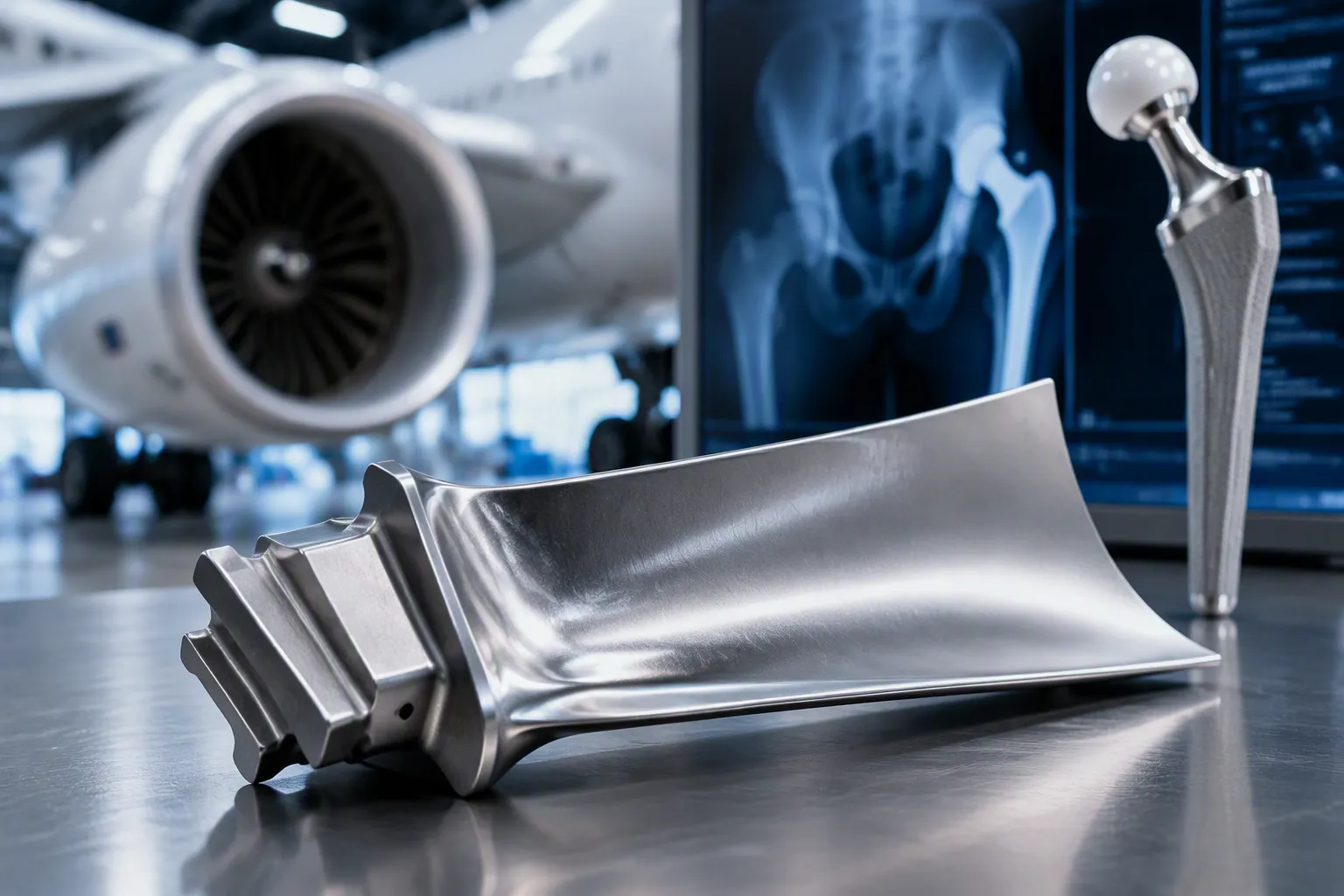
Why is Titanium alloy Grade 23 the preferred choice for aerospace and medical applications? Because it uniquely combines high strength-to-weight ratio, exceptional fracture toughness, outstanding biocompatibility, and superior corrosion resistance. This extra low interstitial (ELI) composition makes it possible. You rely on Titanium alloy Grade 23 (Ti-6Al-4V ELI) for components that must survive extreme cyclic loads in aircraft and remain inert inside the human body. Grade 23’s reliability and performance have made it the material of record for critical parts, setting it apart from Grade 5 and other alloys. SUNXIN provides this superior Titanium alloy to meet your demanding needs.
Key Takeaways
- Titanium Alloy Grade 23 combines high strength, low weight, and excellent biocompatibility, making it ideal for aerospace and medical uses.
- Its Extra Low Interstitial (ELI) composition reduces oxygen and other elements, boosting ductility and fracture toughness without losing strength.
- Grade 23 offers superior fatigue resistance, ensuring components last longer under repeated stress, crucial for aircraft and implants.
- Its elastic modulus closely matches human bone, reducing stress shielding and promoting better implant integration.
- Compared to Grade 5, Grade 23 has 20-30% higher fracture toughness, making it safer for critical applications.
- Grade 23 withstands temperatures up to 400°C and remains tough at cryogenic temperatures, suitable for engines and space fuel tanks.
- In medical implants, Grade 23 promotes osseointegration and resists corrosion, leading to successful hip, knee, and dental replacements.
- Proper machining and heat treatment, like solution treating and aging, optimize Grade 23's properties for demanding uses.
Composition and the ELI Advantage
Chemical Composition of Ti-6Al-4V ELI
Key Elements: Aluminum (5.5-6.5%), Vanadium (3.5-4.5%), Iron (≤0.25%), Oxygen (≤0.13%), Carbon (≤0.08%), Nitrogen (≤0.05%), Hydrogen (≤0.0125%)
You will find that Titanium alloy Grade 23 contains a precise blend of elements that gives it exceptional properties. Aluminum makes up 5.5 to 6.5 percent of the alloy, while vanadium accounts for 3.5 to 4.5 percent. These two elements form the backbone of the material's strength. The remaining elements appear in much smaller quantities, yet each one plays a vital role in the alloy's performance.
The table below shows the complete chemical composition you can expect from this material:
| Element | Content (%) |
|---|---|
| Titanium (Ti) | Balance |
| Aluminum (Al) | 5.5 – 6.5 |
| Vanadium (V) | 3.5 – 4.5 |
| Oxygen (O) | ≤ 0.13 |
| Nitrogen (N) | ≤ 0.05 |
| Carbon (C) | ≤ 0.08 |
| Hydrogen (H) | ≤ 0.0125 |
| Iron (Fe) | ≤ 0.25 |
The alloy follows strict global standards that govern its production. These standards ensure consistency and quality across every batch you receive.
The alloy follows strict global standards, including ASTM F136, ASTM F1295, and ISO 5832-3.
ASTM B348 covers titanium alloy bar and billet for general purposes, defining both Grade 5 and Grade 23. ASTM F136 serves as the implant-grade standard for wrought Ti-6Al-4V ELI used in surgical implant applications. This standard mandates the ELI chemistry you find in Grade 23. ASTM F1472 covers Ti-6Al-4V for surgical implant applications but references the standard Grade 5 composition. For implant applications requiring ASTM F136 compliance, Grade 23 is the mandatory material.
Significance of Extra Low Interstitial (ELI) – Reduced oxygen, nitrogen, and carbon content improves ductility and fracture toughness without sacrificing strength
The term "ELI" stands for Extra Low Interstitial, and it refers to the reduced amounts of oxygen, nitrogen, carbon, and hydrogen in the alloy. You will notice that oxygen stays below 0.13 percent, which is significantly lower than standard titanium alloys. This reduction in interstitial elements creates a remarkable improvement in the material's mechanical behavior.
Lower interstitial content means the metal can deform more before it fractures. You gain improved ductility and fracture toughness without losing any of the strength that makes titanium so valuable. This balance proves essential for components that must withstand repeated stress cycles without developing cracks.
How ELI Enhances Performance
Improved Ductility and Fracture Toughness – Critical for crack resistance in aerospace structures and load-bearing implants
You benefit from the ELI advantage through dramatically improved crack resistance. Aerospace structures face constant vibration and pressure changes during flight. Load-bearing implants inside the human body endure millions of loading cycles over years of use. Both applications demand a material that resists crack formation and propagation.
The reduced oxygen content in Grade 23 allows the metal to absorb more energy before failure. This property translates directly to longer component life and greater safety margins. You can design thinner sections without worrying about premature failure, which leads to weight savings in aircraft and less invasive medical devices.
Reduced Sensitivity to Notch Effects – Allows tighter design margins and longer component life under fatigue
Notch effects occur when stress concentrates around holes, corners, or other geometric discontinuities. These stress concentrations often become the starting point for fatigue cracks. Standard titanium alloys show significant sensitivity to these effects, forcing designers to add extra material as a safety buffer.
Titanium alloy Grade 23 demonstrates reduced sensitivity to notch effects. You can design components with tighter margins, knowing that the material will perform predictably even in the presence of stress concentrators. This characteristic extends fatigue life and reduces the risk of unexpected failure. Engineers appreciate this predictability because it allows them to optimize designs for weight and performance rather than compensating for material limitations.
The ELI composition also improves the material's response to welding and other fabrication processes. You achieve stronger joints and more reliable finished products. Whether you manufacture aircraft components or surgical instruments, the reduced notch sensitivity of Grade 23 gives you confidence in the final product's performance.
Mechanical Properties That Define Reliability
Tensile and Yield Strength
High Strength-to-Weight Ratio – Typical tensile strength ≥ 860 MPa (125,000 psi), yield strength ≥ 790 MPa (115,000 psi), density only 4.43 g/cm³
You will find that Titanium alloy Grade 23 delivers remarkable strength without the weight penalty of other metals. The material achieves a minimum tensile strength of 860 MPa (125,000 psi) and a minimum yield strength of 790 MPa (115,000 psi). These numbers place it among the strongest engineering materials available today.
The true advantage emerges when you compare strength to weight. Grade 23 has a density of only 4.43 g/cm³. Steel offers comparable strength but weighs nearly twice as much. This difference means you can design components that are significantly lighter while maintaining the same structural integrity. Aircraft manufacturers use this property to reduce fuel consumption. Medical device designers use it to create implants that feel natural inside the body.
The table below summarizes the key mechanical properties you can expect from this alloy:
| Property | Value |
|---|---|
| Tensile Strength (min) | 860 MPa (125,000 psi) |
| Yield Strength (min) | 790 MPa (115,000 psi) |
| Density | 4.43 g/cm³ |
| Elongation at Break | 10-15% |
| Reduction of Area | 25-30% |
These values represent the minimum guaranteed performance. Actual test results often exceed these figures, giving you additional safety margin in your designs.
Fatigue Resistance for Cyclic Loading – Superior endurance limit compared to standard Ti-6Al-4V, essential for airframe and orthopedic implants
Fatigue resistance determines how long a component survives under repeated loading. You encounter this type of stress constantly. Aircraft wings flex thousands of times during every flight. Hip implants endure millions of loading cycles as a person walks, runs, and climbs stairs. Materials that cannot withstand cyclic loading will eventually fail, often without warning.
Titanium alloy Grade 23 excels in this critical area. The ELI composition reduces the presence of interstitial elements that can act as crack initiation sites. This cleaner microstructure allows the material to maintain its integrity over millions of loading cycles. You gain a component that performs predictably throughout its service life.
The endurance limit of Grade 23 surpasses that of standard Ti-6Al-4V. This improvement comes directly from the reduced oxygen content. Oxygen atoms create localized stress concentrations within the crystal lattice. Fewer oxygen atoms mean fewer weak points where fatigue cracks can begin. The result is a material that you can trust for safety-critical applications.
Physical and Thermal Characteristics
Poisson's Ratio and Elastic Modulus – Poisson's ratio of 0.342 and modulus of elasticity around 110 GPa, closely matching bone for reduced stress shielding
You might wonder why the elastic modulus matters so much for medical implants. The answer lies in a phenomenon called stress shielding. When a metal implant carries most of the load that should go through the bone, the bone responds by becoming weaker. This happens because bone tissue adapts to the stresses it experiences. If the implant is too stiff, the bone receives less stimulation and begins to resorb.
Titanium alloy Grade 23 has a modulus of elasticity around 110 GPa. This value closely matches the modulus of human cortical bone, which ranges from 10 to 30 GPa depending on the specific bone and loading direction. While the match is not perfect, it comes much closer than other implant materials. Stainless steel and cobalt-chrome alloys have moduli above 200 GPa. These stiffer materials cause more stress shielding and lead to higher rates of implant loosening.
The Poisson's ratio of Grade 23 is 0.342. This value describes how the material deforms laterally when you apply a longitudinal load. A higher Poisson's ratio means the material expands more sideways when compressed. This property affects how implants transfer loads to surrounding bone tissue. The favorable ratio of Grade 23 contributes to better load distribution and more natural mechanical behavior.
Thermal Stability and Conductivity – Maintains mechanical integrity at elevated temperatures (up to 400°C) with low thermal expansion for precision components
Aerospace components face extreme temperature variations during operation. Engine parts heat up to hundreds of degrees. Cryogenic fuel tanks cool down to near absolute zero. You need a material that maintains its properties across this entire range.
Titanium alloy Grade 23 retains its mechanical integrity at temperatures up to 400°C. The strength you rely on at room temperature remains available at elevated temperatures. This thermal stability makes the alloy suitable for compressor blades, engine casings, and other hot-section components. You do not need to worry about sudden loss of strength when temperatures rise during operation.
The thermal expansion coefficient of Grade 23 remains low compared to other metals. This characteristic proves essential for precision components. When you manufacture parts with tight tolerances, you need to know exactly how they will behave under temperature changes. The predictable expansion of Grade 23 allows you to maintain dimensional accuracy even in demanding thermal environments.
Thermal conductivity of the alloy is relatively low at about 6.7 W/m·K. This property creates challenges during machining because heat concentrates at the cutting edge. However, the same low conductivity provides benefits in service. Components retain their shape and properties without conducting excessive heat to surrounding structures. You gain design flexibility that other materials cannot offer.
Comparison with Other Titanium Grades and Materials
You need to understand how materials compare when you choose one for critical applications. Titanium alloy Grade 23 offers clear advantages over standard grades and other implant metals. These differences affect performance, safety, and reliability.
Grade 23 vs. Grade 5 (Ti-6Al-4V) Standard
Lower Interstitial Content Differences
The main difference between Grade 23 and Grade 5 comes down to oxygen content. Grade 23 limits oxygen to 0.13 percent maximum. Grade 5 allows up to 0.20 percent. This small change creates large effects on material behavior.
| Property | Grade 23 (Ti-6Al-4V ELI) | Grade 5 (Ti-6Al-4V) |
|---|---|---|
| Maximum Oxygen Content | 0.13% | 0.20% |
| Fracture Toughness (KIC) | 20-30% higher | Standard |
Improved Fracture Toughness in Grade 23
You gain 20 to 30 percent higher fracture toughness with Grade 23. This improvement comes from fewer interstitial atoms inside the crystal structure. Oxygen atoms create stress concentrations that can start cracks. Less oxygen means fewer crack initiation sites. The material absorbs more energy before failure. Damage-tolerant designs require this level of performance.
Grade 23 vs. Stainless Steel and Cobalt-Chrome
Weight Savings and Modulus of Elasticity
Weight matters in both aerospace and medical applications. Grade 23 weighs about 45 percent less than 316L stainless steel. This weight reduction saves fuel in aircraft. It also creates lighter implants for patients.
The modulus of elasticity also favors Grade 23. The modulus measures how much a material resists bending. Grade 23 has a modulus of 110 GPa. Stainless steel and cobalt-chrome alloys exceed 200 GPa. A lower modulus means the implant flexes more like natural bone. This flexibility reduces stress shielding. Bone stays stronger when it carries a share of the load.
| Property | Grade 23 | 316L Stainless Steel | Cobalt-Chrome |
|---|---|---|---|
| Density | 4.43 g/cm³ | 8.00 g/cm³ | 8.30 g/cm³ |
| Modulus of Elasticity | 110 GPa | 200 GPa | 230 GPa |
Corrosion Resistance in Aggressive Environments
The human body creates a challenging environment for metals. Bodily fluids contain chlorides and other corrosive agents. Surgical stainless steels can suffer from pitting and crevice corrosion in these conditions. Grade 23 resists these forms of corrosion effectively.
The protective oxide layer on titanium remains stable in chloride-rich environments. This stability prevents metal ion release into surrounding tissues. You benefit from fewer adverse reactions and longer implant life. The corrosion resistance of Grade 23 matches or exceeds that of more expensive noble metals.
Fabrication and Heat Treatment Processes
Forging and Machining Considerations
Work Hardening and Tool Wear – Requires sharp tools, low cutting speeds, and high-pressure coolant due to its low thermal conductivity and high strength
You will face unique challenges when machining Titanium alloy Grade 23. The material's low thermal conductivity traps heat at the cutting edge. This heat accelerates tool wear rapidly. You need sharp tools with proper geometry to cut effectively. Carbide inserts with specialized coatings perform best for this alloy.
You must reduce cutting speeds compared to steel machining. Slower speeds prevent excessive heat buildup. High-pressure coolant directed at the cutting zone helps remove heat and clear chips. Without this approach, you risk work hardening the surface. Work hardening makes subsequent cuts more difficult and damages the final part quality.
The alloy's high strength means it resists deformation during cutting. This resistance creates higher cutting forces. Your machine tools must have sufficient rigidity and power. You should use rigid setups and minimal tool overhang to prevent vibration and chatter.
Annealing and Stress Relieving – Typical annealing at 700-785°C to restore ductility after cold working; stress relieving at 480-650°C for complex parts
Cold working reduces the ductility of Titanium alloy Grade 23. You restore this ductility through annealing. The typical annealing range spans 700-785°C. You hold the material at this temperature for a specified time, then cool it slowly. This process softens the material and removes internal stresses.
Complex parts often require stress relieving. You heat these components to 480-650°C. This lower temperature range relieves residual stresses without significantly changing the mechanical properties. Stress relieving proves essential for parts with intricate geometries or those that underwent extensive machining.
You should control the atmosphere during these heat treatments. Oxygen pickup at elevated temperatures can degrade the material's properties. Vacuum furnaces or inert gas environments prevent contamination. You gain consistent results when you follow these guidelines.
Heat Treatment for Optimal Properties
Solution Treating and Aging (STA) – Solution treat at 900-955°C, water quench, then age at 480-595°C to achieve peak strength and fracture toughness
You can achieve peak mechanical properties through solution treating and aging. This process begins with heating the alloy to 900-955°C. You hold this temperature to dissolve the alloying elements into a uniform solid solution. Then you water quench the material rapidly. This quench locks in the high-temperature microstructure.
Aging follows the quench. You heat the material to 480-595°C and hold it there for several hours. This step allows fine precipitates to form within the microstructure. These precipitates strengthen the material significantly.
| Process Step | Temperature Range | Purpose |
|---|---|---|
| Solution Treat | 900-955°C | Dissolve alloying elements |
| Water Quench | Rapid cooling | Lock in microstructure |
| Aging | 480-595°C | Form strengthening precipitates |
Effect on Microstructure and Mechanical Properties – STA produces a fine α+β microstructure, balancing strength, ductility, and fatigue life
The STA process creates a fine α+β microstructure. Alpha phase provides ductility and corrosion resistance. Beta phase contributes strength and toughness. The fine distribution of these phases creates an optimal balance of properties.
You gain higher tensile strength through STA treatment. The material also shows improved fracture toughness compared to annealed conditions. Fatigue life improves because the fine microstructure resists crack initiation. This combination makes STA-treated components ideal for demanding aerospace and medical applications.
You must control the aging parameters precisely. Over-aging reduces strength. Under-aging leaves the material too soft. Proper process control ensures you achieve the specified mechanical properties consistently.
Aerospace Applications

Structural Components in Aircraft
Airframe, Landing Gear, and Fasteners – Used in wing spars, fuselage frames, and landing gear struts where weight and fatigue life are critical
You find Titanium alloy Grade 23 in the most demanding locations on an aircraft. Wing spars carry the bending loads during flight. Fuselage frames maintain the cabin shape under pressure. Landing gear struts absorb the impact of touchdown. Each component must survive thousands of flight cycles without failure.
Weight reduction drives every design decision in aerospace. A lighter aircraft burns less fuel. It also carries more payload. This alloy delivers the strength you need at half the weight of steel. You can design thinner sections without sacrificing safety. The fatigue resistance ensures these components last through the aircraft's design life.
Fasteners represent another critical application. Aircraft use thousands of bolts and rivets. These fasteners experience constant vibration. They also endure fluctuating loads. Grade 23 fasteners maintain their grip strength over decades of service. You avoid the galvanic corrosion issues that plague dissimilar metal joints.
Engine Components and Compressor Blades – Grade 23 can withstand high temperatures (up to 400°C) and high-cycle fatigue in fan blades and disks
Engine environments push materials to their limits. Fan blades spin at thousands of revolutions per minute. Compressor disks experience extreme centrifugal forces. The temperature inside an engine can reach 400°C during operation.
Grade 23 maintains its mechanical properties at these elevated temperatures. You do not lose strength when the engine heats up. The alloy also resists high-cycle fatigue from constant vibration. Each engine revolution creates a complete stress cycle. Fan blades accumulate millions of these cycles during their service life.
You benefit from the damage tolerance of this alloy. Small defects do not grow into catastrophic cracks. The material gives you warning before failure occurs. This behavior makes inspection intervals more predictable. It also makes maintenance more effective.
Spacecraft and Satellite Parts
Lightweight and High Strength for Launch Vehicles – Propellant tanks, pressure vessels, and structural brackets benefit from the high strength-to-weight ratio
Every kilogram you save on a spacecraft translates to more payload. Launch vehicles demand materials with the highest strength-to-weight ratio. This alloy delivers that performance consistently.
Propellant tanks must contain volatile fuels at high pressures. The walls must be thin to save weight. They must also be strong enough to prevent rupture. This alloy provides the perfect balance. You can weld these tanks with confidence. The joints maintain their integrity under stress.
Pressure vessels on spacecraft store gases for life support and propulsion. These vessels must survive launch vibration. They must also endure the vacuum of space. This alloy offers the reliability you need for mission-critical components. Structural brackets connect subsystems to the spacecraft frame. Each bracket carries its load without adding unnecessary mass.
Cryogenic Compatibility – Excellent low-temperature toughness makes Grade 23 suitable for cryogenic fuel tanks (e.g., liquid hydrogen and oxygen)
Many materials become brittle at cryogenic temperatures. Liquid hydrogen boils at -253°C. Liquid oxygen boils at -183°C. Steel can shatter under these conditions. This alloy behaves differently.
The alloy maintains its toughness at extremely low temperatures. You can use it for cryogenic fuel tanks. You do not worry about brittle fracture. The ELI composition contributes to this behavior. Fewer interstitial elements mean fewer stress concentration points. These points can trigger failure.
Cryogenic tanks experience thermal cycling as they fill and empty. Each cycle creates thermal stresses in the material. This alloy withstands these cycles without degradation. You gain a fuel tank system that performs reliably throughout the entire mission.
Medical Applications
Orthopedic Implants
Hip and Knee Replacements – Total hip stems and femoral components where high fatigue strength and biocompatibility prevent loosening
You will find Titanium alloy Grade 23 at the heart of modern joint replacement surgery. Total hip stems and femoral components must endure decades of continuous loading. Every step you take sends forces through these implants. The alloy's high fatigue strength ensures these components survive millions of cycles without cracking.
Biocompatibility plays an equally critical role. Your body's immune system recognizes foreign materials. Grade 23's stable oxide layer prevents adverse reactions. This compatibility allows bone tissue to grow directly onto the implant surface. Strong bone-implant integration prevents loosening over time. You gain a longer-lasting replacement that feels natural.
The elastic modulus of this alloy closely matches human bone. This match reduces stress shielding. Your bone continues to receive mechanical stimulation. It stays strong and healthy around the implant. Patients experience better outcomes with fewer revision surgeries.
Bone Plates and Screws – Fracture fixation devices that must endure cyclic loading without failure
Fracture fixation devices face demanding mechanical requirements. Bone plates and screws hold broken bones together during healing. You rely on these devices to maintain alignment under constant movement. The healing process can take months. During this time, the hardware experiences continuous cyclic loading.
Titanium alloy Grade 23 provides the strength needed for stable fixation. The material resists fatigue failure even in challenging anatomical locations. You can trust these devices to remain intact until healing completes. The corrosion resistance prevents degradation in the body's saline environment.
Surgeons appreciate the material's radiolucency. X-rays pass through titanium more easily than steel. This property allows clear imaging of the healing bone. You gain better monitoring of your recovery progress.
Dental and Surgical Instruments
Dental Implants and Abutments – Osseointegration-friendly surface and corrosion resistance make Grade 23 the standard for dental restorative systems
Dental implants represent one of the most successful applications of this alloy. The material's surface promotes osseointegration. Bone cells attach firmly to the implant surface. This strong bond creates a stable foundation for replacement teeth.
You benefit from the corrosion resistance in the oral environment. Saliva contains chlorides and enzymes that attack metals. Grade 23 resists these aggressive conditions. The implant maintains its integrity for decades. Abutments connect the implant to the visible crown. These components must withstand chewing forces without loosening.
The biocompatibility of this alloy prevents gum inflammation. You avoid the allergic reactions sometimes seen with other metals. Dental restorations using this material achieve high success rates. Patients enjoy natural-looking, functional replacements.
Surgical Forceps and Retractors – Lightweight, non-magnetic, and sterilizable instruments that maintain sharpness and strength over repeated use
Surgical instruments demand precision and durability. Forceps and retractors must perform reliably during delicate procedures. Titanium alloy Grade 23 offers the perfect combination of properties. The lightweight nature reduces hand fatigue during long surgeries. Surgeons maintain steady control throughout the operation.
The non-magnetic property proves essential in modern operating rooms. MRI machines use powerful magnetic fields. Magnetic instruments become dangerous projectiles. Grade 23 instruments remain safe in these environments. You can use them near imaging equipment without concern.
Repeated sterilization cycles would degrade lesser materials. This alloy withstands autoclaving, chemical disinfection, and other methods. The instruments maintain their sharpness and strength. You gain reliable tools that serve you for years. The corrosion resistance prevents pitting and staining. Every instrument maintains its professional appearance.
Titanium alloy Grade 23 delivers an unmatched combination of strength, toughness, biocompatibility, and corrosion resistance. Its ELI composition makes these properties possible. No other material offers this same balance for life-critical components. You can rely on consistent, predictable behavior during fabrication and design. Patients and pilots benefit from its unrivaled reliability. As aerospace and medical technologies advance, this alloy will remain the foundation of material selection for decades to come.
FAQ
What makes Grade 23 different from Grade 5 titanium?
Grade 23 contains less oxygen than Grade 5. The maximum oxygen content drops from 0.20% to 0.13%. This small change improves fracture toughness by 20-30%. You gain better crack resistance without losing strength. That makes Grade 23 ideal for safety-critical components.
Is Titanium Alloy Grade 23 safe for medical implants?
Yes. Grade 23 meets strict implant standards including ASTM F136 and ISO 5832-3. Your body accepts this material without adverse reactions. The stable oxide layer prevents metal ion release. Bone tissue grows directly onto the surface. This creates strong, long-lasting implants.
Can you weld Titanium Alloy Grade 23?
Yes, you can weld this alloy successfully. The ELI composition reduces sensitivity to welding defects. You must control the atmosphere during welding to prevent oxygen contamination. Use inert gas shielding for best results. Proper technique produces strong, reliable joints for aerospace and medical applications.
How does Grade 23 compare to stainless steel for implants?
Grade 23 weighs 45% less than 316L stainless steel. Its elastic modulus of 110 GPa more closely matches bone. This reduces stress shielding and keeps surrounding bone strong. The titanium alloy also resists corrosion better in bodily fluids. Patients experience fewer complications with Grade 23 implants.
What temperatures can Grade 23 withstand?
Grade 23 maintains its mechanical integrity up to 400°C. You can use it for engine components and hot-section parts. The alloy also performs excellently at cryogenic temperatures. Liquid hydrogen and oxygen tanks rely on this property. This wide temperature range makes Grade 23 versatile across many applications.
Is Grade 23 difficult to machine?
Grade 23 requires special techniques due to its low thermal conductivity. You need sharp tools and reduced cutting speeds. High-pressure coolant prevents heat buildup at the cutting edge. The material work-hardens quickly if you use improper parameters. Experienced machinists achieve excellent results with the right equipment.
Where can you source certified Grade 23 material?
You can purchase Grade 23 from specialized titanium suppliers like SUNXIN. These suppliers provide material certification and traceability documentation. You receive mill test reports confirming chemical composition and mechanical properties. Always verify that your supplier meets ASTM F136 or ASTM F1295 standards for your specific application.