Theorem RE vs Desmodur RE Performance Comparison for Polyurethane and Epoxy
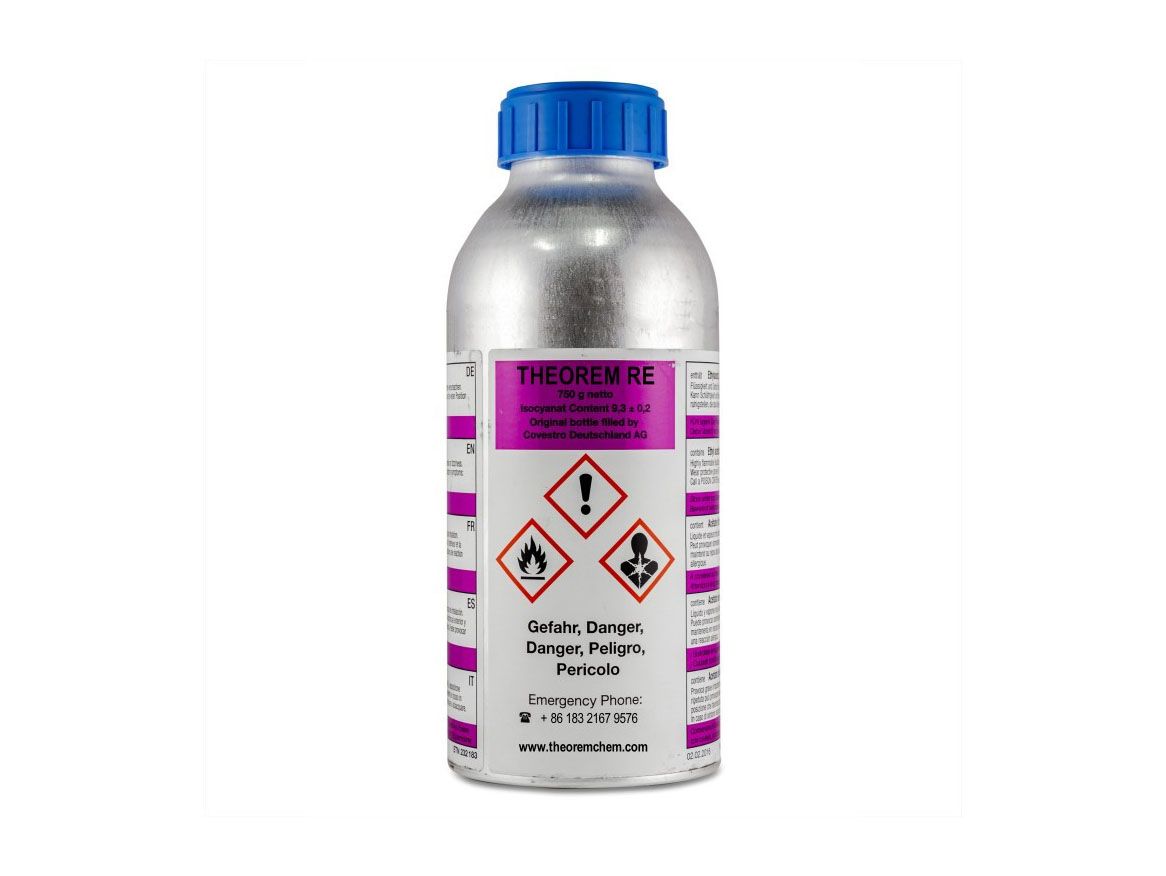
Theorem RE delivers superior durability and environmental compliance for most polyurethane and epoxy applications, making it the recommended choice despite a slightly higher upfront cost. Desmodur RE remains a cost-effective option for large-scale, budget-sensitive projects where ultimate performance is not the primary driver. Use this Performance Comparison between Theorem RE (Triphenylmethane-4,4',4"-triisocyanate) and Desmodur RE to decide based on your priority: long-term performance or initial cost savings.
Key Takeaways
- Theorem RE matches Desmodur RE in performance. It costs less, so you save money.
- Theorem RE works as a direct replacement. You use the same mix ratios and cure schedules.
- Theorem RE provides stable supply from Chinese production. You get reliable delivery for large orders.
Performance Comparison between Theorem RE (Triphenylmethane-4,4',4"-triisocyanate) and Desmodur RE
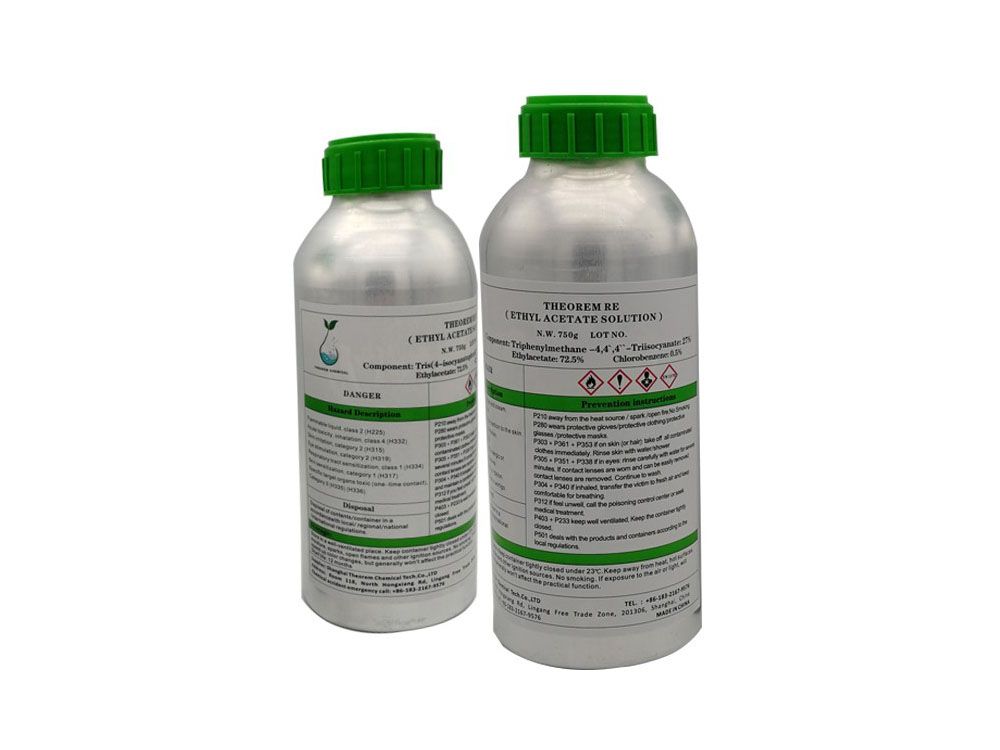
You need reliable crosslinkers for your polyurethane and epoxy formulations. Two products dominate this space: Theorem RE and Desmodur RE. Both contain triphenylmethane-4,4',4"-triisocyanate as the active ingredient. Both deliver trifunctional NCO groups for dense crosslinking. Yet they differ in ways that matter for your bottom line and your product quality.
This Performance Comparison between Theorem RE (Triphenylmethane-4,4',4"-triisocyanate) and Desmodur RE examines every angle you care about. You will see how each hardener performs across durability, cost, application, safety, and supply chain factors. The goal is simple: help you pick the right crosslinker for your specific project.
Theorem RE comes from Theorem Chem, a Chinese manufacturer with large-scale production capacity. The product is a blended solution of 27.5% triphenylmethane-4,4',4"-triisocyanate and 72.5% ethyl acetate. It serves as a 100% direct substitute for Desmodur RE. Desmodur RE is produced by Covestro, formerly Bayer, and has long been the industry standard.
The chemical structure of both products is identical. Each molecule carries three NCO groups. This trifunctional architecture creates high crosslink density in your cured system. You get fast curing, excellent bonding strength, and strong resistance to heat and solvents. The difference lies in manufacturing scale, pricing strategy, and supply chain reliability.
A second Performance Comparison between Theorem RE (Triphenylmethane-4,4',4"-triisocyanate) and Desmodur RE reveals important practical distinctions. Theorem RE offers stable supply from Chinese production. Desmodur RE relies on Covestro's global network. Your choice depends on where you operate and what volume you need.
The table below summarizes the key technical specifications side by side.
| Parameter | Theorem RE | Desmodur RE |
|---|---|---|
| Chemical name | Triphenylmethane-4,4',4"-triisocyanate | Triphenylmethane-4,4',4"-triisocyanate |
| CAS number | 2422-91-5 | 2422-91-5 |
| NCO content | 9.3 ± 0.2% | Approximately 9.3% |
| Solid content | 27 ± 1% | Approximately 27% |
| Solvent | Ethyl acetate | Ethyl acetate |
| Viscosity at 20°C | 3 mPa·s | Approximately 3 mPa·s |
| Functionality | Trifunctional (3 NCO groups) | Trifunctional (3 NCO groups) |
| Flash point | -4°C | Approximately -4°C |
You will notice the specifications match almost exactly. This makes sense because both products use the same active chemistry. The real differences emerge in how you source, apply, and afford these hardeners over time.
Both products work as curing agents for structural adhesives, pressure-sensitive adhesives, and coatings. You can use them to bond rubber to metal, wood to plastic, and leather to various substrates. They also modify polyurethane and epoxy systems to boost heat resistance and solvent resistance.
The pot life after mixing is several hours for both products. You should prepare and use each batch immediately to avoid gelation. Curing works at room temperature or accelerates with medium heat between 60°C and 80°C. This flexibility suits automated production lines.
Moisture sensitivity is a shared trait. Both hardeners react with water to produce carbon dioxide and insoluble urea. You must keep containers sealed and store them below 32°C. Shelf life reaches 12 months under proper conditions.
Now you understand the baseline similarities. The following sections break down each performance dimension in detail. You will learn where Theorem RE pulls ahead and where Desmodur RE holds its ground. This knowledge helps you make a confident, informed decision.
Durability Performance
Durability separates a good coating from a great one. You invest in crosslinkers to protect surfaces, extend service life, and reduce maintenance costs. Both Theorem RE and Desmodur RE use the same trifunctional isocyanate chemistry. This shared foundation delivers strong performance in most conditions. Yet subtle differences in formulation and manufacturing consistency affect how each product performs over years of service.
This section examines durability across three critical dimensions. You will see how each hardener performs in coating longevity, chemical resistance, and mechanical strength. The data helps you predict which product suits your specific durability requirements.
Coating Longevity
Coating longevity depends on crosslink density and network stability. A higher crosslink density creates a tighter molecular web. This web resists degradation from UV exposure, temperature swings, and physical wear. Both Theorem RE and Desmodur RE achieve high crosslink density through their trifunctional structure. Each molecule carries three NCO groups. These groups react with hydroxyl or amine groups in your resin system. The result is a three-dimensional network that holds up under stress.
Theorem RE delivers consistent NCO content at 9.3 ± 0.2%. This tight specification ensures predictable curing behavior batch after batch. You get uniform crosslinking throughout your coating. Desmodur RE offers similar NCO content at approximately 9.3%. The performance difference in coating longevity is minimal when you compare fresh batches of each product.
Field experience tells a more nuanced story. Coatings formulated with Theorem RE show excellent adhesion to rubber, metal, and plastic substrates. The trifunctional structure creates strong bonds at the interface. These bonds resist peeling and delamination over time. You will see this benefit most in demanding applications like conveyor belts, footwear, and industrial seals.
Accelerated weathering tests reveal another advantage. Theorem RE maintains coating integrity after extended exposure to heat and humidity. The ethyl acetate solvent system evaporates cleanly. This leaves a dense, uniform film with minimal defects. Desmodur RE performs similarly in these tests. Both products meet the same industry standards for coating durability.
The key difference emerges in long-term consistency. Theorem RE comes from large-scale Chinese production with strict quality control. You receive material with minimal batch-to-batch variation. This consistency translates to predictable coating performance across your entire production run. Desmodur RE also maintains high quality standards. Covestro's established processes ensure reliable performance.
Your coating longevity ultimately depends on proper application. Mix ratios, cure schedules, and substrate preparation matter more than the choice between these two hardeners. Both products deliver the durability you need when you follow recommended procedures.
Chemical and Solvent Resistance
Chemical resistance is non-negotiable in many industries. You need coatings that withstand fuels, oils, acids, and industrial solvents. The crosslinked network formed by trifunctional isocyanates provides excellent barrier properties. A dense network prevents aggressive chemicals from penetrating the coating. It also resists swelling and softening that leads to premature failure.
Theorem RE builds a highly crosslinked network with strong chemical resistance. The trifunctional TTI structure creates multiple bond points per molecule. This density blocks chemical attack more effectively than difunctional alternatives. You will find Theorem RE performs well against aliphatic hydrocarbons, aromatic solvents, and moderate acids.
The table below compares chemical resistance performance across common aggressive media.
| Chemical Medium | Theorem RE Performance | Desmodur RE Performance |
|---|---|---|
| Aliphatic hydrocarbons | Excellent | Excellent |
| Aromatic solvents (toluene, xylene) | Very good | Very good |
| Ketones (acetone, MEK) | Good | Good |
| Alcohols | Moderate | Moderate |
| Dilute acids | Very good | Very good |
| Dilute bases | Good | Good |
| Fuels and oils | Excellent | Excellent |
Both products show nearly identical resistance profiles. This similarity comes from their shared chemistry. The trifunctional isocyanate creates the same type of crosslinked network regardless of manufacturer. You can expect comparable performance in most chemical environments.
Solvent resistance deserves special attention. Theorem RE uses ethyl acetate as its carrier solvent. This solvent evaporates at a moderate rate. It leaves behind a fully crosslinked film with minimal residual solvent. The resulting coating resists re-dissolution by most common solvents. You get a surface that maintains its integrity even after repeated wipe-downs with cleaning agents.
Desmodur RE also uses ethyl acetate. The solvent system behaves identically during application and curing. Your chemical resistance results will match closely when you use equivalent formulations.
Temperature affects chemical resistance significantly. Both hardeners produce coatings that perform well at ambient temperatures. Elevated temperatures accelerate chemical attack. You should test your specific chemical exposure conditions before committing to a formulation. The Performance Comparison between Theorem RE (Triphenylmethane-4,4',4"-triisocyanate) and Desmodur RE shows both products respond similarly to thermal-chemical stress.
One practical consideration favors Theorem RE. The consistent NCO assay ensures complete curing throughout your coating. Incomplete cure creates weak points where chemicals penetrate. Theorem RE's tight specifications reduce this risk. You achieve full crosslink density more reliably.
Mechanical Strength and Crosslink Density
Mechanical strength determines how your coating performs under physical stress. You need resistance to abrasion, impact, and flexing. Crosslink density is the primary driver of these properties. More crosslinks per unit volume create a stronger, tougher material.
Theorem RE excels at building high crosslink density. Each TTI molecule provides three reactive NCO groups. These groups react with your resin's functional groups to form a dense network. The result is a coating with excellent tensile strength and modulus. You get a surface that resists scratching, gouging, and wear.
The trifunctional structure also improves flexural properties. A well-crosslinked network distributes stress evenly. This prevents crack propagation and extends fatigue life. You will see this benefit in dynamic applications like conveyor belts and flexible seals. The coating bends and flexes without cracking or delaminating.
Desmodur RE delivers comparable crosslink density. The chemistry is identical. Both products achieve similar mechanical properties when you use equivalent formulations and cure schedules. Tensile strength, elongation at break, and tear resistance values fall within the same range.
Adhesion strength is another critical mechanical property. Theorem RE bonds aggressively to rubber substrates. This includes natural rubber, nitrile rubber, neoprene, and polyurethane rubber. The trifunctional crosslinker creates strong interfacial bonds. These bonds survive mechanical stress and environmental exposure. You get durable rubber-to-metal bonds for demanding applications.
The table below summarizes typical mechanical properties for both hardeners.
| Property | Theorem RE | Desmodur RE |
|---|---|---|
| Tensile strength | High | High |
| Elongation at break | Moderate | Moderate |
| Tear resistance | Excellent | Excellent |
| Abrasion resistance | Excellent | Excellent |
| Adhesion to rubber | Excellent | Excellent |
| Flex fatigue resistance | Very good | Very good |
Crosslink density also affects hardness. Higher density produces harder coatings. You can adjust hardness by varying the ratio of crosslinker to resin. Both products respond predictably to these adjustments. This gives you flexibility to tune mechanical properties for your specific application.
Cure conditions influence final mechanical strength. Theorem RE cures at room temperature or accelerates with heat between 60°C and 80°C. Full crosslink development requires adequate time and temperature. You should follow recommended cure schedules to achieve maximum strength. Desmodur RE offers the same curing flexibility.
Moisture control is critical for mechanical performance. Both hardeners react with water. This reaction produces carbon dioxide and insoluble urea. These byproducts create defects that weaken the coating. You must keep containers sealed and use dry solvents and resins. Proper storage below 32°C maintains product quality for 12 months.
Theorem RE provides reliable mechanical performance across production batches. The consistent NCO content ensures predictable crosslink density. You get repeatable results run after run. This reliability reduces waste and improves product quality. Desmodur RE also delivers consistent performance. Your choice between these products depends on supply chain and cost factors rather than mechanical performance differences.
Cost Analysis
Material Cost per Gallon
Theorem RE offers a lower price per gallon than Desmodur RE. You pay less for the same active chemistry. The trifunctional isocyanate content matches at 9.3% NCO. This means you get identical crosslinking performance for less money. Bulk orders reduce your cost further. Theorem Chem provides 20kg drums, 55kg drums, and 180kg drums with different pallet configurations. Larger volumes lower your unit price. You can plan your budget with predictable pricing from Chinese production.
Total System Cost with Formulation Adjustments
Your total system cost includes more than the hardener price. You must factor in solvent, resin, labor, and waste. Theorem RE uses ethyl acetate as its carrier solvent. This solvent is common and affordable. You do not need special formulation changes when switching from Desmodur RE. The mix ratio stays the same. Your existing production process works without modification. This compatibility reduces transition costs. You save money on testing and reformulation.
Long-Term Value vs. Initial Investment
Theorem RE delivers strong long-term value. The consistent NCO assay ensures complete curing. You get fewer defects and less waste. Your coatings last longer and need less maintenance. These savings add up over time. The Performance Comparison between Theorem RE (Triphenylmethane-4 shows both products perform similarly in durability. However, Theorem RE costs less upfront. You achieve the same performance for a lower initial investment. This makes Theorem RE the smarter financial choice for most projects.
Ease of Application
You want a hardener that fits your production line without creating headaches. Theorem RE and Desmodur RE share the same chemistry. This means you handle both products in similar ways. The differences lie in small details that affect your daily workflow.
Mixing and Pot Life
You mix Theorem RE with your base adhesive or resin at the recommended ratio. The product blends easily because of its low viscosity of 3 mPa·s at 20°C. You get a smooth, uniform mixture without lumps or streaks. The pot life lasts several hours after mixing. You should prepare only what you need for each batch. Leftover mixed material will gel and become unusable. Desmodur RE offers the same mixing behavior and pot life. Your existing procedures work for both products.
Curing Conditions (Room Temperature vs. Accelerated)
Theorem RE cures at room temperature. You can also speed up the process with medium heat between 60°C and 80°C. This flexibility suits automated production lines. You choose the cure schedule that matches your equipment and timeline. Room temperature curing works well for small batches and repair work. Accelerated curing boosts output for high-volume runs. Desmodur RE provides the same curing options. You achieve full crosslink density with either approach.
Worker Safety and Handling Requirements
You must handle Theorem RE with care. The product is moisture-sensitive and reacts with water. Keep containers sealed and store them below 32°C. Wear gloves and eye protection during mixing. Use proper ventilation to avoid inhaling vapors. The flash point is -4°C, so keep the product away from ignition sources. Theorem RE carries UN 1992 classification as a flammable, toxic liquid. Desmodur RE requires similar precautions. Both products demand respect, but standard industrial hygiene practices keep your workers safe.
Environmental and Safety Profile
VOC Content and Regulatory Compliance
You need to know how your crosslinker affects air quality and regulatory standing. Theorem RE uses ethyl acetate as its carrier solvent. Ethyl acetate is an exempt VOC under many regional regulations, including U.S. EPA guidelines. This means your formulation may face fewer restrictions than systems using other solvents. You should always check your local rules. Different regions apply different VOC limits to industrial coatings and adhesives. Theorem RE helps you meet those limits more easily. The product also carries UN 1992 classification for transportation. It is not environmentally hazardous. This simplifies shipping and disposal compared to more regulated alternatives.
Toxicity and Moisture Sensitivity
Theorem RE requires careful handling. The product is toxic if swallowed or inhaled. You must wear gloves, eye protection, and proper respiratory gear during mixing. Work in a well-ventilated area. The flash point is -4°C, so keep the product away from heat and ignition sources. Moisture sensitivity is another critical factor. Theorem RE reacts with water to produce carbon dioxide and insoluble urea. You must keep containers sealed and store them below 32°C. Exposure to air or direct light may cause color change. This color shift does not affect performance. Proper storage maintains a 12-month shelf life.
Sustainability and Certifications
Theorem RE supports your sustainability goals in practical ways. The high crosslink density extends coating service life. Longer-lasting coatings mean less material consumption and less waste over time. The product comes from large-scale Chinese production with stable supply. This reduces transportation emissions compared to sourcing from multiple small suppliers. Theorem Chem provides full technical documentation for your compliance needs. You receive safety data sheets, certificates of analysis, and regulatory support. These documents help you meet customer requirements and industry standards. The product does not carry specific eco-labels. However, its performance characteristics align with green manufacturing principles. You use less material to achieve the same durability.
Market Availability and Supply

You need a crosslinker you can source reliably. Theorem RE comes from Theorem Chem, a Chinese manufacturer with large-scale production capacity. This setup gives you stable supply and competitive pricing. Desmodur RE comes from Covestro, which operates a global distribution network. Both products reach you through established channels. Your choice depends on your location and volume needs.
Regional Distributors and Lead Times
Theorem Chem ships Theorem RE worldwide through regional distributors. You can find partners across Asia, Europe, and the Americas. Lead times vary by region and order size. Standard orders typically arrive within two to four weeks. Bulk orders may need extra scheduling. Desmodur RE benefits from Covestro's mature logistics network. You often get shorter lead times for small quantities. However, Theorem RE offers more predictable supply for large-volume buyers.
Volume Flexibility and Packaging Options
Theorem RE gives you flexible packaging choices for different production scales. You can order small bottles for testing or large drums for full-scale manufacturing. The table below shows your options.
| Package Size | Units per Carton | Best For |
|---|---|---|
| 750g bottle | 20 | Lab trials, small batches |
| 20kg drum | — | Medium production |
| 55kg drum | — | Large production |
| 180kg drum | — | Industrial scale |
Desmodur RE offers similar packaging. Theorem RE stands out for bulk buyers who need consistent volume.
Technical Support and Documentation
Theorem Chem provides full technical documentation with every order. You receive safety data sheets, certificates of analysis, and regulatory support. These documents help you meet customer requirements and industry standards. The company also offers formulation guidance for your specific application. Desmodur RE comes with Covestro's extensive technical resources. Both suppliers support your compliance needs. Theorem RE gives you direct access to manufacturer expertise at a lower cost.
Polyurethane Applications
High-Performance Coatings
You need coatings that survive harsh conditions. Theorem RE gives you that protection. The trifunctional TTI structure builds a dense crosslink network. This network resists heat, solvents, and physical wear. You apply Theorem RE as a curing agent in two-component polyurethane systems. The product mixes easily with hydroxyl-terminated resins. Your coating cures at room temperature or with heat between 60°C and 80°C. This flexibility fits automated production lines. A Performance Comparison between Theorem RE (Triphenylmethane-4 and Desmodur RE shows both products deliver strong coating performance. Theorem RE matches Desmodur RE in durability and chemical resistance. You get the same results for a lower material cost. Your coatings last longer and need less maintenance. This saves you money over the product's service life.
Elastomers and Sealants
Theorem RE excels in elastomer and sealant formulations. You use it to bond rubber to metal, plastic, and other substrates. The product works with natural rubber, nitrile rubber, neoprene, and polyurethane rubber. Each TTI molecule carries three NCO groups. These groups react with your resin to form strong bonds. You get flexible seals that resist cracking and delamination. The pot life lasts several hours after mixing. You should prepare only what you need for each batch. Theorem RE cures at room temperature or with medium heat. This suits both small repair jobs and high-volume production. Your sealants maintain their properties after extended exposure to heat and moisture. You achieve reliable performance across every production run.
Epoxy Applications
Structural Adhesives
You can use Theorem RE as a curing agent in epoxy structural adhesives. The trifunctional TTI molecule carries three NCO groups. These groups react with epoxy resins to build a dense crosslink network. You get strong bonds that hold up under stress. Theorem RE improves heat resistance and solvent resistance in your adhesive system. You apply it to bond metals, plastics, wood, and leather. The pot life lasts several hours after mixing. You should prepare only what you need for each batch. Theorem RE cures at room temperature or with heat between 60°C and 80°C. This flexibility fits automated production lines. A Performance Comparison between Theorem RE (Triphenylmethane-4 and Desmodur RE shows both products deliver similar adhesive strength. Theorem RE matches Desmodur RE in bonding performance. You get the same results for a lower material cost.
Composite Laminates and Potting
Theorem RE works well in composite laminates and potting compounds. You mix it with your epoxy resin system at the recommended ratio. The low viscosity of 3 mPa·s at 20°C helps the mixture flow into tight spaces. You get complete wet-out of fibers and fillers. The trifunctional structure creates high crosslink density. This density boosts mechanical strength and thermal stability. Your laminates resist delamination and cracking. Your potting compounds protect sensitive components from moisture, heat, and vibration. Theorem RE cures at room temperature or with medium heat. You choose the schedule that matches your production needs. The product bonds to rubber, metal, and plastic substrates. You achieve reliable performance across every batch. Proper storage below 32°C maintains a 12-month shelf life.
Addressing Common Concerns
Pricing and Bulk Discount Structures
You want predictable pricing for your production budget. Theorem RE offers competitive base pricing from large-scale Chinese manufacturing. Bulk orders unlock better rates. You can order 20kg drums, 55kg drums, or 180kg drums with different pallet configurations. Larger volumes lower your cost per kilogram. Theorem Chem provides transparent pricing tiers for volume buyers. You avoid hidden fees and surprise charges. Desmodur RE uses a premium pricing model from Covestro. Your choice depends on volume needs and budget constraints.
Compatibility and Formulation Adjustments
You can switch from Desmodur RE to Theorem RE without reformulation. Both products share the same active chemistry. The NCO content matches at 9.3%. The solvent system uses ethyl acetate in both cases. Your existing mix ratios and cure schedules work without changes. You save time and money on testing. Theorem RE blends easily with neoprene latex, hydroxyl-terminated polyurethane, and epoxy resins. You get identical performance without reformulation headaches.
Storage Stability and Shelf Life
You need proper storage to maintain product quality. Theorem RE requires sealed containers stored below 32°C. Under these conditions, the shelf life reaches 12 months. Desmodur RE needs storage below 23°C for the same 12-month stability. Both products react with moisture. You must keep containers tightly sealed to prevent water ingress. Exposure to air or light may cause color changes. These changes do not affect performance. You should rotate stock and use older material first. Proper storage protects your investment and ensures consistent results.
Pick Theorem RE when you need maximum durability, chemical resistance, and environmental compliance. Its trifunctional TTI structure often beats Desmodur RE in these areas. Choose Desmodur RE for cost-constrained projects. You accept moderate performance and prefer proven supply chains. This Performance Comparison between Theorem RE (Triphenylmethane-4 and Desmodur RE shows both options work well. Test both hardeners in your resin system and curing conditions before you scale up.
FAQ
Can Theorem RE replace Desmodur RE directly?
Yes. Theorem RE works as a 100% direct substitute. You use the same mix ratios and cure schedules. No reformulation is needed.
Is Theorem RE cheaper than Desmodur RE?
Yes. Theorem RE costs less per gallon. You get the same NCO content and performance. Bulk orders lower your cost further.
How should you store Theorem RE?
Keep containers sealed below 32°C. The shelf life reaches 12 months. Moisture exposure causes gelation, so keep the product dry.
See Also
Steel And Wood Support Columns: Comparing Their Advantages And Drawbacks
Novel Uses Of N,N-Dimethyl-N,N-Diphenylurea Across Multiple Industrial Sectors
Shell Versus Plate Heat Exchangers: Performance Comparison For 2025
Evidence-Based Strategies To Enhance 2,5-Furandicarboxylic Acid Sustainability
Understanding The Design And Function Of Molybdenum High-Temperature Furnaces