The Siomai Machine Secret You Need to Know
You see shiny new kitchen gadgets everywhere, and it is tempting to buy them. The home appliance market is growing fast, with sales projected to hit over $675 billion by 2030. You might think a siomai machine is your next great purchase.
Here's the secret: For most home cooks, the time you save forming dumplings is often lost during setup, cleaning, and troubleshooting.
This makes it less practical than hand-wrapping for small batches. The machine is really only useful for small businesses or if you need to make huge, frequent batches due to dexterity issues.
Cost vs. Benefit: A Financial Breakdown
So, you're picturing dozens of perfect dumplings lining your steamer. The dream is powerful, but let's talk numbers. A kitchen gadget's true value comes down to what you pay versus what you get. When you look closely at a siomai machine, the math often doesn't add up for home use.
The Upfront Investment
First, let's address the price tag. These aren't your average countertop appliances. You're looking at a serious investment, often costing more than a high-end refrigerator or oven.
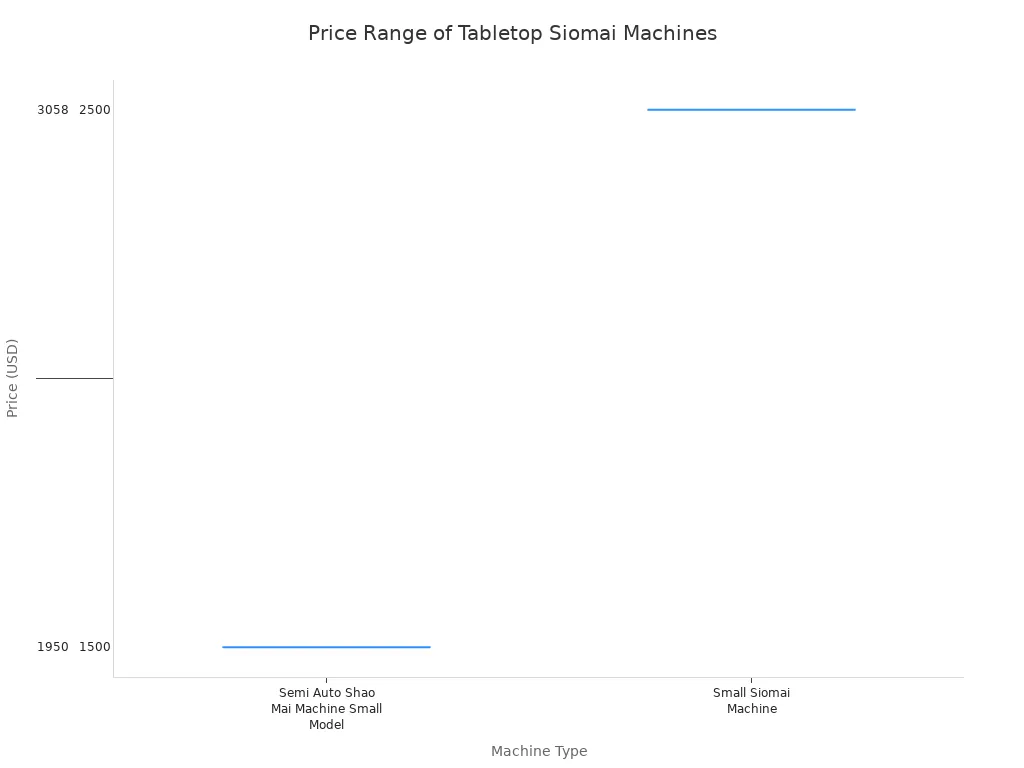
Take a look at the typical price range for these machines. You'll notice they are priced for commercial or semi-commercial use, not for the occasional weekend cook.
| Product Type | Price Range |
|---|---|
| Semi Auto Shao Mai Machine Small Model | $1,950-3,058 |
| Small Siomai Machine | $1,500-2,500 |
| Siumai Dumpling Table Top Machine | $1,779-1,929 |
| Large Capacity / Portable Machine | $900-1,900 |
| Table Model Semi-automatic Maker | $3,450-3,550 |
The initial price is just the beginning. Most of these machines ship from overseas suppliers. This means you have to factor in extra costs that can quickly inflate the final price. These can include:
- Negotiable shipping fees that are not fixed.
- Merchandise processing fees.
- Harbor maintenance fees.
- Federal excise taxes.
Even worse, some goods are subject to Antidumping and Countervailing Duties (AD/CVD), which can add over 200% of the item's value to your bill. You would need to consult a customs broker just to get a clear final price. On top of all that, you typically only get a standard one-year warranty. Regular maintenance is essential to protect your multi-thousand-dollar purchase from breaking down.
Is It Really Faster at Home?
Okay, so it's expensive. But it saves you tons of time, right? This is the biggest misconception. On paper, the numbers are impressive. A fully automatic machine like the ANKO HSM-600 can churn out 6,000 pieces per hour, or 100 per minute. But you are not running a factory.
A more realistic semi-automatic model still requires 2-3 people and produces about 13-17 siomai per minute. An experienced person can hand-wrap about 5-8 siomai per minute. The machine seems faster, but this doesn't account for the total time investment.
The Real-Time Sink ⏱️ The time you spend making siomai is only one part of the process. You must also account for setup, troubleshooting, and the dreaded cleanup.
Think about the entire workflow for making a batch of 60 siomai at home:
- Setup (15-25 minutes): You have to haul the heavy machine out of storage, assemble the parts, and calibrate the settings for your specific filling and wrapper thickness.
- Production (4-5 minutes): The machine forms the siomai. This is the only part that is faster than doing it by hand.
- Cleanup (20-30 minutes): This is the real chore. You must carefully disassemble every part that touched the filling—hoppers, molds, plungers. You need to scrub them all to prevent food residue from building up, which can cause jams and hygiene issues.
Your total time is nearly an hour. In that same time, you could have comfortably hand-wrapped all 60 pieces, enjoyed the process, and finished cleaning a few simple bowls and spoons. The machine only becomes a time-saver when you need to make hundreds, or even thousands, of pieces in one go.
Performance: Machine vs. Hand-Wrapped
Beyond cost and time, you have to ask a simple question: does the siomai even taste better? The final product is what matters most. Here’s how a machine-made dumpling stacks up against a classic, hand-wrapped one.
Consistency and Appearance
A siomai machine delivers one thing flawlessly: uniformity. Every single piece will be an exact copy of the last. They will have the same size, same shape, and same weight. If you want your steamer basket to look like a perfectly organized army of dumplings, the machine wins.
However, this perfection can also feel a bit sterile. The dumplings can lose their character and look like they came from a factory assembly line, not your kitchen. Your hand-wrapped siomai, on the other hand, has a rustic charm. Each little fold and imperfection tells a story. It shows the care you put into making them. You get personality, not just precision.
Taste and Texture
This is where the machine really falls short. The taste and texture of the filling are crucial, and the aggressive mechanical process can damage it.
The Texture Trap 🤏 The powerful mixing and pressing inside the machine can overwork the meat. This process can damage the protein structures in the filling.
Scientific studies on meat batters show that intense mechanical processing can cause proteins to clump together and degrade. What does this mean for your siomai? The filling can become dense, rubbery, and dry. The machine essentially squeezes the life out of the ingredients.
When you mix by hand, you gently combine the ingredients. You can feel the texture and stop before it gets overworked. This light touch keeps the filling juicy and tender. You preserve the distinct textures of the meat, shrimp, and vegetables, creating a much more enjoyable bite.
The Practicality Factor for Home Kitchens
Let's move past performance and talk about daily life. A gadget is only useful if it fits into your kitchen and your routine. This is where the dream of an automated dumpling maker often crashes into the hard reality of limited space and effort.
The Overlooked Cleaning Burden
You just finished making a batch of siomai. If you did it by hand, you have a bowl and a spoon to wash. The cleanup takes two minutes. If you used a machine, your work has just begun.
The Post-Cooking Chore 🧼 Cleaning a siomai machine is a project, not a simple task. You have to take it apart piece by piece. Every hopper, tube, and mold that touched raw meat needs to be meticulously scrubbed.
Manufacturers often highlight that their machines are designed for easy dismantling. They use food-grade stainless steel and certified plastics to ensure hygiene. While that's good, it doesn't eliminate the work. You still have to handle numerous small, intricate parts. You must ensure no tiny bits of filling are left behind, as dried residue can cause jams and bacterial growth. It’s a 20- to 30-minute job that feels far more tedious than wrapping a few dozen dumplings.
Storage and Kitchen Footprint
Okay, so cleaning is a pain. Where do you even put this thing when you're done? Your countertop is probably already home to a coffee maker, a toaster, and a microwave. A commercial-style appliance won't just slide into a spare corner.
These machines are not just big; they are incredibly heavy. Take a look at the typical specs for tabletop models.
| Metric | Typical Range |
|---|---|
| Weight | 25kg - 92kg (55 - 203 lbs) |
| Dimensions (LWH) | 410x365x550mm to 680x400x850mm |
You are looking at an appliance that can weigh more than a 10-year-old child. One model requires counter space of 750mm by 400mm just for operation. That’s a huge chunk of your precious prep area.
Now, think about storage. Common solutions for bulky appliances include:
- Deep drawers
- Dedicated appliance cabinets
- Roll-out shelves
- A kitchen pantry
These are great for a stand mixer or a blender. They are not designed for a 92kg (203 lb) machine. You can't safely place it on a roll-out shelf, and lifting it out of a deep drawer is a serious risk of injury. Unless you have a dedicated spot on a reinforced steel cart in your garage, storing this appliance is a logistical nightmare.
The Siomai Machine Learning Curve
You might think you just plug it in and watch the magic happen. The reality is that operating a siomai machine requires you to become a part-time mechanic. It’s not a simple appliance, and there’s a significant learning curve before you get a single decent dumpling.
Getting the Machine to Work
Your first challenge is getting the conditions just right. The machine is extremely sensitive to the ingredients you use. Your filling needs to have a perfect, well-mixed texture. The temperature and humidity in your kitchen can also affect the consistency of both the dough and the filling, which can stop the machine from working correctly.
Before you even start, you have to make sure the machine is perfectly level. You also need to inspect all the plumbing connections for the filling. If any air gets into the lines, it can throw off the entire process, even if you don't see any leaks. It’s a delicate balancing act from the very beginning.
Common Jams and Errors
Once you get it running, you have to watch it constantly for problems. You can't just turn it on and walk away. Jams and errors are common, and they can bring your production to a halt.
Common Headaches You'll Face 🤕
- Blockages: The hopper or dough feeder gets clogged, forcing you to stop everything and gently clear the obstruction.
- Uneven Filling: The machine dispenses inconsistent amounts of filling. You’ll have to stop and recalibrate the settings, clean the nozzles, or check for worn-out seals.
- Sealing Problems: The siomai won't seal correctly. This often means your wrapper dough is too dry or too wet, and you need to adjust the pressure settings.
Fixing these issues isn't always straightforward. You might have to adjust individual fill times, check for lost tension in tiny springs, or make sure the back pressure is correct. You spend more time troubleshooting than you do enjoying your finished product.
So, is a siomai machine right for your kitchen? For most people, the answer is no. The high cost, difficult cleaning, and large size make it impractical for occasional use.
The machine only makes sense if you run a small food business. If you have dexterity issues, many simpler tools can help without the huge investment.
- The Vidalia Chop Wizard makes chopping easy.
- OXO products offer ergonomic, easy-to-grip handles.
- An Alaskan Ulu Knife allows for one-handed cutting.
Stick to hand-wrapping. You will get a better taste and a more enjoyable experience at home.
FAQ
What if I find a cheap machine online?
You should be careful with low-priced listings. They often have high, hidden shipping fees and import taxes. You might also get a machine with no warranty or customer support. The final cost is usually much higher than the listed price.
Are there any smaller, home-friendly models?
Unfortunately, no. Even the "tabletop" models are very heavy and bulky. They weigh between 55 and 203 pounds and take up significant counter space. These machines are designed for commercial kitchens, not your home.
Is it worth it for my small home business?
Yes, this is the one time it might make sense. If you sell siomai and need to produce hundreds of pieces consistently every week, a machine can save you labor. For smaller batches, hand-wrapping is still more practical.
What tools can help me make siomai faster without a machine? 🥟
You can speed up your prep time with simple gadgets. A food processor or a slap-chop tool makes dicing vegetables and meat much faster. For forming, a simple dumpling press can help you get a consistent shape.
Pro Tip: An Alaskan Ulu knife is great for one-handed chopping if you have dexterity challenges. It's safe, efficient, and easy to clean.
See Also
Top Ampoule Filling Line Manufacturers: A Comprehensive Industry Comparison
Boosting Pharma Efficiency: Modern Capsule Decapsulation Machine Innovations Explained
Finding Quality X-Ray Inspection Machines: Your China Sourcing Guide
Essential Capsule Checkweighers for Buyers to Evaluate in the Coming Year
Revolutionary Folder Gluer Features Shaping 2025 Carton Production Lines