Tablet Sampling Machines Explained: Your Ultimate Lab Selection Guide
You face many choices when selecting a Tablet Sampling Machine for your lab. The market for these machines keeps growing, as shown below:
| Year | Market Size (USD Billion) | CAGR (%) |
|---|---|---|
| 2022 | 0.12 | N/A |
| 2030 | 0.20 | 7.8 |
You should look for proven supplier reputation, a wide product range, and strong technical support. Many labs use Pharmaceutical Capsule Sampling and Capsule Sampling Checkweigher systems. A Capsule Sampling Machine also helps meet quality and compliance needs.
| Criteria | Description |
|---|---|
| Reputation and Experience | Choose suppliers with a proven track record and extensive experience in the industry. |
| Product Range | Ensure the supplier offers a variety of machines to meet different production requirements. |
| Quality and Compliance | Verify that the machines comply with industry standards and regulations, ensuring high-quality and safe tablet production. |
| Technical Support and Service | Opt for suppliers that provide excellent technical support, training, and after-sales service. |
| Customization | Look for suppliers that offer customization options to tailor the machines to specific production needs. |
Key Takeaways
- Choose a Tablet Sampling Machine based on your lab's size and production needs. Match the machine's capacity and speed to avoid bottlenecks.
- Look for suppliers with a strong reputation and excellent technical support. Reliable suppliers help ensure smooth operations and quick problem resolution.
- Regular maintenance and cleaning of your machine are crucial. This keeps your lab safe and ensures accurate results.
- Ensure the machine complies with industry standards like FDA and GMP. Compliance protects your lab and helps you pass audits.
- Consider future growth when selecting a machine. Choose one that can adapt to increased production demands to avoid costly replacements.
Tablet Sampling Machine: Why It’s Essential for Your Lab
Quality Assurance and Efficiency
You want every tablet in your batch to meet strict quality standards. A Tablet Sampling Machine helps you check tablets quickly and accurately. You can collect samples from different points in the production process. This lets you spot problems early and fix them before they affect the whole batch.
Many labs use these machines to save time. You do not need to pick tablets by hand. The machine does the work for you. You can test more tablets in less time. This means you get results faster and keep your lab running smoothly.
Tip: Regular sampling helps you catch defects before they reach the market.
You can also use a table to track your sampling results. This makes it easy to see trends and spot issues.
| Sample Time | Number of Tablets | Defects Found |
|---|---|---|
| 9:00 AM | 20 | 0 |
| 12:00 PM | 20 | 1 |
| 3:00 PM | 20 | 0 |
Compliance and Data Integrity
You must follow strict rules in your lab. These rules come from groups like the FDA and GMP. A Tablet Sampling Machine helps you meet these rules. The machine records each sample and keeps the data safe. You can show inspectors that you follow the right steps.
You need good records to prove your lab’s work. The machine stores data in a way that you can trust. You do not have to worry about lost or changed records. This protects your lab and helps you pass audits.
Note: Always check that your machine meets the latest compliance standards.
Tablet Sampling Machine Types and Their Applications

When you choose a Tablet Sampling Machine, you need to know the main types and how they fit your lab’s needs. Each type works best in different settings. Here is a quick overview:
| Type of Tablet Counter | Description | Application Context |
|---|---|---|
| Fully Automatic Tablet Counter | Advanced machine for large-scale industries, self-sufficient in operations, fast performance. | Ideal for high production environments. |
| Semi-Automatic Tablet Counter | Compact and precise, requires some manual input, suitable for medium-sized operations. | Preferred by medium-sized food factories or pharmacies. |
| Manual Tablet Counter | Simplest design, slow process, requires manual counting. | Suitable for low production areas like home businesses. |
Manual Tablet Sampling Machines
Manual machines give you full control over the sampling process. You count and collect tablets by hand. These machines have a simple design and do not need electricity. You can use them in small labs or home businesses where you do not need to sample many tablets. Manual machines work best when you want to keep costs low and do not need high speed.
Tip: Manual machines help you learn the basics of tablet sampling before moving to more advanced options.
Semi-Automatic Tablet Sampling Machines
Semi-automatic machines offer a balance between manual work and automation. You load the tablets and start the process, but the machine helps with counting and sorting. These machines fit well in medium-sized labs or pharmacies. They give you better speed and accuracy than manual models. You still need to check the results, but you save time and effort.
| Feature | Semi-Automatic | Fully Automatic |
|---|---|---|
| Production Rate | Lower throughput | Higher throughput |
| Accuracy | Less accurate | Nearly 100% accurate |
You can see that semi-automatic machines have lower throughput and accuracy than fully automatic models. Still, they work well if you do not need to process large batches.
Fully Automatic Tablet Sampling Machines
Fully automatic machines handle the whole sampling process for you. You set the program, and the machine does the rest. These machines work best in large labs or factories with high production needs. They offer fast performance and nearly perfect accuracy. You can trust them to keep up with strict quality standards.
Note: Fully automatic machines help you meet high demand and strict rules with less manual work.
Specialized Tablet Sampling Machines
You may need a machine that does more than basic sampling. Specialized tablet sampling machines help you solve unique lab challenges. These machines work with special tablet shapes, fragile coatings, or hazardous materials. You can use them in research labs, pharmaceutical development, or quality control for advanced products.
Some specialized machines offer features that standard models do not. You can find machines with gentle handling for soft tablets. Others have dust control systems for powders that create messes. Some models work with very small tablets or odd shapes. You can also choose machines that sample tablets in blister packs without damaging the packaging.
Tip: Always match the machine’s features to your lab’s specific needs. This helps you avoid problems and get accurate results.
Here are some examples of specialized tablet sampling machines:
- Machines for effervescent tablets that prevent moisture exposure.
- Models with anti-static systems for tablets that attract dust.
- Equipment designed for high-potency drugs with extra safety features.
- Machines that handle multi-layer or coated tablets without causing damage.
| Machine Type | Unique Feature | Best Use Case |
|---|---|---|
| Moisture-Controlled | Prevents water damage | Effervescent tablets |
| Anti-Static | Reduces dust attraction | Powdery or sticky tablets |
| High-Potency Safe | Extra containment | Hazardous drug sampling |
| Multi-Layer Compatible | Gentle handling | Coated or layered tablets |
You should talk to suppliers about your lab’s requirements. Ask for demonstrations or sample tests. This helps you see how the specialized machine works with your tablets. You can make better decisions and avoid costly mistakes.
A specialized Tablet Sampling Machine gives you more control over your testing process. You can protect your products and meet strict standards. Your lab stays efficient and safe.
Tablet Sampling Machine Selection Based on Lab Requirements
Small-Scale vs. High-Throughput Labs
You need to match your Tablet Sampling Machine to your lab’s size and workload. Small labs often focus on basic testing and routine checks. Large labs handle many samples and need fast, accurate results. Here are some options for different lab sizes:
- Manual Dissolution Testers work well in small labs. You can use them for simple tests. They cost less and do not need much training.
- Offline Sampling Testers give you a balance. You get some automation without spending too much. These testers fit quality control labs that want better speed and accuracy.
- Online Sampling Testers suit high-throughput labs. You get maximum efficiency and top accuracy. These machines help you process many samples quickly and keep your data safe.
Tip: Always check your lab’s sample volume before choosing a machine. You save money and avoid buying equipment that does not fit your needs.
| Lab Type | Best Machine Type | Key Benefit |
|---|---|---|
| Small-Scale | Manual Dissolution Tester | Low cost, easy to use |
| Medium-Scale | Offline Sampling Tester | Balanced automation |
| High-Throughput | Online Sampling Tester | Fast, accurate, efficient |
Research, Quality Control, and Production Needs
You must think about your lab’s main goal when picking a Tablet Sampling Machine. Research labs want new methods and advanced technology. You may use machine learning or in-line monitoring to improve your results. These tools help you find better ways to test tablets and boost product quality.
Quality control labs focus on strict rules. You need machines that follow regulations and catch defects early. In-line inspection systems help you spot problems before they reach customers. These systems keep your lab safe and your products reliable.
Production labs want to save time and cut costs. You use process analytical technology tools like Raman spectroscopy and near-infrared (NIR) spectroscopy. These tools let you watch key steps in real time. You can fix issues fast and reduce waste.
Note: Always match your machine’s features to your lab’s main task. You get better results and avoid costly mistakes.
| Lab Environment | Main Focus | Recommended Features |
|---|---|---|
| Research | Innovation, efficiency | In-line monitoring, machine learning |
| Quality Control | Compliance, defect prevention | Advanced inspection systems |
| Production | Cost, waste reduction | Real-time monitoring, PAT tools |
Tablet Sampling Machine Features and Components to Evaluate
Sampling Capacity and Throughput
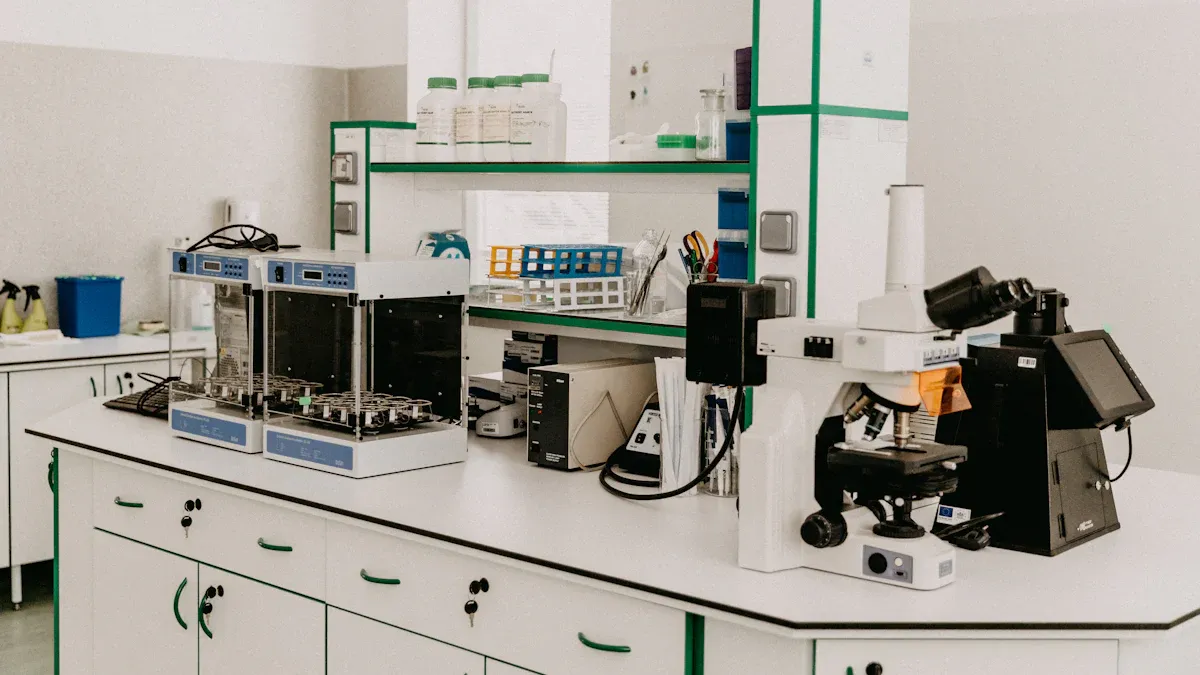
You need to check how many tablets your machine can sample in one cycle. Sampling capacity tells you the maximum number of tablets the machine handles at once. Throughput shows how fast the machine works over time. If your lab tests large batches, you want a machine with high capacity and fast throughput. This helps you finish work quickly and keep up with production.
Some machines sample only a few tablets at a time. Others process hundreds in one hour. You should match the machine’s speed to your lab’s workload. If you choose a machine that is too slow, you may fall behind. If you pick one that is too fast for your needs, you waste money.
Tip: Always ask for sample test runs before you buy. This helps you see if the machine meets your daily needs.
Automation and User Interface
Automation makes your job easier. You can set up the Tablet Sampling Machine to run tests with little effort. Some machines let you program different sampling routines. You press a button, and the machine does the rest. This saves you time and reduces mistakes.
The user interface is the part you use to control the machine. Good machines have clear screens and simple controls. You want menus that are easy to read and buttons that are easy to press. Some machines use touchscreens. Others have knobs or switches. A good interface helps you train new staff quickly.
You should look for machines with safety alerts and step-by-step guides. These features help you avoid errors and keep your lab safe. If the interface is confusing, you may make mistakes or waste time.
Note: Choose a machine with a user interface that matches your team’s skill level.
Cleanability and Maintenance
Cleanability keeps your lab safe and your results accurate. You need to clean the Tablet Sampling Machine often to remove dust, powder, and residue. Maintenance helps your machine last longer and work better.
You should check if you can remove all product contact parts easily. This makes cleaning faster and more thorough. You also want to remove the press tooling without special tools. Cleaning the press and related peripherals is important. After cleaning, you install new press tools and clean product contact parts.
Here is a table that shows what you need to consider for cleaning and maintenance:
| Feature | Description |
|---|---|
| Cleaning Agent | The type of cleaning agent used in the process. |
| Concentration | The concentration level of the cleaning agent. |
| Temperature | The temperature at which cleaning occurs. |
| Time | The duration of the cleaning process. |
| Cleaning Method | The specific method employed for cleaning. |
| Water Quality | The quality of water used in the cleaning process. |
| Environmental Factors | External factors that may affect cleaning. |
You should also pay attention to these steps:
- Remove all product contact parts.
- Remove the press tooling.
- Clean the press and related peripherals.
- Install new press tools and clean product contact parts.
If you follow these steps, you keep your machine in good shape. You also protect your lab from contamination.
Tip: Regular cleaning and maintenance help you avoid breakdowns and keep your results reliable.
Material and Tablet Compatibility
You need to check if your Tablet Sampling Machine works with the tablets you use in your lab. Different machines handle different tablet sizes, shapes, and materials. Some tablets have coatings that protect them from moisture or light. Others have special layers or are made with fragile ingredients. If your machine does not match your tablet type, you may damage the tablets or get wrong results.
You should look at the machine’s specifications. Most machines list the tablet diameter, thickness, and hardness they can handle. Some machines work with round tablets only. Others can sample oval, square, or custom shapes. You must also think about the tablet’s material. Hard tablets need strong sampling tools. Soft or coated tablets need gentle handling.
Tip: Always test your tablets with the machine before you buy. This helps you avoid problems and keeps your samples safe.
Here are some things to check for compatibility:
- Tablet size range (diameter and thickness)
- Tablet shape (round, oval, square, custom)
- Tablet hardness or fragility
- Coating type (film, sugar, enteric)
- Material sensitivity (moisture, light, static)
If you use many types of tablets, choose a machine with adjustable settings. Some machines let you change the sampling force or speed. This helps you protect fragile tablets and get accurate samples. You should ask the supplier for a demo with your tablet types. This makes sure the machine fits your needs.
Data Management and Connectivity
You need to keep your lab data safe and easy to access. Modern Tablet Sampling Machines offer many ways to manage and share your data. You can connect your machine to other devices and systems. This helps you track samples, store results, and share information with your team.
Many machines use open API technology. This lets you link your Tablet Sampling Machine with lab computers, printers, or other equipment. You can move data between systems without trouble. Some machines use cloud storage. You can save your sample data online and access it from anywhere. This helps you work with large teams or labs in different places.
You may use point-of-care devices. These tools send sample results straight to patient records or lab reports. You get real-time updates and faster decisions. Centralized data management gives you a full view of all your samples. You can spot trends, find problems, and make better choices.
Mobile health (mHealth) features let you collect and share data using phones or tablets. You can send results to doctors or lab managers quickly. This improves communication and helps you respond faster.
Here is a table that shows common data management and connectivity options:
| Data Management and Connectivity Options | Description |
|---|---|
| Open API for interoperability | Connects with other devices and systems for easy data exchange. |
| Cloud for flexible data storage | Stores data online for access from multiple locations. |
| Point-of-Care devices | Sends results directly to patient records or reports. |
| Centralized data management | Combines all sample data for better tracking and analysis. |
| Mobile health (mHealth) initiatives | Uses mobile devices for fast data sharing and communication. |
Note: Choose a machine with data options that match your lab’s workflow. Good data management helps you pass audits and improve your lab’s performance.
Tablet Sampling Machine Compliance and Quality Standards
Regulatory Requirements (GMP, FDA)
You must follow strict rules when you use a Tablet Sampling Machine in your lab. These rules help you keep your products safe and high in quality. The FDA and GMP set standards for labs and factories that make tablets. You need to check that your machine meets these standards before you start using it.
Here is a table that shows the main requirements:
| Regulatory Requirement | Description |
|---|---|
| Sanitation and hygiene protocols | Measures to prevent contamination during production. |
| Controlled environments | Air filtration and cleanroom procedures to protect product integrity. |
| Accurate documentation | Records every step in the production process. |
| Equipment validation | Confirms equipment produces consistent results. |
| Quality control testing | Tests raw materials, in-process components, and finished products. |
| Personnel training | Makes sure workers know the right procedures. |
| Traceability systems | Tracks and recalls products if problems happen. |
| FDA oversight | The FDA enforces GMP standards for pharmaceuticals and devices. |
You need to check each requirement before you buy or use a machine. This helps you avoid problems during audits and keeps your lab running smoothly.
Tip: Always ask your supplier for proof of compliance with GMP and FDA standards.
Documentation and Traceability
You must keep good records when you use a Tablet Sampling Machine. These records help you show that you follow the rules. You need to track every sample and every batch. This makes it easy to find problems and fix them fast.
- You can use audit trails, user permission settings, and data export functions to keep your records safe and easy to find.
- You get forward and backward traceability by collecting data about product components, raw materials, and third-party parts.
- You need strong batch documentation to meet regulations, improve your process, and make sure your products are high quality.
You should set up your machine to collect and store data automatically. This helps you pass audits and keeps your lab safe. You can find problems early and make changes before they affect your products.
Note: Good documentation and traceability protect your lab and your customers.
Tablet Sampling Machine Supplier Evaluation and Support
Supplier Reputation and Reliability
You want to work with a supplier you can trust. A reliable supplier helps your lab run smoothly and keeps your equipment working well. When you choose a supplier for your Tablet Sampling Machine, look for these important qualities:
- Quality of products and services
- Cost-effectiveness and competitive pricing
- Delivery reliability and timeliness
- Customer service and support
- Risk management practices
- Supplier's expertise and experience
- Quality-control systems and certifications
- Key performance indicators (KPIs) for reliability
A supplier with strong experience and good customer service can solve problems quickly. You should check if the supplier has certifications and uses quality-control systems. These signs show that the supplier cares about your lab’s success.
Tip: Ask other labs about their experiences with different suppliers. Good reviews often mean you will get better support.
After-Sales Service and Training
You need more than just a machine. You need help after you buy it. Good suppliers offer after-sales service and training. This support helps you use your Tablet Sampling Machine the right way. You can call for help if something breaks or if you have questions.
Training helps your team learn how to use the machine safely and correctly. Some suppliers send experts to your lab. Others offer online guides or videos. You should ask about the kind of training and support you will get before you buy.
Note: Strong after-sales service saves you time and money. It also helps you avoid mistakes.
Warranty and Spare Parts
A warranty protects you if your machine stops working. Leading suppliers offer clear warranty periods and easy access to spare parts. You should check the warranty before you buy. Look at how long it lasts and what it covers.
Here is a table that shows what you can expect from a top supplier:
| Supplier | Warranty Period | Spare Parts Availability |
|---|---|---|
| Tangent | 1 year | Extended Labor and Parts Service contracts available for 2nd and 3rd year |
You want a supplier who can send spare parts quickly. This keeps your lab running and avoids long delays. Some suppliers offer extra service contracts for more years of protection.
Tip: Always ask about spare parts and warranty details before you make your final choice.
Tablet Sampling Machine Practical Considerations
Space and Installation Needs
You need to think about where you will put your Tablet Sampling Machine. Measure your lab space before you buy. Some machines are small and fit on a bench. Others need a whole corner or special room. Check the size and weight of the machine. Make sure you have enough room for people to move around it. You may need extra space for cleaning or maintenance.
Ask the supplier about installation steps. Some machines need special power outlets or ventilation. Others work with standard lab setups. You should plan for easy access to the machine. This helps you keep it clean and fix problems quickly.
Tip: Draw a simple floor plan to see how the machine fits in your lab.
| Machine Size | Space Needed | Installation Type |
|---|---|---|
| Small (bench-top) | Minimal | Plug-and-play |
| Medium | Moderate | May need adjustments |
| Large (floor) | Significant | Professional setup |
Budget and Total Cost of Ownership
You must look beyond the price tag when you choose a Tablet Sampling Machine. The cost includes more than just buying the machine. Think about maintenance, spare parts, and training. Some machines use special cleaning agents or need regular service. These costs add up over time.
Check if the machine uses a lot of power or needs expensive supplies. Ask about warranty and support. A longer warranty can save you money if something breaks. Compare different models and suppliers. Look for hidden costs like shipping or installation fees.
Note: A lower price may mean higher costs later. Always ask for a full cost breakdown.
Ease of Use and Training
You want a Tablet Sampling Machine that is easy to use. Simple controls help everyone in your lab work with confidence. Machines with clear screens and buttons make learning fast. You do not need to be a technical expert to operate them.
Training is important. Good suppliers offer guides, videos, or in-person help. You learn how to run tests and fix small problems. User-friendly machines help you avoid mistakes. Compliance with industry standards also makes you feel safe using the machine.
- User-friendly operations let you use the machine easily, even if you have little experience.
- Machines that meet industry standards give you confidence and help you follow rules.
- Training and support teach you test steps and troubleshooting.
Tip: Choose a machine that matches your team’s skill level. Good training helps you get the best results.
Tablet Sampling Machine Selection Mistakes to Avoid
Overlooking Scalability
You might focus only on your lab’s current needs, but future growth matters. If you choose a Tablet Sampling Machine that cannot handle more samples as your lab expands, you will face problems later. Cloud-based laboratory information management systems (LIMS) help you scale up easily. These systems let you add more machines or increase your workload without buying new infrastructure. When you plan for scalability, you make sure your lab can grow and adapt to new projects or higher production.
Tip: Always think about how your lab might change in the next few years. A machine that fits today may not work tomorrow.
Ignoring Maintenance Demands
Some labs forget to check how much care their machines need. If you ignore maintenance, your machine may break down or give wrong results. You should look at cleaning steps, spare parts, and how often you need to service the machine. Easy-to-clean machines save you time and keep your lab safe. If you pick a machine that is hard to maintain, you may spend more money fixing it.
Here is a table of common mistakes and their impacts:
| Mistake Description | Impact |
|---|---|
| Choosing based solely on initial cost without analyzing output and quality features | Leads to operational inefficiencies and quality issues. |
| Underestimating production volume requirements | Results in selecting a machine that cannot meet high output needs, causing bottlenecks. |
| Imposing a rigid budget ceiling | May exclude beneficial high-speed machines, inflating total costs. |
| Over-reliance on technical specifications | Neglects important equipment configuration details. |
| Focusing only on maximum capacity ratings | Actual speed can be affected by product characteristics like size and hardness. |
| Lack of an effective dust extraction system | Can lead to contamination, non-compliance with cGMP, and explosion risks. |
Note: Regular maintenance keeps your machine running smoothly and protects your results.
Failing to Verify Compliance
You must check that your Tablet Sampling Machine meets all industry standards. Skipping this step can lead to failed audits or unsafe products. To verify compliance, follow these steps:
- Define what you need to validate, such as key process steps and quality checks.
- Create a plan that lists your goals and how you will reach them.
- Look for risks that could affect quality.
- Make a sampling plan and test your machine carefully.
- Check that the machine and process work as they should.
- Use statistics to improve your process.
- Keep detailed records of everything you do.
- Train your team on compliance rules.
- Review your data often and look for ways to improve.
You should also describe your sampling procedures, define who is responsible, and check samples at different stages. Good compliance protects your lab and your customers.
Tablet Sampling Machine Buyer’s Checklist
Key Questions for Lab Managers and Buyers
Before you buy a Tablet Sampling Machine, you need to ask the right questions. These questions help you find a machine that fits your lab’s needs and keeps your work running smoothly. You want to make sure the machine matches your current work and can handle future changes.
- What are your tablet size and shape requirements?
- What are your target tablet weight, hardness, and thickness?
- What is your desired tablet production output (for example, tablets per hour or day)?
- Do you have plans for future production growth?
- What materials will you use for tablet production?
- Do you have any specific formulation needs?
- What level of automation do you want?
- What is the available space in your lab or manufacturing area?
- What are the power supply and electrical needs in your facility?
- What is your budget for the machine?
- Do you have any specific regulatory requirements to meet?
You should answer each question honestly. These questions help you define your lab’s needs and avoid costly mistakes. When you know your tablet size, shape, and material, you can choose a machine that works with your products. If you plan for future growth, you will not outgrow your equipment too soon.
Tip: Write down your answers and share them with your team. This helps everyone understand what you need and why.
Understanding your production volume and formulation needs helps you pick a machine that keeps up with your workflow. Checking your space and power supply makes installation easier. Knowing your budget and regulatory needs keeps your lab safe and compliant. When you use this checklist, you make a smart choice for your lab.
You can select the best Tablet Sampling Machine by reviewing your lab’s needs, checking features, and planning for future growth. To make a smart choice, follow these steps:
- Identify your lab’s needs and vendor requirements.
- Research vendors.
- Request proposals.
- Evaluate and score each proposal.
- Create a shortlist.
- Negotiate and finalize the contract.
Consulting suppliers and involving your team helps you avoid mistakes and ensures your lab gets the right equipment.
FAQ
What is a tablet sampling machine used for?
You use a tablet sampling machine to collect and test tablets during production. This helps you check quality, spot defects, and make sure your products meet safety standards.
How do I choose the right tablet sampling machine for my lab?
You should look at your lab’s sample volume, tablet types, and automation needs. Check the machine’s features, space requirements, and if it meets industry standards. Ask suppliers for demos or sample tests.
Can one machine handle different tablet sizes and shapes?
Many machines can adjust for different sizes and shapes. You should check the machine’s specifications. Some models work best with round tablets, while others handle custom shapes.
How often should I clean and maintain my tablet sampling machine?
You need to clean and maintain your machine after each use or batch. Regular cleaning keeps your results accurate and your lab safe. Always follow the manufacturer’s instructions.
Do tablet sampling machines store data automatically?
Most modern machines store data automatically. You can track samples, save results, and share information with your team. This helps you pass audits and keep good records.
See Also
Is It Worth Investing in Automated Virus Sampling Lines?
Top Capsule Checkweighers Buyers Need to Explore for 2025
Understanding Pharmaceutical Checkweighers and Their Key Features