What Happens at Each Stage of Wastewater Treatment
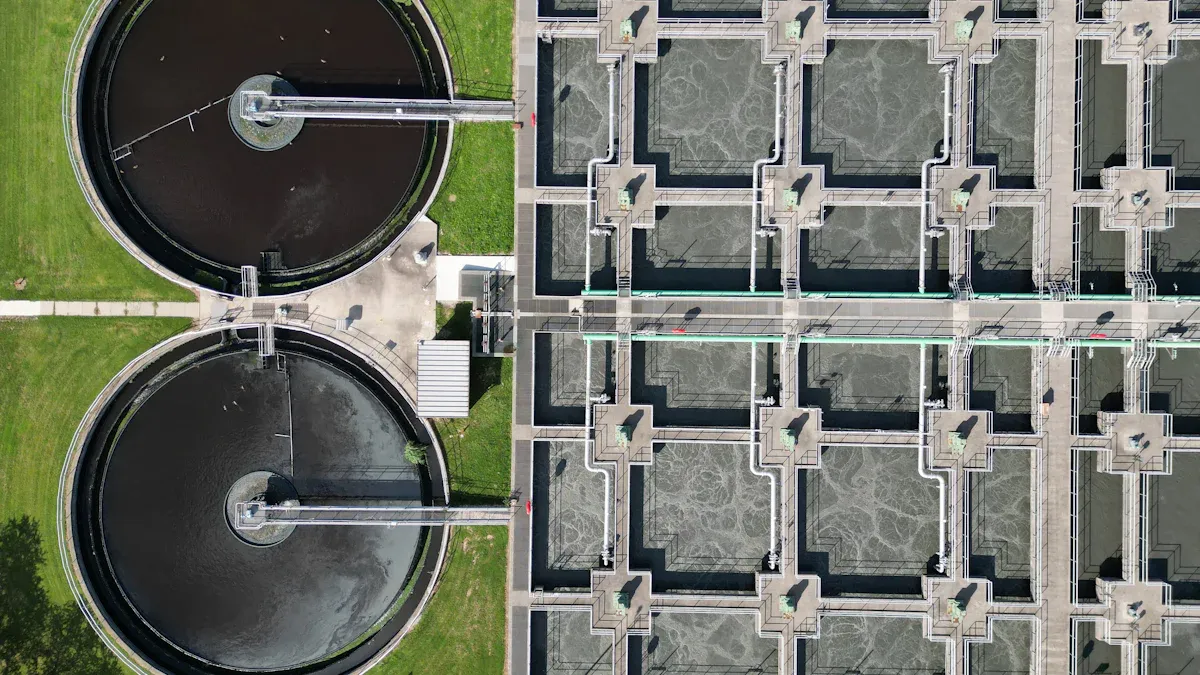
You rely on wastewater treatment to keep your community healthy and your environment safe. At a waste sewage treatment plant, each step removes harmful substances before water returns to nature. Untreated wastewater spreads diseases like cholera and typhoid, disrupts marine life, and damages coastal economies. In 2020, only 56% of global domestic wastewater received safe treatment.
Key Takeaways
- Wastewater treatment is essential for protecting public health and the environment by removing harmful substances from water.
- Each stage of treatment, from screening to disinfection, plays a crucial role in ensuring that water is safe to return to nature.
- Regular monitoring and strict regulations help maintain water quality, preventing pollution and protecting aquatic life.
Screening and Pumping at the Waste Sewage Treatment Plant
Removing Large Debris
When you flush or drain water at home, it carries more than just liquid. At the waste sewage treatment plant, the first step is screening. You see large screens catch items that do not belong in the water. These screens trap things like rags, wood, and even plastic items. Workers use special equipment to remove these objects so they do not damage machines later in the process. The table below shows some common debris you might find during this stage:
| Type of Debris | Description |
|---|---|
| Rags | Non-biodegradable fabric materials |
| Wood | Large pieces of timber or wooden materials |
| Paper | Non-biodegradable paper products |
| Sanitary Items | Items such as diapers and feminine products |
| Leaves | Organic matter from trees and plants |
| Trash | General waste materials |
| Plastic Items | Non-biodegradable plastic materials |
Removing these materials helps protect the equipment and keeps the treatment process running smoothly.
Moving Water into the Plant
After screening, you need to move the water deeper into the waste sewage treatment plant. Powerful pumps push the water through pipes and into the next stage. You rely on different types of screens and pumps to keep things flowing. Coarse screens catch bulky solids first. Fine screens trap smaller bits. Bar screens use parallel bars to grab large debris. Drum and rotary screens use rotating cylinders to remove medium-sized solids. Here is a quick look at the equipment used:
| Equipment Type | Description |
|---|---|
| Coarse Screens | Remove bulky solids with larger openings |
| Fine Screens | Capture smaller particulates missed by coarse screens |
| Bar Screens | Use parallel bars to catch large debris, cleaned manually or mechanically |
| Drum and Rotary Screens | Use rotating cylinders for high efficiency in removing fine to medium-sized solids |
You depend on these machines to keep water moving and prevent blockages. This step prepares the water for the next phase of treatment.
Grit Removal Process
Eliminating Sand and Small Particles
You see grit removal as the next important step at the waste sewage treatment plant. Water from your home carries tiny particles like sand, gravel, and eggshells. These materials settle quickly and can cause problems if you do not remove them early. Special tanks called grit chambers slow down the flow of water. Heavy particles sink to the bottom while lighter materials stay suspended. Workers use mechanical scrapers or pumps to collect the settled grit.
Grit removal protects the machines and pipes in the plant. Sand and gravel can wear down moving parts and block pipes. You help keep the treatment process running smoothly by removing grit before it reaches sensitive equipment. This step also improves the quality of treated water and sludge.
Tip: Removing grit early keeps maintenance costs low and prevents damage to expensive equipment.
You benefit from grit removal in several ways:
- It protects mechanical equipment from damage and keeps operations efficient.
- It prevents blockages and ensures smooth water flow through the plant.
- It improves the quality of treated water and sludge, helping meet strict standards for reuse or land application.
- It reduces operational problems and lowers maintenance costs.
- It ensures uninterrupted flow, which is essential for later treatment stages.
Grit removal may seem simple, but it plays a big role in making sure the rest of the treatment process works well. You rely on this step to keep your community’s water clean and safe.
Primary Settling Tanks
Separating Solids from Water
When water enters the primary settling tanks, you see a big change. The tanks look like large, calm pools. Here, gravity does most of the work. Heavier particles sink to the bottom, while lighter materials float to the top. You notice that the water slows down in these tanks. This slow movement gives solids time to settle out.
Operators use special equipment to remove the solids that collect at the bottom. These solids are called sludge. Workers also skim off any floating materials, such as oils and grease, from the surface. By removing these materials, you help protect the next stages of treatment.
You might wonder how effective this step is. Primary settling tanks can remove a large amount of suspended solids from the water. Here is what you can expect:
- Primary treatment can remove up to 70% of Total Suspended Solids (TSS).
- Primary clarification can remove 40 to 60% of total suspended solids.
Note: Removing solids early makes the rest of the treatment process easier and more efficient.
You play a key role in keeping water clean by supporting this process. The cleaner the water leaves the primary tanks, the less work remains for the biological and chemical treatment steps. This stage sets the foundation for safe and effective wastewater treatment.
Aeration and Biological Treatment
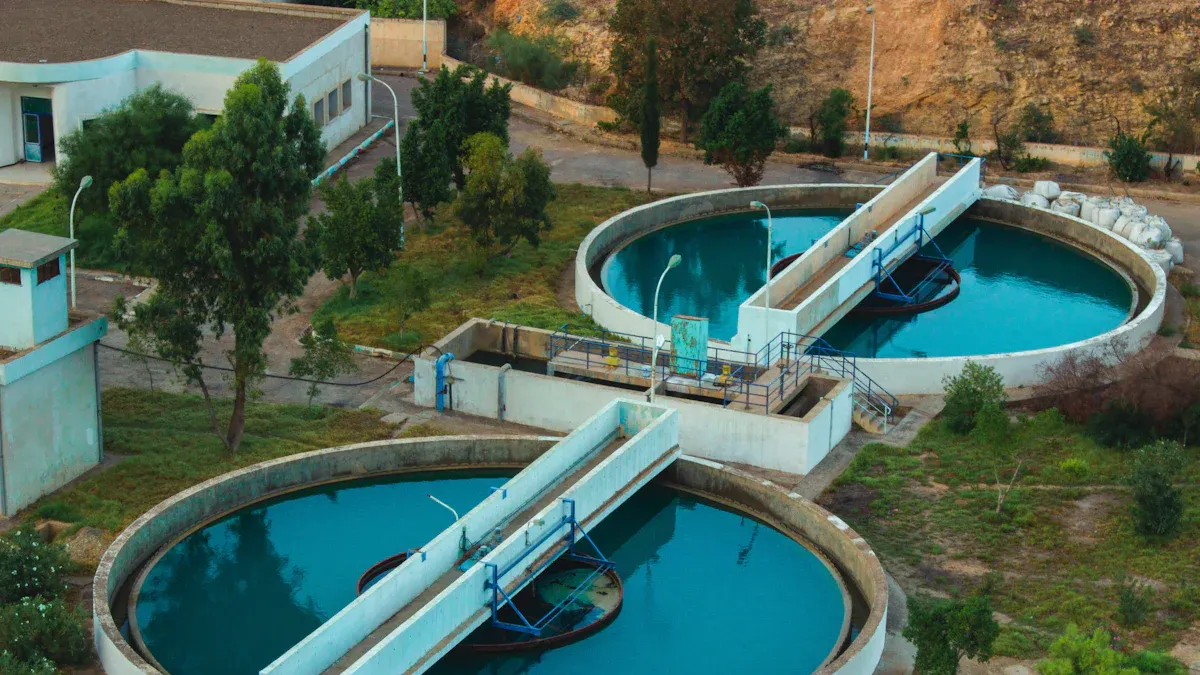
Adding Air to Support Helpful Bacteria
You reach the aeration stage at the waste sewage treatment plant. Here, you see large tanks filled with bubbling water. Powerful blowers pump air into the tanks. This air mixes with the wastewater and creates an oxygen-rich environment. Oxygen helps helpful bacteria grow and thrive. These bacteria need oxygen to survive and do their job.
Operators monitor the oxygen levels closely. If the tanks do not have enough oxygen, the bacteria cannot work well. You notice that the treatment process slows down when oxygen drops. High oxygen levels keep the bacteria healthy and active. You help maintain the right conditions for these microorganisms.
Tip: Aeration keeps the bacteria strong and makes the treatment process more efficient.
Breaking Down Organic Matter
You watch as the bacteria begin to break down organic matter in the wastewater. These microorganisms use oxygen to digest and metabolize pollutants. As they feed, they turn harmful substances into safer byproducts like carbon dioxide and water. The bacteria multiply quickly when they have enough oxygen.
The efficiency of this stage depends on the amount of oxygen in the tanks. Sufficient oxygen supports the growth of aerobic bacteria. If oxygen levels fall, other types of bacteria take over and slow the process. You rely on the aeration stage to remove most of the organic pollutants before the water moves to the next step.
Here is a simple table showing what happens during aeration:
| Process | Result |
|---|---|
| Air added to tanks | Oxygen-rich environment |
| Bacteria grow | Break down organic matter |
| Pollutants removed | Cleaner water |
Aeration and biological treatment play a key role in making water safe at the waste sewage treatment plant.
Secondary Settling Stage
Letting Remaining Solids Settle Out
You reach the secondary settling stage at the waste sewage treatment plant. This step helps you remove the last bits of solid material from the water. Large tanks, called secondary clarifiers, hold the water after biological treatment. The water sits quietly in these tanks. Gravity pulls the remaining solids down to the bottom. You see the water become clearer as the solids settle out.
Operators watch the process closely. They make sure the tanks work well and the water stays calm. If the water moves too fast, solids do not settle. If it moves too slow, the process takes longer than needed. You help keep the system balanced. Most municipal plants let water settle for two to three hours. This time allows enough solids to sink without slowing down the whole plant.
- Typical settling time: two to three hours
- Solids sink to the bottom
- Clear water rises to the top
Workers use special equipment to collect the settled solids, called activated sludge. You see this sludge move to another part of the plant for further treatment. The clear water at the top flows out of the tank. This water is much cleaner than before.
Tip: Secondary settling tanks help you remove up to 90% of suspended solids from wastewater. This step makes the water safe for the next treatment stage.
You play a key role in making sure the water is clean and safe. The secondary settling stage prepares the water for final filtration and disinfection.
Filtration in Waste Sewage Treatment Plant
Removing Fine Particles
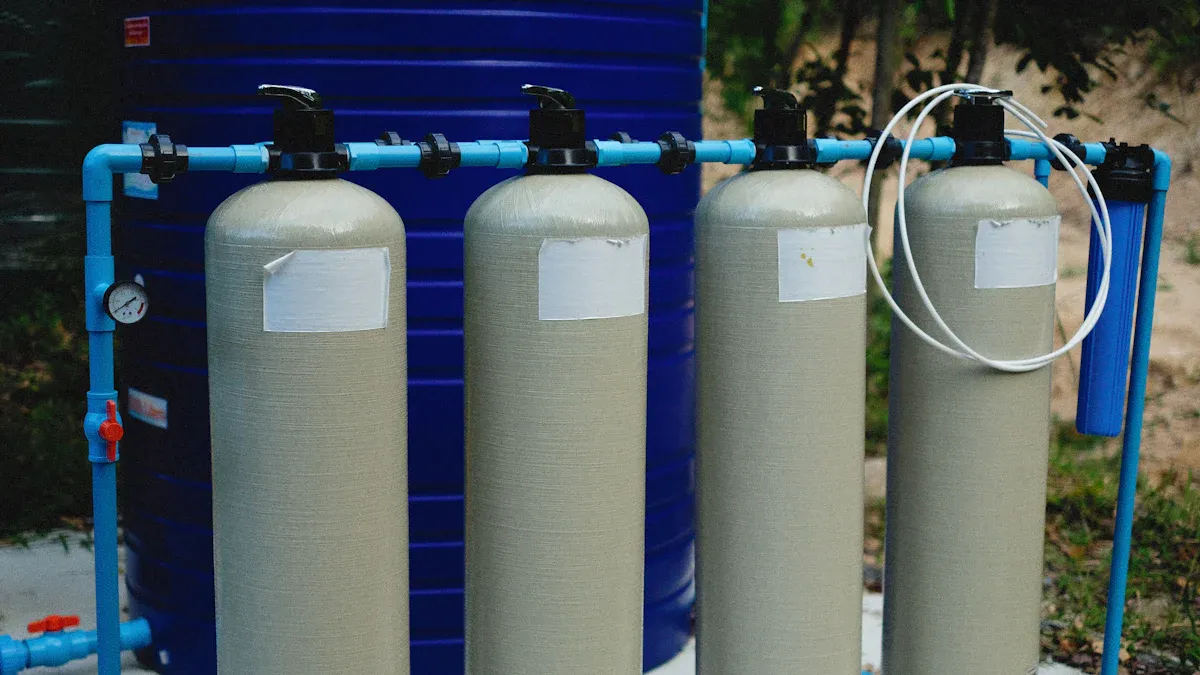
You reach the filtration stage at the waste sewage treatment plant. This step helps you remove the smallest particles that remain in the water after settling. Filtration works by passing water through special screens or filters. These filters trap fine particles that can slip through earlier stages.
Operators use different types of filtration media to clean the water. You see fine screens and microscreens used for this purpose. Fine screens catch larger fine particles, while microscreens target tiny bits like algae and micro-particles. The table below shows how each filtration media works:
| Filtration Media | Opening Size (mm) | Effectiveness |
|---|---|---|
| Fine Screens | 6 - 25 | Removes larger fine particles |
| Microscreens | < 2 | Effective for algae and micro-particles |
You notice that filtration can remove a high percentage of suspended solids. Well-executed primary treatment can remove up to 60% or more of suspended solids from wastewater. Advanced primary treatment can achieve over 80% removal of total suspended solids (TSS). Conventional primary treatment typically removes between 40% and 60% of TSS.
- Advanced primary treatment: over 80% removal of TSS
- Conventional primary treatment: 40% to 60% removal of TSS
- Well-executed primary treatment: up to 60% or more removal of suspended solids
Tip: Filtration makes water much cleaner and prepares it for the final disinfection stage.
You help protect the environment by making sure water leaves the plant as clean as possible. Filtration is a key step in producing safe water for reuse or release.
Disinfection Methods
Killing Harmful Germs
You reach the final step at the waste sewage treatment plant. Disinfection protects your health by killing harmful germs that survive earlier stages. Without this step, dangerous bacteria, viruses, and parasites could enter rivers, lakes, or even your tap water.
You find three main disinfection methods used around the world:
- Chlorine: You see chlorine added to water to kill microorganisms. This method works well and has been used for many years. However, chlorine can create harmful by-products, so operators must manage it carefully.
- Ultraviolet (UV) Light: UV light damages the DNA of germs, making them harmless. You notice that UV does not add chemicals or leave residues in the water. It works against bacteria, viruses, algae, giardia, and cryptosporidium—even those that resist chlorine. UV systems need regular maintenance and clear water to work best.
- Ozone: Ozone gas kills germs quickly and does not produce harmful by-products. You see that ozone systems cost more and need special equipment to generate ozone on-site.
Note: UV disinfection stands out because it does not use chemicals or create toxic by-products. Chlorination remains popular but can produce substances like trihalomethanes and haloacetic acids, which may harm your health.
You help ensure that only safe, clean water leaves the plant. Disinfection acts as your last defense against disease-causing organisms.
Final Discharge of Treated Water
Releasing Water Safely
You reach the final step at the waste sewage treatment plant. Here, you see treated water ready to return to rivers, lakes, or oceans. Before you release this water, you must follow strict rules set by the Environmental Protection Agency (EPA). The EPA creates Effluent Guidelines for each industry. These rules help you remove as many pollutants as possible while keeping costs reasonable. You need a National Pollutant Discharge Elimination System (NPDES) permit to release water into natural bodies. This permit sets limits based on technology and local water quality needs.
Sometimes, the river or lake cannot handle extra wastewater without harm. State agencies check the water’s health and set total maximum daily loads (TMDLs) for pollutants. You must follow these limits to protect fish, plants, and people. If your water might contain toxic substances, you test it using bioassays. These tests show if the water could hurt aquatic life. If problems appear, you take extra steps to fix them.
When you release treated water, you help the environment. Still, you must watch for possible impacts:
- Nutrient pollution from nitrogen and phosphorus can cause algae to grow too fast.
- Too much algae uses up oxygen, which harms fish and other animals.
- Some leftover contaminants may still affect aquatic ecosystems, so you monitor water quality often.
Tip: Careful monitoring and strict permits help you keep rivers and oceans healthy for everyone.
Sludge Treatment and Management
Handling and Treating Solids
You see sludge as the leftover solid material after water passes through each stage at the waste sewage treatment plant. Sludge contains organic matter, bacteria, and sometimes chemicals. You need to treat this sludge before you can safely dispose of it or reuse it.
Operators use several steps to handle and treat sludge. You start with thickening. This process separates solids from liquids and reduces the volume of sludge. Gravity thickening and centrifugal thickening are common methods. You notice that thickening makes sludge easier to manage.
Next, you move to treatment. You can choose chemical stabilization, biological stabilization, or thermochemical treatments. Chemical stabilization uses lime to raise the pH and break down organic matter. Biological stabilization relies on helpful microorganisms. You see two types: anaerobic digestion, which works without oxygen, and aerobic digestion, which uses oxygen. Thermochemical treatments apply heat to reduce water content and stabilize sludge.
After treatment, you focus on dewatering. This step removes even more water, turning sludge into a drier product called a filter cake. You use belt filter presses or thermal drying for this purpose. Dewatering makes transportation and disposal easier.
You also need to handle reject water. This is the liquid separated during thickening and dewatering. You send reject water back for further treatment.
Sludge processing helps you minimize odors and pathogens. You protect public health and the environment by making sure the final product, called bio-solids, is safe for disposal or reuse.
Here is a quick summary of the main steps:
- Thickening
- Treatment (chemical, biological, or thermochemical)
- Dewatering
- Reject water handling
You play an important role in managing sludge and keeping your community safe.
You depend on each stage at a waste sewage treatment plant to keep water safe for your community and the environment.
Monitoring public health relevant microbial or chemical contaminants in wastewater to inform early warning of disease incidence and prevalence within the community.
- Comprehensive treatment protects aquatic life and reduces harmful nutrients.
- Cleaner water means fewer diseases and healthier families.
FAQ
What happens to the solids removed from wastewater?
You see solids turned into sludge. Workers treat and dry sludge. Some plants reuse it as fertilizer. Others send it to landfills.
Can you reuse treated wastewater?
You can reuse treated water for irrigation, industrial cooling, or toilet flushing. Operators test water to make sure it meets safety standards.
Why do you need to disinfect treated water?
Disinfection kills germs that survive earlier steps. You protect your health and keep rivers, lakes, and oceans safe for everyone.
See Also
Comprehensive Overview of Plate Heat Exchanger Functionality
Exploring How Sterile Filter Devices Operate Effectively
Best Precoating Options for Filtration Systems This Year
Industrial Applications of Semi-Welded Plate Heat Exchangers 2025
Innovations in Heat Exchanger Manufacturing Boost Industrial Efficiency