Step by step guide to setting up a grain sorter machine in 2026
A facility manager evaluates operational needs before installing a grain sorter machine. This process ensures that the equipment matches production goals and safety standards.
Careful planning and a methodical approach help teams achieve reliable operation and long-term efficiency.
Assess Facility Needs for a Grain Sorter Machine
Identify Grain Types and Sorting Requirements
Facility managers begin by identifying the types of grains processed and their specific sorting needs. Each grain presents unique challenges. Wheat, rice, and corn differ in size, shape, and defect behavior. Sorting machines often require customization to handle these differences. Operators must consider parameters such as moisture content, defect spectrum, and size distribution. The following table outlines common grain types and their sorting requirements:
| Grain Type | Description |
|---|---|
| Rice | Sorting machines remove impurities and ensure consistent quality. |
| Wheat | Equipment eliminates damaged grains, supporting high-quality food production. |
| Seeds | Machines sort sunflower, soybean, and other seeds to maintain crop standards. |
| Corn | Sorting by color and size improves processing efficiency. |
| Barley | Similar to corn, sorting enhances the final product’s quality. |
Modern grain sorter machines offer high precision and accuracy. Optical sorters detect subtle defects, improving product quality and minimizing waste. Advanced models use AI-powered algorithms to enhance efficiency and meet stringent food safety regulations.
Evaluate Space, Power Supply, and Workflow
Facility size and throughput requirements influence equipment selection. Large operations need high-capacity machines, while smaller processors may choose compact systems. Managers should:
- Identify throughput needs.
- Consider grain type.
- Determine required precision level.
Stable compressed air (6–8 bar) and clean, dry air for ejection valves are essential for proper operation. Facilities must verify their capacity before purchase. Automation in grain handling systems streamlines workflow, reduces human error, and ensures consistent grain flow. Efficient integration of the grain sorter machine into existing processes boosts reliability and speed.
Address Legal and Compliance Requirements
Obtain Necessary Licenses and Permits
Facility managers must secure all required licenses and permits before installing a grain sorter machine. These documents ensure that the operation aligns with local, national, and international regulations. The following table outlines the most common compliance standards encountered during setup:
| Compliance Standard | Description |
|---|---|
| ISO 9001 | Global benchmark for quality management, ensuring systematic controls and consistent output. |
| CE Mark | Indicates conformity with EU legislation, mandatory for the European market. |
| IEC/EN 60204-1 | Safety standard for machinery electrical equipment. |
| RoHS and REACH | Compliance for sales in the EU regarding hazardous substances. |
| Regional Requirements | Local certifications may be needed for specific markets like Saudi Arabia or Australia. |
Managers should contact local authorities to verify which certifications apply to their region. They must also maintain up-to-date documentation for audits and inspections.
Complete Safety and Regulatory Checks
Grain sorter machines in North America must comply with strict safety standards set by regulatory bodies. Agencies such as the FDA, USDA, and EPA require certifications related to hygiene, safety, and environmental sustainability. These checks include regular audits, validation of sorting accuracy, and thorough documentation. Companies must implement robust quality management systems to meet evolving regulations that focus on reducing food waste and promoting sustainability.
Quality control plays a vital role in compliance. Teams should follow these steps:
- IQC (Incoming Quality Control): Inspect all incoming materials and components, documenting each batch.
- IPQC (In-Process Quality Control): Monitor assembly, calibrate sensor modules, and perform functional checks.
- FQC (Final Quality Control): Test the assembled machine with end-to-end sorting simulations and sensitivity checks.
The regulatory landscape in 2026 encourages the adoption of advanced technologies, such as hyperspectral imaging and AI-driven quality assessment tools. These innovations help facilities meet compliance requirements, enhance traceability, and build consumer trust.
Select the Right Grain Sorter Machine
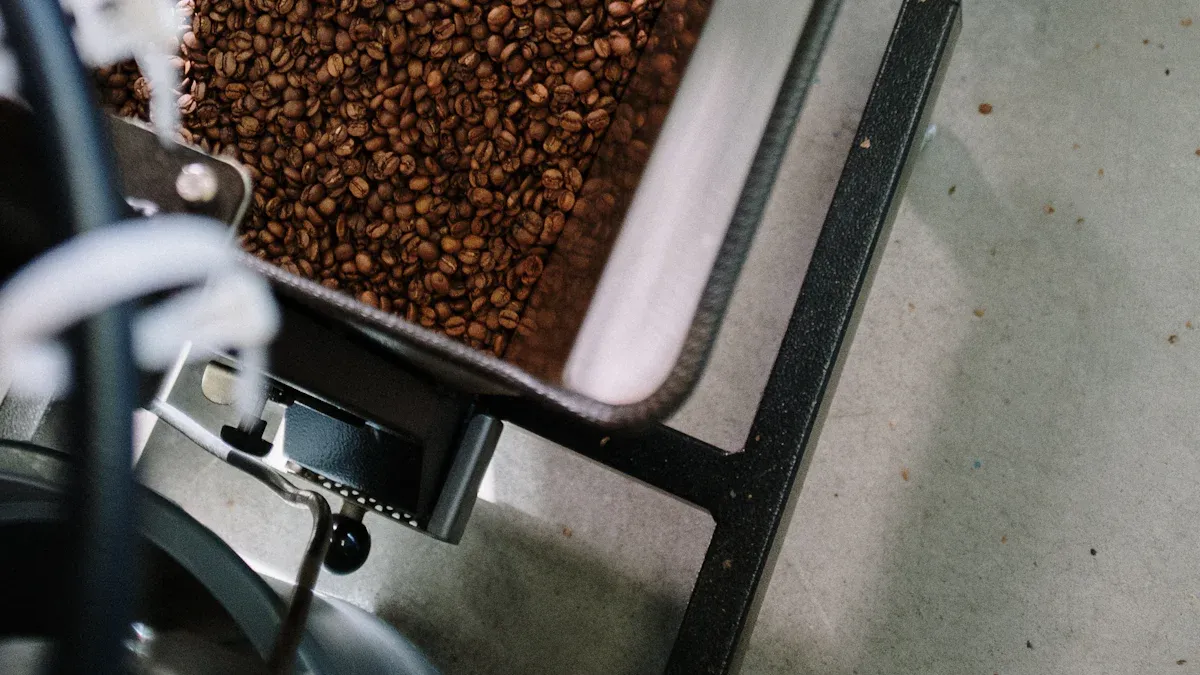
Compare Models and Features for 2026
Choosing the right grain sorter machine requires a careful review of available models and their unique features. In 2026, manufacturers offer a wide range of solutions tailored to different operational needs. The following table highlights leading models and their specializations:
| Model | Features | Specialization |
|---|---|---|
| Satake | Advanced optical sorting solutions for various grains | Pioneer in grain sorting technology |
| Tomra | High-precision sensors and scalable systems | Focus on efficiency and adaptability |
| Bühler | Integrated sorting and processing equipment with robust support | Comprehensive solutions for grain processing |
| Key Technology | Multispectral imaging for superior sorting accuracy | Specializes in high-accuracy sorting |
| Raytec | Cost-effective options with user-friendly interfaces | Budget-friendly solutions |
Facility managers should compare these models based on their specific grain types, operational scale, and support requirements. Each manufacturer brings unique strengths, from advanced imaging to regional customization.
Consider Capacity, Technology, and Compatibility
Selecting a grain sorter machine involves more than just model comparison. Managers must evaluate capacity, technology, and compatibility with existing systems.
- Sorting capacity (tons per hour) determines how much grain the machine can process. Matching machine capacity to daily volume prevents unnecessary costs or bottlenecks.
- Overestimating capacity increases expenses, while underestimating it creates operational slowdowns.
- Modern machines feature optical sorting, AI integration, and robotic automation. These advancements improve accuracy and efficiency.
- Multi-spectral imaging detects impurities invisible to the naked eye, ensuring high-quality output.
- IoT connectivity allows real-time monitoring and predictive maintenance, supporting smooth facility operations.
Tip: Managers should always align machine specifications with facility needs to maximize return on investment.
Prepare Facility for Grain Sorter Machine Installation
Plan Site Layout and Workflow Integration
Facility managers review the stages of the milling process before placing equipment. They map out the flow of materials from intake to sorting and packaging. Placing the grain sorter machine near related equipment reduces unnecessary movement and increases efficiency. Managers optimize workflow by grouping machines with similar functions. They also consider the proximity of workstations to minimize walking distances for operators.
Safety remains a top priority. Managers install proper ventilation systems to remove dust and maintain air quality. Ergonomic workstations help reduce fatigue and prevent injuries. The following checklist supports effective site layout planning:
- Analyze each stage of the milling process.
- Position machines to streamline material flow.
- Group equipment for efficient workflow.
- Install ventilation for dust control.
- Design ergonomic workstations for operator comfort.
Tip: A well-planned site layout improves productivity and supports a safer working environment.
Ensure Utilities, Electrical, and Safety Measures
Facility teams verify that all utilities meet the requirements of the grain sorter machine. They inspect electrical systems for compatibility with the machine’s voltage and amperage needs. Clean, dry compressed air must be available for ejection valves. Managers check water supply and drainage if the machine includes washing or wet sorting features.
Safety measures include installing emergency shut-off switches and fire suppression systems. Teams mark clear evacuation routes and provide safety signage. The table below outlines essential utilities and safety checks:
| Utility/Safety Measure | Description |
|---|---|
| Electrical Supply | Matches machine specifications |
| Compressed Air | Stable and clean for optimal operation |
| Ventilation | Controls dust and maintains air quality |
| Emergency Shut-Off | Allows quick response to incidents |
| Fire Suppression | Protects equipment and personnel |
Facility managers confirm that all systems function correctly before installation begins.
Install the Grain Sorter Machine

Unpack and Position the Machine
Installation begins with careful unpacking. Teams inspect all components for shipping damage. They verify the presence of essential parts, such as the main body, control panels, sensors, and ejection modules. Each item receives a check against the manufacturer’s packing list. Teams use lifting equipment to move the grain sorter machine into position, following safety protocols to prevent injury and equipment damage.
Positioning the machine requires attention to workflow and accessibility. Operators ensure clear access to maintenance panels and control interfaces. The machine must sit on a level, vibration-free surface to maintain sorting accuracy. Teams align the infeed and outfeed points with upstream and downstream equipment. This alignment reduces grain spillage and supports efficient material flow.
Tip: Mark the final position on the floor before moving the machine. This practice helps avoid unnecessary adjustments and ensures proper integration with existing systems.
Electrical and Mechanical Setup
Technicians connect the grain sorter machine to facility utilities. They follow industry standards for electrical and mechanical setup to ensure safety and reliability. The table below outlines key features and requirements for modern machines:
| Feature | Description |
|---|---|
| Adjustability for Grain Types | Customizable settings for different grains to minimize false rejections and maximize yield. |
| Optical Detection System | High-resolution cameras and advanced imaging for accurate identification of defects and foreign materials. |
| Intelligent Analysis & Control | User-friendly interfaces with self-learning algorithms for improved sorting accuracy. |
| Anti-Static & Dust Prevention | Incorporation of ionizers and filtration systems to maintain sensor clarity and operational efficiency. |
| Power Supply Compatibility | Operates on a wide voltage range (100–240V) for global deployment and integration. |
| Motor Power & Ejection Technology | Precision air valves for effective removal of defective particles and improved machine stability. |
| Warranty & Failure Diagnostics | Built-in diagnostic tools and technical support for minimizing downtime and ensuring reliability. |
Technicians verify voltage and amperage compatibility before connecting power. They install grounding wires to prevent electrical hazards. The team connects compressed air lines for ejection valves and checks for leaks. Ionizers and dust filters receive inspection to ensure optimal sensor performance. Operators test emergency shut-off switches and review diagnostic tools for quick troubleshooting.
Initial Calibration and Warm-Up
Calibration ensures the grain sorter machine operates at peak accuracy. Technicians follow a structured process to set up the optical detection system and sorting algorithms. They use AI-assisted calibration tools to adjust for environmental factors, such as lighting and temperature. For facilities handling multiple grain types, operators create separate profiles for each application.
Recommended calibration methods include:
- Utilizing AI-assisted calibration for precise adjustments.
- Adjusting for environmental factors like humidity and dust.
- Creating separate profiles for multi-color or multi-grain sorting.
- Implementing periodic auto-calibration checks to maintain accuracy.
Teams avoid common mistakes by checking sensor alignment, replacing worn components, and validating adjustments with test batches. They monitor environmental conditions throughout the process. Maintenance staff conduct daily and weekly checks, recalibrating after any mechanical changes. A calibration logbook helps track adjustments and supports consistent performance.
During the initial warm-up, operators may encounter several issues:
- Drift across the shift. Teams check electronic grounding, thermal stability, and load cell health.
- High variability. Staff inspect feeders for buildup, check pan inserts, and confirm consistent product feed.
- Repeated overfill. Operators verify target weight settings, review combination software, and check for false readings from impacted load cells.
Note: Early detection and correction of these issues prevent downtime and ensure the grain sorter machine delivers reliable results from day one.
Test and Optimize the Grain Sorter Machine
Run Initial Sorting Tests
Operators begin by running initial sorting tests to verify that the grain sorter machine meets performance expectations. They process a representative batch of grain and monitor key metrics. The following table outlines essential performance indicators:
| Metric | Description |
|---|---|
| Sorting Accuracy | The precision with which the sorter separates different grain types. |
| Capacity | The amount of grain processed per hour, indicating efficiency. |
| Energy Consumption | The amount of energy used during operation, affecting operational costs. |
| Maintenance Frequency | How often the machine requires servicing, impacting downtime and reliability. |
Operators also check throughput capacity, sensor resolution, and the responsiveness of the air nozzle system. Machines with touchscreen panels and self-diagnostics simplify this process. Stainless steel frames and proper power compatibility further support reliable operation.
Tip: Record all test results in a logbook to track performance trends and identify areas for improvement.
Adjust Settings for Optimal Performance
After initial tests, technicians fine-tune the grain sorter machine for maximum efficiency. They adjust sorting parameters, calibrate sensors, and review the user interface for ease of operation. The table below highlights features that impact performance:
| Key Feature | Impact on Performance |
|---|---|
| Advanced Sorting Mechanisms | Technologies like laser or optical sorting ensure precise detection and separation. |
| User-Friendly Interface | Quick adjustments and monitoring enhance operational efficiency. |
| Regular Maintenance Practices | Prevents malfunctions and supports consistent output. |
Technicians follow these steps to optimize results:
- Use a gravity table to remove lightweight damaged kernels.
- Implement a dual-camera optical sorter for discolored or cracked kernels.
- Combine these methods to achieve high-quality grain specifications.
Routine cleaning and scheduled inspections keep the machine running smoothly. Regular maintenance prevents unexpected downtime and ensures long-term reliability.
Train Staff and Establish Maintenance for Grain Sorter Machine
Staff Training on Operation and Safety
Facility managers prioritize comprehensive training for all operators before the grain sorter machine enters full production. Staff members learn the fundamentals of machine operation, including the purpose of each component and how the system functions. Safety training covers the use of personal protective equipment, emergency shutdown procedures, and hazard identification. Operators receive hands-on instruction in calibration and setup, enabling them to adjust sorting parameters for different grains. Maintenance and troubleshooting modules teach staff how to perform routine checks and resolve common issues. Quality control training ensures that operators can monitor sorting accuracy and maintain consistent output. Advanced sessions prepare select staff to integrate the machine with other facility equipment for specialized applications.
Tip: Regular refresher courses help staff stay updated on new features and safety protocols.
Recommended Training Protocols:
- Understanding the basics of machine operation
- Safety training, including PPE and emergency procedures
- Calibration and setup for various grain types
- Maintenance and troubleshooting techniques
- Quality control and performance monitoring
- Advanced training for integration with other systems
Set Up Regular Maintenance and Operational Checks
A structured maintenance schedule keeps the grain sorter machine running efficiently and minimizes downtime. Facility teams perform daily cleaning of lenses, LED illuminators, and ejection nozzles. They verify air pressure and inspect moving parts for wear. Weekly tasks include calibrating color thresholds, checking belt tension, and lubricating motors. Quarterly checks involve replacing air filters, validating sensor alignment, and updating firmware.
| Frequency | Operational Checks |
|---|---|
| Daily | Clean lenses and LED illuminators; inspect ejection nozzles; verify air pressure. |
| Weekly | Calibrate color thresholds; check belt tracking and tension; lubricate motors. |
| Quarterly | Replace air filters; validate sensor alignment; update firmware. |
Facility managers also monitor screens, conveyors, and sensors for debris. They track the condition of belts, motors, and bearings, applying lubrication to reduce friction. Staff receive ongoing training in proper operation techniques to support consistent maintenance practices.
Note: A well-maintained machine delivers reliable sorting performance and extends equipment lifespan.
Facility managers achieve successful grain sorter machine installation by following these steps:
- Assess facility needs
- Address legal requirements
- Select the right machine
- Prepare the site
- Install, test, and train staff
Careful planning, compliance, and ongoing maintenance ensure smooth operation and long-term efficiency.
FAQ
What grains can a sorter machine handle in 2026?
Most machines sort wheat, rice, corn, barley, and seeds. Advanced models support multi-grain processing with customizable settings.
How often should staff calibrate the grain sorter machine?
Operators calibrate machines weekly. Facilities with high throughput may require daily calibration for optimal accuracy.
What safety features do modern grain sorter machines include?
Manufacturers equip machines with emergency shut-off switches, fire suppression systems, and dust control technology. These features protect staff and equipment.
See Also
Innovative Folder Gluer Trends for Carton Production in 2025
Comprehensive Guide to Choosing Tablet Sampling Machines for Labs
Is It Worth Investing in Automated Virus Tube Assembly Lines?
Essential Industrial Checkweighers for Every Food Manufacturing Facility