How Sewage Is Treated Step by Step at a Treatment Plant
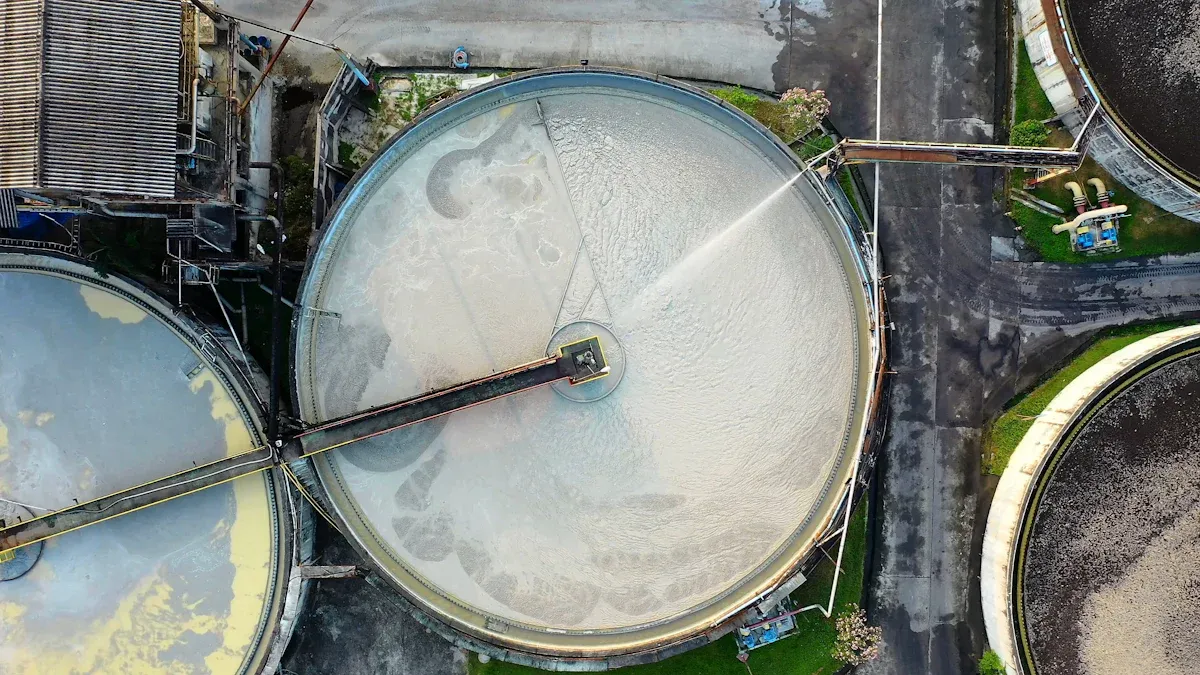
You use water every day, but have you ever wondered what happens after it goes down the drain? Around the world, more than 80% of sewage enters the environment without cleaning. At a treatment plant for sewage, you see several important steps that protect your health and nature.
| Aspect | Description |
|---|---|
| Compliance Requirements | Regulations keep people and the environment safe. |
| Effluent Quality Standards | Plants must reach certain water quality before releasing water. |
Key Takeaways
- Sewage treatment involves multiple steps that protect health and the environment, starting from pumping and screening to disinfection.
- You can help sewage systems by not flushing trash or large items, which keeps the treatment process efficient and reduces costs.
- Maintaining proper oxygen levels in treated water is crucial for supporting aquatic life and preventing environmental harm.
Pumping and Screening at a Treatment Plant for Sewage
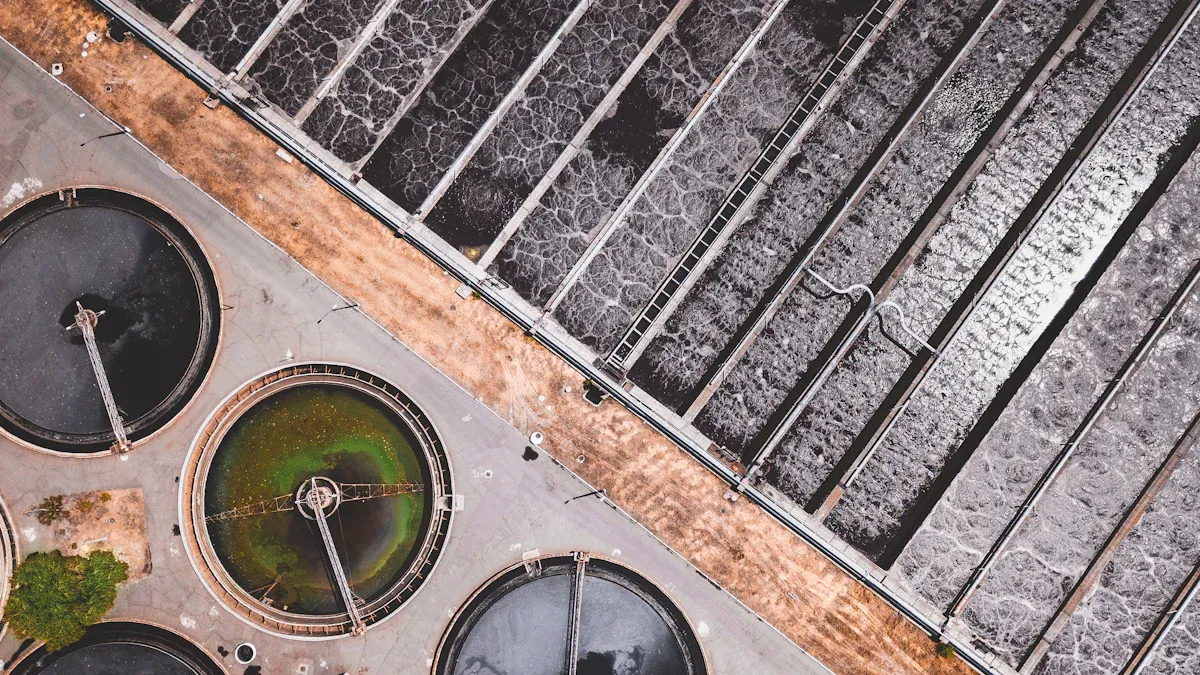
Moving Sewage to the Plant
You help protect your community every time you flush a toilet or wash your hands. The water you use travels through pipes and enters a treatment plant for sewage. Most sewage comes from several sources:
- Separate sewer systems send wastewater to the plant and stormwater to a different network.
- Sanitary sewer overflows happen during heavy rain or when pipes break.
- Industrial wastewater sometimes needs special cleaning before joining the main flow.
- Domestic wastewater carries things like soap, medicine, and other household products.
To move all this sewage, the plant uses powerful pumps. These pumps keep water flowing smoothly and prevent blockages. Common types include:
- Centrifugal pumps use spinning force to move large amounts of water.
- Agitator pumps keep solids mixed so they do not clog the pipes.
- Grinder pumps chop up solid waste, making it easier to transport.
You can see how these pumps work together to deliver sewage safely to the treatment plant for sewage.
Removing Large Debris
When sewage arrives, it contains many objects that should not be in the water. Workers use screens to catch these items before they damage equipment or slow down the cleaning process. The plant uses several screening methods:
| Screening Method | Description | Key Features |
|---|---|---|
| Coarse Screens | Remove bulky solids with larger openings. | First line of defense in screening process. |
| Fine Screens | Eliminate smaller particulates after coarse screening. | Capture debris that coarse screens may miss. |
| Bar Screens | Use parallel bars to catch large debris. | Effective for bulky solids; can be manually or mechanically cleaned. |
| Rotary Drum Screens | Remove fine to medium-sized solids through a rotating cylinder. | High efficiency; enhance overall effluent quality when combined with fine screens. |
| Band Screens | Provide continuous cleaning for high-flow applications. | High removal efficiencies; adapt to various plant sizes and flow conditions. |
| Manual Screening | Use basket screens for larger debris. | Simple operation; reduce clogging in downstream processes. |
| Static Screens | Operate without moving parts; rely on gravity for solid-liquid separation. | Robust and dependable; minimal maintenance required. |
You help keep the system running smoothly by not flushing trash or large items. This first step makes sure the treatment plant for sewage can work efficiently.
Grit Removal in Sewage Treatment
Separating Sand and Gravel
When you look at sewage, you see more than just dirty water. It carries small, heavy particles like sand, gravel, and tiny bits of glass. These materials are called grit. You need to remove grit early in the treatment process. If you leave grit in the water, it can cause big problems later.
At the treatment plant, you find special tanks called grit chambers. Water flows slowly through these chambers. The slow speed lets heavy grit settle to the bottom, while lighter waste stays in the water. Workers then collect the grit and remove it from the system. This step keeps the rest of the treatment process running smoothly.
You can measure how well grit removal works in different ways. Some plants sample the liquid effluent stream, which helps reduce errors in measuring efficiency. Others collect the recovered grit directly, but this method can be hard to use at some sites. Sometimes, workers analyze sludge for grit, but this can be tricky if there is only a small amount.
| Method of Sampling | Advantages | Disadvantages |
|---|---|---|
| Liquid effluent stream sampling | Minimizes errors in efficiency measurement | Requires careful implementation |
| Solid stream sampling of recovered grit | Provides direct measurement of grit | Unwieldy and impractical on certain sites |
| Analysis of sludges for grit | Can indicate grit presence | Subject to error and problematic for small quantities |
Protecting Equipment
You protect the treatment plant’s machines when you remove grit. Grit acts like sandpaper and can damage pumps, valves, and other equipment. If you let grit stay, you will see more breakdowns and higher repair costs. Removing grit helps you save money and keeps the plant working longer.
- Grit removal prevents the abrasion of mechanical equipment such as pumps and valves.
- It reduces maintenance costs by minimizing the need for repairs.
- It enhances the efficiency and longevity of treatment systems.
Tip: You can help by not flushing sand, gravel, or other gritty materials down the drain. This simple action keeps the treatment plant for sewage working well and protects your community.
Primary Sedimentation at the Treatment Plant for Sewage
Settling Out Solids
When you reach the primary sedimentation step, you see how gravity helps clean the water. The wastewater flows into large tanks called primary clarifiers. Here, the water slows down and sits for about two to three hours. This pause gives heavy particles time to settle at the bottom. You can think of this as letting sand settle in a glass of muddy water.
During this stage, you remove a large amount of pollution from the water. The process takes out about 60 to 65% of suspended solids. It also removes around 35% of the material that uses up oxygen in the water, known as BOD (biochemical oxygen demand). This big reduction makes the next steps much easier.
- Primary sedimentation tanks hold sewage for 1.5 to 3 hours.
- About 60% of total suspended solids are removed.
- Around 35% of BOD is taken out.
Collecting Sludge and Scum
As solids settle, you notice two main types of waste: sludge and scum. Sludge is the thick, heavy material that sinks to the bottom. Scum floats on top and includes things like fats, oils, and bits of food. Workers use special equipment to collect both.
- Sludge settles at the bottom and is pumped away for further treatment.
- Scum floats to the surface and is skimmed off.
- Both sludge and scum move to dewatering presses, where water is squeezed out.
The sludge you collect is rich in nutrients and organic matter. Many treatment plants for sewage use this sludge to make compost or produce biogas, which is a renewable energy source. By removing these wastes early, you help protect the environment and make the water much cleaner for the next steps.
Aeration and Biological Treatment in Sewage Plants
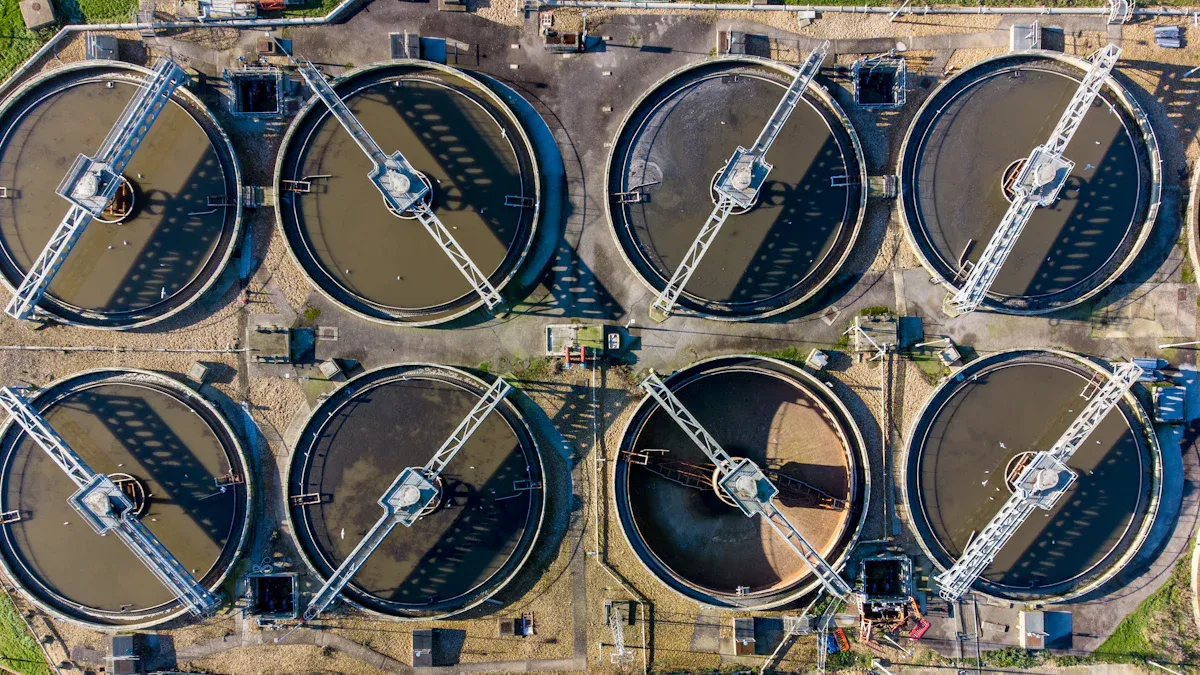
Adding Air to Support Bacteria
You help clean water by using a treatment plant for sewage that relies on living bacteria. These bacteria need oxygen to survive and do their job. In the aeration tanks, you see large machines that pump air into the water. This process is called aeration. When you add air, you create an oxygen-rich environment where bacteria can thrive.
- Aeration introduces air into wastewater, which is vital for the biological breakdown of organic pollutants.
- Bacteria that love oxygen use this air to break down harmful substances.
- As bacteria work, they turn contaminants into safer things like carbon dioxide and water.
You can find different tools that help monitor and control the amount of air in these tanks. Some plants use optical dissolved oxygen sensors. These sensors use special light technology to check oxygen levels without much maintenance. Others use electrochemical sensors, which measure oxygen with electrical signals. Both types can connect to computer systems that adjust the air flow automatically.
Tip: When you keep the right amount of oxygen in the tanks, you help bacteria work faster and more efficiently.
Breaking Down Organic Matter
You play a part in removing pollution from water. During biological treatment, bacteria eat and break down organic matter in the sewage. This step removes most of the pollution that remains after earlier processes. In fact, biological treatment usually eliminates about 85 percent of organic matter from the water.
You can see how this step makes the water much cleaner and safer for the next stages. By supporting bacteria with enough air, you help protect rivers, lakes, and the environment.
Secondary Sedimentation at a Treatment Plant for Sewage
Removing Remaining Solids
You reach the secondary sedimentation step after biological treatment. Here, you focus on removing the last bits of solids from the water. This process is very important because it keeps the environment safe and helps the treatment plant for sewage meet strict rules. If you leave biological solids in the water, you can cause pollution and face problems with regulations.
- Secondary sedimentation removes biological solids that remain after aeration.
- These solids contain many microorganisms that break down waste.
- You prevent environmental harm by making sure these solids do not enter rivers or lakes.
You see that this step is also called final sedimentation. It targets bio-solids, which are rich in helpful bacteria. By removing them, you make the water much cleaner.
Clarifying the Water
You use gravity to separate the solids from the water in large tanks called secondary clarifiers. The water moves slowly, which lets the solids and microorganisms settle to the bottom. Clear water rises to the top and leaves the tank, while the settled solids go back for more treatment or become sludge.
- Gravity sedimentation helps separate biomass from treated water.
- The slow flow in the clarifier allows solids to settle.
- Clear water exits from the top, ready for the next step.
- Some sludge is recycled to help with further treatment.
- You find both circular and rectangular clarifiers in many plants.
You can check how well this process works by looking at a few key factors:
| Parameter | Description |
|---|---|
| Effluent Quality | You monitor the clarity of the water leaving the tank. |
| Design Factors | Good design helps the clarifier work better. |
| Continuous Monitoring | You check water quality all the time to catch problems early. |
Tip: When you keep an eye on these factors, you help protect your community and the environment.
Filtration in Sewage Treatment
Filtering Out Fine Particles
You reach the filtration step after sedimentation. Here, you focus on removing the smallest particles that remain in the water. Filtration acts like a final barrier, catching fine solids that earlier steps missed. You see different types of filters at a treatment plant for sewage. Each type uses special materials to trap particles based on their size.
| Filtration Media Type | Description | Materials Used |
|---|---|---|
| Bag/Cartridge Filters | Rated by micron size, can be nominal or absolute. | Polypropylene, Polyester, Cellulose, Cotton |
| Sediment Filters | Trap particles by size, measured in microns. | Wound string, Polypropylene, Ceramic, Cotton |
| Mixed Media Filters | Combine several materials for better filtration. | Sand, Anthracite, Quartz sand, Garnet, Magnetite |
You often find mixed media filters in large plants. These filters use layers of sand, anthracite, and other minerals. They work together to catch both large and tiny particles. You also see bag or cartridge filters in smaller systems. These filters remove fine solids and help protect the next treatment steps.
Tip: Filtration works best when you combine it with coagulation and sedimentation. This combination helps meet strict water quality standards.
Improving Water Quality
You improve water quality by removing particles that make water cloudy or unsafe. Filtration reduces turbidity, which means the water looks clearer and cleaner. You also remove harmful germs and tiny solids that can slip through earlier steps.
- Coagulation-flocculation helps particles stick together so filters can catch them.
- Ultrafiltration uses special membranes to block viruses, bacteria, and most suspended solids.
- Mechanical straining removes larger particles that cannot pass through filter pores.
- Adsorption captures very small particles on the surface of the filter media.
Ultrafiltration uses pressure to push water through a fine membrane. This process removes almost all viruses, bacteria, and endotoxins. You get water with high purity and very low contaminant levels. When you use filtration, you help make sure the water leaving the treatment plant is safe for the environment and your community.
Disinfection at the Treatment Plant for Sewage
Killing Harmful Germs
You reach the disinfection step at the treatment plant for sewage. Here, you focus on removing harmful germs that can make people sick. Disinfection uses powerful methods to kill bacteria, viruses, and other microorganisms. You often see three main techniques:
- Chlorination adds chlorine to the water. Chlorine destroys germs quickly and is widely used.
- Ultraviolet (UV) radiation shines UV light on the water. This light damages the DNA of germs, stopping them from multiplying.
- Ozonation mixes ozone gas into the water. Ozone breaks down cell walls and kills germs.
Each method works in a different way. Chlorination needs about 30 minutes to disinfect water, but it can create byproducts that need careful handling. UV treatment takes longer but does not leave chemicals behind. Ozonation is effective but costs more to operate.
| Disinfection Method | Effective Contact Time (CT) | Cost Implications |
|---|---|---|
| Chlorination | 30 min | High capital and maintenance costs |
| UV Treatment | 1 h | Lower operational costs |
| Ozonation | Varies | Higher operating expenses |
Tip: You help protect your community by making sure germs do not enter rivers or lakes.
Making Water Safe to Release
You must meet strict standards before you release treated water. In the United States, the Clean Water Act requires a weekly average of 45 mg/l or less for BOD and TSS. Rivers with BOD below 8 mg/l are clean, while those above 20 mg/l are polluted. In Ontario, the Ontario Water Resources Act bans the release of harmful substances and sets fines for violations.
You check water quality carefully. You make sure the water is free from dangerous germs and meets all legal limits. When you finish disinfection, you help keep the environment and people safe.
Oxygen Uptake Before Release
Ensuring Proper Oxygen Levels
You play a key role in making sure treated water supports life when it returns to rivers or lakes. Before you release the water, you must check that it contains enough dissolved oxygen (DO). Fish, plants, and helpful bacteria all need DO to survive. If you let oxygen levels drop too low, you risk harming these organisms. Water with low oxygen can cause fish to die and disrupt the balance of the ecosystem.
You see that many factors affect how much oxygen stays in the water. Respiration by aquatic animals and the breakdown of organic matter both use up oxygen. If too much organic material remains, bacteria will consume more oxygen as they decompose it. This can lead to hypoxia, a condition where oxygen levels fall so low that aquatic life struggles to survive. In healthy systems, you aim for DO levels between 5 and 8 mg/L. Sensitive species need at least 5 mg/L to stay healthy.
To keep oxygen at safe levels, you use special monitoring systems. These tools help you track oxygen in real time and make quick adjustments if needed.
| Monitoring System | Description |
|---|---|
| IQ SensorNet | Monitors wastewater with up to 20 probes, giving you real-time data. |
| Optical Sensors | Measure oxygen directly, reducing costs and making checks easier. |
| Water Quality Sensors | Give you important information for running treatment equipment properly. |
Protecting the Environment
You protect the environment every time you check and adjust oxygen levels before releasing treated water. When you maintain proper DO, you help fish, insects, and plants thrive. You also prevent harmful conditions like fish kills and foul odors. By using reliable sensors and keeping a close watch, you make sure your local rivers and lakes stay healthy for everyone.
Tip: When you support good oxygen levels, you help keep the water clean and safe for people, pets, and wildlife. 🌱🐟
You protect your health and the environment when you use a treatment plant for sewage. Each step removes harmful germs and keeps water safe for rivers, lakes, and your community.
| Benefit | Impact on You and Nature |
|---|---|
| Removes contaminants | Prevents disease and pollution |
| Shields aquatic ecosystems | Preserves biodiversity |
| Supports safe water reuse | Helps agriculture and industry |
FAQ
What happens to the sludge from sewage treatment?
You see sludge turned into compost, fertilizer, or biogas. Some plants use it for energy. Others send it to landfills after safe processing.
Is treated sewage water safe for the environment?
You can trust treated water when plants follow rules. It meets safety standards. This water supports fish, plants, and other wildlife.
How can you help keep sewage systems working well?
You should not flush wipes, grease, or trash. You protect pipes and equipment. You help treatment plants run smoothly.
See Also
A Comprehensive Overview of Plate Heat Exchanger Functionality
Exploring How Sterile Filter Devices Operate Effectively
The 2025 Handbook for Semi-Welded Plate Heat Exchangers
Unexpected Techniques for Diagnosing Sulfur Recovery Catalyst Issues