Exploring the Top Uses of Stainless Steel Plate Heat Exchangers

Industries rely on stainless steel plate heat exchangers for efficient liquid-to-liquid heat transfer. These heat exchangers dominate sectors such as chemicals, food and beverage, and HVAC because stainless steel offers outstanding corrosion resistance and hygiene. Stainless steel plate heat exchangers meet strict demands in oil and gas, chemical processing, and food production, where durability and performance matter most. Shanghai Plate Heat Exchanger introduces the HT-Bloc Welded Plate Heat Exchanger, an innovative solution that combines robust stainless steel construction with advanced engineering. Stainless steel plate heat exchangers continue to lead the market due to their adaptability and reliability.
Benefits of Stainless Steel Plate Heat Exchangers
Corrosion Resistance and Hygiene
Stainless steel plate heat exchangers offer outstanding corrosion resistance, which is essential for industries that handle aggressive fluids or operate in harsh environments. The food and beverage sector relies on these exchangers because stainless steel resists rust and chemical attacks, ensuring hygiene and cleanliness. The non-porous surface prevents bacterial growth, making stainless steel ideal for processes with strict sanitary requirements. In offshore engineering and marine applications, stainless steel withstands constant exposure to saltwater, maintaining cleanability and resistance over time.
Note: The smooth surface of stainless steel supports easy cleaning, reducing contamination risks and supporting regulatory compliance.
Advantage | Description |
|---|---|
Corrosion Resistance | Stainless steel resists rust, scaling, and chemical attacks, ensuring a longer lifespan. |
Hygienic Properties | Smooth, non-porous surface prevents bacterial growth, ideal for food and pharmaceutical industries. |
Durability and Mechanical Strength
Strength and durability define stainless steel plate heat exchangers. These exchangers handle high pressures and temperatures without failure, making them suitable for demanding industrial environments. Duplex stainless steels provide up to twice the design stress compared to other materials, which means greater strength under extreme conditions. The HT-Bloc Welded Plate Heat Exchanger uses precision welding and high-quality stainless steel to deliver long-term reliability and mechanical strength.
Material Type | Design Stress (Acceptable) | Strength Advantage | Formability |
|---|---|---|---|
Duplex Stainless Steels | Up to 2x higher | Higher strength | Lower than austenitic |
Austenitic Grades | Standard | Lower strength | Higher |
High Efficiency and Compact Design
Thermal efficiency is a key benefit of stainless steel plate heat exchangers. The advanced plate geometry in the HT-Bloc maximizes surface area, boosting efficiency while minimizing energy consumption. The compact design allows these exchangers to fit into space-constrained settings without sacrificing performance. Industries value the ability to achieve high heat transfer rates in a small footprint, which supports flexible installation and process optimization.
Stainless steel plate heat exchangers deliver excellent thermal efficiency.
The compact structure enables efficient heat transfer in limited spaces.
Energy Savings and Reliability
Stainless steel plate heat exchangers contribute to significant energy savings in continuous operation. Power plants use these exchangers to recover waste heat, reducing fuel consumption and emissions. The HT-Bloc Welded Plate Heat Exchanger manages pressure drops efficiently, ensuring reliable fluid flow and consistent performance. Industries benefit from reduced maintenance needs and longer service life, which supports sustainability and operational reliability.
Tip: Stainless steel plate heat exchangers help industries meet environmental goals by optimizing energy use and minimizing downtime.
Technical Features of HT-Bloc Welded Plate Heat Exchanger
Modular Design and Scalability
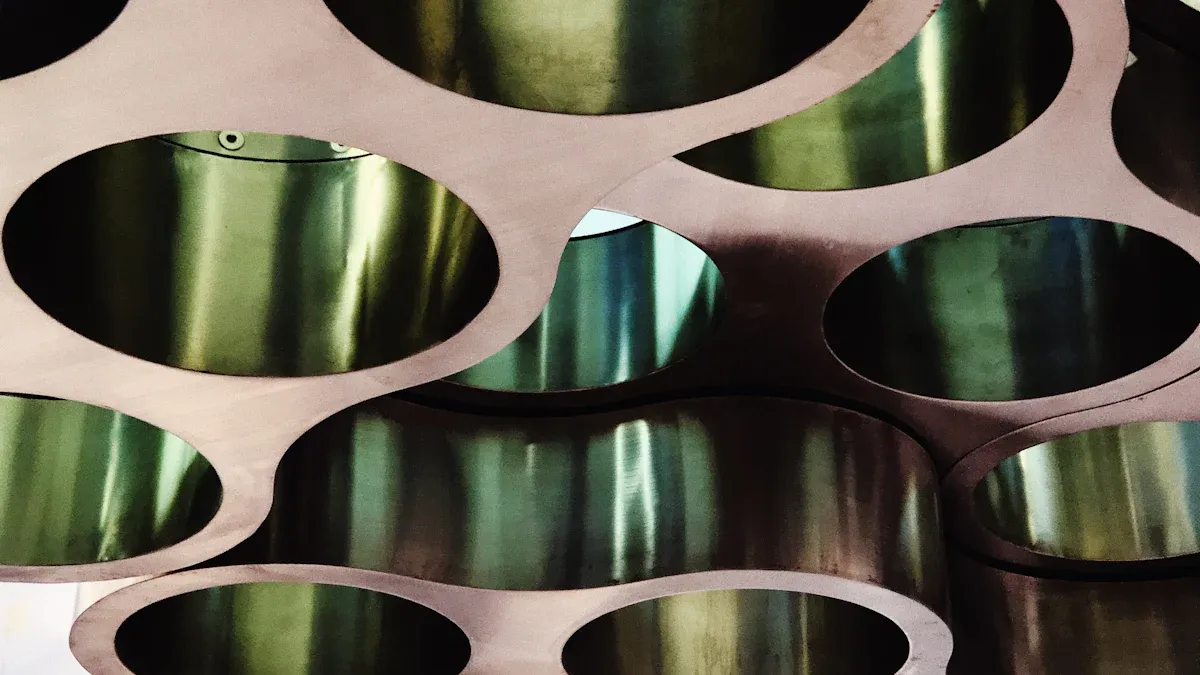
The HT-Bloc Welded Plate Heat Exchanger uses a modular design. Each module can be added or removed to match the thermal needs of different processes. This feature gives engineers flexibility when they need to expand or adjust a system. The modular approach also makes maintenance easier. Workers can access all sides of the unit, which reduces downtime. Many industries value this versatility because it allows them to adapt quickly to changing production requirements.
Welded Construction and Leak Resistance
The HT-Bloc stands out with its fully welded construction. This design does not use gaskets, which eliminates the risk of gasket failure. The welded joints create a permanent seal. This seal increases leak resistance, especially in high-pressure or high-temperature environments. The absence of gaskets means less maintenance and fewer shutdowns for repairs. The welded structure also handles corrosive fluids and extreme conditions with ease.
Welded plate heat exchangers are less prone to leakage than traditional designs.
They require less maintenance because there are no gaskets to replace.
The permanent seal supports reliable operation in demanding applications.
Advanced Plate Geometry and Flow Dynamics
Engineers designed the HT-Bloc with advanced plate geometry. The special shape of the plates increases the surface area for heat transfer. This design improves flow dynamics, which means fluids move efficiently through the heat exchanger tubes. The result is higher thermal efficiency and lower energy use. The compact arrangement of the plates also saves space in crowded facilities. Many industries choose this technology for its ability to deliver strong performance in a small footprint.
Use of Stainless Steel Heat Exchanger Tubes
The HT-Bloc uses stainless steel heat exchanger tubes to boost efficiency and durability. These tubes, especially those made from 316L stainless steel, have thinner walls than carbon steel tubes. Thinner walls allow for better heat transfer, which means the heat exchanger can be smaller and still perform well. Stainless steel heat exchanger tubes resist corrosion, so they keep working efficiently over time. Corrugated designs in the tubes also help lower installation costs and speed up project completion. The versatility of stainless steel heat exchanger tubes makes them suitable for many industries, from food processing to offshore engineering. Their reliability and easy maintenance support long-term operation and lower costs.
Feature | Benefit |
|---|---|
Thinner tube walls | Improved heat transfer efficiency |
Corrosion resistance | Longer service life, less maintenance |
Compact design | Smaller footprint, flexible installation |
Versatility | Suitable for many industrial processes |
Applications of Stainless Steel Plate Heat Exchanger Tubes
Food and Beverage Industry
The food and beverage industry relies on stainless steel plate heat exchanger tubes to maintain strict hygiene and process efficiency. These tubes provide a smooth, non-porous surface that prevents bacterial growth, which is essential for food safety. They withstand high pressure and temperature changes, supporting reliable operation during pasteurization, sterilization, and cooling processes. Efficient heat transfer helps preserve the quality of products like juices, dairy, and beer. Compliance with standards such as FDA, 3-A, and EHEDG ensures that these exchangers meet global food safety requirements. Shanghai Plate Heat Exchanger’s HT-Bloc Welded Plate Heat Exchanger offers a modular design and advanced plate geometry, making it a preferred choice for food processing plants that demand both flexibility and cleanliness.
Tip: Stainless steel plate heat exchanger tubes support Clean-in-Place (CIP) systems, reducing downtime and ensuring consistent product quality.
Chemical and Pharmaceutical Processing
Chemical and pharmaceutical industry operations require precise temperature control and contamination prevention. Stainless steel plate heat exchanger tubes play a critical role in these applications by providing a physical barrier between process fluids and heating or cooling media. This design prevents cross-contamination, which is vital for product purity. In pharmaceutical manufacturing, tubes made from 316L stainless steel with polished surfaces resist microbial growth and allow for rigorous cleaning. Systems often integrate Clean-in-Place (CIP) and Sterilize-in-Place (SIP) protocols to maintain hygiene. The HT-Bloc Welded Plate Heat Exchanger from Shanghai Plate Heat Exchanger meets the demands of the pharmaceutical industry by offering leak-resistant welded construction and easy maintenance. These features help companies comply with cGMP and FDA standards, ensuring safe and reliable production.
Application Area | Key Benefit | Regulatory Focus |
|---|---|---|
Chemical Processing | Efficient heat management, contamination control | ASME, TEMA, ISO 9001 |
Pharmaceutical Industry | Product purity, hygiene, easy cleaning | FDA, ASME BPE, 3-A, Passivation |
Power Generation and Metallurgy
Power plants and metallurgical facilities use stainless steel plate heat exchanger tubes to improve thermal efficiency and reduce operational costs. These exchangers regulate temperatures in cooling and heating systems, which is crucial for maintaining stable operations in furnaces and refining processes. The thin, corrugated plates maximize heat transfer, leading to energy savings of up to 30% compared to traditional designs. Their compact footprint allows for installation in space-limited environments, reducing construction costs. Shanghai Plate Heat Exchanger’s HT-Bloc Welded Plate Heat Exchanger stands out for its durability and adaptability, making it suitable for demanding applications in power generation and metallurgy. The modular design allows for easy expansion or modification as process needs change.
Plate heat exchangers remove excess heat, preventing equipment wear.
Lower maintenance requirements minimize downtime and support continuous operation.
Oil, Gas, and Offshore Engineering
Oil, gas, and offshore engineering environments present some of the harshest conditions for heat exchangers. Stainless steel plate heat exchanger tubes, especially those made from duplex and super austenitic alloys, offer excellent resistance to chloride-induced corrosion and pitting. These properties make them ideal for seawater, brine, and amine-rich systems. Offshore platforms use these exchangers to maintain operational efficiency in engines, compressors, and process systems. The HT-Bloc Welded Plate Heat Exchanger from Shanghai Plate Heat Exchanger delivers reliable performance in extreme temperatures and confined spaces. Advanced design features, such as computational fluid dynamics optimization, ensure efficient heat transfer and easy servicing. This versatility supports a wide range of applications, from extraction to processing, in the oil and gas sector.
Type of Stainless Steel | Key Properties | Typical Application |
|---|---|---|
TP316L / TP317L | Moderate chloride resistance | Moderate chloride environments |
S32205 / S32750 | High strength, pitting resistance | Seawater, brine, amine-rich systems |
904L / 625 | Superior corrosion resistance | Ultra-aggressive, sour gas conditions |
Shanghai Plate Heat Exchanger brings over 20 years of expertise to these industries. The company’s advanced manufacturing techniques and commitment to quality ensure that each HT-Bloc Welded Plate Heat Exchanger meets the highest standards for durability, efficiency, and safety. Their solutions adapt to a wide range of applications, supporting the evolving needs of modern industry.
Stainless steel plate heat exchangers deliver strong performance, durability, and efficiency across many industries. The table below highlights their main advantages and technical features:
Benefit/Feature | Description |
|---|---|
High Efficiency | Advanced plate design maximizes heat transfer. |
Durability | Stainless steel resists corrosion and harsh conditions. |
Compact Design | Saves space in modern facilities. |
Easy Maintenance | Modular structure allows quick servicing. |
Shanghai Plate Heat Exchanger’s HT-Bloc stands out for its fully welded, compact design and reliable operation in demanding environments. Industry experts recommend consulting with experienced manufacturers to ensure the best fit for specific needs and long-term value.
Seek tailored solutions from Shanghai Plate Heat Exchanger for optimal results.
Evaluate material compatibility and maintenance needs before selection.
FAQ
What makes stainless steel plate heat exchangers suitable for food processing?
Stainless steel resists corrosion and supports hygiene. The smooth surface prevents bacteria from growing. Food processors choose these exchangers for easy cleaning and compliance with safety standards.
How does the HT-Bloc Welded Plate Heat Exchanger prevent leaks?
The HT-Bloc uses a fully welded design. This construction removes the need for gaskets. Welded joints create a permanent seal that resists leaks, even under high pressure.
Can stainless steel plate heat exchangers handle aggressive chemicals?
Yes. Stainless steel resists many chemicals and harsh fluids. Chemical plants use these exchangers for reliable heat transfer and long service life in demanding environments.
What maintenance do stainless steel plate heat exchangers require?
Operators clean the plates regularly to maintain efficiency. The modular design of the HT-Bloc allows easy access for inspection and cleaning. Routine checks help ensure long-term performance.