321 vs 304 Flanges An Analysis of Strength and Heat Tolerance
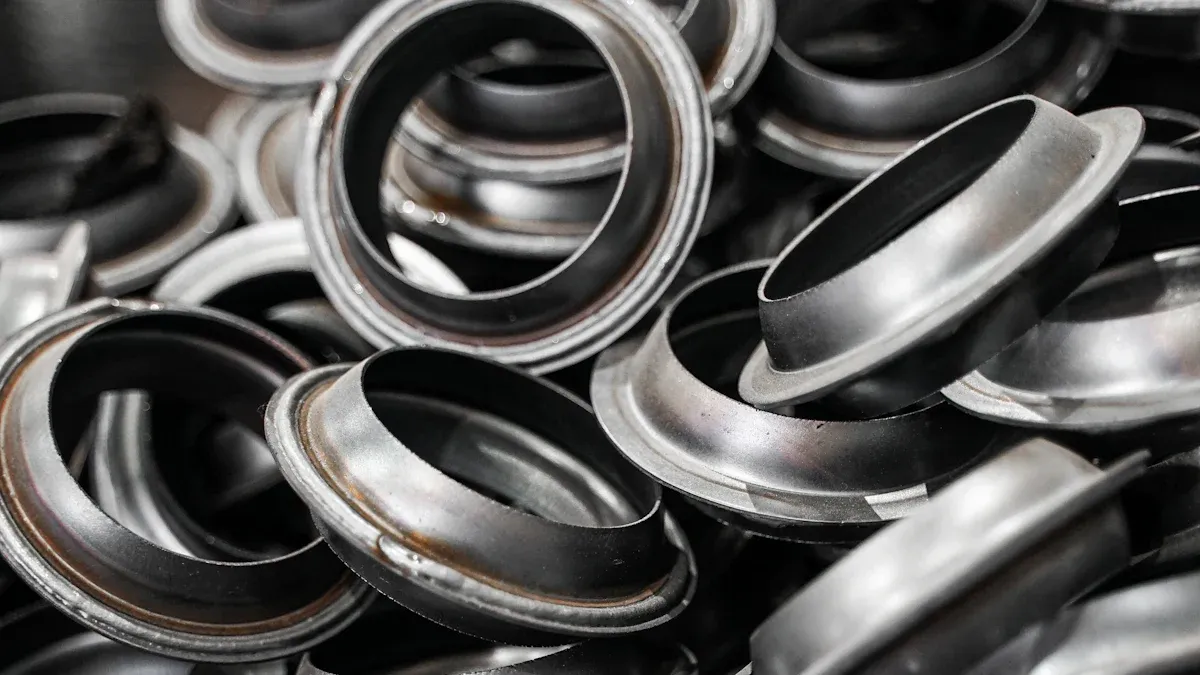
High-temperature industrial applications demand superior material performance. Stainless Steel 321 Flanges provide significantly better heat resistance and high-temperature strength compared to standard 304 flanges. This enhanced capability ensures operational reliability in extreme environments.
The key difference lies in the alloy's composition. The addition of titanium to the 321/321H grade prevents critical material failure at elevated temperatures, a common risk with other steels. This stabilization is the foundation of its robust performance.
Key Takeaways
- 321 flanges handle high heat better than 304 flanges. They have titanium, which stops them from breaking down at hot temperatures.
- 304 flanges work well for everyday uses that are not too hot. They are cheaper for these jobs.
- 321 flanges cost more at first. But they save money over time in hot places because they last longer and prevent expensive repairs.
- Always pick the right flange for the job. Use 321 for hot places and 304 for cooler places to keep things safe and working well.
Understanding the Fundamental Chemical Differences
The performance of a flange begins with its elemental makeup. While 304 and 321 stainless steels belong to the same austenitic family, a small but critical difference in their chemistry creates a massive gap in high-temperature capability.
The Composition of Standard 304 Stainless Steel
Grade 304 stainless steel stands as the industry's most common and versatile alloy. Its excellent corrosion resistance and formability come from its primary alloying elements: chromium and nickel. Chromium forms a passive, corrosion-resistant surface layer. Nickel stabilizes the steel's austenitic crystal structure.
The typical chemical balance for 304 grade steel focuses on these two key elements.
| Element | Typical Range (%) |
|---|---|
| Chromium (Cr) | 17.50 – 20.00 |
| Nickel (Ni) | 8.00 – 11.00 |
This foundational chemistry makes 304 an excellent choice for a wide range of general-purpose applications.
How Titanium Stabilization Defines 321/321H
Stainless Steel 321/321H builds upon the 304 foundation with one crucial addition: titanium (Ti). Engineers add titanium as a "stabilizing" agent. This element fundamentally changes how the alloy behaves under high heat.
Titanium has a stronger chemical attraction to carbon than chromium does. During high-temperature exposure or welding, titanium bonds with available carbon to form harmless titanium carbides. This action prevents chromium from being depleted at the material's grain boundaries, preserving the steel's corrosion resistance.
This stabilization is the core of 321's superior performance. The amount of titanium is precisely controlled and must be at least five times the carbon content.
| Element | Composition % |
|---|---|
| Chromium (Cr) | 17.0 – 19.0 |
| Nickel (Ni) | 9.0 – 12.0 |
| Titanium (Ti) | 5 x Carbon % (min) |
| Carbon (C) | 0.08 max |
| Iron (Fe) | Balance |
This intentional chemical design makes 321/321H flanges inherently resistant to intergranular corrosion in high-temperature service.
Heat Resistance Analysis: The Critical Performance Differentiator
Heat tolerance is the single most important factor separating 321 and 304 stainless steel. While both perform well at ambient temperatures, their behavior diverges dramatically when exposed to heat. This divergence determines their suitability for demanding industrial processes.
Why 304 Fails: Sensitization and Intergranular Corrosion
Grade 304 stainless steel has a significant vulnerability in high-heat environments. This weakness is a phenomenon known as sensitization. Sensitization occurs when the steel is heated or held within a critical temperature range. For 304 stainless steel, this range is typically between 450°C and 850°C (842°F and 1562°F).
Inside this temperature zone, the carbon within the steel alloy begins to bond with the chromium. This process forms chromium carbides along the steel's grain boundaries. The formation of these carbides depletes the surrounding areas of the chromium needed for corrosion protection. The once-protected grain boundaries become susceptible to attack, leading to a failure mode called intergranular corrosion. This type of corrosion weakens the material from the inside out, compromising the flange's structural integrity.
How Titanium Prevents Carbide Precipitation in 321
Stainless Steel 321 Flanges are engineered specifically to overcome the problem of sensitization. The titanium in the 321 alloy acts as a stabilizing agent because it has a much stronger chemical attraction to carbon than chromium does.
When a 321 flange is exposed to high temperatures, the titanium effectively intercepts the carbon. It preferentially forms stable titanium carbides. This chemical reaction locks the carbon in place, preventing it from bonding with chromium. As a result, the chromium remains evenly distributed throughout the steel, maintaining its protective layer and preventing intergranular corrosion.
This stabilization mechanism ensures the material retains its corrosion resistance even after prolonged exposure to elevated temperatures or during welding cycles.
Comparing Maximum Service Temperatures
The chemical differences directly translate to vastly different operational temperature limits. Grade 304 is generally limited to applications below 425°C (800°F) to avoid the risk of sensitization. Exceeding this temperature, especially for extended periods, invites material degradation.
Grade 321, however, excels in high-heat conditions thanks to its titanium stabilization. It is the preferred grade for applications reaching up to approximately 900°C (1650°F). Its performance capabilities are outlined below:
- Continuous Service: Suitable for constant use in temperatures up to 870°C (1600°F).
- Intermittent Service: Can withstand intermittent heating cycles up to 900°C (1650°F).
This superior heat tolerance makes it a reliable choice for thermal cycling and continuous high-temperature processes.
| Flange Grade | General Maximum Service Temperature | Key Limitation |
|---|---|---|
| 304 | ~425°C (800°F) | Risk of sensitization and intergranular corrosion. |
| 321/321H | ~900°C (1650°F) | Excellent resistance to sensitization. |
Mechanical Strength: A Tale of Two Temperatures
While heat resistance is a primary concern, the mechanical strength of a flange under load is equally critical for ensuring system integrity. An analysis of strength reveals a clear story: 304 and 321 flanges are equals at room temperature, but 321 demonstrates vastly superior strength when temperatures rise.
Room Temperature Strength: A Close Match
At ambient or room temperatures, both 304 and 321 stainless steel flanges exhibit nearly identical mechanical properties. When evaluating their baseline strength before high-temperature exposure, engineers will find little difference in their performance. Key metrics like tensile strength (the maximum stress a material can withstand before breaking) and yield strength (the stress at which it begins to deform permanently) are comparable.
This similarity is evident in their typical values:
| Property (annealed) | 304 (typical) | 321 (typical) |
|---|---|---|
| Tensile strength (UTS) | 500–750 MPa | 500–750 MPa |
| 0.2% Yield strength | 205–310 MPa | 205–310 MPa |
This data shows that for applications operating in non-elevated temperature environments, both materials offer similar structural performance. The true divergence in capability only begins when heat enters the equation.
High-Temperature Strength: Creep and Stress Rupture
The performance of a flange in a high-temperature system is defined by its ability to resist two critical failure modes: creep and stress rupture.
- Creep is the tendency of a material to slowly and permanently deform over time when subjected to constant stress at high temperatures.
- Stress Rupture is the ultimate failure of the material after undergoing creep for an extended period.
In this domain, Stainless Steel 321 flanges show their true engineering advantage. Grade 304 stainless steel softens quickly at temperatures above 540°C (1000°F), making it highly susceptible to creep. In contrast, Grade 321 is far more resistant to high-temperature oxidation and creep, making it suitable for long-term use at temperatures approaching 800°C (1472°F).
Grade 321 stainless steel exhibits superior Stress Rupture properties and Creep Resistance compared to 304 stainless steel. This enhanced performance is a direct result of the titanium addition, which improves high-temperature strength by controlling carbide formation and strengthening the material's internal structure.
For applications requiring long-term reliability under both heat and pressure, 321H is the superior choice. Its validated creep damage modeling confirms its predictable and robust performance in demanding conditions.
The Role of Carbon in 321H for Enhanced Performance
For the most extreme applications, engineers turn to the 321H grade. The "H" signifies a higher carbon content, a small but powerful modification that significantly boosts the material's high-temperature capabilities. 321H stainless steel is a high-carbon variant of 321, specifically engineered for enhanced creep resistance and superior strength at elevated temperatures.
Even a small increase in carbon plays a crucial role in boosting the material's strength. This controlled carbon content provides additional structural reinforcement at the microscopic level, further improving the flange's ability to resist creep and stress rupture during prolonged service.
According to ASTM standards, 321H stainless steel contains between 0.04% and 0.10% carbon.
This intentional chemistry makes 321H flanges the premier choice for critical applications like pressure vessels and refinery units operating continuously between 427-816°C (800-1500°F). It delivers the ultimate combination of heat resistance and mechanical strength, ensuring long-term operational safety and reliability. 🚀
Weldability and Fabrication Considerations
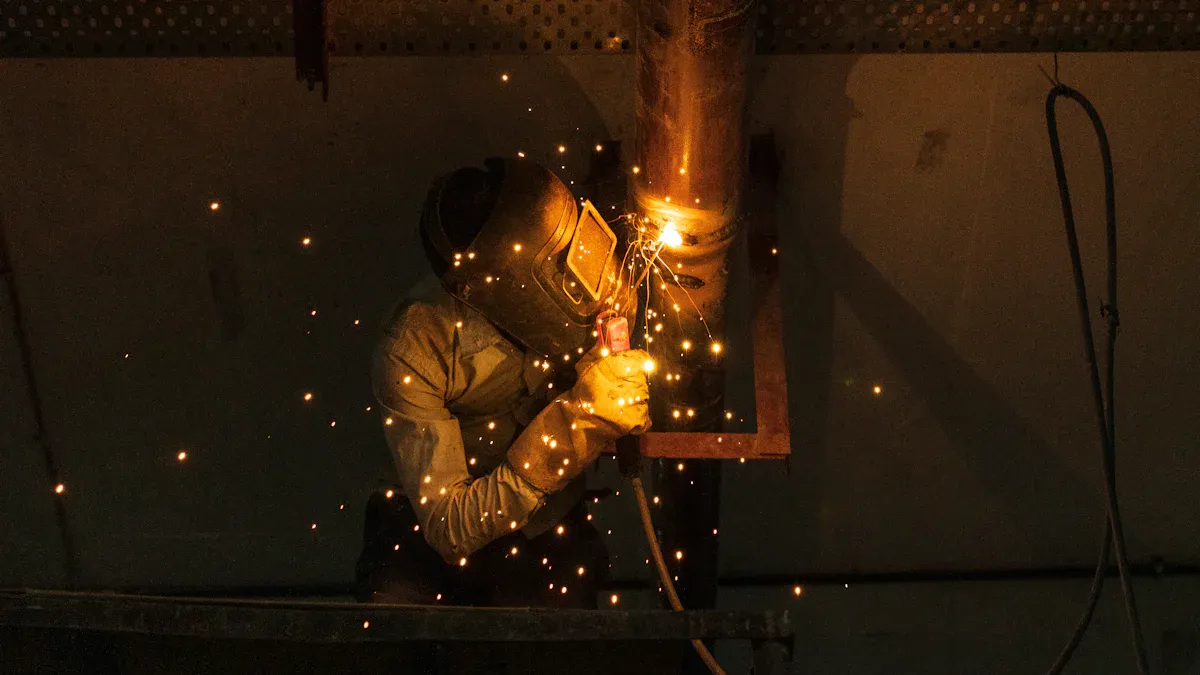
The ease of welding and subsequent treatment requirements are critical factors in project timelines and costs. While both 304 and 321 are weldable, their post-weld integrity and treatment needs differ significantly due to their chemistry.
Welding Characteristics of 304 Flanges
Grade 304 stainless steel is known for its good weldability. Fabricators can use several standard fusion methods to join these flanges. Common practices include:
- Welding Method: Gas Tungsten Arc Welding (GTAW), or TIG welding, is a preferred process for achieving sound, leak-tight welds.
- Filler Metal: Welders typically use ER308L filler metal for joining 304 grade components.
However, a major risk exists when welding 304 steel. The heat from welding can cause weld decay, a form of intergranular corrosion, in the heat-affected zone (HAZ) next to the weld. In this zone, high temperatures cause chromium to bond with carbon. This process depletes the chromium needed for corrosion protection, making the material vulnerable to rapid, localized failure when exposed to a corrosive environment.
Post-Weld Heat Treatment Needs for Stainless Steel 321 Flanges
The titanium stabilization in 321 stainless steel directly counters the risk of weld decay. For maximum corrosion resistance, especially in severe operating conditions, a post-weld heat treatment is recommended. This process ensures the material's protective qualities are fully restored.
A stabilizing anneal involves heating the component to a range of 843–899°C (1550–1650°F). The material is held at this temperature, allowing any chromium carbides to dissolve. The titanium then bonds with the carbon, forming harmless titanium carbides.
This treatment effectively locks carbon away from chromium, restoring the steel's full corrosion resistance across the weld and HAZ. This step is crucial for ensuring the long-term reliability of Stainless Steel 321 Flanges in demanding applications, preventing premature failure and guaranteeing system integrity. ✅
Application Guide: Choosing the Right Flange for the Job
Selecting the correct flange material is a critical engineering decision that directly impacts system safety, longevity, and budget. The choice between 321/321H and 304 hinges on the specific operating temperature and performance demands of the application.
Ideal Scenarios for 321/321H Flanges
Engineers specify Stainless Steel 321 Flanges for applications where high heat and structural integrity are non-negotiable. Their titanium-stabilized chemistry makes them the definitive choice for environments with thermal cycling or continuous temperatures above 425°C (800°F). These flanges prevent sensitization, ensuring long-term reliability where standard 304 steel would fail.
The superior creep resistance and high-temperature strength of 321/321H make it essential for critical service components. ⚙️
Common industrial uses include:
| Industry | Application Example |
|---|---|
| Aerospace & Automotive | Aircraft exhaust systems, exhaust manifolds |
| Power Generation | Superheater and afterburner parts |
| Heat Treatment | Furnace parts, thermal oxidizers |
| Chemical Processing | High-temperature pressure vessels |
When 304 Flanges Are the Cost-Effective Choice
Grade 304 flanges are an excellent and economical solution for a vast range of general-purpose applications. They perform reliably in environments operating below the sensitization temperature range of 425°C (800°F). Choosing the correct grade for the temperature prevents machinery failures and extends equipment life, delivering significant cost savings.
Their combination of good corrosion resistance, formability, and hygienic properties makes them a staple in many industries. 304 flanges are particularly effective in sectors where extreme heat is not a factor.
| Industry Sector | Application Example |
|---|---|
| Food & Beverage | Sanitary piping systems for milk, beer, and juices |
| Water Treatment | Piping for clean water distribution and wastewater facilities |
| Pharmaceutical | Clean-in-place (CIP) loops and processing equipment |
For these applications, the advanced heat tolerance of 321 is unnecessary, making 304 the smart, cost-effective choice.
Cost vs. Performance: A Long-Term Investment
Evaluating the financial impact of flange selection requires looking beyond the initial price tag. The true cost emerges over the component's entire service life, where performance directly influences operational expenses and safety.
Initial Cost Comparison
On paper, 304 stainless steel flanges present a lower upfront cost. However, the price of 321/321H flanges reflects their enhanced composition and superior capabilities. The addition of titanium to the base 304 alloy is the primary driver of this cost difference.
The market price for Stainless Steel 321, often between US$2,300 and US$2,700 per ton, is directly influenced by the cost of its primary raw materials. Elements like chromium, nickel, and titanium, along with global economic factors and transportation costs, all contribute to the final price of the alloy.
This specialized chemistry makes 321/321H a premium material, but its price is justified by its performance in demanding conditions.
Calculating Total Cost of Ownership and Safety
A smarter financial analysis uses the Total Cost of Ownership (TCO) model. TCO provides a complete picture by accounting for all expenses associated with a component throughout its lifecycle. Key factors include:
- Initial Purchase Price: The upfront cost of the flange.
- Installation & Operation Costs: Expenses for setup, testing, and energy use.
- Maintenance Costs: The budget for planned upkeep and reactive repairs.
- Downtime Costs: A major expense including lost production and labor costs from unexpected failures.
Choosing a 304 flange for a high-temperature application may save money initially. However, a single failure due to sensitization can lead to catastrophic downtime and repair costs, quickly erasing any initial savings. Investing in 321/321H flanges for appropriate high-heat applications minimizes the risk of failure. This decision protects against costly shutdowns and enhances plant safety, making it a strategic investment in long-term reliability. 💰
The choice between these two alloys is a critical engineering decision. For applications involving intermittent heating or continuous service temperatures above 425°C (800°F), Stainless Steel 321 Flanges are the definitive choice for ensuring operational safety and reliability.
While 304 flanges serve well in general-purpose, lower-temperature roles, investing in the superior heat tolerance of 321/321H is essential. This strategic selection prevents premature material failure in demanding high-heat environments, safeguarding both assets and personnel. 🛡️
FAQ
What is the primary advantage of 321 flanges over 304?
The main advantage is superior heat resistance. Stainless Steel 321 Flanges contain titanium, which prevents material degradation (sensitization) at temperatures above 425°C (800°F). This makes them reliable for high-temperature service where 304 flanges would fail.
What does the "H" in grade 321H signify?
The "H" indicates a higher carbon content within the alloy. This intentional chemistry gives 321H flanges significantly improved high-temperature strength and creep resistance, making them ideal for the most demanding thermal applications like pressure vessels. ⚙️
Can I use a 321 flange in a low-temperature application?
Yes, a 321 flange functions perfectly at low temperatures. However, it is not the most cost-effective choice. Grade 304 flanges offer similar performance in these conditions at a lower initial price, making them the more economical option.
Why is post-weld heat treatment recommended for 321 flanges?
A post-weld stabilizing anneal restores maximum corrosion resistance. This treatment ensures the titanium bonds with carbon, preventing any potential for chromium depletion in the weld zone and guaranteeing long-term integrity in harsh environments.
See Also
Mastering Pass Partition Plate Welding: Expert Strategies for 2025 Success
Optimized Steel Processing: Consistent Excellence in Heat Exchange Applications
Assessing Molybdenum Plugs: Enhancing Seamless Steel Pipe Manufacturing by 2025
Choosing Pressure Vessel Materials: Adhering to ASME BPVC Section VIII Guidelines
Shell Versus Plate: A 2025 Performance Comparison of Heat Exchangers