The Ultimate Guide to Stainless Steel 321/321H Flanges in Chemical Plants
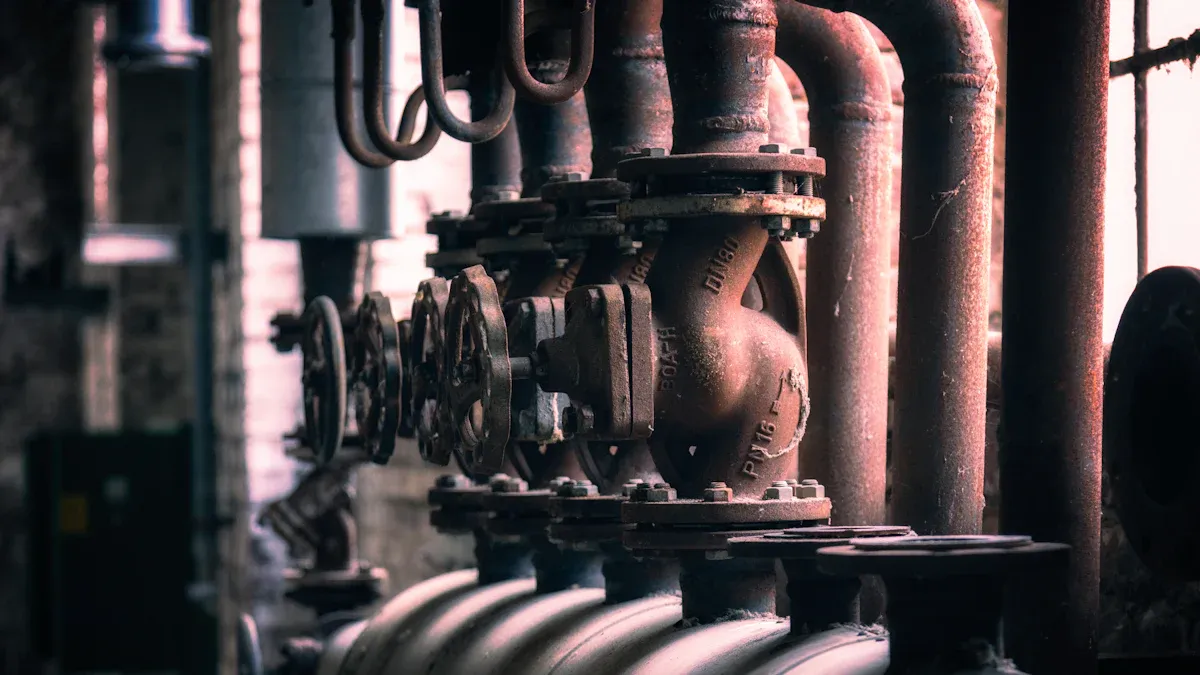
Stainless Steel 321 / 321H Flanges represent the premier choice for demanding chemical plant applications. Their unique titanium stabilization provides superior performance in extreme conditions.
This critical feature delivers exceptional resistance to high-temperature corrosion and intergranular attack.
The use of Stainless Steel 321 Flanges and Stainless Steel 321H Flanges ensures operational safety. They guarantee long-term reliability within harsh refinery and petrochemical environments, safeguarding critical systems from failure.
Key Takeaways
- Stainless Steel 321/321H flanges are best for chemical plants. They have titanium inside. This helps them work well in very hot places.
- These flanges stop a problem called intergranular corrosion. This problem makes other steels weak in high heat. Titanium keeps the steel strong.
- Grade 321H is stronger for very hot jobs. It has more carbon. This helps it stay strong under stress and heat for a long time.
- These flanges are easy to weld. They do not need extra heat treatment after welding. This saves time and money.
- Using these flanges makes chemical plants safer. They last longer. This means less repair work and fewer shutdowns.
Why Titanium Stabilization is Critical for High-Temp Chemical Processes
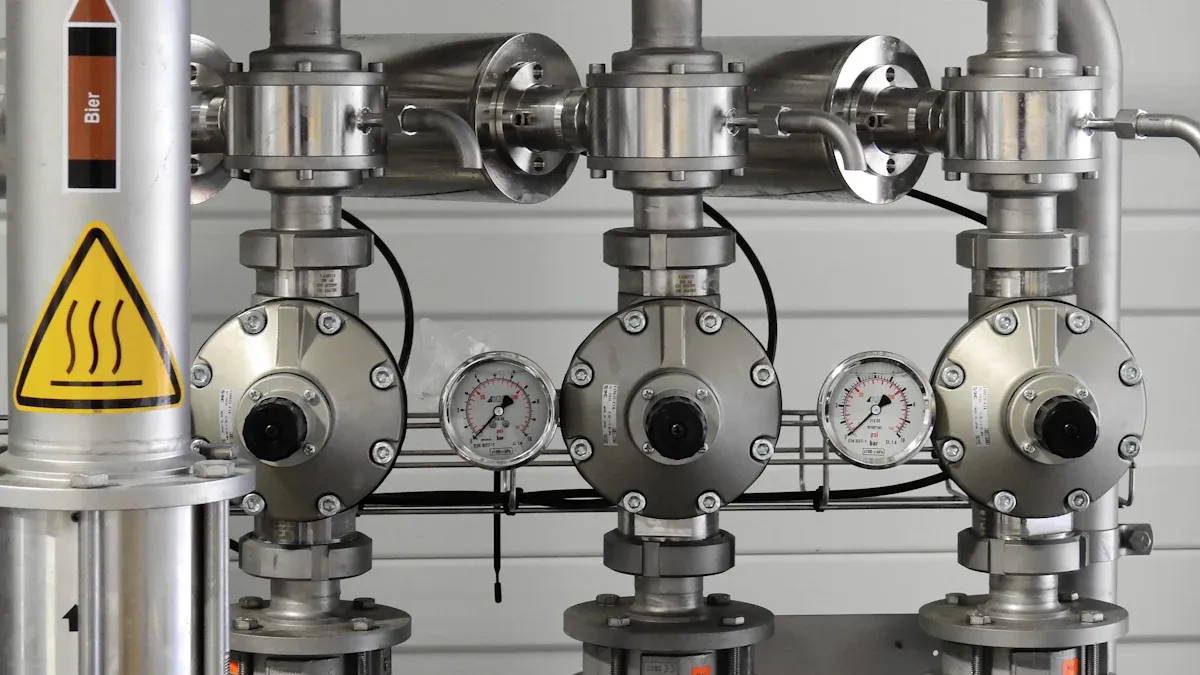
The defining feature of Stainless Steel 321 / 321H Flanges is their titanium stabilization. This metallurgical enhancement directly counters the most severe material challenges found in high-temperature chemical processing. It provides a robust defense against material degradation, ensuring long-term system integrity where other steels would fail.
Preventing Intergranular Corrosion
Intergranular corrosion is a primary cause of failure in standard austenitic stainless steels operating at high temperatures. This destructive process occurs when steel is exposed to temperatures between 427–816°C (800–1500°F). Carbon atoms migrate to the grain boundaries and combine with chromium, forming chromium carbides. This reaction depletes chromium from the areas adjacent to the grain boundaries, compromising the steel's protective passive layer and making it vulnerable to corrosive attack.
A documented case study highlights this risk, detailing the failure of AISI 304 stainless steel tubes in a gas heater unit. Investigators confirmed intergranular corrosion was the cause, linking the failure directly to the steel's high carbon content and susceptibility at the grain boundaries. They recommended using stabilized grades like AISI 321 to prevent such incidents.
This is precisely where titanium stabilization demonstrates its value. Titanium has a much stronger affinity for carbon than chromium does. It acts as a "scavenger" for carbon by forming stable titanium carbides (TiC). This process effectively locks carbon in place, preventing it from reacting with chromium. As a result, chromium remains evenly distributed throughout the steel's matrix, ensuring the continuous presence of a passive oxide layer that is crucial for corrosion resistance. This mechanism makes SS 321 immune to sensitization and subsequent intergranular attack, even after prolonged exposure to elevated temperatures.
Superior Performance up to 870°C (1600°F)
Chemical processes often operate at extreme temperatures where material strength and oxidation resistance are non-negotiable. Grade 321 stainless steel excels in these conditions, maintaining its structural integrity and corrosion resistance at temperatures where common grades falter. It offers reliable performance for continuous service up to 870°C (1600°F).
While its ambient temperature properties are similar to other austenitic grades, its high-temperature stability is far superior. The titanium stabilization not only prevents corrosion but also helps the material resist oxidation, slowing the degradation process at elevated temperatures.
The table below outlines the key high-temperature properties of SS 321:
| Property/Limit | Condition/Temperature | Typical Value/Range |
|---|---|---|
| Tensile Strength | Annealed | 520 - 750 MPa |
| Creep Strength | Considerations begin around 600°C (1112°F) | Critical for long-term applications |
| Max Continuous Service Temp | Intermittent or Continuous | 870°C (1600°F) |
This robust performance makes Stainless Steel 321 / 321H Flanges an ideal choice for equipment like heat exchangers, exhaust systems, and refinery units that undergo thermal cycling.
The Role of 321H's Higher Carbon Content
For the most demanding high-temperature applications, the "H" grade offers an even greater advantage. Stainless Steel 321H was specifically developed for enhanced performance at temperatures above 537°C (1000°F). Its primary distinction lies in its chemical composition.
According to ASTM A182 specifications, the 321H grade contains a higher, controlled level of carbon.
- Alloy: 321H
- Carbon Content: 0.04% - 0.10%
This elevated carbon content directly translates to superior mechanical properties at extreme temperatures. It provides a significant boost to the material's:
- High-Temperature Strength: The material can withstand higher stresses before deforming.
- Creep Resistance: It resists slow, continuous deformation under prolonged stress at high temperatures.
- Stress Rupture Properties: It has a longer lifespan before failing under a constant load at elevated temperatures.
This makes 321H the definitive material for pressure vessels and critical piping systems where long-term reliability under intense heat and pressure is essential for operational safety and efficiency.
How Stainless Steel 321 / 321H Flanges Combat Aggressive Corrosion
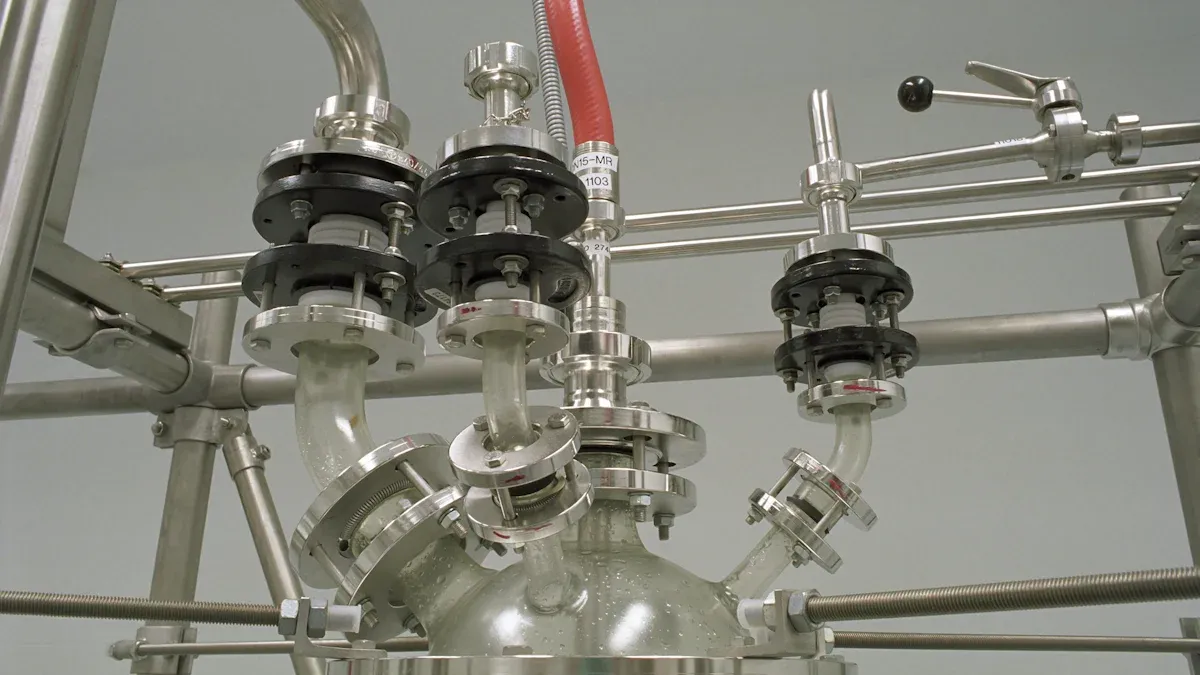
Beyond high temperatures, chemical plant environments present a constant threat from aggressive corrosive agents. The unique chemistry of Stainless Steel 321 / 321H Flanges provides a formidable defense against some of the most destructive forms of corrosion found in refinery and petrochemical operations. Their stabilized microstructure ensures long-term reliability where other materials would quickly degrade.
Solving Polythionic Acid (PTA) Cracking
Polythionic acid (PTA) stress corrosion cracking is a notorious failure mechanism in refinery equipment, particularly during shutdowns. This insidious form of corrosion occurs when specific conditions align, leading to catastrophic equipment failure. The process typically involves:
- Formation: PTA forms through a reaction between sulfide scale (from processing sour crudes), oxygen (from air), and water (from steam or humidity).
- Sensitization: The material must have a sensitized microstructure. This happens when standard austenitic steels are heated, causing chromium to bond with carbon at the grain boundaries and depleting the surrounding areas of their protective chromium.
- Stress: The component must be under tensile stress, which is common in pressurized piping systems.
- Attack: The combination of PTA exposure and tensile stress initiates intergranular cracking along the weakened, chromium-depleted grain boundaries.
A critical prerequisite for polythionic acid stress corrosion cracking (PTA SCC) is a sensitized microstructure. When the chromium level in these depleted zones falls below the threshold necessary for passivity, the material becomes vulnerable to attack.
This is where the titanium stabilization of Grade 321 provides a definitive solution. The titanium has a stronger chemical attraction to carbon than chromium does. During manufacturing and subsequent high-temperature exposure, the titanium preferentially forms stable titanium carbides. This action prevents the formation of chromium carbides, keeping chromium evenly distributed throughout the steel's structure. As a result, the grain boundaries remain protected and immune to sensitization, effectively eliminating the primary condition required for PTA cracking to begin.
Resisting Organic and Inorganic Acids
Chemical processing involves a vast spectrum of organic and inorganic acids, many of which can aggressively attack piping materials. While several stainless steel grades offer good general corrosion resistance, Grade 321 provides a distinct advantage in specific acidic environments due to its titanium content.
When compared to other common grades like 316L, SS 321 demonstrates superior performance against certain compounds. The titanium within the alloy helps form a resilient, protective oxide film when it comes into contact with agents like sulfuric acid compounds. This passive layer acts as a durable barrier against corrosion.
The following table compares the key corrosion resistance features of SS 321 and SS 316L:
| Feature | Stainless Steel 321 | Stainless Steel 316L |
|---|---|---|
| Resistance to Sulfuric Acid | Forms a protective oxide film, offering excellent resistance. | Good general resistance, but not specifically enhanced for sulfuric acid. |
| Resistance to Chlorides | Good general resistance. | Superior resistance to pitting from chlorides due to molybdenum content. |
| Key Stabilizing Element | Titanium (Ti) | Molybdenum (Mo) for pitting resistance. |
| Primary Advantage | Resists intergranular corrosion and certain acids. | Resists chloride pitting and crevice corrosion. |
This comparison shows that for applications involving exposure to sulfuric acid compounds—a common scenario in chemical plants—Grade 321 is an exceptionally reliable choice.
Preventing Failure in Hydrotreating Units
Hydrotreating units are essential for removing impurities like sulfur and nitrogen from hydrocarbon streams. However, this process creates an intensely corrosive environment that can compromise equipment integrity. Two primary corrosive agents are responsible for most failures in these units:
- Organic Chlorides: These contaminants enter with the crude feed and are not always removed during desalting. Inside the hydrotreater, they break down (hydrolyze) and form hydrochloric acid, creating low-pH streams that cause severe, rapid corrosion and can lead to equipment leaks.
- Hydrogen Sulfide (H₂S): The hydrotreating process itself converts sulfur compounds into hydrogen sulfide gas. This highly corrosive gas attacks metal surfaces within the hydrotreater and in downstream equipment.
The robust and stabilized nature of SS 321/321H makes it an ideal material for combating these threats. Its inherent resistance to acidic corrosion provides a strong defense against the low-pH conditions created by organic chlorides. Furthermore, its stable microstructure withstands the general corrosive attack from H₂S, ensuring that flanges, pipes, and vessels maintain their structural integrity. Using these flanges helps prevent unexpected failures and costly downtime in one of the refinery's most critical units.
Key Mechanical and Fabrication Advantages
Beyond their superior corrosion resistance, Stainless Steel 321 / 321H Flanges offer significant mechanical and fabrication benefits. These properties streamline manufacturing processes and enhance the long-term performance of critical piping systems, making them a practical and reliable choice for chemical plant construction and maintenance.
Excellent Weldability Without Post-Weld Heat Treatment
Alloy 321 exhibits outstanding welding characteristics. It can be readily joined using most standard processes, simplifying fabrication and repair work. The titanium stabilization that prevents intergranular corrosion also eliminates the need for post-weld heat treatment or annealing. This saves considerable time and cost during assembly.
Recommended welding techniques include:
- Gas Tungsten Arc Welding (GTAW/TIG)
- Gas Metal Arc Welding (GMAW/MIG)
- Shielded Metal Arc Welding (SMAW)
Using filler metals specifically designed for this grade ensures the weld joint maintains its integrity and corrosion resistance, creating a seamless and durable connection.
High Toughness for Complex Piping Systems
The excellent ductility of Grade 321 is a major asset for fabricating complex piping geometries. This property allows the material to undergo significant deformation, such as deep drawing and bending, without cracking. Its good plasticity facilitates the creation of components with precise dimensions and smooth surfaces. This formability is crucial for engineering the intricate layouts required in modern chemical plants, ensuring components fit perfectly and function reliably under pressure.
Long-Term Durability and Reduced Downtime
The combination of robust mechanical properties and straightforward fabrication leads to exceptional long-term durability. Components made from this alloy resist failure from both mechanical stress and corrosive attack. This inherent reliability minimizes the need for frequent inspections, repairs, and replacements. For chemical plants, this translates directly into reduced operational downtime and lower maintenance costs, maximizing productivity and ensuring safer, more continuous operations.
Practical Guide: Specifying 321 vs. 321H
Selecting the correct grade between 321 and 321H is crucial for optimizing performance and cost in chemical plant applications. The decision hinges on the specific operating temperature and mechanical strength requirements of the system.
Choosing 321 for Service Below 538°C (1000°F)
For a wide range of applications operating below 538°C (1000°F), standard Grade 321 is the ideal and most cost-effective choice. It provides all the essential benefits of titanium stabilization, including complete immunity to intergranular corrosion after welding or during thermal cycling. This grade offers excellent durability and reliability for processes where extreme creep strength is not the primary design driver.
Opting for 321H for High-Temperature Strength
Engineers specify Grade 321H for the most demanding high-temperature services, particularly those exceeding 537°C (1000°F). Its higher carbon content (0.04%–0.10%) delivers superior high-temperature strength and creep resistance. This makes 321H essential for equipment that must maintain structural integrity under prolonged stress and heat.
Key Applications for 321H:
- Furnace parts and heating element tubing
- Steam superheating systems
- Aircraft exhaust manifolds
- Expansion joints and bellows
- Petroleum refining units
Comparing 321/321H to Alternatives like 304 and 347
While Stainless Steel 321 / 321H Flanges are superior for many applications, it is useful to compare them against common alternatives.
-
Versus Grade 304: Grade 304 is a common, cost-effective stainless steel. However, it is susceptible to sensitization and intergranular corrosion when heated. Grade 321 justifies its higher cost by offering a maximum operating temperature of about 860°C (1580°F), compared to 800°C (1472°F) for 304, along with guaranteed protection against high-temperature corrosion.
-
Versus Grade 347: Grade 347 is another stabilized stainless steel, but it uses niobium instead of titanium. Both grades offer excellent weldability and prevent sensitization. Their performance and availability are largely similar, making them interchangeable in many scenarios.
| Criteria | Stainless Steel 321 | Stainless Steel 347 |
|---|---|---|
| Stabilizing Element | Titanium (Ti) | Niobium (Nb) |
| Weldability | Excellent | Excellent |
| Availability | Widely available | Widely available |
| Cost | Broadly comparable | Can be slightly more expensive |
This comparison shows that while alternatives exist, the 321 family provides a targeted, reliable solution for high-temperature, corrosive environments.
Stainless Steel 321 / 321H Flanges provide a definitive solution for chemical plants. Their combination of titanium stabilization, high-temperature strength, and superior corrosion resistance ensures the integrity of critical piping systems.
Specifying this material directly solves the most severe challenges in refinery and petrochemical applications. It offers a reliable and cost-effective choice for ensuring long-term operational safety and system durability.
FAQ
What is the primary advantage of titanium in SS 321?
Titanium acts as a stabilizing agent. It forms stable titanium carbides, which prevents chromium depletion at the grain boundaries. This mechanism provides immunity to intergranular corrosion after welding or high-temperature exposure, ensuring the material's long-term reliability.
When is Grade 321H the correct choice over 321?
Engineers specify Grade 321H for service temperatures exceeding 537°C (1000°F). Its higher carbon content delivers superior high-temperature strength and creep resistance. This makes it essential for pressurized systems requiring long-term structural integrity under extreme heat.
Is post-weld heat treatment required for SS 321 flanges?
No, post-weld heat treatment is not necessary for SS 321 flanges. The titanium stabilization effectively prevents sensitization during welding. This feature preserves the material's corrosion resistance in the heat-affected zone, which simplifies fabrication and reduces overall project costs.
See Also
Industrial Semi-Welded Plate Heat Exchangers: A Comprehensive 2025 Guide
ASME BPVC Section VIII: Pressure Vessel Material Selection Explained
Welding Pass Partition Plates: Expert Insights and Best Practices for 2025
Achieving Optimal Results: Steel Processing for Heat Exchange Applications
Cutting-Edge Materials Transforming the Heat Exchanger Supply Chain