How to Solve Common Aquarium Problems with the C600 Meter
You can master your aquarium's health. Your C600 Water Quality Test Meter gives you precise data on pH, TDS, EC, Salinity, and Temperature. This helps you move from guessing to knowing. The trend towards precision in pet care shows why a good Water Quality Test Kit Meter for 4in1, 7in1, 10in1 is essential.
Pro Tip: Regular testing helps you spot problems early. You can fix issues before they harm your fish.
Use this table for ideal water conditions:
| Parameter | Freshwater Range | Saltwater Range |
|---|---|---|
| pH | 6.5–8.0 | 8.0–8.4 |
| TDS | 150-500 ppm | N/A |
| Salinity | < 0.3% | 3.2%–3.5% |
| Temperature | 24–28ºC (Tropical) | 24–27ºC |
Note: For saltwater, a salinity of 3.5% (35 ppt) equals a conductivity (EC) of about 53 mS/cm.
Key Takeaways
- Use your C600 meter to check water quality. It helps you fix cloudy water and algae problems.
- The C600 meter helps you keep fish healthy. It checks pH and temperature to prevent stress.
- Regularly test salinity with your C600 meter. This is important for saltwater and brackish tanks.
Fixing Visible Water Issues: Cloudy Water and Algae Blooms
Visible problems like cloudy water or green algae are the most common frustrations for aquarium owners. You can solve these issues with precision. Your C600 meter provides the data you need to diagnose the root cause and take effective action.
Diagnosing Cloudy Water with pH and TDS
You see cloudy water in your tank. Your first instinct might be to do a massive water change, but you should diagnose the problem first. Use your C600 to check the pH and Total Dissolved Solids (TDS).
High TDS can be the cause. It provides a rich environment for certain bacteria (heterotrophic bacteria) that feed on organic waste. These bacteria multiply quickly and create a "bacterial bloom," making the water look milky or hazy. For instance, one 72-gallon tank with cloudy water had a TDS reading of 340.
A sudden pH drop is another major red flag. If your aquarium's pH drops below 6.0, the beneficial bacteria in your filter begin to die. These bacteria are essential for a healthy nitrogen cycle. Their death can cause your tank to "re-cycle," leading to cloudy water and a dangerous spike in ammonia.
"I can't remember the exact number, but the bio-filter can also die with extremely low pH (5 or so). I wonder if you pH is low enough to be a factor. Since it is less than what your kit can read, it might be really low!"
Look at how a low pH crash affects water parameters:
| Parameter | Initial Reading | Subsequent Reading |
|---|---|---|
| pH | ≤ 6.0 | < 6 |
| Ammonia | 4.0 ppm | 2.0 ppm |
| Nitrate | 80 ppm | ~10 ppm |
| Nitrite | 3.0 ppm | 0.5 ppm |
| Water Clarity | Cloudy | Still VERY cloudy |
Your Action Plan for Clear Water
Your goal is to lower the TDS and stabilize the pH. Most freshwater aquariums thrive with TDS levels between 150-500 ppm. Planted tank enthusiasts often prefer even lower TDS levels. Here are steps you can take to achieve clear water:
- Use RO/DI Water: A reverse osmosis deionization (RO/DI) system produces nearly pure water. Mixing this with your tap water is the most effective way to lower TDS.
- Add Aquarium Soil: Special substrates like Controsoil can help lower TDS and buffer your pH, keeping it stable and below 7.0.
- Introduce Tannins: Natural sources release tannins, which soften water and lower pH.
- Driftwood: A classic choice that adds a natural look.
- Catappa Leaves: Also known as Indian almond leaves, these are excellent for lowering pH.
- Alder Cones: Small but powerful, these also release beneficial tannins.
Tackling Algae by Measuring TDS and EC
Algae blooms are another common visible issue. They are often caused by an imbalance of light and nutrients. Your Water Quality Test Meter measures Electrical Conductivity (EC) and TDS, which are excellent indicators of the total nutrient load in your water.
Studies show a direct link between nutrient levels and algae. High nutrient concentrations are a basic requirement for algae blooms, especially for cyanobacteria (blue-green algae). When your C600 meter shows high TDS or EC readings, it tells you that your water has too much "food" available for algae to grow.
Your Action Plan for an Algae-Free Tank
High TDS or EC readings mean you have excess nutrients. Here is how you can reduce them and get rid of algae for good:
- Perform Small, Frequent Water Changes: Change 10-20% of the water weekly. This removes nutrients directly and keeps your water parameters stable.
- Reduce Feeding: Overfeeding is a primary source of excess nutrients. Feed your fish only what they can eat in one or two minutes.
- Clean Your Substrate: Lightly vacuum your gravel or sand during water changes. This removes fish waste and uneaten food before they can break down into nutrients.
- Control Your Lighting: Algae needs light to grow. Keep your aquarium lights on for no more than 8-10 hours a day. A simple outlet timer can make this easy.
- Add Fast-Growing Plants: Live plants compete with algae for nutrients. Floating plants are especially effective because they also provide shade.
- Maintain Your Filter: Rinse your filter media in old tank water (not tap water) to remove debris without killing the beneficial bacteria. A clean filter helps manage waste effectively.
By using your Water Quality Test Meter to monitor these parameters, you can stop guessing and start solving your aquarium's visible problems with confidence.
Using the C600 Water Quality Test Meter to Protect Fish Health
A clear tank is a great start, but your fish's health depends on invisible factors. Sudden changes in pH and temperature can cause serious stress, even if the water looks perfect. Your C600 Water Quality Test Meter is your best tool for monitoring these hidden dangers. You can protect your fish by understanding the data and taking the right steps.
Identifying Stress from pH and Temperature Swings
Fish are ectotherms, meaning their body temperature matches the water around them. Temperature directly controls their metabolism, energy, and behavior. Your C600 meter gives you an instant, precise temperature reading. A rapid temperature shift can overwhelm a fish's ability to adapt. This can weaken their immune system and make them sick. For example, a sudden drop in temperature can cause a fish's metabolism to slow down, while a rapid increase can accelerate it dangerously.
| Temperature Change | Metabolic Indicators (Serum) | Immune Enzymes (Serum) |
|---|---|---|
| Decrease | Triglyceride ↑, Cholesterol ↑, Blood Glucose ↓ | Alkaline Phosphatase ↑, Aspartate Transaminase ↑, Alanine Transaminase ↑, Lysozyme ↓ |
| Acute Warming | Triglyceride ↓, Cholesterol ↓ | Not specified |
Likewise, an unstable pH level is a major source of stress. The pH can swing wildly if your water's buffering capacity, or Carbonate Hardness (KH), is too low. KH acts like a sponge. It absorbs acids that are naturally produced in your tank from fish waste and respiration. Without a strong KH "sponge," your pH can crash, harming your fish.
Pro Tip: Use your C600 meter to test pH regularly. A stable pH is just as important as the right pH level.
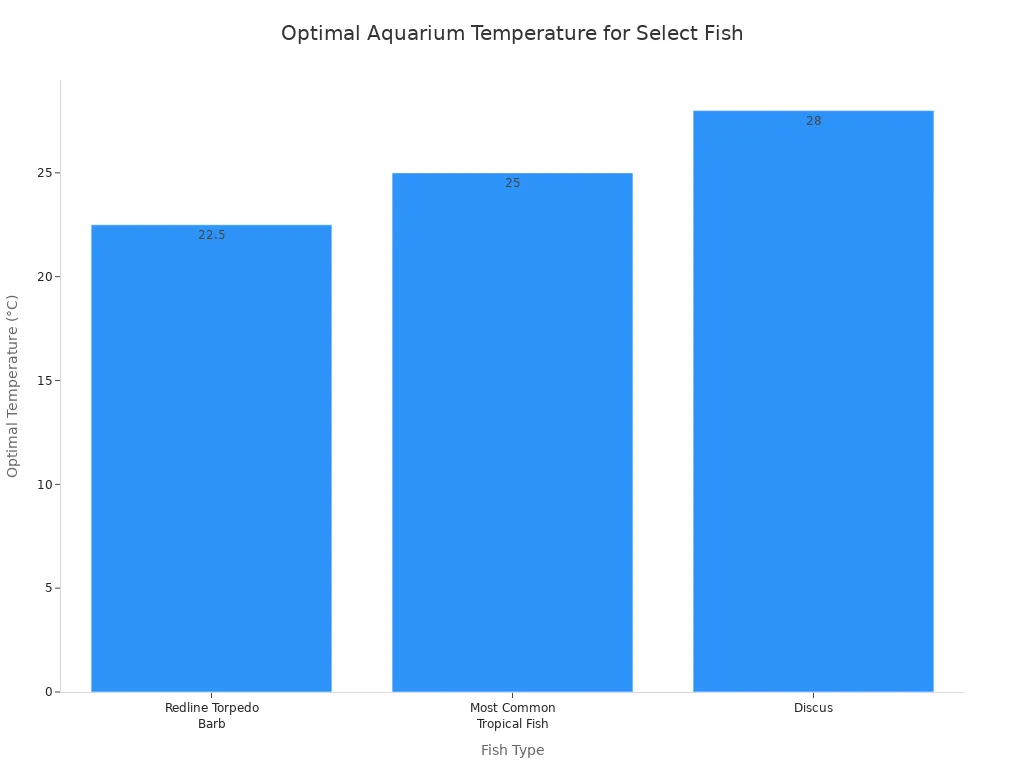
Most tropical fish thrive in a specific temperature range. You can use this chart as a general guide.
Your Action Plan for Stable pH and Temperature
You can create a stable environment for your fish with a few key actions. Consistency is the goal.
For Stable Temperature:
- Use a Reliable Heater: Invest in a quality aquarium heater to maintain a consistent temperature. For larger tanks or setups that get too warm, a chiller like the JBJ Arctica series can provide powerful, stable cooling.
- Acclimate New Fish Slowly: Never just drop a new fish into your tank. The shock from a sudden temperature change can be fatal.
- Float the sealed bag in your aquarium for 20-30 minutes. This allows the water temperatures to equalize.
- Turn off the aquarium lights to reduce stress.
- After floating, open the bag and slowly add small amounts of your tank water into the bag every 5-10 minutes. This is called drip acclimation and is the safest method.
- After about 30-60 minutes, gently net the fish out of the bag and release it into your tank. Do not add the bag water to your aquarium.
Warning! ⚠️ For fish shipped over several hours, the water in the bag can become toxic. Ammonia builds up, but high CO2 levels keep the pH low and the ammonia non-toxic. When you open the bag, CO2 escapes, the pH rises, and the ammonia becomes deadly. In these cases, a faster "plop and drop" acclimation after floating the bag is safer than a long drip acclimation.
For Stable pH:
- Maintain Your KH: Carbonate Hardness (KH) is the key to preventing pH swings. A KH level between 4-8 dKH is ideal for most freshwater aquariums.
- Use Buffering Substrates: You can naturally increase and stabilize your KH.
- Crushed Coral: Adding a small bag of crushed coral to your filter or substrate will slowly dissolve. It releases minerals that buffer the water and can raise the pH to around 7.6.
- Aragonite Sand: This is essentially very fine crushed coral. It works faster and can buffer your pH to about 8.2, making it a great choice for fish that prefer harder, more alkaline water.
Checking Salinity for Saltwater and Brackish Tanks
If you keep a saltwater, reef, or brackish aquarium, salinity is one of the most critical parameters you need to monitor. The C600 Water Quality Test Meter measures salinity with precision, showing you the result in both percentage (%) and parts per thousand (ppt). This removes all guesswork. Even small deviations from the ideal salinity can stress marine and brackish fish and invertebrates.
Brackish tanks are a unique middle ground between freshwater and full saltwater. Many popular fish, like certain mollies and puffers, thrive in these conditions. You must provide the correct salinity level for them to stay healthy.
| Fish Species | Salinity Range (SG) | Salinity Range (ppt) |
|---|---|---|
| Certain Mollies | 1.005 – 1.010 | 5-13 |
| Figure Eight Puffer | 1.018 – 1.025 | 24-30 |
Your Action Plan for Correct Salinity
Maintaining the perfect salinity is a balancing act of water changes and evaporation. Your C600 meter is the perfect tool to guide you.
- Top Off with Freshwater: Water evaporates from your tank, but the salt stays behind. This makes the salinity rise. You should top off your tank daily with fresh, dechlorinated water (RO/DI water is best) to replace what was lost to evaporation.
- Use a Quality Salt Mix: When you perform a water change, you must use a high-quality marine salt mix. Cheap salt mixes can lack essential minerals. Brands like Red Sea Coral Pro are designed with elevated foundation elements for coral growth, while others like Two Little Fishies AccuraSea®1 are formulated to precisely simulate natural seawater.
- Mix Water Correctly: Always mix your new saltwater in a separate bucket before adding it to the tank. Use your Water Quality Test Meter to check that the new water's salinity and temperature match your main tank's parameters perfectly before you make the change.
This table shows how different salt brands can affect your water parameters when mixed to 35 ppt salinity.
| Brand | Ca (mg/l) | Mg (mg/l) | Alkalinity (dKH) |
|---|---|---|---|
| Brightwell Aquatics NeoMarine | 413 | 1290 | 7.5 |
| Two Little Fishies AccuraSea®1 | 420 | 1300 | 8 |
| Fritz Reef Pro High Alk | 400-450 | 1300-1400 | 10-11.5 |
| Red Sea Coral Pro Salt | 465 | 1390 | 12.0 |
By regularly testing and making small, precise adjustments, you can provide the stable environment your aquatic pets need to flourish.
Your C600 meter gives you the power to solve water problems with exact data. You can stop guessing and start knowing. Regular monitoring with your Water Quality Test Meter prevents issues before they harm your fish, a strategy proven to improve animal welfare in professional aquaculture.
Your Action Plan: Keep this guide handy. Turn your C600 readings into a healthy, clear aquarium.
FAQ
How often should I test my aquarium water?
You should test your water weekly to catch problems early. Test more often if you see sick fish or cloudy water. This helps you maintain a stable environment.
Can I use the C600 for both freshwater and saltwater?
Yes, you can. The C600 meter accurately measures parameters for freshwater, saltwater, and brackish tanks. It is a versatile tool for all your aquariums. ✅
What if my TDS is high but the water looks clear?
High TDS means many dissolved substances are in the water. These can be invisible nutrients that fuel future algae blooms. You should take action to lower the TDS.
See Also
Unexpected Strategies for Effective Troubleshooting of Sulfur Recovery Catalysts
Enhancing Metering Precision: The Role of Manganin Copper Shunts
Simplifying AHRI 400/401 Heat Exchanger Solutions for Seamless Operation
Revolutionizing Hydrogen Fuel Cells with Advanced Micro-Channel Heat Exchanger Technology
Innovative Current Transformer Solutions for Enhanced Smart Meter Performance