The Best Small Water Dispenser for Your Home in 2026
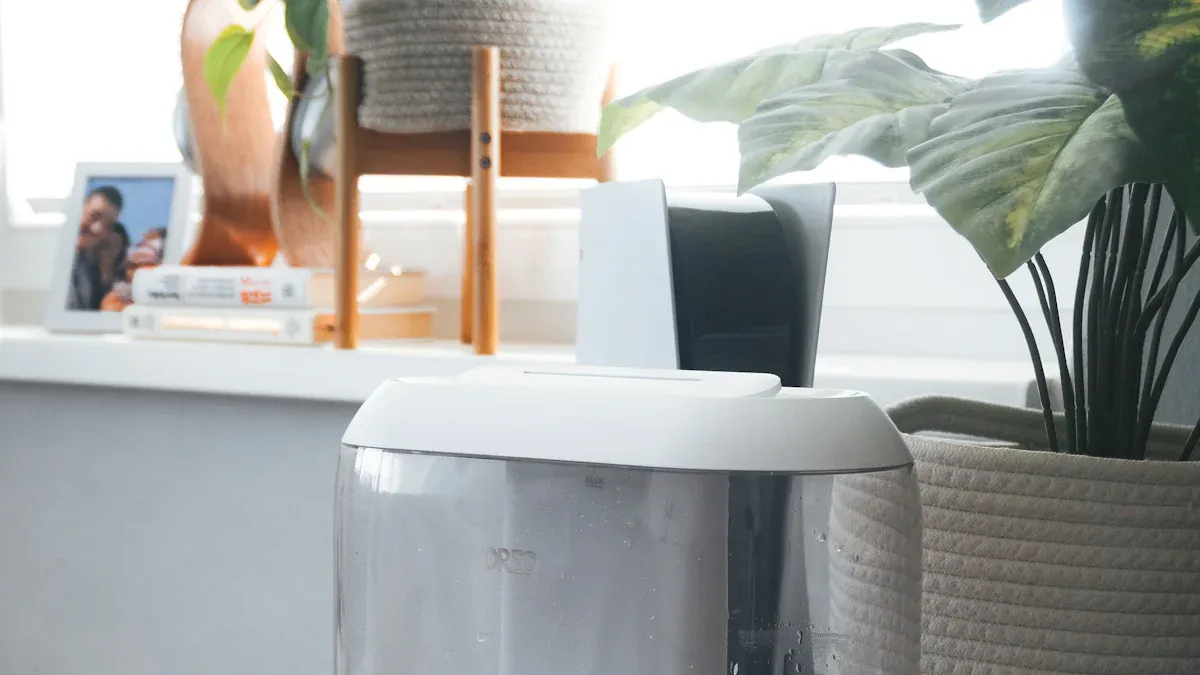
A countertop dispenser is your best choice. It helps you save floor space and works with a smaller budget. A bottom-loading small water dispenser for home is the right fit. You can avoid lifting heavy water jugs and get more water capacity. Your decision depends on your specific needs.
Key Takeaways
- Choose a countertop water dispenser to save floor space and money. It is good for small homes.
- Pick a bottom-loading dispenser to avoid lifting heavy water bottles. This makes changing bottles easy.
- Clean your water dispenser often to keep your water safe and fresh. Look for safety locks if you have children.
Space and Placement: Countertop vs. Floor
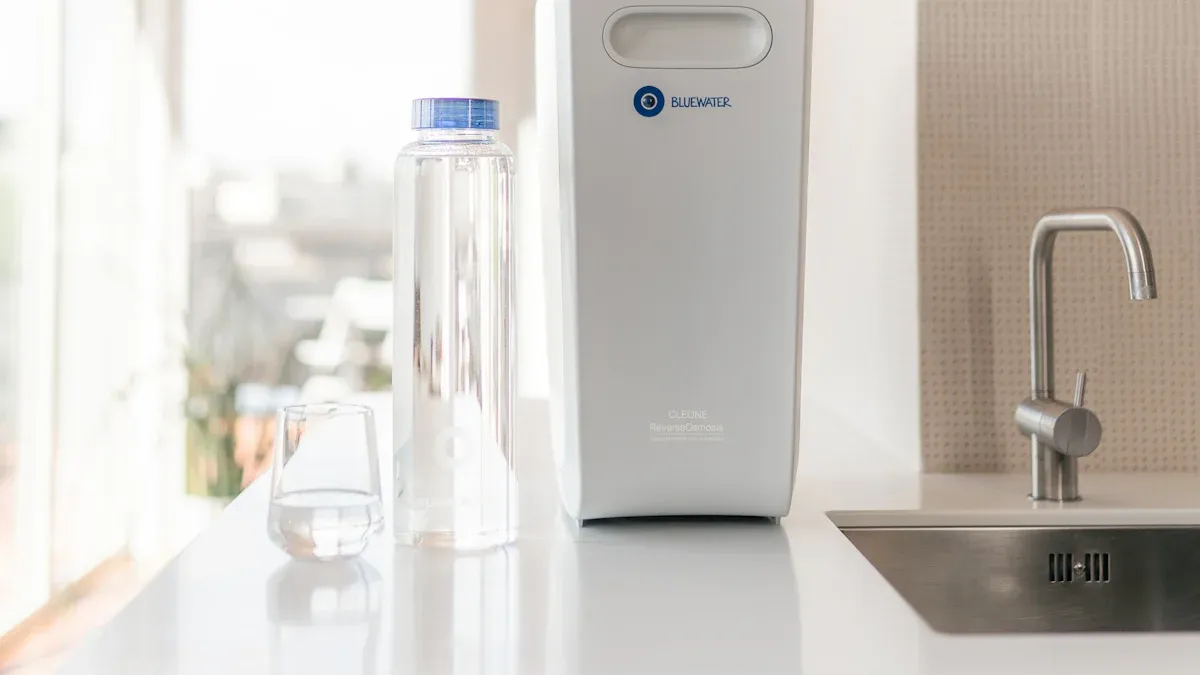
Your first decision involves where to put your new water dispenser. You must choose between a unit that sits on your counter and one that stands on your floor. Each option affects your living space differently.
Countertop: Saves Floor Space
A countertop water dispenser keeps your floor area completely open. This makes it a great choice for apartments, dorm rooms, or smaller kitchens where every square foot matters. You place the unit directly on your counter, just like a coffee maker or microwave. However, this convenience comes at the cost of counter space. You should measure the area between your counter and upper cabinets to ensure a good fit.
Here are the dimensions of two popular models to give you an idea of the space you might need:
| Model | Height | Width | Depth |
|---|---|---|---|
| Bevi Countertop Unit | 18.5” | 10” | 11” |
| Brio 630 RO Countertop | 16.73” | 14.4” | 19.29” |
Bottom-Loading: Frees Up Counters
A bottom-loading dispenser frees up your valuable counter space. This gives you more room for preparing food and using other small appliances. These dispensers have a slim, vertical design. You can easily tuck one into a corner or an unused spot in your kitchen or dining area.
Tip: A bottom-loading dispenser fits perfectly next to a refrigerator or along an empty wall in your dining room. This placement keeps it accessible without getting in your way.
Ultimately, you must decide which surface is more valuable in your home: your counter or your floor.
Ease of Use: Lifting vs. Sliding
Your daily interaction with a water dispenser mostly involves getting water and changing the bottle. The design of your dispenser directly impacts how easy these tasks are. You will either lift heavy bottles or slide them into place.
Countertop: Requires Lifting Bottles
A countertop dispenser requires you to lift a heavy water bottle and place it on top of the unit. This can be a challenging task. A standard 3-gallon water bottle weighs 24 pounds. A 5-gallon bottle is even heavier.
According to Argonne National Laboratory, “a full five gallon water cooler bottle weighs approximately 43 pounds.”
Lifting this much weight can be difficult and may lead to spills or even injury if you are not careful. Many users find managing these heavy bottles to be a major inconvenience.
Common frustrations you might face with top-loading models include:
- Wrestling with heavy 5-gallon jugs.
- Managing the physical strain of lifting the bottles.
- Running out of water at inconvenient times.
- Waiting for someone else to help you change the bottle.
You must consider if you are comfortable and able to lift over 40 pounds every time you need to change the water.
Bottom-Loading: No Heavy Lifting
A bottom-loading dispenser offers a much easier solution. You do not need to lift the heavy water bottle. Instead, you simply slide it into a cabinet at the base of the unit. This design eliminates the physical strain and risk associated with lifting.
This ergonomic benefit is a major reason people choose bottom-loading models. Market research shows that ergonomic concerns were the main reason for 68% of buyers who upgraded their water dispensers. They wanted to avoid back pain and the difficulty of handling large bottles.
The benefits of a bottom-loading design include:
- Eliminating physical strain from lifting heavy bottles. 💪
- Allowing easy bottle insertion at ground level.
- Reducing safety hazards from dropping bottles or straining your back.
- Making bottle changes effortless for users of all ages and abilities.
You might wonder how the water gets from the bottom to the top. These dispensers use a simple and clever pump system.
Here is how it works:
- A probe, or tube, goes from the dispenser into your water bottle.
- A small pump inside the dispenser turns on when you press the faucet.
- The pump creates a vacuum that pulls water up through the tube.
- Water flows from the tube to the faucet, giving you fresh water on demand.
This process happens automatically. You just slide the bottle in, close the door, and enjoy the convenience.
Choosing a Small Water Dispenser for Home Use
You have compared space and ease of use. Now you need to think about the practical details of owning a water dispenser. Your decision will depend on your family's needs, your budget, and how much time you can spend on upkeep.
Capacity for Your Household
You should choose a water dispenser that meets your family's daily drinking water needs. An average person in the US uses about 60 gallons of water indoors each day, but most of that is for bathing and cleaning. For drinking, you need to consider how many people are in your home. A small water dispenser for home should provide enough water without needing constant refills.
Most dispensers use standard 3-gallon or 5-gallon jugs. The right size for you depends on how much water your household drinks.
| Jug Size | Glasses (16oz) |
|---|---|
| 3-gallon | 24 |
| 5-gallon | 40 |
A larger 5-gallon jug is often more convenient for families.
- A 5-gallon water bottle typically lasts 1-2 weeks for a family of four.
This means you will change the bottle less often. A 3-gallon jug might be fine for one or two people. It is also lighter and easier to handle if you choose a top-loading model.
Upfront Cost and Budget
Your budget plays a big role in choosing a small water dispenser for home. Countertop models are usually less expensive to buy. Bottom-loading dispensers have a higher upfront cost because of their pump mechanism and more complex design.
You also need to consider the long-term operating costs. A water dispenser uses electricity to cool and heat water. The annual cost to run a dispenser can range from $30 to $60, depending on the model and your usage.
- Countertop dispensers with both hot and cold functions can cost around $10-$12 per month in electricity. A cold-only model is cheaper, costing about $5 per month.
- Bottom-loading dispensers are generally efficient. Their annual electricity costs are often similar to top-loading models, averaging between $24 and $48 per year.
These costs are similar to running a mini-fridge. Factoring in both the purchase price and the future electricity bills will help you make the best financial decision.
Cleaning and Maintenance
You must clean your water dispenser regularly to ensure your water is safe and tastes fresh. Bacteria and mineral buildup can occur over time if a unit is not maintained. A consistent cleaning routine is simple and essential for any small water dispenser for home.
Cleaning Tip: You should clean your dispenser more often than you think. A quick daily wipe-down and a deeper clean every month will prevent bacteria, mold, and mineral buildup.
Here is a simple cleaning schedule you can follow:
- Daily: Wipe the outside surfaces and taps. Empty and clean the drip tray.
- Monthly: Perform a deep clean. You need to drain, sanitize, and rinse the internal reservoir.
- Every 3-6 Months: Conduct a thorough deep clean and descaling to remove any mineral deposits.
How to Clean Your Dispenser in 6 Easy Steps:
- Unplug and Prepare: First, unplug the dispenser from the wall. Remove the water bottle. Take out any removable parts like the drip tray and internal baffle.
- Mix a Cleaning Solution: You can use a simple mixture of one part white vinegar to three parts water. For a deeper clean, use one tablespoon of unscented bleach per gallon of water.
- Scrub the Inside: Pour your cleaning solution into the water reservoir. Use a soft, long-handled brush to scrub the inside surfaces.
- Sanitize and Drain: Let the solution sit for about 10-15 minutes. Then, drain it completely through the taps into a bucket.
- Rinse Thoroughly: Fill the reservoir with fresh, clean water and drain it again. Repeat this step at least two more times to remove any trace of the cleaning solution.
- Clean Parts and Reassemble: Wash the drip tray and other removable parts with warm, soapy water. Wipe down the dispenser's exterior. Once everything is dry, put it all back together.
Using the right tools can make cleaning much easier. You can find affordable cleaning kits designed specifically for water coolers.
| Recommended Cleaning Tool | Why It's Useful |
|---|---|
| Water Cooler Cleaning Kit | Comes with specialized brushes and a cleaning solution for an all-in-one fix. |
| Long Bottle Cleaning Brush | A flexible, long-handled brush helps you scrub hard-to-reach areas inside the reservoir. |
| Ice Maker & Tube Brush Set | Includes various brush heads to clean narrow tubes and nozzles effectively. |
Regular maintenance ensures your dispenser works well and provides clean, healthy water for years to come.
Features and Functions
Modern water dispensers offer more than just water. You should look at the specific features that will make your life easier and safer. These functions can greatly improve your daily experience.
Hot, Cold, and Room Temp Water
Most dispensers give you instant access to hot and cold water. This is perfect for making a quick cup of tea or a refreshing cold drink. The default cold water temperature is usually set between 4-10°C (39-50°F). Hot water is typically heated to a range of 70-95°C (158-203°F).
Some models give you more control. For example, the Clover B7A lets you adjust the cold water temperature. Other brands like Elkay offer dispensers with precise digital thermostats. You can also find models that provide room temperature water, which is great for cooking or for those who prefer water that is not too cold.
You might worry about electricity use. An ENERGY STAR certified water cooler is very efficient. It consumes less than 0.16 kWh per day on average. ⚡
Safety Locks and Other Extras
A child safety lock on the hot water tap is a critical feature for any home with young children. Accidental burns are a serious risk. Studies show that children aged 1-4 are the most common victims of burns from water dispensers. Many of these injuries happen when a child plays with the hot water tap.
Dispensers use different types of locks to prevent accidents.
- Button Lock: You must press a safety button and the lever at the same time.
- Lever Lock: You have to lift or slide a lock before the lever will work.
- Dual-Step Activation: These systems require two separate actions to get hot water.
Choosing a dispenser with a reliable safety lock gives you peace of mind. It helps keep your family safe from accidental burns.
For ultimate convenience and zero heavy lifting, the bottom-loading dispenser is the clear winner. If you need the most space-saving and budget-friendly option, the countertop dispenser is your ideal pick.
Your final choice for a small water dispenser for home depends on your space, budget, and how much you dislike lifting. As technology advances, you can also expect more smart and sustainable options.
FAQ
How often should I clean my water dispenser?
You should wipe the unit daily and perform a deep clean every month. This simple routine prevents bacteria buildup and keeps your water tasting fresh and pure.
Are bottom-loading dispensers noisy?
No, they are very quiet. You may hear a soft hum when the pump pulls water from the bottle. The sound is minimal and not disruptive to your home.
Can I use any brand of water jug?
Yes, most dispensers fit standard 3-gallon and 5-gallon jugs. You can use bottles from almost any brand. Always check your model's manual for specific recommendations.