Sustainable Approaches in Sewage Water Treatment Plant Operations
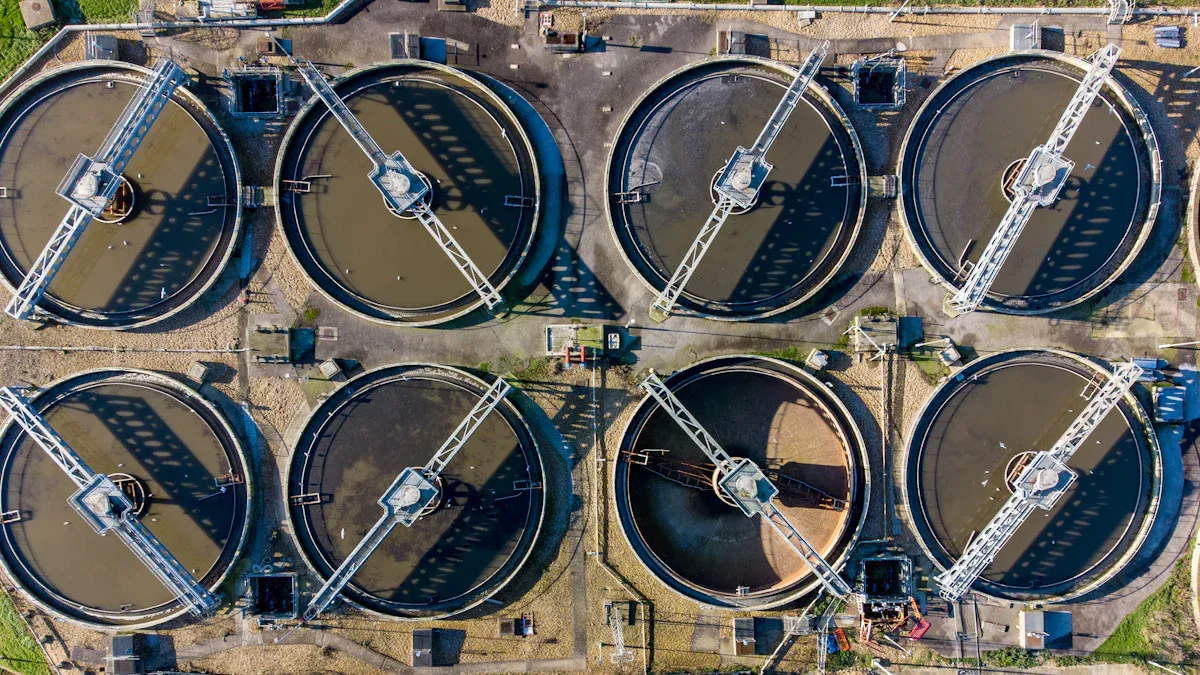
You can help protect public health and the environment by choosing sustainable approaches for your sewage water treatment plant. Untreated sewage often causes waterborne diseases and biodiversity loss. Eco-friendly solutions reduce environmental damage, save money through lower energy use, and help you meet strict regulations.
Key Takeaways
- Choose advanced oxidation processes (AOPs) for effective pollutant removal. AOPs can achieve up to 100% chemical oxygen demand reduction, improving water quality.
- Utilize AI and IoT for real-time monitoring and optimization. These technologies help predict treatment needs and enhance operational efficiency.
- Implement energy-efficient practices to lower costs and reduce environmental impact. Upgrading equipment and using renewable energy can significantly cut electricity expenses.
Innovative Technologies in Sewage Water Treatment Plant Operations
Advanced Oxidation and Photocatalysis
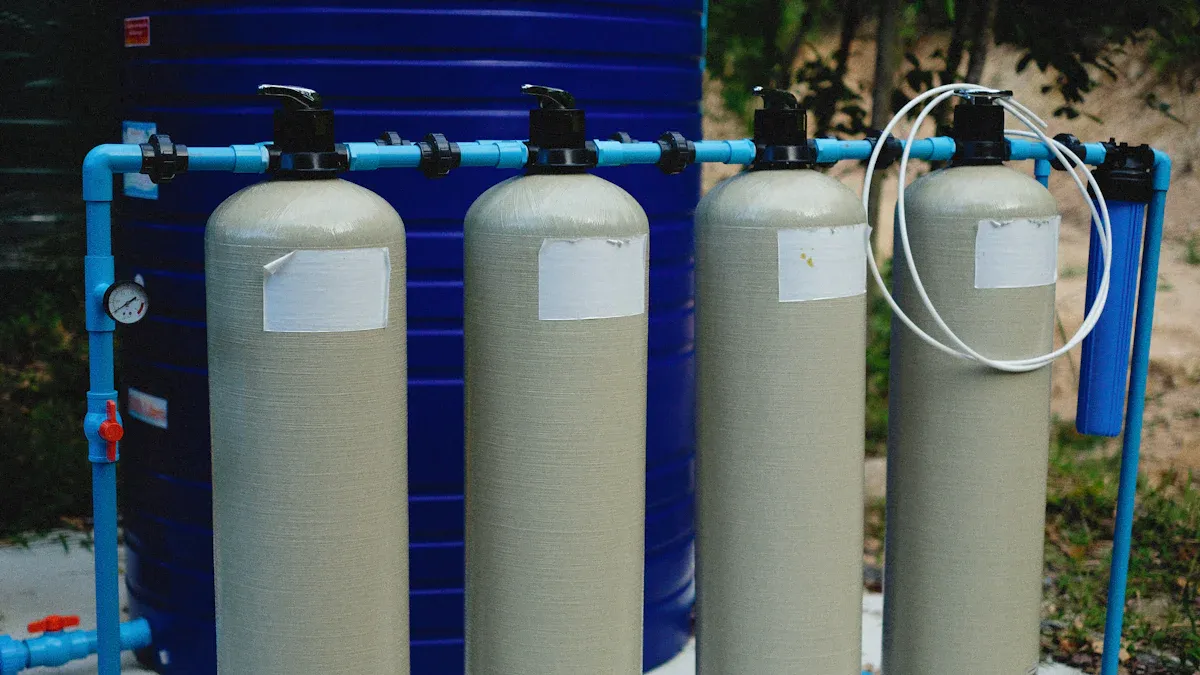
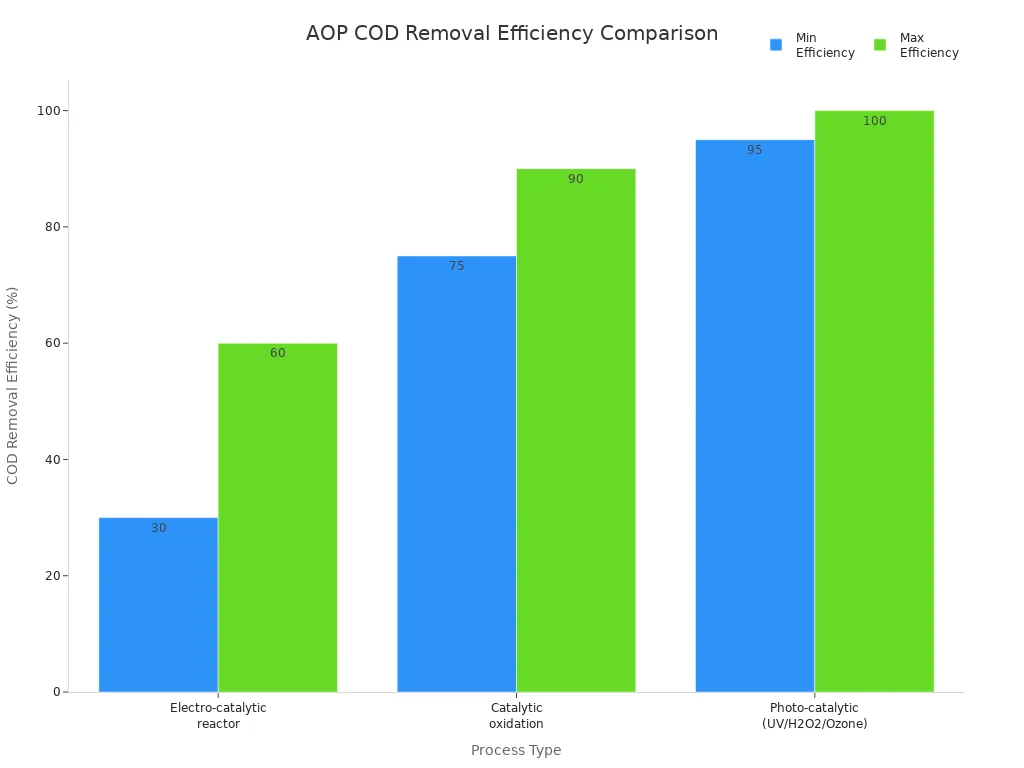
You can use advanced oxidation processes (AOPs) to remove tough pollutants from wastewater. These processes use strong oxidants like ozone, hydrogen peroxide, and UV light to break down chemicals that regular treatment cannot handle. The table below shows how different AOPs perform when removing chemical oxygen demand (COD), which measures water pollution:
| Process Type | COD Removal Efficiency |
|---|---|
| AOP Electro-catalytic reactor | 30-60% |
| AOP catalytic oxidation | 75-90% |
| AOP Photo-catalytic (UV/H2O2/Ozone) | 95-100% |
Photocatalysis is a special type of AOP. You can use sunlight or visible light to activate a catalyst, which helps break down harmful substances. This method uses less energy than traditional UV disinfection. Photocatalysis also destroys organic contaminants while disinfecting water. However, you may need to watch for increased chlorine demand and byproduct formation, such as trihalomethanes (THMs). Enhanced coagulation can help reduce these byproducts.
When you choose AOPs, you should consider their energy use and environmental impact. The table below compares energy consumption for different AOPs:
| Process Type | Energy Consumption (kWh/m3) | Main Environmental Impact Driver |
|---|---|---|
| Ozonation | 0.29 | Chemical addition |
| Photoelectrocatalytic Oxidation | 0.25 | Chemical addition |
| Solar Photo-Fenton | 0.35 | Chemical addition |
| Ozonation (Tarpani & Azapagic) | ~0.9 | Chemical addition |
| Ozonation (Arzate et al.) | 0.17 | Chemical addition |
| Photo Fenton (Arzate et al.) | 0.13 - 0.1 | Chemical addition |
Tip: You can lower your plant’s carbon footprint by choosing AOPs with lower energy needs and by managing chemical use carefully.
AI and IoT for Real-Time Optimization
You can make your sewage water treatment plant smarter by using artificial intelligence (AI) and the Internet of Things (IoT). AI models help you predict the best treatment levels and adjust equipment settings automatically. Real-time monitoring lets you track water quality and make quick changes to keep everything running smoothly.
- AI predicts optimal treatment levels and adjusts equipment settings.
- Real-time monitoring of water quality parameters allows for immediate adjustments.
- AI regulates oxygen and chemical dosages based on sensor data.
- Automatic real-time adjustments maximize performance.
- AI anticipates load changes and treatment needs.
IoT devices use sensors to monitor your plant’s systems. These sensors send data to a central platform, which helps you spot problems early and avoid costly repairs. The table below shows how IoT improves plant operations:
| Feature | Description |
|---|---|
| Continuous Monitoring | Advanced sensors track water quality like pH and temperature in real-time. |
| Data Transmission | Data goes to a central platform for analysis, boosting efficiency. |
| Real-time Alerts | Immediate notifications for anomalies allow for proactive maintenance. |
| Historical Data Logging | Tracks water quality over time for better decisions. |
| Environmental Impact | Improves public health safety and sustainability. |
- IoT helps you monitor flow rates and predict equipment failures, reducing costs.
- Sensors detect pump stress, so you can fix issues before breakdowns.
- Automated chemical dosing prevents waste by adjusting in real-time.
Note: You can shift from reactive to predictive maintenance with IoT. Continuous monitoring lets you respond quickly to problems, which saves resources and keeps your plant reliable.
AI and IoT also help you meet regulations. Real-time data collection and automated reporting make it easier to stay compliant and avoid fines.
Resource Recovery and Water Reuse
You can turn waste into valuable resources at your sewage water treatment plant. Technologies like anaerobic digestion, membrane systems, and vacuum evaporation help you recover biogas, nutrients, and metals from wastewater.
- Anaerobic digestion produces biogas for energy.
- Membrane systems recover clean water and nutrients.
- Vacuum evaporation extracts metals.
Sewage treatment plants play a key role in the circular economy. You can convert organic sludge into biogas, which lowers carbon emissions. Phosphorus-rich sludge becomes fertilizer for farms. You can even recover heat from treated water for district heating.
Every liter of wastewater contains energy, nutrients, and materials. Advanced treatment lets you recover clean water for irrigation and industry, energy for electricity, and nutrients for fertilizer. This approach supports sustainable agriculture and reduces waste.
Callout: By recovering resources, you help the environment and save money. You also support local communities by providing renewable energy and fertilizers.
Innovative technologies can reduce long-term maintenance needs. They improve efficiency and help you meet regulatory standards. Some systems may need extra care, but the benefits often outweigh the costs.
Operational Strategies for Sustainable Sewage Water Treatment Plant Management
Energy Efficiency and Renewable Integration
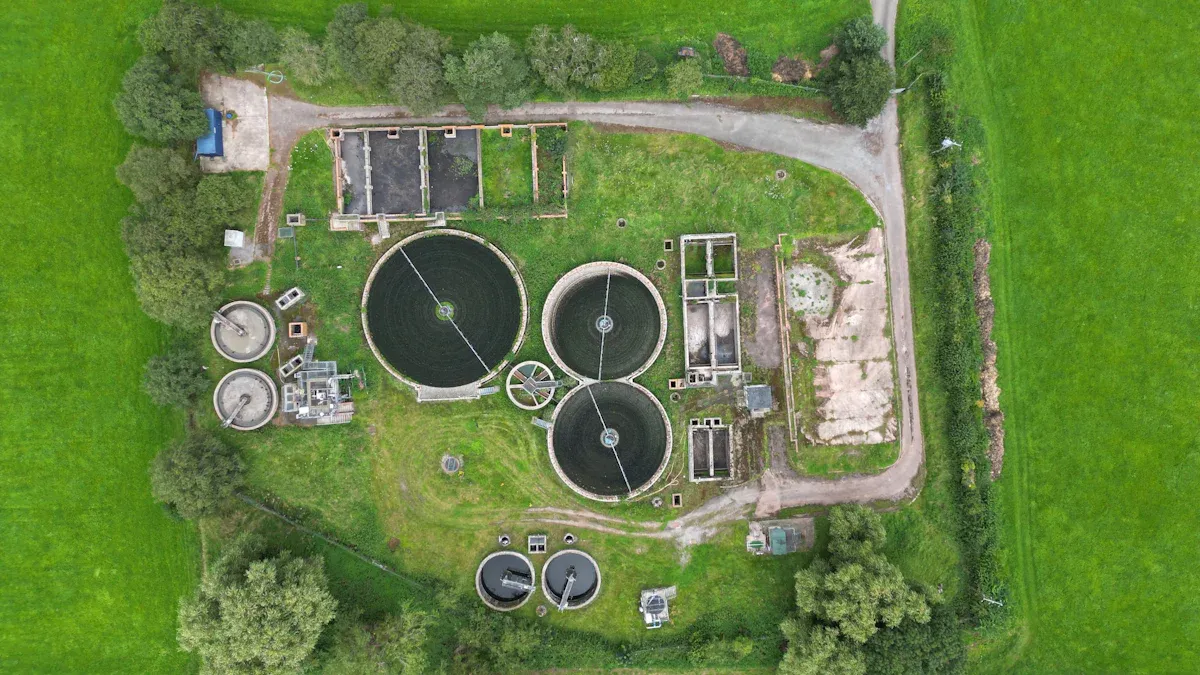
You can make your sewage water treatment plant more sustainable by focusing on energy efficiency. Electricity costs often make up a large part of your operating budget. In the United States, wastewater treatment plants use over 30 terawatt hours of electricity each year. This leads to billions of dollars in expenses. You can lower these costs and help the environment by following a few important steps:
-
Develop a Baseline
Start by collecting accurate data about your plant’s energy use. This helps you understand where you use the most energy. -
Understand the Savings
Use efficient pumps and variable speed drives. These upgrades can cut energy use in the most demanding parts of your plant. -
Identify and Assess Areas for Improvement
Walk through your facility and look for places where you can save energy. You might find old equipment or systems that need updating. -
Implement Improvements
Work with your team and stakeholders to make changes. This could mean installing new equipment or changing how you run certain processes. -
Track and Report Progress
Keep an eye on your energy performance. Regular tracking helps you see if your changes are working.
You can also use renewable energy sources to power your plant. For example, the city of Tulare, California, uses biogas from its wastewater to generate electricity. This provides 45% of the plant’s energy needs and saves over $1 million each year. Many municipalities save 15% to 30% on energy costs by using energy-efficient practices.
Tip: You can recover energy from sewage sludge using anaerobic digesters. This reduces your reliance on outside electricity and lowers your carbon footprint.
Chemical Reduction and Safer Alternatives
You can protect the environment and lower costs by reducing chemical use in your sewage water treatment plant. Common chemicals include flocculants, coagulants, pH adjusters, disinfectants, and oxidizing agents. These chemicals help clean water, but they can also cause problems:
- Harmful by-products like trihalomethanes (THMs) can form.
- Heavy metals may build up and affect food chains.
- Aquatic life can suffer from chemical residues.
- Nitrates in water can harm human health.
- Soil quality may drop due to leftover chemicals.
- Chemical production and biological processes add greenhouse gases.
You can use several strategies to cut down on chemicals:
-
Advanced DAF Technology
This technology reduces the amount of chemicals needed for treatment. -
Precision Chemical Dosing
Real-time monitoring helps you avoid overdosing and keeps your plant efficient. -
Enhanced Pretreatment
Treating water before the main process means you need fewer chemicals later. -
Flow-Paced Dosing
Adjust chemical feed rates based on real-time flow. This prevents waste during slow periods. -
Constituent Concentration Dosing
Monitor water quality and adjust dosing for better control. -
Competitive Bidding
Regularly check chemical prices to keep costs low.
You can also switch to safer alternatives. The table below shows some options:
| Technology/Method | Description |
|---|---|
| Anaerobic digesters | Capture methane for energy production, reducing electricity demand. |
| Natural systems (wetlands) | Filter nutrients while supporting biodiversity. |
| Advanced filtration and reverse osmosis | Designed for water reuse in irrigation, industry, or even drinking water. |
| Biological nutrient removal | Target nitrogen and phosphorus without overusing chemicals. |
You can use biological treatment methods, such as activated sludge systems and constructed wetlands. These methods use natural processes to break down pollutants. They use less energy and produce fewer chemical by-products. UV disinfection is another safe choice. It destroys harmful microorganisms without harsh chemicals. Genclean AOP liquid technology offers a non-toxic way to disinfect and remove micropollutants.
Note: Reducing chemicals not only protects the environment but also saves money. You can improve compliance and avoid fines by using safer alternatives.
Circular Water Use and Decentralized Systems
You can help your community save water by adopting circular water use models. These models recycle water and recover valuable resources. You can use green infrastructure, such as green roofs, to reduce water runoff and promote local recycling. Non-drinking water can be used for toilet flushing and cleaning. This lowers the demand for potable water.
You can also recover nutrients and energy from wastewater. This transforms your sewage water treatment plant into a resource center. You support sustainable agriculture and reduce waste.
Decentralized systems treat sewage on-site. These systems offer many benefits:
- Cost-effectiveness
- Flexibility
- Sustainability
- Resource recovery from wastewater
- Safe disposal of treated sludge
- Practical solutions for areas where centralized systems are not possible
The table below shows the main benefits and challenges:
| Benefits | Challenges |
|---|---|
| Cost-effectiveness | Technological constraints |
| Flexibility | Social factors |
| Sustainability | Regulatory issues |
| Resource recovery from wastewater | Efficiency affected by wastewater characteristics |
| Safe disposal of treated sewage sludge | Site-specific evaluations needed |
| Pragmatic approach in impractical areas | Future research needed for optimization |
Decentralized systems treat sewage close to where it is produced. This reduces pollution and allows for nearby reuse. You can lower your carbon footprint by up to 23%. Although these systems may cost more to build, you can recover the investment in 8 to 9 years due to lower energy use.
Callout: Circular water use and decentralized systems help cities save water, reduce pollution, and support local sustainability goals.
You may face challenges such as fluctuating water quality, aging equipment, regulatory compliance, and finding skilled workers. Training programs can help your team learn about energy optimization, biological treatment, and equipment maintenance. You can find resources like self-paced courses, textbooks, and online videos to support operator certification and skill development.
You can measure sustainability by tracking water quality, waste, costs, and recovery.
Key steps for you:
- Use energy-efficient systems
- Involve your team and partners
- Try advanced treatment methods
- Reuse water and recover resources
| Trend | Description |
|---|---|
| Digitalization | AI and data improve plant performance |
| Circular Water Use | More water reuse and resource recovery |
FAQ
What is the main benefit of using AI in sewage water treatment plants?
You can use AI to predict problems early. This helps you save energy, reduce costs, and keep your plant running smoothly.
How does resource recovery help the environment?
You turn waste into useful products like biogas and fertilizer. This reduces pollution and supports local farming.
Can you reuse treated sewage water safely?
- Yes, you can reuse treated water for:
- Irrigation
- Industrial cleaning
- Toilet flushing
See Also
Ways to Reduce Environmental Impact Using Plate Heat Exchangers
Comprehensive 2025 Overview of Semi-welded Plate Heat Exchangers
Research-Driven Strategies for Enhancing 2 5-Furandicarboxylic Acid Sustainability
Comparative Analysis of EHEDG and 3A SSI Hygienic Design Standards
Innovative Materials Transforming the Heat Exchanger Industry