How Does a Sewage Wastewater Treatment Plant Function in 2026
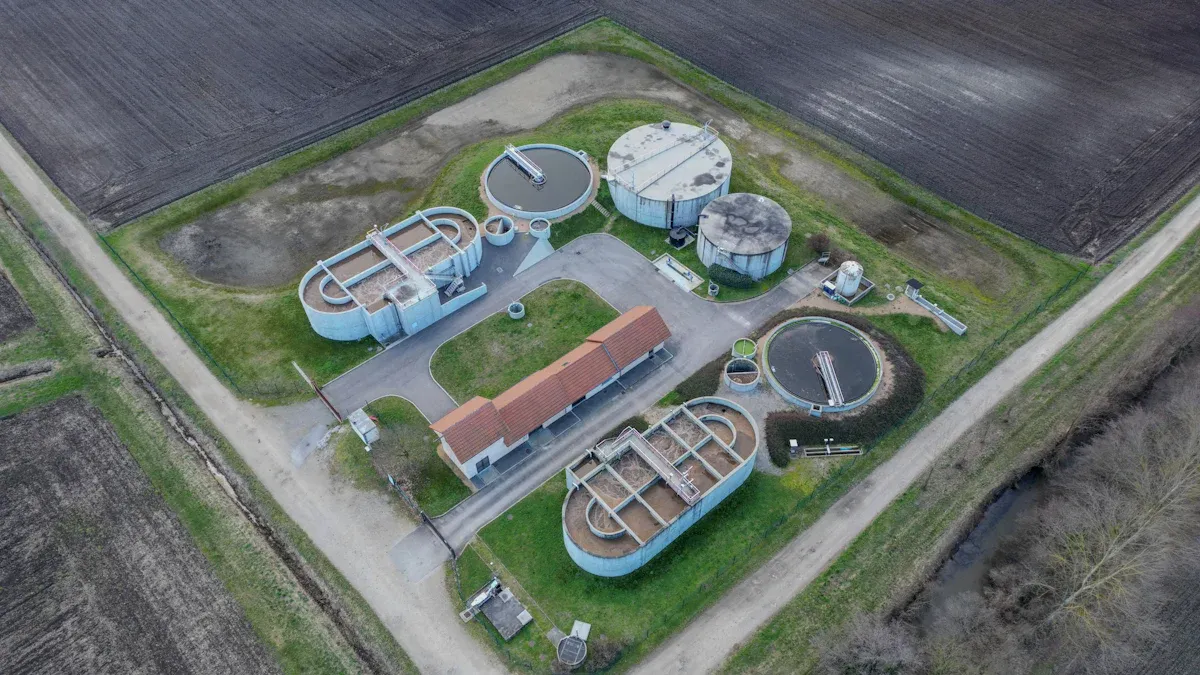
You see a sewage wastewater treatment plant clean water in several steps. First, you watch solids get removed, then microorganisms break down waste. Next, advanced filters and chemicals clear out what remains. Across the U.S., each state sets its own rules for water quality, as shown below:
| Region | Regulatory Framework | Key Points |
|---|---|---|
| Arizona | AAC Title 18, Chapter 9 and 11 | Rules for recycled water use and water quality standards. |
| California | Title 22 (State Water Board) | Main regulations for recycled water and its reuse. |
Key Takeaways
- Sewage wastewater treatment involves multiple stages: preliminary, primary, secondary, and tertiary. Each stage plays a crucial role in cleaning water effectively.
- Modern treatment plants use automation and smart monitoring to improve efficiency. These technologies help save energy and reduce costs while ensuring water quality.
- Resource recovery from sludge not only generates energy but also supports environmental sustainability. This practice reduces waste and promotes a circular economy.
Main Stages of a Sewage Wastewater Treatment Plant
Preliminary Treatment: Screening and Grit Removal
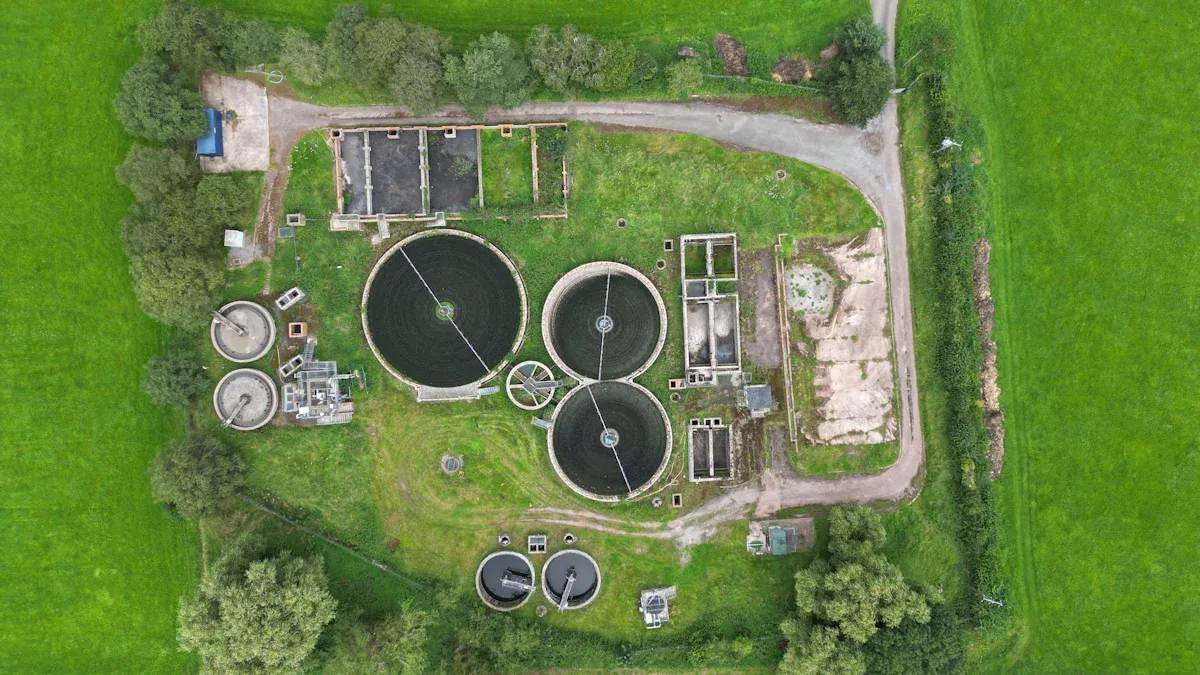
When you look at the first stage in a sewage wastewater treatment plant, you see how important it is to remove large and gritty materials. This step protects the equipment and makes the rest of the process work better. You find coarse objects like cans, rags, sticks, and plastic packets in the incoming water. Grit such as sand, gravel, and small rocks also enters the system. Removing these items keeps pumps and pipes from getting damaged or clogged.
Tip: Removing large and gritty materials early helps the whole plant run smoothly and prevents costly repairs.
You will notice several types of screening and grit removal systems in use by 2026. Here is a table showing some of the most common technologies and where you might find them:
| Type of System | Application |
|---|---|
| Constant Current Screen Systems | Industrial Wastewater Treatment |
| Grit Systems | Municipal Water Treatment |
| Combined Constant Current and Grit Systems | Food and Beverage Industry |
| Modular Systems | Pulp and Paper Industry |
| Integrated Systems | Pharmaceutical Manufacturing |
| Membrane Filtration Technology | |
| Gravity Filtration Technology | |
| Electrocoagulation Technology | |
| Ultrafiltration and Microfiltration | |
| Chemical Treatment Technology |
You may also see fine screens, coarse screens, rotary drum screens, and auger screens. These devices capture everything from large rags to tiny hairs. New bar screens and screenings washer/compactors help remove and concentrate fine grit. HeadCell units handle specific flow rates, making sure grit removal stays efficient.
Primary Treatment: Sedimentation and Sludge Handling
After screening, you move to the primary treatment stage. Here, water flows into large tanks where solids settle to the bottom. This process is called sedimentation. It removes about 50–70% of suspended solids and 25–40% of biological oxygen demand (BOD). You see the water become much clearer as heavy particles drop out.
- Sedimentation works well for organic solids.
- Some contaminants, like PFAS, can pass through because they dissolve in water.
Once solids settle, you need to handle the sludge. Plants use several methods to manage this thick material:
| Method | Description | Energy Consumption |
|---|---|---|
| Thickening | Removes water from sludge using mechanical means to reduce volume. | Low |
| Sedimentation | Solids settle at the bottom of a tank. | Low |
| Dissolved Air Flotation | Uses air bubbles to separate solids from liquids. | Low |
| Centrifugation | Spins sludge to separate solids from liquids. | Low |
| Pre-thickening | De-waters sludge before further treatment. | Varies |
For smaller plants, composting works well. Mid-sized plants often use aerobic digestion. Large facilities prefer anaerobic digestion to break down the sludge.
Secondary Treatment: Biological Processes
In the secondary stage, you watch microorganisms break down the remaining organic matter. These tiny helpers eat the waste and turn it into cleaner water. You find two main types of biological processes: suspended-growth and biofilm methods. In both, bacteria and other microbes grow and form clumps or films. These clumps, called flocs, settle out and leave the water much cleaner.
This stage removes many organic pollutants, including ammonia, nitrogen compounds, and phosphorus. However, some pollutants like PFAS do not break down easily and may remain in the water. The biological treatment stage lowers the organic matter and reduces the biological oxygen demand, making the water safer for the next step.
Tertiary Treatment: Advanced Purification and Disinfection
You reach the final stage, where advanced purification makes the water even cleaner. Tertiary treatment uses several high-tech methods to remove fine solids, nutrients, pathogens, and trace contaminants. This step produces water that you can reuse for irrigation or industry.
- Membrane filtration removes particles and organic matter.
- Activated carbon filtration eliminates dissolved organic compounds.
- Ultraviolet (UV) disinfection kills microorganisms.
- Reverse osmosis filters out dissolved solids and impurities.
- Advanced oxidation processes break down stubborn chemicals.
- Electrodeionization systems use electricity to produce high-quality water with low energy use.
Tertiary filtration systems reduce suspended solids and nutrients like phosphorus and nitrogen. These systems help meet strict environmental standards and address new contaminants. Modern disinfection methods, such as chlorination, UV, and ozone, provide high effectiveness against pathogens. Each method has its own advantages and disadvantages:
| Disinfection Method | Effectiveness | Advantages | Disadvantages |
|---|---|---|---|
| Chlorination | High | Low cost, long history of effectiveness | Can produce harmful byproducts, requires dechlorination |
| Ultraviolet (UV) | High | No chemical residues, effective against a wide range of pathogens | Requires high-quality effluent, frequent maintenance needed |
| Ozone | High | Strong oxidizing agent, no residual chemicals | Costly, requires specialized equipment |
With these advanced steps, a sewage wastewater treatment plant in 2026 delivers water that is safe for reuse or release into the environment.
Modern Advancements in Sewage Wastewater Treatment Plants in 2026
Automation and Smart Monitoring
You now see how automation and smart monitoring have changed the way a sewage wastewater treatment plant works. You use artificial intelligence to optimize treatment steps. Machine learning helps you improve efficiency every day. Automated systems watch and adjust treatment settings without you needing to step in.
Here is how smart monitoring helps you:
| Application | Description |
|---|---|
| Water Quality Monitoring | You check pH, clarity, and chlorine levels all the time to meet standards. |
| Remote Asset Management | You get real-time updates on equipment for quick repairs. |
| Cost Savings | You lower costs for your city or company. |
| Improved Water Quality | You meet water quality rules with AI support. |
| Energy Efficiency | You use less energy in treatment and water delivery. |
With these tools, you make fewer mistakes and keep the plant running smoothly, even when water quality changes. You also save money because you need less manual work and can fix problems early.
Energy Efficiency and Resource Recovery
You notice that energy-saving upgrades play a big role in a modern sewage wastewater treatment plant. You use PowerPlate upgrades to make machines like decanter centrifuges work better and use less energy. Digital services such as KemConnect® PT help you add the right amount of chemicals, which saves power at plants like Lotsbroverket. You also capture biogas from waste, which gives you electricity and cuts greenhouse gas emissions by a large amount.
Modern plants let you recover energy and nutrients from sludge. You turn organic waste into energy, which helps you pay less for electricity and shrink your carbon footprint. You also recover nitrogen and phosphorus, which lowers the need for chemicals and supports the circular economy.
Tip: When you recover resources, you help the environment and make the plant more efficient.
Enhanced Disinfection Methods
You now use new ways to disinfect water in 2026. High-strength peracetic acid systems, like Peragreen 26WW, help you control germs in wastewater. This method works well, breaks down safely, and fits into your current system without big changes. You reduce harmful microbes and support a cleaner, safer water cycle.
You help protect public health and nature by supporting modern treatment plants.
- You reduce waterborne diseases by improving water quality and monitoring pathogens.
- Advanced technology lets you recover resources and reuse water, which saves energy.
- Treated water returns safely to the environment, helping local ecosystems thrive.
FAQ
What happens to the sludge after treatment?
You see plants turn sludge into biogas for energy. Some plants use it as fertilizer. Others send it to landfills if it cannot be reused safely.
Can you drink water after it leaves the treatment plant?
You cannot drink this water directly. Plants clean it for reuse or safe release. Cities treat drinking water separately to meet health standards.
How do smart systems help you run a treatment plant?
You use smart sensors to track water quality. Automated controls adjust equipment. This helps you save energy, reduce costs, and keep water safe.
See Also
A Comprehensive Overview of Semi-Welded Heat Exchangers in 2025
Three Key Benefits of PHE Plates for Enhanced Performance
Understanding the Advantages of Commercial Heat Exchangers in 2025
Innovative Materials Transforming the Heat Exchanger Industry Today
Recent Innovations in Heat Exchanger Manufacturing Boost Industrial Efficiency